How Is the Quantum Sensor Market Being Transformed by Silicon Carbide Qubits and Space-Based Gravity Instruments?

Quantum sensing is entering a new phase of real-world viability. Two major developments silicon carbide (SiC) spin qubit sensors operating at room temperature and NASA’s forthcoming quantum gravity gradiometer are reshaping the technological and commercial landscape. These advancements, validated by Phys.org and NASA’s Jet Propulsion Laboratory, illustrate how quantum sensors are shifting from laboratory prototypes to usable, field-ready systems.
What Makes Silicon Carbide–Based Quantum Sensors a Breakthrough for 2025?
A major leap forward has come from researchers at the HUN-REN Wigner Research Center for Physics, the Beijing Computational Science Research Center, and the University of Science and Technology of China. Their work, outlined in Phys.org (2025), demonstrates that silicon carbide defects specifically divacancies in 4H-SiC can be engineered to function as highly sensitive quantum sensors at room temperature.
The key innovation is the creation of a new SiC surface that drastically reduces noise. Traditional SiC surfaces contain unwanted charges and spins that overwhelm the signals produced by shallow quantum defects. Instead of modifying existing methods, the research team designed an entirely new alkene-terminated SiC surface that eliminates much of this interference. As a result, qubits placed only a few nanometers below the surface can finally operate with the stability and clarity needed for high-precision sensing.
This improvement is not only technical it changes the usability of the material. Because the new surface is bio-inert and the qubits emit near-infrared light, the sensor operates reliably in biological and chemical environments. Near-infrared wavelengths penetrate tissue and liquids well, enabling potential applications in biomedical diagnostics, chemical detection, and nanoscale magnetic field mapping. The fact that this system works at room temperature further expands its practicality since it avoids the need for complex cryogenic systems.
The early results demonstrate significantly reduced noise, improved coherence of spins, and the ability to perform stable sensing protocols even in reactive or aqueous settings. With continued refinement, including isotopically purified SiC surfaces, researchers aim to extend spin coherence times and enhance sensitivity. The long-term vision includes applications ranging from surface NMR spectroscopy to implantable, bio-compatible sensors capable of monitoring molecular processes in real time.
How Is NASA Advancing Quantum Gravity Measurement for Earth and Space Applications?
NASA’s Jet Propulsion Laboratory is developing the first space-based quantum sensor for gravity mapping, marking a milestone for earth science and quantum technology. Supported by NASA’s Earth Science Technology Office, the Quantum Gravity Gradiometer Pathfinder (QGGPf) will demonstrate how ultracold atoms can be used to detect variations in Earth’s gravitational field with unprecedented precision.
Gravity varies depending on the distribution of mass beneath Earth’s surface. While these variations are subtle, gravity gradiometers can detect them by comparing how fast two nearby test masses fall. The QGGPf achieves this using two clouds of rubidium atoms cooled near absolute zero, where they behave like matter waves. Measuring the difference in acceleration between these clouds reveals gravitational anomalies linked to aquifers, mineral deposits, tectonic activity, and other subsurface features.
According to NASA’s estimates, quantum gravity gradiometers could eventually be up to ten times more sensitive than classical instruments. Unlike traditional satellites that rely on pairs of spacecraft, this quantum system is compact occupying only 0.25 cubic meters and weighing 125 kilograms allowing it to operate on a single spacecraft. The consistency of atomic test masses also enhances long-term measurement stability, improving the accuracy of multi-year missions.
Beyond Earth, this technology could help scientists map gravitational fields on other planets or moons, study mass distribution in planetary interiors, and support fundamental physics investigations. The mission also reflects a growing collaboration between NASA and quantum technology companies, including AOSense, Infleqtion, and Vector Atomic.
How Do These Breakthroughs Shape the Quantum Sensor Market Outlook?
Together, SiC-based qubit sensors and NASA’s quantum gravity gradiometer broaden the technological scope of quantum sensing. Silicon carbide establishes a practical and scalable platform for room-temperature detection in biomedical and chemical environments, while space-borne quantum gravity sensing unlocks high-value applications in resource mapping, water monitoring, planetary exploration, and national security.
These developments suggest that the Quantum Sensor Market is shifting toward platforms that are both deployable and commercially relevant. Instead of relying solely on laboratory-grade systems, the field is moving toward sensors that operate in ambient, complex, or even extraterrestrial environments. As a result, the sector may experience increased investment from healthcare, environmental science, mining, energy, and aerospace industries that can leverage these new capabilities. Quantum sensors are transitioning from controlled laboratory environments to practical, field-ready technologies across healthcare, earth science, and space exploration. These breakthroughs point to expanding market opportunities and accelerated commercial adoption.
Key Players in the Quantum Sensor Market
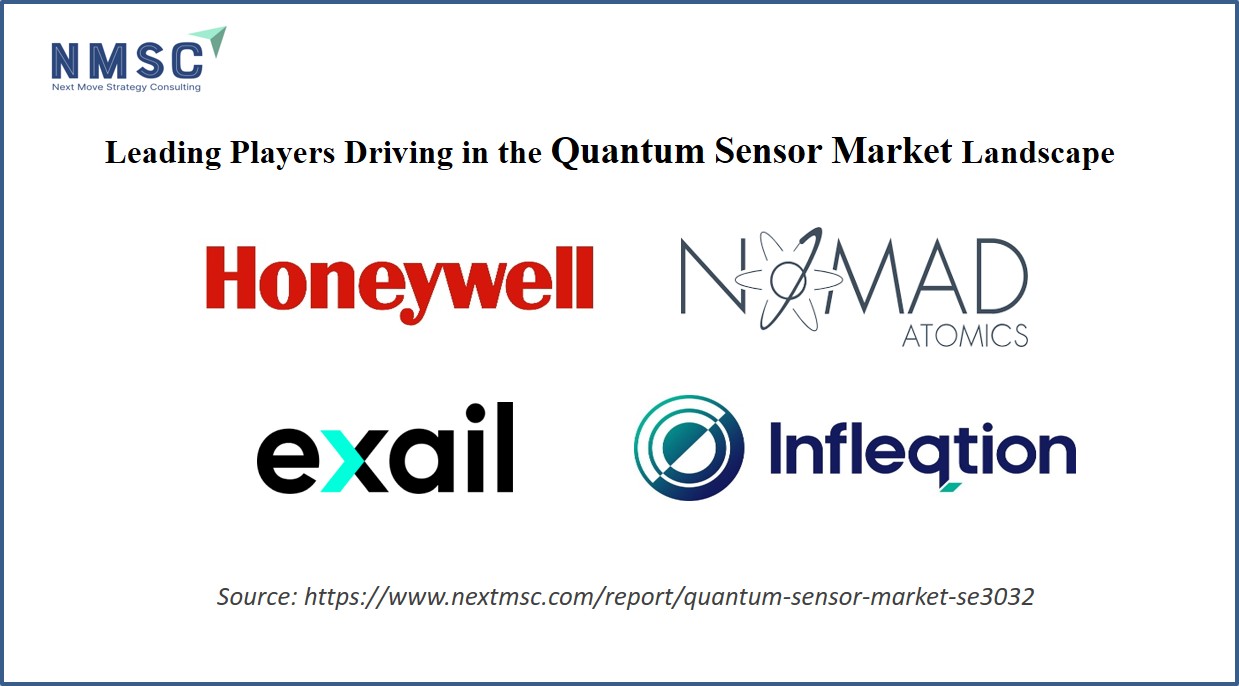
Leading companies in the quantum sensor industry include Infleqtion Inc. (formerly ColdQuanta), Exail (integrating the iXblue and Muquans product portfolios), AOSense Inc., M Squared Lasers Ltd. (M²), Nomad Atomics Pty Ltd, Honeywell International Inc., ID Quantique SA (IDQ), Single Quantum B.V., Photon Spot Inc., Munich Quantum Instruments GmbH (MQI), Pixel Photonics GmbH, Quantum Opus LLC, Qnami AG, Quantum Diamond Technologies Inc. (QDTI), and Robert Bosch GmbH (Bosch Quantum Sensing), among others. These companies continue to strengthen their market presence through strategic collaborations, advanced product launches, and ongoing technological innovation.
Where Are Quantum Sensors Creating the Most Immediate Opportunities?
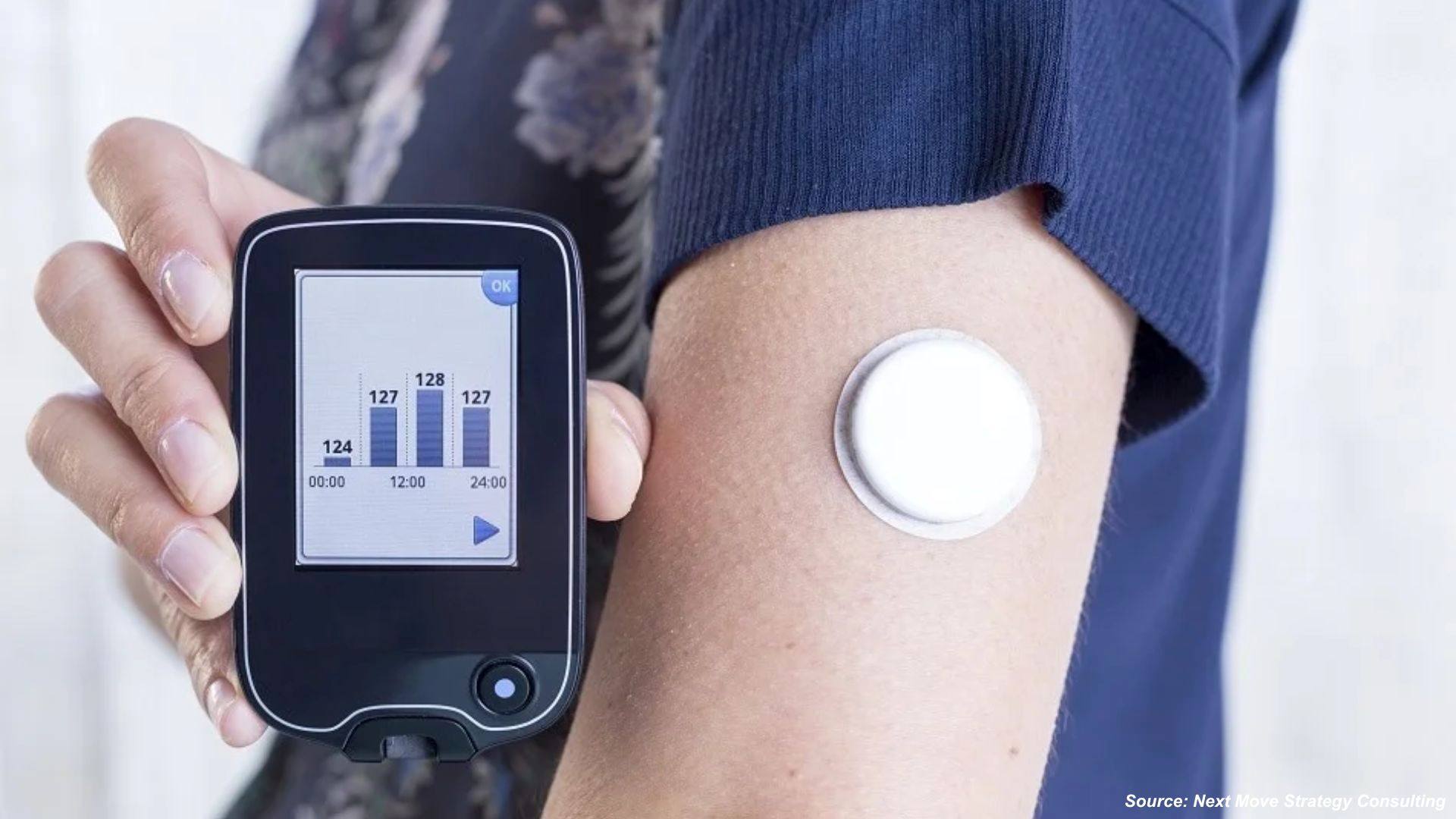
In biomedical applications, SiC sensors offer a path toward non-invasive, room-temperature diagnostics due to their bio-inert surfaces and near-infrared emission. In chemical and materials science, nanoscale detection of magnetic and molecular signals becomes more feasible with the improved stability of shallow SiC defects.
Earth science stands to gain from NASA’s quantum gravity sensing, which can refine mapping of groundwater, mineral reserves, and geological structures. The technology also strengthens navigation systems and supports climate-related monitoring. In planetary and space science, quantum gravity sensors may reveal detailed insights into planetary crusts, oceans, and internal processes.
Market-Relevant Impacts of Current Quantum Sensor Breakthroughs
|
Innovation |
Market Impact |
|
SiC-based quantum defects |
Enables practical room-temperature nanoscale sensing |
|
New SiC surface chemistry |
Extends sensing to biological and reactive environments |
|
Quantum gravity gradiometer |
Improves resource and aquifer mapping accuracy |
|
Compact space-based design |
Reduces mission cost and increases commercial applicability |
Next Move Strategy Consulting’ View
Organizations should closely monitor advancements in silicon carbide (SiC) defect engineering, as these innovations highlight the potential for commercially viable, room-temperature quantum sensors across multiple industries. Researchers and decision-makers are advised to assess the applications of emerging space-based quantum gravity sensors, such as NASA’s QGGPf, for enhancing capabilities in resource exploration, environmental monitoring, and geospatial intelligence. There are also significant opportunities to integrate SiC-based near-infrared sensors into biomedical diagnostics, real-time monitoring, and advanced research due to their bio-compatible design and stable operation. Collaborating strategically with leading research institutions, technology developers, and industry partners will be critical to accelerate the transition from experimental demonstrations to deployable solutions. Finally, organizations should develop long-term technology roadmaps that align R&D investments with emerging market opportunities, ensuring sustained competitive advantage in the evolving quantum sensor landscape.
Next Steps: What Should Researchers and Decision-Makers Do Now?
-
Track advances in silicon carbide (SiC) defect engineering to assess the growing feasibility of room-temperature quantum sensors.
-
Evaluate the impact of upcoming quantum gravity sensing capabilities, especially for sectors such as resource exploration, environmental monitoring, and navigation, as NASA’s mission progresses.
-
Explore integration opportunities for SiC-based near-infrared quantum sensors in biomedical diagnostics, imaging, and monitoring applications.
-
Pursue cross-disciplinary collaborations with leading research institutions and commercial innovators to accelerate technology readiness levels and speed up real-world deployment.
About the Author
 Mayurima Roy
— Mayurima Roy is Research Analyst at Next Move Strategy Consulting, where she has spent 4 years working across the firm's full industry coverage rather than a single fixed vertical. Her work centers on structured research, ongoing trend tracking, competitive assessment, and insight-led content development, translating complex market data into clear, decision-ready narratives that support informed client decision-making across diverse global industries, market sectors, and world regions every day.
Mayurima Roy
— Mayurima Roy is Research Analyst at Next Move Strategy Consulting, where she has spent 4 years working across the firm's full industry coverage rather than a single fixed vertical. Her work centers on structured research, ongoing trend tracking, competitive assessment, and insight-led content development, translating complex market data into clear, decision-ready narratives that support informed client decision-making across diverse global industries, market sectors, and world regions every day.
About the Reviewer
 Supradip Baul
— Supradip Baul is an accomplished business consultant and strategist with over a decade of rich experience in market intelligence, strategy, technology, and business transformation. His work has included rigorous qualitative and quantitative analysis across multiple industries, helping clients shape investment decisions and long-term roadmaps. Earlier in his career, he was associated with Gartner, where he contributed to industry-leading reports and market share analyses. He has worked with leading global companies and holds an MBA with a dual specialization in Marketing and Finance.
Supradip Baul
— Supradip Baul is an accomplished business consultant and strategist with over a decade of rich experience in market intelligence, strategy, technology, and business transformation. His work has included rigorous qualitative and quantitative analysis across multiple industries, helping clients shape investment decisions and long-term roadmaps. Earlier in his career, he was associated with Gartner, where he contributed to industry-leading reports and market share analyses. He has worked with leading global companies and holds an MBA with a dual specialization in Marketing and Finance.















Add Comment