How Procalcitonin (PCT) Polyclonal Antibodies Support Sepsis Research
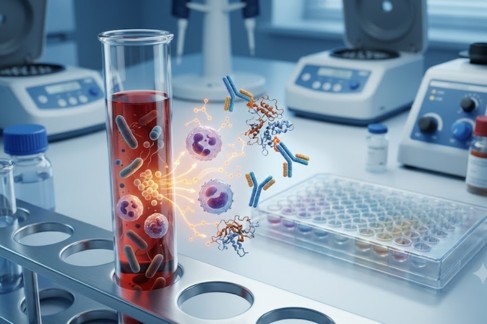
Our body’s immune system responds to an infection by attacking the invading microorganisms. However, when the body’s immune and inflammatory responses become uncontrolled and cause damage to its own tissues and organs, it leads to a life-threatening disease known as sepsis.
Instead of remaining localized to the site of infection, widespread inflammation can affect blood vessels, blood flow, and multiple organs. It can develop from bacterial, viral, fungal, or other infections. It may progress rapidly if not recognized and treated promptly.
Sepsis often begins with an infection such as:
-
Pneumonia or another lung infection
-
Urinary tract or kidney infection
-
Abdominal infection
-
Skin or soft-tissue infection
-
Bloodstream infection
As the infection triggers a strong systemic response, inflammatory molecules are released into the circulation. This can cause blood vessels to become leaky and dilated, disrupt normal blood flow, and reduce the delivery of oxygen and nutrients to tissues.
If the process becomes severe, organs such as the lungs, kidneys, liver, heart, and brain may begin to malfunction. Severe sepsis with circulatory and cellular/metabolic abnormalities is commonly associated with septic shock, a form of sepsis with profound circulatory and metabolic dysfunction and a substantially higher risk of death.
That is why early diagnosis and appropriate treatment are crucial. Here is where procalcitonin (PCT) polyclonal antibody comes into play.
What is Procalcitonin (PCT) Polyclonal Antibody?
Polyclonal antibodies (PAbs) are mixtures of antibodies produced by different B-cell clones. Rather than recognizing only one specific epitope, they can bind to multiple epitopes on the same target antigen.
A PCT polyclonal antibody is generated to recognize procalcitonin. This broad epitope recognition can be useful in laboratory assays because different antibody populations may bind different regions of the PCT molecule.
Researchers use PCT polyclonal antibodies as capture or detection reagents depending on the assay design. They can recognize multiple epitopes and contribute to signal generation and target detection in appropriately validated immunoassays.
What is PCT?
PCT is a 116-amino-acid precursor of calcitonin that can rise substantially during systemic bacterial infections. Under normal physiological conditions, circulating PCT concentrations are very low.
However, inflammatory signaling can stimulate PCT production in tissues throughout the body during systemic bacterial infection. Cytokines and bacterial components such as lipopolysaccharide are among the factors associated with increased PCT expression.
This response makes PCT an ideal biomarker for sepsis research. PCT concentrations can increase relatively early during bacterial infection and may change as the inflammatory process develops or responds to treatment.
Some clinical guidance notes that PCT can become detectable within several hours, reach a peak around 24 hours, and subsequently decline when infection is adequately controlled.
How Do PCT PAbs Help in Sepsis Research?
Support PCT Detection
Researchers use various immunoassays, including ELISA, chemiluminescence, immunofluorescence, immunochromatography, etc., for sepsis research. They use PCT antibodies for the development and optimization of immunoassays.
In a typical sandwich immunoassay, one antibody captures PCT from a biological sample while another antibody recognizes a different region of the molecule. The resulting antibody-antigen complex can then be detected through an enzymatic, fluorescent, or chemiluminescent signal.
So, PCT polyclonal antibodies can serve as valuable reagents during assay development, optimization, and research into improved PCT detection technologies.
Investigate Biomarker Levels
Researchers use antibody-based PCT assays to investigate how PCT concentrations change across different experimental conditions. For example, they compare PCT levels between healthy controls and subjects experiencing systemic bacterial inflammation.
Longitudinal measurements can also help researchers examine whether PCT concentrations increase, remain elevated, or decline over time. This type of analysis helps researchers investigate relationships between biomarker kinetics, disease progression, antimicrobial treatment, and recovery.
Research has reported associations between elevated baseline PCT or poor PCT clearance and more severe outcomes in patients with sepsis. However, PCT interpretation can be influenced by the clinical context and other factors. So researchers must carefully design experiments and interpret findings alongside additional parameters.
Explore Antimicrobial Treatment Response
Researchers rely on biomarkers to monitor treatment response. Since PCT levels decline as bacterial inflammation improves, researchers investigate PCT kinetics before and after antimicrobial intervention.
This has contributed to interest in PCT-guided antimicrobial stewardship. Clinical guidelines have suggested that PCT, when combined with clinical assessment, can support decisions about discontinuing antimicrobial therapy in selected patients when the appropriate duration of treatment is uncertain.
For laboratory researchers, PCT antibodies make it possible to develop assays that help measure these changes and study the relationship between PCT concentrations and therapeutic outcomes.
Support Comparative Biomarker Research
Sepsis involves numerous biological pathways, including inflammatory, immune, metabolic, and coagulation responses. Consequently, researchers rarely study PCT in isolation.
PCT antibody-based assays can be incorporated into broader biomarker studies comparing PCT with markers such as C-reactive protein, cytokines, or other sepsis-associated proteins. This helps researchers determine whether combinations of biomarkers provide more useful information than individual measurements.
This approach is particularly relevant because PCT has limitations in specificity. Noninfectious conditions can also produce elevated PCT concentrations, and assay results can be affected by patient characteristics and clinical circumstances.
The Bottom Line
Procalcitonin is an important biomarker in sepsis research because its concentrations can change substantially during systemic bacterial infection and may provide information about infection severity and treatment response. PCT polyclonal antibodies support this research by enabling specific detection of procalcitonin in immunoassays and experimental biomarker studies.
However, choosing high-quality PCT PAbs is crucial. Otherwise, you may have to compromise on your results.
About the Author
 Sanyukta Deb
— Sanyukta Deb is Digital Marketing Team Lead at Next Move Strategy Consulting, where she has led content strategy and technical SEO for the firm's B2B market research publications for over 2 years. Her editorial process translates NextMSC's primary and secondary research — spanning technology, industrial, and consumer sectors — into commercial narratives, backed by search-intent, keyword, and competitive analysis. She brings 5 years of overall experience in digital marketing and content strategy.
Sanyukta Deb
— Sanyukta Deb is Digital Marketing Team Lead at Next Move Strategy Consulting, where she has led content strategy and technical SEO for the firm's B2B market research publications for over 2 years. Her editorial process translates NextMSC's primary and secondary research — spanning technology, industrial, and consumer sectors — into commercial narratives, backed by search-intent, keyword, and competitive analysis. She brings 5 years of overall experience in digital marketing and content strategy.
About the Reviewer
 Debashree Dey
— Debashree Dey is Assistant Manager at Next Move Strategy Consulting, where she supports cross-vertical market content and communications across diverse industries for 6 years. Her professional background includes senior content writing, communications, and published manuscript authorship, with experience developing audience-focused business narratives and maintaining clear, consistent messaging. Her role supports research-led content development and editorial quality across NextMSC publications.
Debashree Dey
— Debashree Dey is Assistant Manager at Next Move Strategy Consulting, where she supports cross-vertical market content and communications across diverse industries for 6 years. Her professional background includes senior content writing, communications, and published manuscript authorship, with experience developing audience-focused business narratives and maintaining clear, consistent messaging. Her role supports research-led content development and editorial quality across NextMSC publications.


















Add Comment