How to Standardize Dangerous Goods Shipping Across Multiple Carriers and Locations
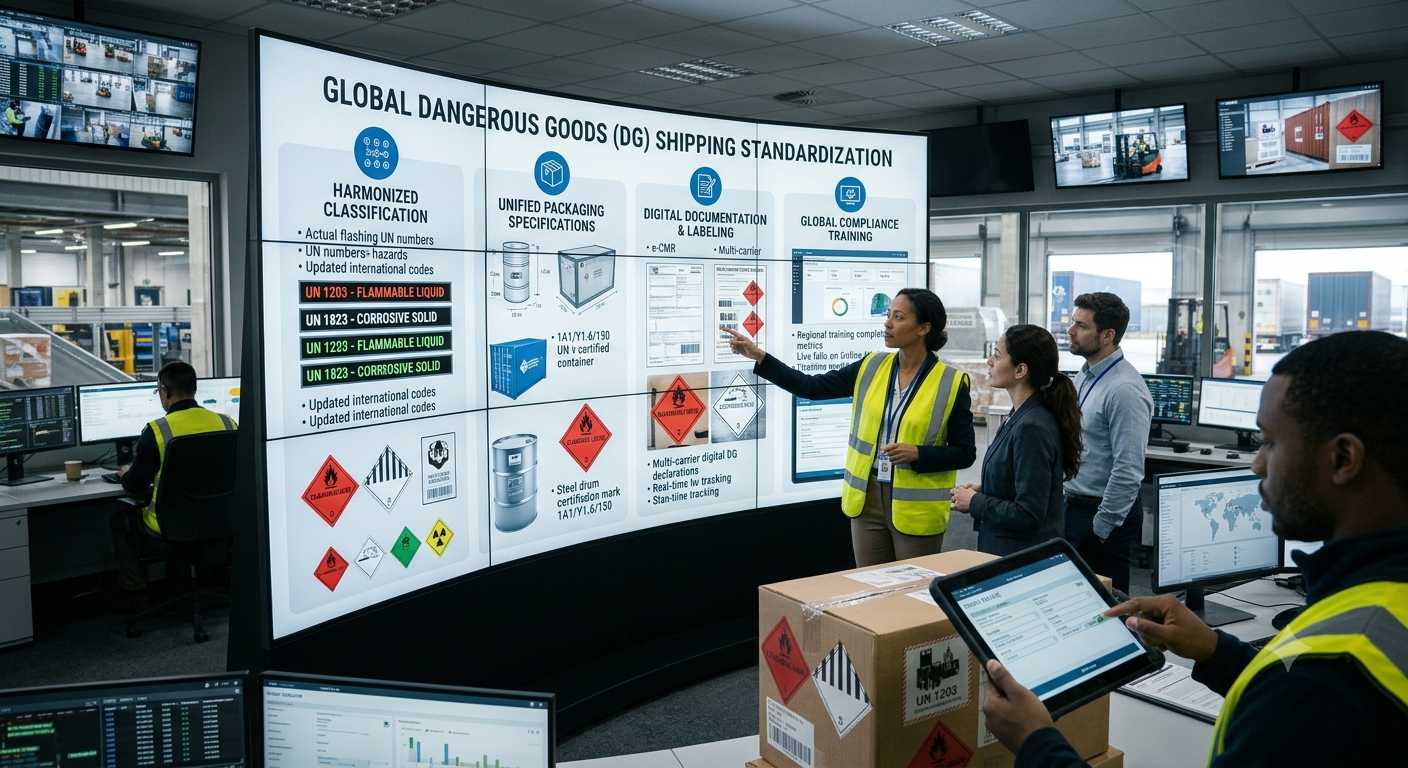
If you have ever watched two warehouses ship the same lithium battery pack in two different ways, you already know the problem. Same company, same rules on paper, and yet very different results. Errors rarely happen because people do not care. They happen because every site, carrier, and team builds its own habits over time. This guide walks through practical ways to bring those habits together, and shows where dangerous goods shipping software fits into the picture.
Why Dangerous Goods Shipping Becomes Complex at Scale
Sending one hazardous materials shipping order correctly is manageable. Doing it hundreds of times a week across several sites is a different story. Every carrier, lane, and new team member adds another layer of risk.
Different Carrier Requirements and Service Restrictions
Carriers do not all accept the same materials. One may take a flammable liquid by ground but refuse it by air, while another caps quantities per package. Some express services exclude regulated freight altogether. Without a clear reference, hazmat shippers end up guessing, and guessing gets expensive fast.
Multiple Shipping Locations and Teams
A plant in one country and a distribution center in another rarely share the same routines. One team may use a spreadsheet, another an old system, and a third a trusted colleague's memory. When that colleague leaves, the knowledge leaves too.
Changing Regulations Across Regions
Rules from IATA, the IMDG Code, ADR, and the US Department of Transportation are updated on set cycles and do not always match. A package that is fine domestically may need different marks or limits once it crosses a border. Strong dangerous goods compliance depends on keeping up with these changes.
Manual Documentation and Data Entry
Retyping UN numbers, proper shipping names, and packing groups is where small mistakes creep in. One wrong digit can mean a rejected pickup, a fine, or a safety incident. Manual dangerous goods documentation also makes it hard to prove what was done and when, and that weakens compliance.
What Standardized Dangerous Goods Shipping Looks Like
Standardization does not mean forcing every site into a rigid box. It means everyone follows the same core rules, uses the same data, and produces the same quality of work.
Consistent Shipping Rules Across Locations
Every facility applies the same decision logic. If a material needs a certain package type or is barred from a certain service, that rule holds in Texas, Rotterdam, and Singapore alike. Where local law requires differences, they are documented rather than improvised.
Centralized Dangerous Goods Data
Classifications, UN numbers, packing instructions, and emergency contacts live in one trusted place. Teams pull from that source instead of recreating it each time.
Standardized Documentation and Labeling
Declarations, shipping documentation, and labels follow one format and one review path. Any handler in any city sees the same clear information.
Unified Carrier Selection and Booking Processes
Booking follows the same steps everywhere, with approved carriers and services defined by material type. A structured approach to multi-carrier shipping keeps options open while controls stay firm.
How Dangerous Goods Shipping Software Helps Standardize Operations
Policies on paper only go so far. Software puts them into daily practice. Tools such as hazmat shipping software and shipping compliance software move rules out of binders and into the workflow, so the right choice becomes the easy choice.
Centralizing Dangerous Goods Shipping Data
A single database holds material details and handling requirements. When something changes, you update it once and every site benefits. That ends the version confusion between locations.
Automating Documentation and Compliance Checks
The software can fill in forms from stored data and flag conflicts before a label is printed. Hazmat compliance checks then run at booking, which is when fixing a problem costs the least.
Applying Consistent Shipping Rules Across Locations
Compliance rules are set centrally and applied automatically. A user at a small satellite office gets the same guardrails as a specialist at headquarters.
Supporting Multi-Carrier Shipping Workflows
Teams can compare and book with several carriers in one place while the software screens each option against the material's restrictions. Nobody has to memorize every carrier rulebook.
Improving Shipment Visibility
Once a package is booked, teams need to know where it is. Better shipment visibility across carriers lets you respond quickly when a load is delayed or held.
Key Capabilities Needed for Multi-Location Dangerous Goods Shipping
Not every tool is built for this work. When you compare options, look for the following.
Carrier and Service Validation
The software should confirm that a chosen carrier and service can legally move the material and quantity in question.
Automated Documentation
Look for declarations and shipping documentation generated from central data, with a clear audit trail attached to each one.
Labeling and Shipping Instructions
The right labels, marks, and packing guidance should be produced for every parcel, so packers are not left to interpret dense regulatory text.
Real-Time Shipment Tracking
Tracking should cover every carrier you use and appear in one view, not five separate portals.
Exception Alerts and Reporting
Alerts for delays, rejections, or missing information help teams act early. Reports show patterns by site, carrier, or material, which helps you improve dangerous goods logistics over time.
How Standardization Reduces Compliance and Operational Risk
Fewer Documentation Errors
When data is entered once and reused, typing mistakes drop sharply. Cleaner documentation means fewer rejected shipments and fewer awkward calls with carriers.
Better Control Across Facilities
Leaders can see how each site handles hazmat and regulated freight and spot gaps before they turn into incidents. Training also gets easier, because everyone learns one process.
Faster Resolution of Shipping Exceptions
With shared records and alerts, the team knows who owns a problem and what to do next. Hours saved on a held package can matter a great deal.
Improved Audit Readiness
Auditors ask for compliance proof. A centralized record of classifications, documents, and decisions lets you answer in minutes rather than days.
How to Standardize Dangerous Goods Shipping Across an Enterprise
You do not need to fix everything at once. A steady, staged approach works best.
Define Common Shipping Policies and Procedures
Start by writing down who classifies materials, who approves shipments, and who handles exceptions. Keep it short enough that people will actually read it.
Centralize Dangerous Goods Information
Gather product data from every site, clean it, and store it in a single controlled source with clear ownership.
Standardize Carrier Selection and Booking
Choose approved carriers and services for each material class, and make booking follow one path at every location.
Automate Compliance-Related Workflows
Move repeat checks and document creation into software, then keep trained people focused on judgment calls. Always confirm requirements against current regulations and, where needed, a qualified dangerous goods safety adviser.
Conclusion
Standardizing this work is less about adding rules and more about making the same good decisions everywhere. Shared policies, central data, consistent paperwork, and clear carrier choices reduce compliance risk and save time. Software makes those habits stick, especially when hazmat teams are spread across regions. Start small, prove the process at one site, and expand from there.
FAQs
What Is Dangerous Goods Shipping Software?
It is software that helps shippers classify materials, check hazmat carrier rules, create documents and labels, and track shipments, all in one place. Its goal is to reduce manual work and support accurate, compliant shipping.
How Can Companies Standardize Dangerous Goods Shipping Across Locations?
Set common policies, centralize product and regulatory data, use one booking process, and automate repeat checks. Train every site on the same steps.
How Does Software Help With Multi-Carrier Dangerous Goods Shipping?
It screens each carrier and service against the material and quantity, then shows only valid options. That saves time and prevents costly booking mistakes.
What Features Should Dangerous Goods Shipping Software Include?
Look for carrier validation, automated documents, label generation, tracking across carriers, exception alerts, and reporting for audits.
About the Author
 Sanyukta Deb
— Sanyukta Deb is Digital Marketing Team Lead at Next Move Strategy Consulting, where she has led content strategy and technical SEO for the firm's B2B market research publications for over 2 years. Her editorial process translates NextMSC's primary and secondary research — spanning technology, industrial, and consumer sectors — into commercial narratives, backed by search-intent, keyword, and competitive analysis. She brings 5 years of overall experience in digital marketing and content strategy.
About the Reviewer
 Debashree Dey
— Debashree Dey is Assistant Manager at Next Move Strategy Consulting, where she supports cross-vertical market content and communications across diverse industries for 6 years. Her professional background includes senior content writing, communications, and published manuscript authorship, with experience developing audience-focused business narratives and maintaining clear, consistent messaging. Her role supports research-led content development and editorial quality across NextMSC publications.














Add Comment