Is Food Robotics Revolutionizing the Kitchen and Transforming the Global Food Industry
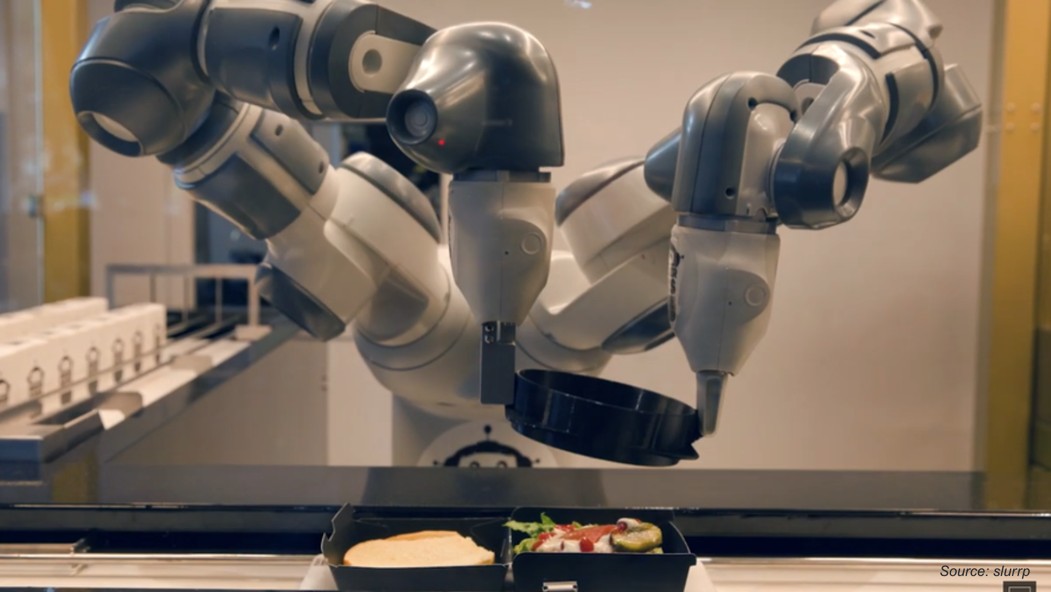
Based on our analysis, the global food robotics market is experiencing rapid growth primarily driven by the increasing demand for automation, operational efficiency, and enhanced hygiene standards in food production. Consequently, advanced robotic systems, including automated cooking, packaging, and delivery solutions, are empowering manufacturers and restaurants to streamline operations, reduce labour costs, and maintain consistent product quality. In addition, the integration of AI, machine learning, and IoT technologies further enhances precision, predictive capabilities, and real-time monitoring, thereby reinforcing the sector’s strong commitment to innovation and operational excellence.
According to Next Move Strategy Consulting, the global Food Robotics Market was valued at USD 3.64 billion in 2025 and is projected to reach USD 4.74 billion in 2026, with forecasts estimating it will grow to USD 17.85 billion by 2035, representing a compound annual growth rate CAGR of 15.89% from 2026 to 2035.
Want Insights on the Food Robotics Market? Access a FREE Sample Instantly
The food robotics market is gaining strong momentum as rising consumer expectations for faster service, enhanced food safety, hygiene transparency, and personalised dining experiences reshape operational priorities across food production and retail environments. In response, the transition toward sustainable, contactless, AI-enabled, and adaptive automation solutions is accelerating adoption globally, positioning food robotics as a foundational enabler of efficiency optimisation, contamination risk reduction, labour resilience, and long-term profitability within the modern food ecosystem.
Will Smart Kitchen Robotics Transform How Restaurants Serve Food?
Based on our assessment, advancements in smart kitchen robotics are revolutionising the food service industry by enabling restaurants and commercial kitchens to automate cooking, assembly, and delivery processes. We observed that these systems feature intuitive interfaces, AI-driven recipe execution, and real-time monitoring, allowing operators to maintain high consistency, efficiency, and hygiene standards. Our analysis indicates that these technological innovations not only streamline kitchen operations but also enhance customer experience by ensuring faster service and consistent food quality.
For example, Miso Robotics, a leading innovator in autonomous cooking solutions, has deployed its Flippy robot in multiple fast-food chains to assist with grilling and frying operations. We observed that the robot monitors cooking times and temperatures with precision, reducing human error and operational bottlenecks. Based on our evaluation, such robotics solutions complement human staff, improve operational efficiency, and enable restaurants to meet growing consumer demand for faster, safer, and higher-quality dining experiences, ultimately redefining how food is prepared and served in modern kitchens.
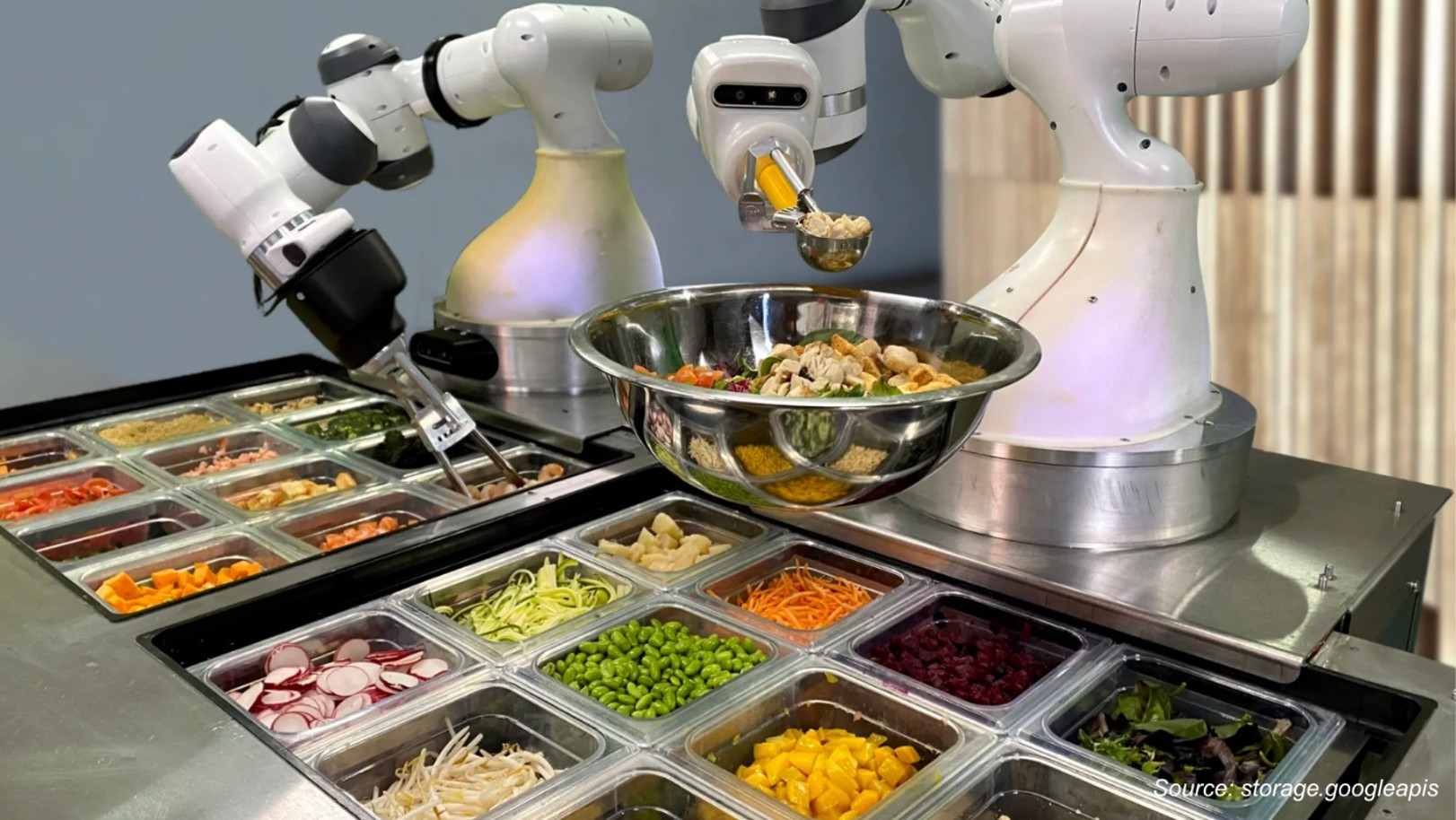
AI-Powered Food Robotics Transforms Kitchen Efficiency and Enhances Customer Experience
Based on our assessment, the integration of artificial intelligence (AI) and robotics in commercial kitchens is reshaping food preparation and service. We observed that AI-powered robotic systems enhance precision, speed, and consistency by automating tasks such as cooking, plating, and packaging, thereby allowing kitchen staff to focus on creative and customer-facing activities. Our analysis indicates that these advanced solutions not only streamline operations but also improve hygiene standards and reduce human error, delivering a higher-quality dining experience while lowering operational costs.
Furthermore, we also observed that predictive analytics and real-time monitoring capabilities are revolutionising operational decision-making. By analysing order trends, inventory levels, and cooking performance, these platforms enable restaurants to optimise workflows, anticipate demand, and minimise food waste. Based on our evaluation, as AI and robotics continue to evolve and integrate more deeply into kitchens, we anticipate further advancements that will enhance efficiency, consistency, and customer satisfaction, ultimately transforming the modern food service landscape.
Smart Robots as the Secret Ingredient to a Perfect Dining Experience
Based on our assessment, smart food robots are revolutionising how meals are prepared, served, and personalised in restaurants and commercial kitchens. We observed that these AI-powered systems automate complex tasks from cooking and plating to customising orders based on dietary preferences, thereby enhancing operational efficiency while minimising errors. Our analysis indicates that by leveraging robotics alongside real-time data, kitchens maintain consistent food quality, accelerate service, and provide a level of personalisation previously unattainable in high-volume environments.
Furthermore, we observed that these innovations are advancing sustainability and reducing food waste. By analysing consumption trends and ingredient usage, AI-powered robots enable precise inventory management and minimise spoilage. Based on our evaluation, as AI and robotics continue to evolve, we anticipate that these technologies will not only transform kitchen workflows but also deliver faster, safer, and more personalised dining experiences, positioning food robotics as a critical driver of the modern culinary ecosystem.
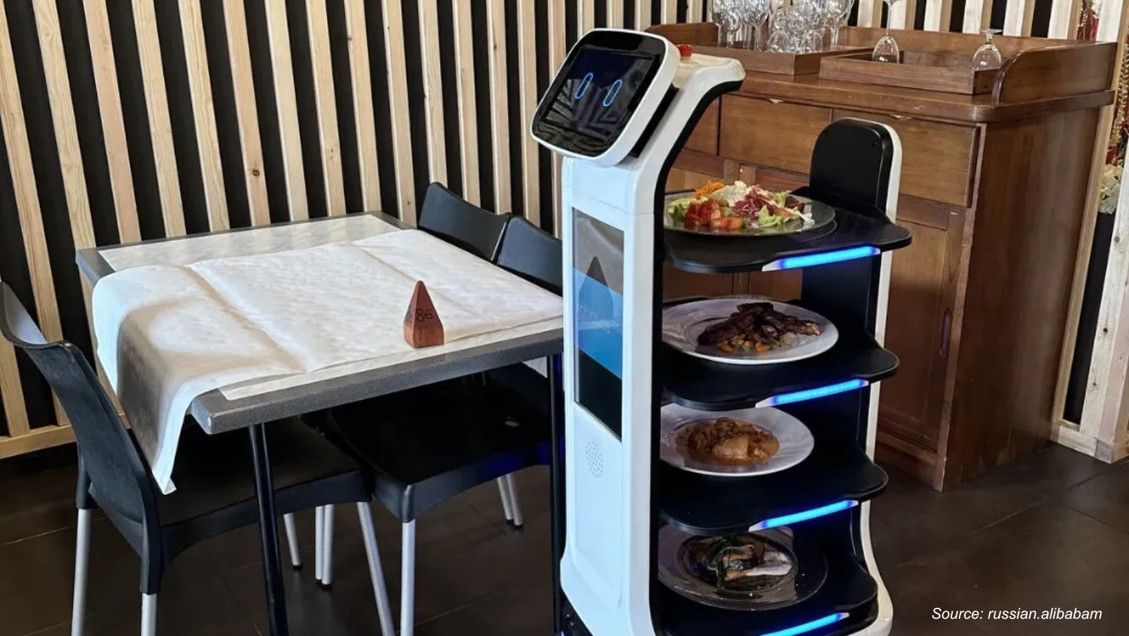
How AI and Robotics Are Shaping the Future of Sustainable and Contactless Food Service?
Based on our assessment, AI and robotics are fundamentally transforming the food service industry by enabling more sustainable and contactless operations. We observed that intelligent robotic systems automate cooking, assembly, and delivery processes with high precision, thereby reducing human contact and consistently ensuring hygiene compliance. Our analysis indicates that these technologies not only enhance operational efficiency but also improve consistency, speed, and customer satisfaction, addressing the growing demand for safe and reliable food experiences.
Furthermore, we observed that AI-driven analytics empower kitchens to optimise resource usage, manage inventory more effectively, and minimise food waste, thereby promoting sustainability across operations. By dynamically analysing consumption patterns and adjusting workflows in real time, robotic systems support more responsible and eco-friendly practices. Based on our evaluation, as AI and robotics continue to advance, they are set to reshape modern food service, delivering faster, safer, and more sustainable dining experiences while redefining efficiency and personalisation in the industry.
Conclusion
Based on our assessment, we observed that recent advancements in AI and robotics are driving a transformative shift in the food service industry, as innovations not only enhance operational efficiency but also improve customer experience and promote sustainability. We also found that the integration of intelligent robotics, data-driven analytics, and automation in kitchens is redefining traditional workflows, enabling faster service, consistent quality, and safer contactless operations. Our analysis indicates that these developments support optimised resource management, reduced food waste, and greater personalisation in meal preparation, reflecting the growing expectations of modern consumers. As AI and robotics continue to evolve and scale across the sector, the food service landscape is moving toward a more efficient, sustainable, and customer-centric future, demonstrating the combined impact of technological innovation and operational excellence.
About the Author
 Sikha Haritwal
— Sikha Haritwal is an assistant manager with strong expertise in market research, data analysis, and cross-functional coordination. She plays a key role in leading complex research initiatives, strengthening analytical rigor, and enabling data-driven decision-making across teams. Known for her leadership mindset and structured problem-solving approach, she supports process improvement, enhances operational efficiency, and contributes to building scalable frameworks that drive long-term strategic outcomes and organizational effectiveness.
Sikha Haritwal
— Sikha Haritwal is an assistant manager with strong expertise in market research, data analysis, and cross-functional coordination. She plays a key role in leading complex research initiatives, strengthening analytical rigor, and enabling data-driven decision-making across teams. Known for her leadership mindset and structured problem-solving approach, she supports process improvement, enhances operational efficiency, and contributes to building scalable frameworks that drive long-term strategic outcomes and organizational effectiveness.
About the Reviewer
 Supradip Baul
— Supradip Baul is an accomplished business consultant and strategist with over a decade of rich experience in market intelligence, strategy, technology, and business transformation. His work has included rigorous qualitative and quantitative analysis across multiple industries, helping clients shape investment decisions and long-term roadmaps. Earlier in his career, he was associated with Gartner, where he contributed to industry-leading reports and market share analyses. He has worked with leading global companies and holds an MBA with a dual specialization in Marketing and Finance.
Supradip Baul
— Supradip Baul is an accomplished business consultant and strategist with over a decade of rich experience in market intelligence, strategy, technology, and business transformation. His work has included rigorous qualitative and quantitative analysis across multiple industries, helping clients shape investment decisions and long-term roadmaps. Earlier in his career, he was associated with Gartner, where he contributed to industry-leading reports and market share analyses. He has worked with leading global companies and holds an MBA with a dual specialization in Marketing and Finance.

















Add Comment