Is Industrial Automation Redefining the Future of Manufacturing?
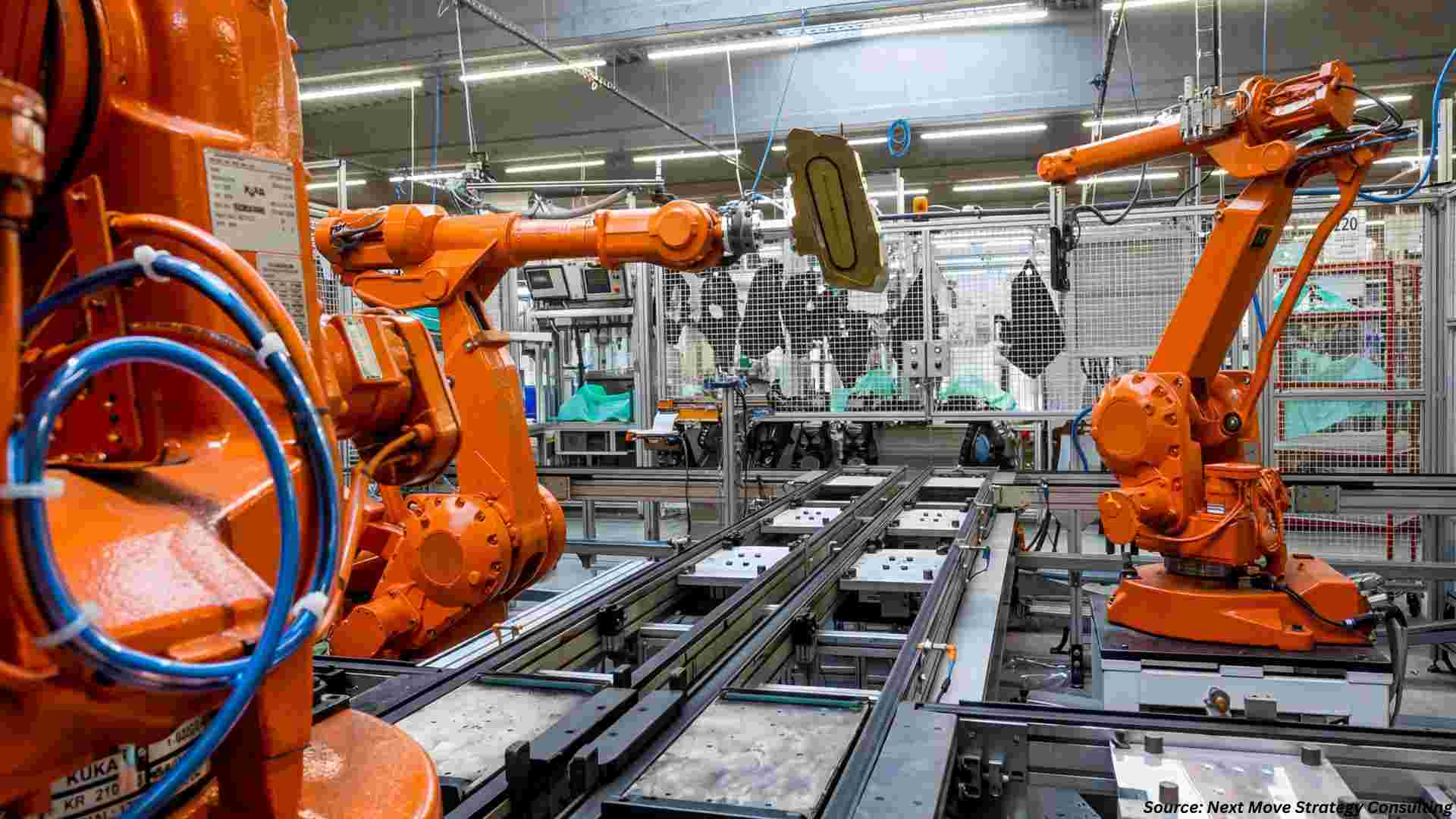
Industrial Automation Market is no longer a distant ambition. It is rapidly becoming the foundation of how modern manufacturing operates, competes, and evolves. As industries move toward 2030, automation is transitioning from isolated applications to fully integrated systems that influence everything from product design to service delivery.
This transformation reflects more than efficiency gains. It signals a structural shift in how manufacturers create, deliver, and sustain value in a highly competitive global landscape.
What Is Driving the Surge in Industrial Automation?
The growth of industrial automation is closely tied to the convergence of artificial intelligence, advanced technologies, and data-driven decision-making. Manufacturers are increasingly embedding automation across their operations rather than limiting it to specific production lines.
By the end of the decade, the proportion of manufacturers with highly automated processes is expected to increase significantly, rising from 18% to 50%. This shift highlights a broader change in capital allocation and operational strategies.
How Is Artificial Intelligence Enhancing Industrial Automation?
Artificial intelligence is playing a critical role in redefining industrial automation. It is not only improving operational efficiency but also enabling growth through innovation and smarter decision-making.
Nearly half of industry leaders expect artificial intelligence to drive both growth and productivity, making it one of the most impactful technologies in manufacturing. Robotics, on the other hand, is still largely viewed as a tool for improving efficiency rather than generating new revenue streams.
Artificial intelligence enables predictive maintenance, optimizes production planning, and supports real-time decision-making. It also enhances product development by enabling manufacturers to analyze large volumes of data quickly and accurately.

Why Are Some Manufacturers Advancing Faster Than Others?
A clear divide is emerging between manufacturers that are rapidly adopting automation and those that are progressing more slowly. A group often referred to as “future-fit” manufacturers is leading the way with significantly higher levels of automation and innovation.
These organizations already demonstrate stronger adoption rates and are expected to widen the gap further by 2030. Their advantage is not limited to technology. It is deeply rooted in organizational culture, leadership, and strategic alignment.
Companies that empower employees to act on new ideas, encourage calculated risk-taking, and rely heavily on data-driven decision-making are better positioned to succeed. These cultural attributes allow them to scale automation more effectively and adapt to changing market conditions.

How Is Industrial Automation Expanding Beyond the Factory Floor?
Industrial automation is no longer confined to manufacturing operations. It is increasingly influencing how companies generate revenue and deliver value to customers.
By 2030, a significant portion of manufacturing revenue is expected to come from activities outside traditional product manufacturing. These include connected solutions, service-based offerings, and data-driven innovations.
Manufacturers are evolving into solution providers by combining physical products with software, analytics, and ongoing services. This shift allows them to create recurring revenue streams and build stronger customer relationships.
What Role Do Innovation Centers Play in Automation Adoption?
Innovation centers are becoming essential in accelerating the adoption of industrial automation. These facilities provide a collaborative environment where manufacturers can explore, test, and implement new technologies.
A recent example is the Automation Center Stuttgart, launched in 2025 as a state-of-the-art facility designed to represent the future of manufacturing. It enables companies to experiment with automation technologies and develop tailored solutions for real-world challenges.
Such centers also emphasize sustainability by incorporating recyclable materials and promoting environmentally responsible practices. Their global presence allows manufacturers to address regional needs while leveraging advanced technologies.
Key Drivers Powering Industrial Automation Transformation
This pie chart represents how different factors contribute to the overall impact of industrial automation. Artificial intelligence holds the largest share because it drives both growth and efficiency. Robotics follows closely as a key enabler of productivity improvements. Digital transformation plays a strong supporting role by integrating systems and enabling data-driven decisions. Service innovation reflects the shift toward new revenue models, while workforce and culture, though smaller in percentage, remain critical for long-term success.

Leading Companies Driving Industrial Automation Growth
The industrial automation sector features a strong presence of global players such as Siemens AG, Honeywell International Inc., Schneider Electric SE, ABB Ltd., Emerson Electric Co., Rockwell Automation Inc., Mitsubishi Electric Corporation, FANUC Corporation, Keyence Corporation, Omron Corporation, Yokogawa Electric Corporation, KUKA AG, Bosch Rexroth, Phoenix Contact GmbH & Co. KG, and Delta Electronics, Inc.
These companies are actively strengthening their market position through strategic initiatives, including new product developments and collaborative partnerships, enabling them to sustain competitiveness and expand their global footprint in industrial automation.

Major Trends Shaping the Present in Industrial Automation?
Industrial automation today is defined by integration, intelligence, and adaptability. The increasing use of artificial intelligence, the expansion of automation across operations, and the evolution of business models are shaping the current landscape.
Manufacturers are no longer treating automation as a standalone initiative. Instead, it is being integrated into broader digital transformation strategies that enhance agility and resilience.
Next Steps: How Should Businesses Respond?
Organizations must take a proactive approach to remain competitive in an increasingly automated environment. Investing in scalable technologies, integrating artificial intelligence into core operations, and fostering a culture of innovation are essential steps.
Equally important is the need to adopt data-driven decision-making and explore new business models that extend beyond traditional manufacturing. Companies that act early and strategically will be better positioned to lead in the evolving industrial landscape.
-
Invest in scalable industrial automation technologies aligned with long-term business strategy
-
Integrate artificial intelligence into core manufacturing and decision-making processes
-
Build a culture that encourages innovation, experimentation, and calculated risk-taking
-
Strengthen data-driven capabilities to improve operational efficiency and agility
-
Explore new revenue streams through service-based and connected solutions
Final Thoughts
Industrial automation is redefining manufacturing at every level. It is no longer just about improving efficiency but about enabling a complete transformation of how businesses operate and grow.
As the industry moves toward 2030, the gap between leaders and others will continue to widen. The defining factor will be the ability to align technology, strategy, and culture into a cohesive system that drives sustained success.
About the Author
 Tania Dey is a content writer specializing in transformation-led, insight-driven storytelling. She develops research-backed, high-impact content aligned with evolving business priorities, digital behavior, and audience expectations. Her work helps organizations sharpen value propositions, strengthen visibility, and communicate strategic intent with clarity and precision. Grounded in data-informed storytelling, she brings a strong focus on relevance, consistency, and measurable digital impact across platforms.
About the Reviewer
 Sanyukta Deb is Digital Marketing Team Lead at Next Move Strategy Consulting, where she has led content strategy and technical SEO for the firm's B2B market research publications for over 2 years. Her editorial process translates NextMSC's primary and secondary research — spanning technology, industrial, and consumer sectors — into commercial narratives, backed by search-intent, keyword, and competitive analysis. She brings 5 years of overall experience in digital marketing and content strategy.
















Add Comment