The Shift Toward Intelligent Warehousing as Automation, Robotics, and E-Commerce Demand Redefine the Warehouse ASRS Market
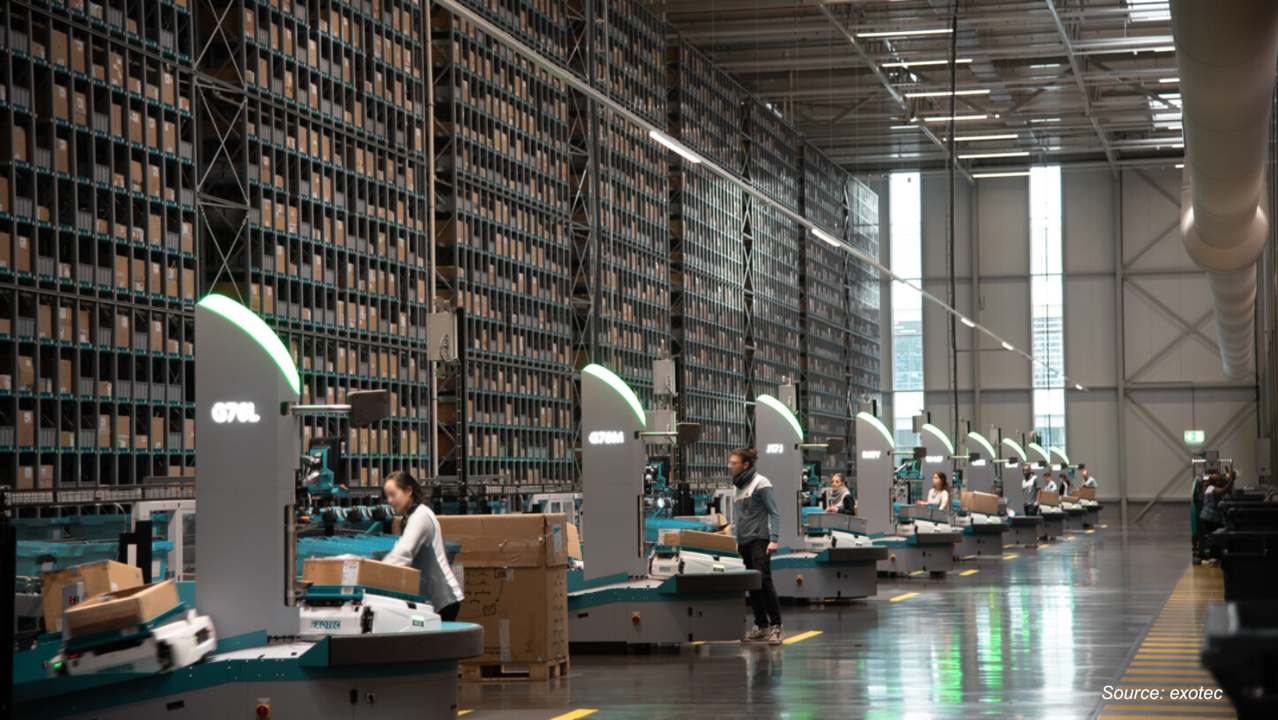
Warehouse storage and retrieval systems (ASRS) are evolving from traditional infrastructure into intelligence-driven, software-integrated fulfillment platforms. In 2026, three forces are simultaneously reshaping the market, that is, advanced robotics and automation systems, integration of warehouse software and real-time analytics, and strong demand driven by e-commerce expansion and labor constraints. As supply chains scale and fulfillment expectations become more complex, manual and semi-automated warehouse models are proving inadequate.
Our analysis indicates that the convergence of these automation and software capabilities allows operators to not only improve throughput and storage efficiency but also enhance accuracy, flexibility, and operational resilience. The broader supply chain landscape reinforces this shift, as global e-commerce growth continues to compress delivery timelines while increasing order volumes and variability. At the same time, persistent labor shortages and rising warehouse operating costs are accelerating the need for automation across logistics networks. As a result, warehouse operators are increasingly prioritizing high-density storage systems, goods-to-person automation, and real-time inventory visibility to optimize performance, reduce dependency on labor, and strengthen end-to-end fulfillment efficiency.
According to NMSC, the Warehouse ASRS Market size was valued at USD 6.87 billion in 2025 and is expected to reach USD 8.56 Billion by 2026. Furthermore, the market is projected to reach USD 22.74 Billion by 2035, growing at a CAGR of 11.46% from 2026 to 2035. Also, the market is valued at 24.31 thousand units in 2025 and is projected to reach 31.20 thousand units in 2026 and the market is also expected to reach 94.06 thousand units in 2035 with a CAGR of 13.04%.
Request for a Sample PDF on the Warehouse ASRS Market Report
How Are Robotics and ASRS Technologies Establishing the Foundation for High-Throughput Warehousing?
Our analysis indicates that advanced ASRS systems and warehouse robotics have become the clearest expression of the market’s shift toward automation-led efficiency. Unlike conventional storage systems, modern ASRS solutions integrate automated shuttles, robotic picking systems, and vertical storage designs to maximize space utilization while significantly improving order processing speed.
This shift is also being reinforced by capacity expansion and infrastructure investments. For instance, Daifuku Co., Ltd. completed a new factory building at its Shiga Works hub in April 2026, increasing cleanroom production capacity by 30% to support growing demand from semiconductor-driven automation systems. This reflects how suppliers are scaling production to meet rising requirements for high-performance automated storage solutions.
We observed that next-generation systems are increasingly designed for modular scalability and high throughput, allowing operators to handle fluctuating order volumes without proportional increases in labor. As a result, ASRS is no longer a niche automation layer but is becoming a foundational component of warehouse design.

How Is Software Integration Transforming Warehouses into Data-Driven Fulfilment Systems?
Software integration is redefining the role of automated storage and retrieval systems (ASRS) in modern warehouses, shifting them from purely mechanical solutions to intelligent, data-driven ecosystems. Notably, recent industry-backed surveys indicate that only 23% of warehouses have fully integrated systems, while 62% remain partially integrated, highlighting a major gap in digital maturity and a strong opportunity for software-led transformation. We observed that as supply chains become more complex and demand patterns more dynamic, organizations are increasingly leveraging software to enhance visibility, coordination, and operational efficiency across warehouse functions.
-
Seamless System Integration: According to Kardex, integration across WMS, ERP, and automation systems is still evolving, only 23% of warehouses report fully integrated systems, meaning most facilities continue to operate in fragmented environments, limiting real-time coordination and efficiency gains.
-
Dynamic Operational Optimization: Software-driven systems allow real-time adjustments in picking strategies and resource allocation; this helps warehouses respond quickly to demand fluctuations and maintain high efficiency.
-
Intelligent Decision-Making: Advanced data analytics empowers operators with actionable insights; this supports proactive planning, optimized workflows, and improved overall performance.
In conclusion, software integration is transforming ASRS into a strategic enabler of smart warehousing. As organizations continue to prioritize digitalization and automation, software-driven capabilities will play a crucial role in enhancing agility, efficiency, and competitiveness in the evolving logistics landscape.

What Role Do Value-Added Capabilities Play in Operational Efficiency?
Through our market assessment, we observed that digital transformation is enabling ASRS solutions to deliver a broader range of value-added capabilities that extend beyond traditional storage and retrieval functions. Modern systems are increasingly equipped with predictive inventory management tools, adaptive slotting mechanisms, and intelligent order fulfillment capabilities that align storage strategies with real-time demand patterns.
This shift is also reflected in recent industry developments. For instance, Exotec was recognized among the World’s Most Innovative Companies in 2026 following the launch of its Next Gen Skypod system and a multi-site automation partnership with Decathlon, aimed at standardizing fulfillment operations across Europe. These highlights how advanced ASRS platforms are increasingly designed to deliver not just automation, but system-level intelligence and operational consistency at scale.
Furthermore, these systems support enhanced order accuracy, reduced picking errors, and faster processing times, thereby improving overall warehouse productivity. In addition, the ability to simulate operations and optimize workflows using data-driven insights allows organizations to proactively address inefficiencies and improve performance. As a result, ASRS is evolving into a strategic asset that not only drives operational efficiency but also enhances customer satisfaction through improved service levels and responsiveness.

Company Developments and Technological Advancements Shaping the Warehouse ASRS Market
Industry leaders in the warehouse automated storage and retrieval systems (ASRS) market are actively advancing their capabilities through continuous innovation in system design, software integration, and automation technologies. Companies are increasingly focusing on enhancing system flexibility, storage density, and throughput performance to meet the evolving requirements of high-volume and complex warehouse operations. In addition, the development of modular ASRS architectures and scalable system configurations is enabling organizations to adapt more efficiently to fluctuating demand patterns and diverse inventory profiles.
-
KNAPP AG has advanced next-generation ASRS solutions focused on flexibility and scalability. In March 2025, the company introduced its AeroBot system at automatica 2025, designed to enhance storage density and enable highly adaptable warehouse configurations.
-
Murata Machinery, Ltd. demonstrated its next-generation automation capabilities at ProMat 2025, highlighting integrated ASRS solutions combined with robotics and real-time data visibility tools, reinforcing the shift toward intelligent and connected warehouse systems.
-
Daifuku Co., Ltd. is strengthening its global production and delivery capabilities alongside technological advancements. In February 2025, the company expanded its manufacturing footprint by establishing a new production facility in India, aimed at increasing ASRS production capacity and reducing regional delivery timelines. This reflects a broader trend of aligning manufacturing expansion with rising demand for automated storage solutions across high-growth regions.
Overall, these developments indicate that the ASRS market is transitioning toward integrated, software-driven, and highly scalable automation ecosystems, where competitive advantage is increasingly defined by system intelligence, flexibility, and the ability to support complex, high-throughput warehouse operations.
How Are Software-Driven Intelligent ASRS Reshaping Modern Warehousing?
Software-driven and intelligent ASRS are reshaping modern warehousing as the market enters a phase of accelerated evolution. Rising supply chain complexity, rapid e-commerce expansion, and persistent labor shortages are compelling organizations to adopt advanced automation solutions. Our analysis suggests that warehouses are increasingly transitioning toward software-centric systems that enable scalability, flexibility, and real-time decision-making. Investments in data analytics, intelligent control systems, and interoperable platforms are becoming central to operations, allowing seamless integration across warehouse ecosystems. At the same time, modular and adaptive architectures are gaining traction, enabling operators to efficiently scale capacity while maintaining high throughput and accuracy under fluctuating demand conditions.
Furthermore, there is a growing emphasis on real-time visibility and intelligent decision-making across fulfillment operations. Organizations are leveraging advanced ASRS technologies to enable dynamic inventory management, optimize workflows, and enhance responsiveness. The need to reduce labor dependency while improving productivity is accelerating the adoption of goods-to-person systems and intelligent automation platforms. In parallel, the market is shifting from hardware-centric deployments to outcome-driven automation models, where speed, accuracy, and cost efficiency define competitive advantage. Overall, ASRS is evolving into a software-enabled, performance-driven ecosystem, with digitally integrated and scalable solutions emerging as key differentiators in the global logistics landscape.
About the Author
 Saista Faiyaz
— Saista Faiyaz is Research Associate at Next Move Strategy Consulting, where she has covered consumer markets and healthcare technologies for 3 years. Her work includes primary interview review, secondary-source validation, market sizing, and structured analysis of company and industry data. She supports research by comparing evidence across sources, organizing findings into market narratives, and documenting assumptions used in analysis. Her scope includes cross-market benchmarking, and reports.
Saista Faiyaz
— Saista Faiyaz is Research Associate at Next Move Strategy Consulting, where she has covered consumer markets and healthcare technologies for 3 years. Her work includes primary interview review, secondary-source validation, market sizing, and structured analysis of company and industry data. She supports research by comparing evidence across sources, organizing findings into market narratives, and documenting assumptions used in analysis. Her scope includes cross-market benchmarking, and reports.
About the Reviewer
 Supradip Baul
— Supradip Baul is an accomplished business consultant and strategist with over a decade of rich experience in market intelligence, strategy, technology, and business transformation. His work has included rigorous qualitative and quantitative analysis across multiple industries, helping clients shape investment decisions and long-term roadmaps. Earlier in his career, he was associated with Gartner, where he contributed to industry-leading reports and market share analyses. He has worked with leading global companies and holds an MBA with a dual specialization in Marketing and Finance.
Supradip Baul
— Supradip Baul is an accomplished business consultant and strategist with over a decade of rich experience in market intelligence, strategy, technology, and business transformation. His work has included rigorous qualitative and quantitative analysis across multiple industries, helping clients shape investment decisions and long-term roadmaps. Earlier in his career, he was associated with Gartner, where he contributed to industry-leading reports and market share analyses. He has worked with leading global companies and holds an MBA with a dual specialization in Marketing and Finance.
















Add Comment