Top Companies Driving Innovation and Transforming the Global Warehouse Asrs Market
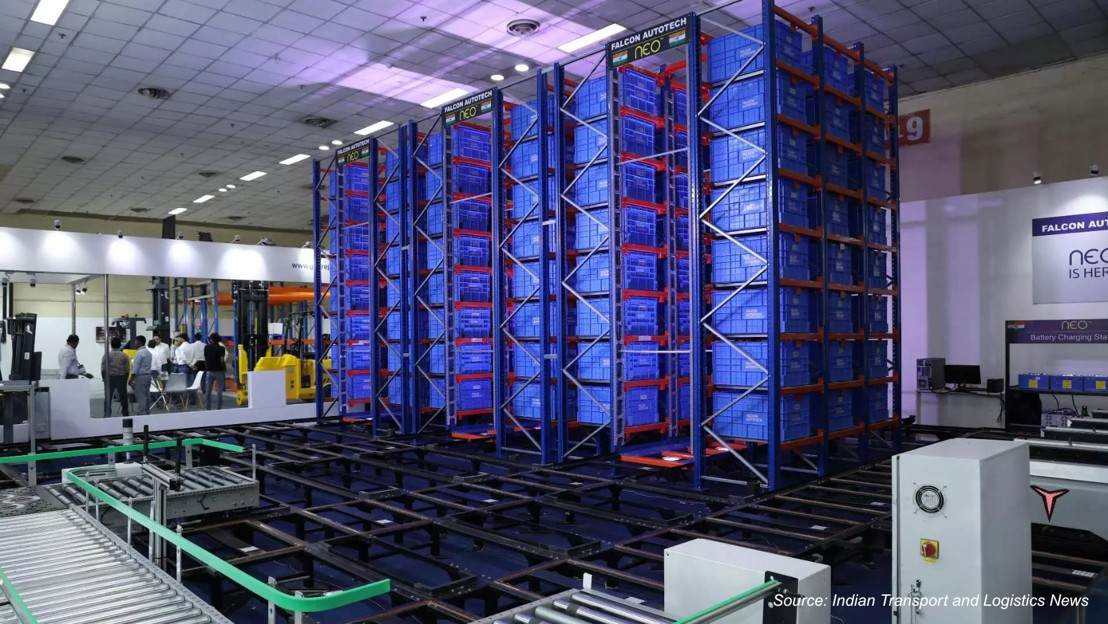
As per NMSC analysis, we noticed the Warehouse ASRS Market size was valued at USD 6.87 billion in 2025 and is expected to reach USD 8.56 Billion by 2026. Furthermore, the market is projected to reach USD 22.74 Billion by 2035, growing at a CAGR of 11.46% from 2026 to 2035. Also, the market is valued at 24.31 thousand units in 2025 and is projected to reach 31.20 thousand units in 2026 and the market is also expected to reach 94.06 thousand units in 2035 with a CAGR of 13.04%.
Based on our market analysis, we observed that the global warehouse automated storage and retrieval systems (ASRS) market is undergoing significant transformation, driven by the rapid adoption of intelligent automation, advanced robotics, and data-driven warehouse management technologies. As supply chains become increasingly complex and e-commerce demand accelerates, organizations are prioritizing high-density storage, operational efficiency, and real-time inventory visibility. In this context, ASRS solutions are evolving from conventional storage infrastructure into highly integrated, software-enabled systems that combine robotics, AI-powered optimization, and cloud-based control platforms. Consequently, these advancements are enabling faster order fulfilment, reduced labour dependency, and improved accuracy, thereby positioning ASRS as a critical backbone of modern intralogistics ecosystems.
Warehouse ASRS Market Overview
The warehouse ASRS market is expanding steadily as industries such as e-commerce, retail, automotive, and food & beverage increasingly adopt automated warehousing solutions to address space constraints and rising throughput requirements. Through our evaluation, we identified that these systems function as core components within warehouse automation, facilitating efficient storage, retrieval, and inventory management while minimizing human intervention. Moreover, growth is being reinforced by the need for cost optimization, persistent labor shortages, and the increasing emphasis on supply chain resilience. In addition, companies are actively investing in scalable and modular ASRS architectures to accommodate fluctuating demand patterns, thereby ensuring long-term operational flexibility and efficiency across distribution networks.
Technological innovation continues to redefine the operational capabilities of ASRS deployments. Based on our assessment, we observed leading providers are integrating AI-driven algorithms, predictive analytics, and advanced warehouse control systems to optimize storage allocation and retrieval sequencing. Furthermore, the incorporation of IoT-enabled sensors and real-time data analytics enhances system visibility, enabling predictive maintenance and reducing downtime. At the same time, cloud-based platforms are facilitating seamless integration with warehouse management systems (WMS) and enterprise resource planning (ERP) solutions, thereby improving decision-making and operational synchronization. In parallel, the emergence of shuttle-based systems, cube-based storage models, and robotic picking technologies is accelerating the transition toward flexible and high-performance automated warehouses.
Leading companies such as Murata Machinery, Ltd., KNAPP AG, Toyota Material Handling, Daifuku Co., Ltd., and Dematic are playing a pivotal role in transforming the warehouse ASRS market through continuous innovation and system-level integration capabilities. Our analysis indicates that these companies are increasingly focusing on advanced ASRS technologies, including shuttle systems, mini-load solutions, and high-bay automated warehouses, to address diverse industry requirements. Additionally, they are investing in AI-enabled warehouse control software, digital twins, and real-time analytics to enhance system performance, scalability, and reliability. Furthermore, their strategic initiatives include expanding global service networks, strengthening customization capabilities, and delivering end-to-end intralogistics solutions. As a result, their emphasis on automation, data integration, and customer-centric system design is not only improving warehouse efficiency but also reshaping the competitive landscape, positioning them as key enablers of next-generation, intelligent supply chain ecosystems.

Request for a Sample PDF on the Warehouse ASRS Market Report
Highlights of Murata Machinery, Ltd.
Based on our analysis, we identified that Murata Machinery, Ltd., headquartered in Kyoto, Japan, has established itself as a highly specialized provider of Automated Storage and Retrieval Systems (ASRS), particularly within manufacturing-intensive and high-throughput warehouse environments. The company’s expertise lies in shuttle-based ASRS, unit-load systems, and integrated warehouse control technologies, enabling synchronized material flow between production lines and storage systems. This positioning allows Murata to address critical operational requirements such as precision handling, high-density storage, and system reliability across industries including automotive and electronics.
In March 2025, Murata Machinery demonstrated its next-generation automation capabilities at ProMat, highlighting integrated ASRS solutions combined with robotics and real-time data visibility tools. From our evaluation, this development reflects a broader shift in the warehouse ASRS market toward tightly integrated, production-linked automation ecosystems rather than standalone storage systems. Furthermore, by advancing interoperability and intelligent control systems, Murata strengthens its ability to deliver high-performance, synchronized warehouse environments, thereby reinforcing its competitive position in manufacturing-centric ASRS deployments.
Highlights of KNAPP AG
Through our market assessments, we observed that KNAPP AG, headquartered in Graz, Austria, is positioning itself as a technology-driven intralogistics provider with strong capabilities in shuttle-based ASRS, goods-to-person systems, and software-centric warehouse solutions. The company’s integrated approach combining robotics, storage systems, and proprietary software such as KiSoft enables high-throughput order fulfillment and scalable automation across industries including e-commerce, healthcare, and retail.
In March 2025, KNAPP introduced its AeroBot system at automatica 2025, a next-generation ASRS solution designed to enhance storage density, flexibility, and system scalability. Based on our assessment, this innovation reflects the increasing demand for modular and software-driven ASRS architectures capable of adapting to fluctuating order volumes and warehouse configurations. Moreover, by strengthening its software-hardware integration capabilities, KNAPP enhances its ability to deliver flexible, intelligent automation systems, thereby improving its competitive positioning within dynamic fulfilment environments.
Highlights of Toyota Material Handling

Our assessment indicates that Toyota Material Handling, headquartered in Japan and operating under Toyota Industries Corporation, plays a strategic role in the warehouse automated storage and retrieval systems (ASRS) market as an integrated intralogistics solutions provider rather than a pure-play ASRS manufacturer. The company offers a comprehensive portfolio that includes forklifts, automated guided vehicles (AGVs), and warehouse automation solutions, which collectively support the deployment and operation of ASRS within complex warehouse environments. Its strength lies in enabling seamless coordination between storage systems, material flow equipment, and fleet operations.
Furthermore, Toyota Material Handling’s value proposition is centered on system integration, operational reliability, and end-to-end warehouse optimization. Through our evaluation, we found that the company is particularly relevant in large-scale distribution centers where ASRS systems must operate in conjunction with multiple automation technologies. In this context, Toyota enhances warehouse efficiency by ensuring interoperability across equipment layers, thereby reducing operational bottlenecks and improving throughput. Moreover, the increasing convergence of ASRS with broader warehouse automation ecosystems reinforces Toyota’s strategic positioning in the market. As warehouses evolve toward fully integrated and intelligent environments, the ability to synchronize ASRS with transport systems and control platforms becomes critical. Consequently, Toyota Material Handling strengthens its role as a key enabler of holistic warehouse automation, supporting scalable and resilient supply chain operations.
Highlights of Dematic

Based on our market analysis, we observed that Dematic, headquartered in Atlanta, United States, is a leading provider of integrated warehouse automation solutions with strong capabilities in Automated Storage and Retrieval Systems (ASRS), including unit-load systems, shuttle-based architectures, and automated case-handling solutions. As part of KION Group, the company combines advanced material handling equipment with intelligent software platforms such as warehouse execution systems, enabling high-performance and scalable warehouse operations across industries including retail, e-commerce, and third-party logistics.
Through our assessment, we identified that Dematic’s core strength lies in its ability to deliver end-to-end automation solutions that integrate ASRS with sortation, conveying, and order fulfillment systems. This systems-level approach allows customers to optimize storage density while simultaneously improving order processing speed and operational accuracy. Additionally, Dematic’s focus on modular system design enables flexibility in warehouse configurations, which is increasingly important in environments characterized by fluctuating demand and dynamic inventory profiles.
Furthermore, the growing emphasis on software-driven optimization and real-time decision-making is reshaping the ASRS landscape. In this regard, Dematic’s integration of control software and analytics capabilities enhances system visibility and operational efficiency. Consequently, the company reinforces its competitive position by delivering adaptable and intelligent ASRS solutions that align with evolving supply chain requirements and digital transformation trends.
Highlights of Daifuku Co., Ltd.

Through our primary research, we identified that Daifuku Co., Ltd., headquartered in Osaka, Japan, remains one of the most dominant players in the warehouse ASRS market, driven by its comprehensive portfolio of unit-load, mini-load, and high-speed automated warehouse systems. The company’s ability to deliver large-scale, customized automation solutions with high throughput and reliability has positioned it as a preferred partner across industries such as e-commerce, automotive, and semiconductors.
In Feb 2025, Daifuku expanded its manufacturing footprint by establishing a new production facility in India aimed at increasing ASRS production capacity and reducing regional delivery timelines. Based on our assessment, this development reflects the accelerating demand for localized automation solutions in emerging markets and highlights the importance of regional manufacturing strategies within the ASRS industry. Furthermore, by strengthening its production capabilities and supply chain responsiveness, Daifuku enhances its ability to execute large-scale automation projects efficiently, thereby reinforcing its global leadership position.
Summary of Warehouse ASRS Market
Our analysis indicates that the warehouse automated storage and retrieval systems (ASRS) market is rapidly transforming as organizations increasingly adopt automation to enhance storage efficiency, accuracy, and throughput. Driven by the expansion of e-commerce, persistent labor shortages, and rising supply chain complexity, ASRS is becoming a critical component of modern warehouse infrastructure. Moreover, the integration of AI-driven optimization, advanced control systems, and cloud-based platforms is enabling real-time inventory visibility and more efficient decision-making. As a result, with growing investments, modular system adoption, and deeper integration across warehouse technologies, the ASRS market is well-positioned for sustained growth, supporting faster, scalable, and more resilient supply chain operations.
About the Author
 Saista Faiyaz
— Saista Faiyaz is Research Associate at Next Move Strategy Consulting, where she has covered consumer markets and healthcare technologies for 3 years. Her work includes primary interview review, secondary-source validation, market sizing, and structured analysis of company and industry data. She supports research by comparing evidence across sources, organizing findings into market narratives, and documenting assumptions used in analysis. Her scope includes cross-market benchmarking, and reports.
Saista Faiyaz
— Saista Faiyaz is Research Associate at Next Move Strategy Consulting, where she has covered consumer markets and healthcare technologies for 3 years. Her work includes primary interview review, secondary-source validation, market sizing, and structured analysis of company and industry data. She supports research by comparing evidence across sources, organizing findings into market narratives, and documenting assumptions used in analysis. Her scope includes cross-market benchmarking, and reports.
About the Reviewer
 Supradip Baul
— Supradip Baul is an accomplished business consultant and strategist with over a decade of rich experience in market intelligence, strategy, technology, and business transformation. His work has included rigorous qualitative and quantitative analysis across multiple industries, helping clients shape investment decisions and long-term roadmaps. Earlier in his career, he was associated with Gartner, where he contributed to industry-leading reports and market share analyses. He has worked with leading global companies and holds an MBA with a dual specialization in Marketing and Finance.
Supradip Baul
— Supradip Baul is an accomplished business consultant and strategist with over a decade of rich experience in market intelligence, strategy, technology, and business transformation. His work has included rigorous qualitative and quantitative analysis across multiple industries, helping clients shape investment decisions and long-term roadmaps. Earlier in his career, he was associated with Gartner, where he contributed to industry-leading reports and market share analyses. He has worked with leading global companies and holds an MBA with a dual specialization in Marketing and Finance.
















Add Comment