Is the 5G Technology Market Entering a New Growth Phase?
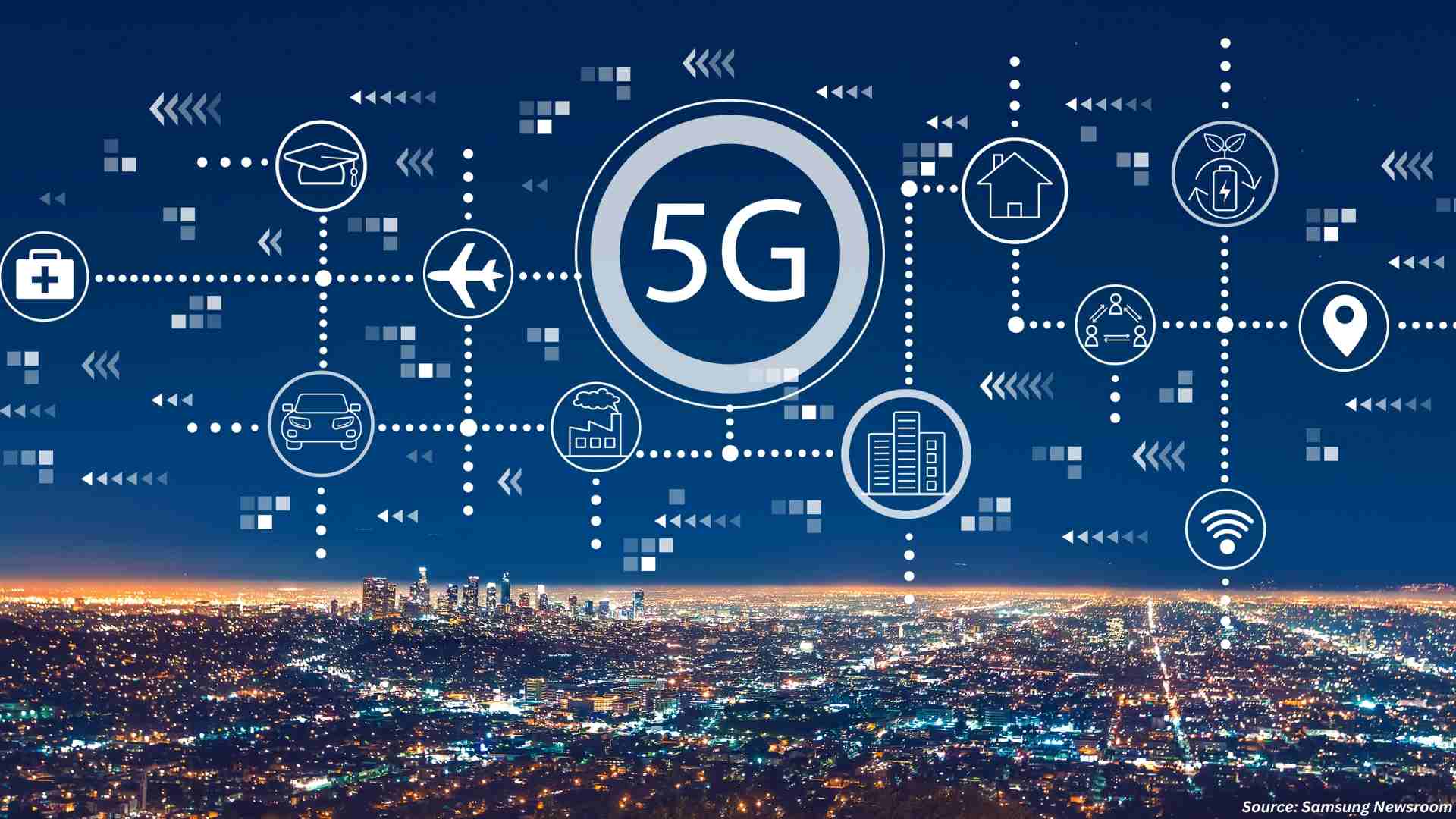
The 5G technology market in 2026 is witnessing tangible momentum driven by strategic partnerships and new device launches. Two recent developments—collaboration between Ericsson and SoftBank, and a new smartphone from Realme—highlight how both infrastructure and consumer demand are shaping the market.
These developments signal a transition from early deployment to accelerated adoption.
How Are Strategic Partnerships Driving the 5G Technology Market?
What Does the Ericsson–SoftBank Collaboration Mean for 5G?
The partnership between Ericsson and SoftBank represents a strategic move to strengthen the 5G technology market through a multi-year agreement focused on enhancing core network infrastructure. By deploying advanced solutions such as Ericsson’s dual-mode 5G Core, cloud-native architecture, user data consolidation, policy control, and cloud-based IP Multimedia Subsystem (IMS), the collaboration aims to accelerate SoftBank’s transition to 5G Standalone (SA). This approach enables seamless integration of existing 4G and 5G networks while improving scalability, efficiency, and service delivery, highlighting a broader industry shift from basic network expansion to intelligent network optimization.
From a market perspective, this development underscores how infrastructure advancements are driving the next phase of 5G adoption. Ericsson’s strong profitability, stable balance sheet, and expanding enterprise focus position it as a key player in enabling advanced 5G use cases, despite moderate revenue decline and valuation concerns. The partnership not only strengthens network capabilities but also prepares the ecosystem for increased demand, supporting enterprise applications and digital transformation initiatives. Overall, this collaboration reflects a maturing 5G technology market where innovation, efficiency, and strategic alliances are becoming central to sustained growth.
Why Does This Matter for the 5G Market?
This partnership demonstrates how telecom companies are investing in network optimization rather than just expansion. It indicates a shift toward improving user experience, reliability, and enterprise-grade connectivity.
Market Impact Analysis
-
Accelerates commercialization of advanced 5G applications
-
Encourages similar collaborations globally
-
Strengthens infrastructure readiness for future demand
Are 5G Devices Fueling Market Demand?
What does Realme’s New 5G Smartphone Indicate?
The upcoming launch of the Realme 16 5G by Realme on April 2 in India highlights how device innovation is playing a crucial role in accelerating the 5G technology market. The smartphone introduces a unique “selfie mirror” placed next to the rear camera, allowing users to capture selfies using the main camera with ease, supported by features like the “Say Hi” gesture and a ring flash for better low-light photography. With a 50MP rear camera, a 50MP front camera, and AI-driven imaging technologies such as LumaColor, the device focuses heavily on enhancing user experience and content quality. Additionally, AI features like AI Edit Genie and AI Instant Clip reflect the growing integration of artificial intelligence in smartphones to support content creation and personalization.
Beyond camera innovation, the Realme 16 5G emphasizes performance and durability with a 7,000mAh battery offering up to two days of usage, supported by 60W charging, along with a 6.57-inch display and an IP69 rating for dust and water resistance. These features indicate a shift toward high-performance, feature-rich 5G devices that can drive mass adoption. From a market perspective, such launches strengthen the demand side of the 5G technology market by making advanced connectivity more accessible and appealing to consumers. As more brands like Realme introduce differentiated 5G smartphones, the market is expected to witness increased user penetration, higher data consumption, and faster ecosystem growth.
How does this Influence the 5G Technology Market?
Device innovation plays a crucial role in driving consumer adoption. As more affordable and feature-rich 5G smartphones enter the market, user penetration increases.
Market Impact Analysis
-
Boosts consumer adoption of 5G services
-
Encourages telecom operators to expand coverage
-
Enhances demand for high-speed data services
What Trends Are Emerging in the 5G Technology Market?
Is the Market Shifting from Deployment to Optimization?
Based on the developments:
|
Trend |
Description |
Market Impact |
|
Infrastructure Enhancement |
Partnerships improving network quality |
Better service reliability |
|
Device Innovation |
New 5G smartphones entering market |
Increased adoption |
|
Ecosystem Expansion |
Integration across industries |
Broader use cases |
What Does This Mean for Stakeholders?
-
Telecom companies are focusing on performance improvements
-
Device manufacturers are competing through innovation
-
End-users are experiencing more accessible 5G technology
How Are These Developments Impacting the 5G Technology Market?
As a market research perspective, the combined effect of infrastructure partnerships and device launches is significant.
Key Market Implications
1. Strengthening Supply Side
-
Ericsson–SoftBank collaboration enhances network capabilities
-
Improves readiness for large-scale 5G usage
2. Boosting Demand Side
-
Realme’s 5G smartphone increases accessibility
-
Encourages wider consumer adoption
3. Accelerating Market Maturity
-
Balanced growth between infrastructure and devices
-
Supports sustainable long-term expansion
Leading Key Players of the Market
The 5G technology market is highly competitive, with a diverse mix of telecom operators, technology providers, and research institutions driving innovation. Key players include Deutsche Telekom AG, Orange S.A., Huawei Technologies Co. Ltd., Qualcomm Inc., Ericsson, and Samsung, along with academic institutions and research organizations. This broad ecosystem reflects the collaborative nature of the industry, where telecom infrastructure, hardware innovation, and research capabilities collectively contribute to market growth.
Past initiatives have laid a strong foundation for current advancements. For instance, in November 2019, Siemens and Qualcomm Technologies, Inc. conducted a joint proof-of-concept at the Siemens Automotive Test Center in Nuremberg, marking the first private 5G Standalone (SA) network in an industrial environment using the 3.7–3.8GHz band. Qualcomm provided 5G test networks and devices, while Siemens contributed industrial equipment such as automated guided vehicles, demonstrating early real-world applications of 5G in industrial automation.

Next Move Strategy Consulting’s Viewpoint
From an NMSC (Next Move Strategy Consulting) viewpoint, these developments highlight the evolution of the 5G Technology Market from experimental deployments to scalable, real-world applications. Early collaborations between companies such as Siemens and Qualcomm Technologies, Inc. have paved the way for today’s advanced partnerships, such as those led by Ericsson and SoftBank. This progression indicates a clear shift toward ecosystem-driven innovation, where telecom providers, technology firms, and research institutions are collectively enabling next-generation connectivity.
Furthermore, the growing involvement of enterprise-focused players and academic institutions suggests that 5G is expanding beyond traditional consumer applications into industrial and commercial domains. This includes use cases such as smart manufacturing, automated logistics, and real-time data processing. As these collaborative efforts continue to mature, they are expected to reduce deployment complexities, improve network efficiency, and accelerate adoption across sectors. From a market strategy perspective, this ecosystem synergy will play a critical role in unlocking long-term value, driving sustained investment, and positioning the 5G technology market for robust and scalable growth.

What Should Businesses and Investors Watch Next?
Next Steps:
1. Monitor telecom partnerships: Strategic collaborations will define network quality and coverage expansion
2. Track device innovation trends: New smartphone features will influence user adoption patterns
3. Focus on ecosystem development: Integration with industries will unlock new revenue streams
4. Evaluate regional growth strategies: Markets with strong infrastructure investments will grow faster
5. Assess consumer behavior shifts: Increased 5G usage will reshape digital consumption patterns
About the Author
 Prakhyat Chowdhury
— Prakhyat Chowdhury is a results-driven Market Analyst and data strategist specializing in business intelligence, trend forecasting, and performance-focused market growth. His competitive intelligence frameworks, and data-driven insights enhances strategic planning, operational efficiency, and organizational authority. Known for strong communication, analytical thinking, and multilingual proficiency, he delivers rigorous, objective-led solutions that support scalable business outcomes across industries with professionalism. He consistently aligns quantitative and qualitative analysis with global business goals.
Prakhyat Chowdhury
— Prakhyat Chowdhury is a results-driven Market Analyst and data strategist specializing in business intelligence, trend forecasting, and performance-focused market growth. His competitive intelligence frameworks, and data-driven insights enhances strategic planning, operational efficiency, and organizational authority. Known for strong communication, analytical thinking, and multilingual proficiency, he delivers rigorous, objective-led solutions that support scalable business outcomes across industries with professionalism. He consistently aligns quantitative and qualitative analysis with global business goals.
About the Reviewer
 Sanyukta Deb
— Sanyukta Deb is Digital Marketing Team Lead at Next Move Strategy Consulting, where she has led content strategy and technical SEO for the firm's B2B market research publications for over 2 years. Her editorial process translates NextMSC's primary and secondary research — spanning technology, industrial, and consumer sectors — into commercial narratives, backed by search-intent, keyword, and competitive analysis. She brings 5 years of overall experience in digital marketing and content strategy.
Sanyukta Deb
— Sanyukta Deb is Digital Marketing Team Lead at Next Move Strategy Consulting, where she has led content strategy and technical SEO for the firm's B2B market research publications for over 2 years. Her editorial process translates NextMSC's primary and secondary research — spanning technology, industrial, and consumer sectors — into commercial narratives, backed by search-intent, keyword, and competitive analysis. She brings 5 years of overall experience in digital marketing and content strategy.
















Add Comment