Is the Automotive Robotics Market Ready for the Next Industrial Revolution?
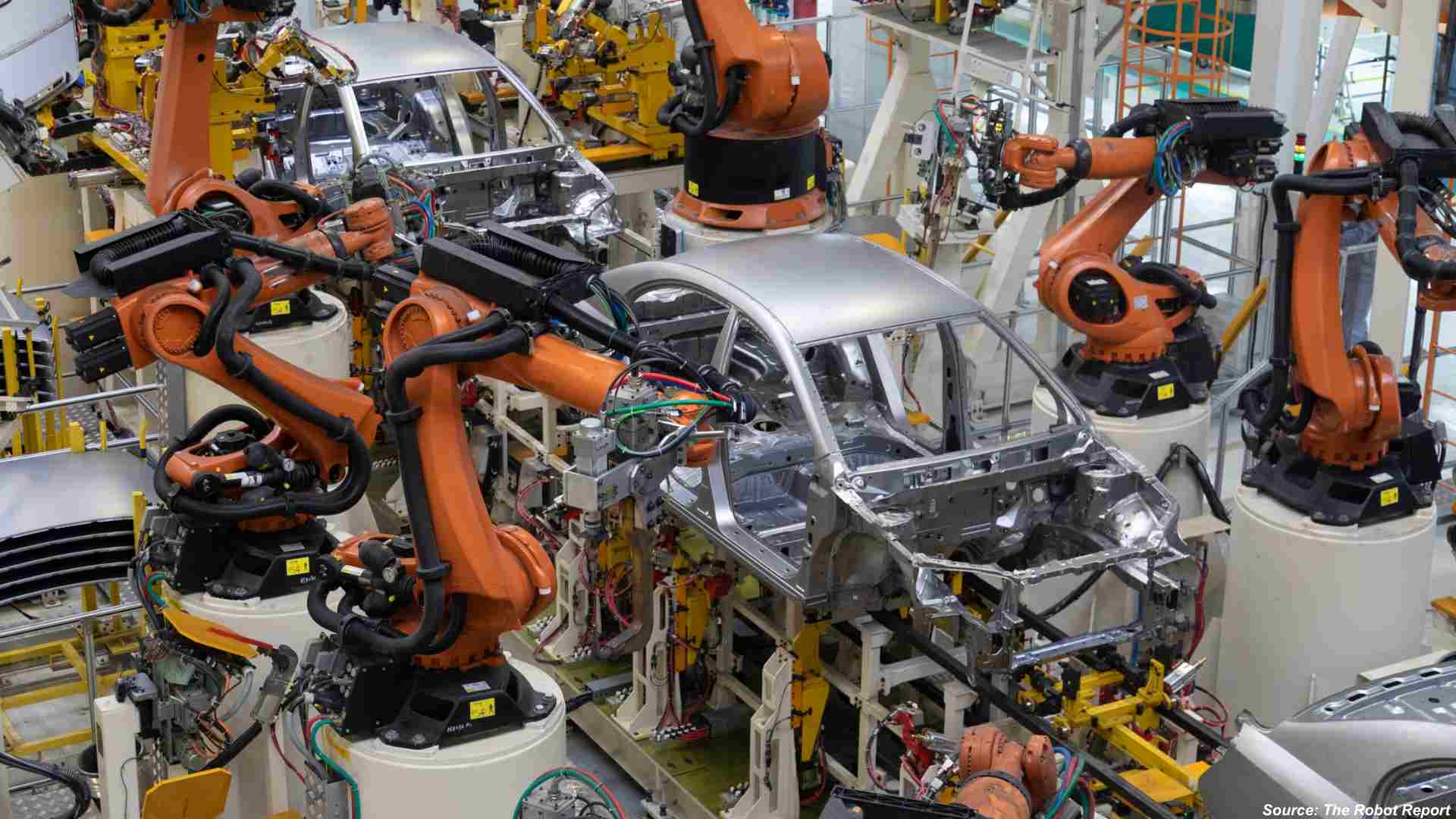
The automotive industry has long been the primary driver of robotic adoption. As we progress through 2025, the integration of automation is no longer just about speed and precision; it is about intelligence, connectivity, and security. Manufacturers are navigating a complex landscape where technological advancements must be balanced with robust protection against emerging threats.
How Is Cybersecurity Impacting Automotive Robotics Development?
In a significant shift for the industry, cybersecurity is no longer viewed as a secondary IT concern but as a core manufacturing discipline. According to the 2026 Automotive Manufacturing Outlook Survey by ABB Robotics, there is an unprecedented consensus on digital risk.
-
95% of automotive manufacturing leaders now rate cybersecurity as a "significant concern".
-
53% of these leaders brand the issue as "extremely significant".
-
Cybersecurity now ranks higher than cost reduction, AI, and flexible manufacturing as a priority across all global regions and supplier tiers.
Why Are AI and Human-Robot Collaboration Growing?
While security is the top priority, the physical expansion of robotics continues through large-scale strategic partnerships. In March 2026, Doosan Robotics signed a Memorandum of Understanding (MOU) with the global automotive parts manufacturer Kwangjin Group to revolutionize component production.
-
100+ manufacturing robot solutions are scheduled for deployment across domestic and overseas plants by 2027.
-
19 units will be operational by May 2026 to initiate the automation of complex assembly processes.
-
These robots are designed to be installed without major changes to existing factory layouts, offering high safety and precision for human-robot collaboration.
What Do the Current Market Trends Indicate for 2025–2026?
The following table summarizes the primary shifts observed in the automotive robotics sector based on recent industry data.
|
Feature |
2024 Focus |
2025–2026 Shift |
|
Primary Goal |
High-volume throughput |
Cybersecurity and operational resilience |
|
Technology |
Standard industrial arms |
AI-integrated and autonomous mobile robots |
|
Workforce |
Separation of human and robot |
High-level human-robot collaboration |
|
Data Usage |
Basic monitoring |
Real-time threat detection and predictive maintenance |
Key Players Leading the Industry
Several companies operate in the automotive robotics industry, including ABB Ltd., Comau S.P.A., Denso Corporation, Fanuc Corporation, Kawasaki Heavy Industries, Ltd., KUKA AG, Nachi-Fujikoshi Corp., Omron Corporation, Seiko Epson Corporation, Yaskawa Electric Corporation, Stäubli International, Universal Robots, Mitsubishi Electric Corporation, CMA Robotics S.P.A., and HD Hyundai Robotics. These companies are actively implementing strategies such as product launches, partnerships, and technology collaborations across global markets to strengthen their competitive positions and expand their robotics portfolios.
For example, in June 2023, ABB introduced four new large robot models along with 22 variants designed to help automotive manufacturers improve productivity, quality, and workplace safety while adapting to industry shifts toward electric vehicles and autonomous technologies. Earlier, in June 2022, Kawasaki Heavy Industries announced a collaboration with Realtime Robotics to automate the programming, deployment, and control of its industrial robots, enabling more flexible robotic motion planning, collision avoidance, and efficient manufacturing floor design.

NMSC Viewpoint: What Do These Developments Mean for the Automotive Robotics Market?
According to Next Move Strategy Consulting’s perspective, the latest developments highlight a structural shift in the Automotive Robotics Market toward connected, intelligent, and security-centric manufacturing systems. As automotive factories transition into digitally integrated smart factories, robotics deployments are becoming deeply linked with artificial intelligence, cloud platforms, and data analytics.
The 2026 ABB Robotics Automotive Manufacturing Outlook Survey shows that 95% of automotive manufacturing leaders consider cybersecurity a significant concern, with 53% calling it “extremely significant.” This demonstrates that robotics adoption is no longer evaluated only on productivity gains but also on system security, operational resilience, and protection of connected factory infrastructure.
What Are the Next Steps for Manufacturers?
To stay competitive in this rapidly evolving environment, automotive manufacturers and stakeholders should consider the following actions:
-
Conduct a Cybersecurity Audit: Evaluate current robotic networks against the latest industrial standards to prevent unauthorized access.
-
Invest in AI-Ready Hardware: Prioritize the acquisition of robotic systems that support over-the-air (OTA) updates and AI vision integration.
-
Upskill the Workforce: Focus on training employees to manage collaborative environments where humans and robots share the same workspace.
-
Monitor Regional Innovations: Keep a close watch on technological breakthroughs in key markets like South Korea to anticipate global assembly standards.
About the Author
 Prakhyat Chowdhury
— Prakhyat Chowdhury is a results-driven Market Analyst and data strategist specializing in business intelligence, trend forecasting, and performance-focused market growth. His competitive intelligence frameworks, and data-driven insights enhances strategic planning, operational efficiency, and organizational authority. Known for strong communication, analytical thinking, and multilingual proficiency, he delivers rigorous, objective-led solutions that support scalable business outcomes across industries with professionalism. He consistently aligns quantitative and qualitative analysis with global business goals.
Prakhyat Chowdhury
— Prakhyat Chowdhury is a results-driven Market Analyst and data strategist specializing in business intelligence, trend forecasting, and performance-focused market growth. His competitive intelligence frameworks, and data-driven insights enhances strategic planning, operational efficiency, and organizational authority. Known for strong communication, analytical thinking, and multilingual proficiency, he delivers rigorous, objective-led solutions that support scalable business outcomes across industries with professionalism. He consistently aligns quantitative and qualitative analysis with global business goals.
About the Reviewer
 Sanyukta Deb
— Sanyukta Deb is Digital Marketing Team Lead at Next Move Strategy Consulting, where she has led content strategy and technical SEO for the firm's B2B market research publications for over 2 years. Her editorial process translates NextMSC's primary and secondary research — spanning technology, industrial, and consumer sectors — into commercial narratives, backed by search-intent, keyword, and competitive analysis. She brings 5 years of overall experience in digital marketing and content strategy.
Sanyukta Deb
— Sanyukta Deb is Digital Marketing Team Lead at Next Move Strategy Consulting, where she has led content strategy and technical SEO for the firm's B2B market research publications for over 2 years. Her editorial process translates NextMSC's primary and secondary research — spanning technology, industrial, and consumer sectors — into commercial narratives, backed by search-intent, keyword, and competitive analysis. She brings 5 years of overall experience in digital marketing and content strategy.
















Add Comment