Mechanical Ventilators Market: AI and FDA Recalls Reshape Growth | NextMSC
Introduction
The global mechanical ventilators market stands at a critical inflection point — shaped simultaneously by an accelerating respiratory disease burden, a wave of AI-driven clinical innovation, and a regulatory environment that is actively tightening quality standards for life-sustaining devices. According to Next Move Strategy Consulting's Mechanical Ventilators Market report, the global mechanical ventilators market is projected to reach USD 8.31 billion by 2030, growing at a compound annual growth rate (CAGR) of 11.0% from 2024 to 2030. This trajectory reflects not a generic uptick in medical device spending, but a structurally driven expansion rooted in the compounding prevalence of chronic obstructive pulmonary disease (COPD), the demographic aging of Asia-Pacific populations, and the commercial maturation of intelligent ventilation platforms.
The World Health Organization (WHO) identifies COPD as the third leading cause of death worldwide, responsible for 3.4 million deaths annually. Meanwhile, the Institute for Health Metrics and Evaluation (IHME) reported that in 2023, chronic respiratory diseases collectively affected 569.2 million people globally — a patient population whose acute and chronic care needs directly underpin demand for mechanical ventilation infrastructure. For institutional investors and C-suite decision-makers, the convergence of these epidemiological realities with rapid technological advancement makes the mechanical ventilators market one of the most consequential segments within the broader critical care device landscape.
For More Information: Download FREE Sample on Mechanical Ventilators Market Report
Dual FDA Recalls and the Hamilton-C6 Debut: A Market Defined by Accountability and Innovation
The Regulatory Reckoning: Two High-Profile Ventilator Recalls in 2026
The first half of 2026 delivered a stark reminder that in the mechanical ventilators market, manufacturing precision is not a differentiator — it is a baseline requirement. Two separate FDA enforcement actions involving ventilator products have reshaped how procurement officers, hospital systems, and investors assess supplier risk.
On May 21, 2026, the U.S. Food and Drug Administration (FDA) issued a Class I recall — the agency's most serious classification, reserved for devices that may cause serious injury or death — for certain React Health VOCSN V+Pro Ventilators. The recall was triggered by a manufacturing test configuration error that prevented certain units from being evaluated under all intended high-pressure conditions during production testing. As a result, an oxygen leak condition could occur, delivering fraction of inspired oxygen (FiO₂) below intended levels during ventilation — and, in oxygen-enriched environments, creating a fire risk. React Health contacted all affected customers on March 23, 2026, recommending immediate discontinuation of use. As of March 4, 2026, the company had not reported any serious injuries or deaths associated with the issue.
Separately, on April 15, 2026, the FDA issued a recall notice for Philips Trilogy Evo Platform Ventilators — devices used in both hospital and home care settings — due to issues arising from the use of nonpneumatic (vibrating mesh) nebulizers with the ventilators and a potentially faulty obstruction alarm. As of March 6, 2026, Philips had reported three serious injuries and no deaths associated with these issues. Philips directed customers to update all affected units with software version 1.05.15.00 and to cease use of nonpneumatic nebulizers with the platform.
These two enforcement actions, occurring within weeks of each other, have materially elevated the compliance burden for ventilator manufacturers operating in the U.S. market. Hospital procurement teams are now conducting more rigorous post-market surveillance reviews, and the FDA's Center for Devices and Radiological Health (CDRH) has signaled continued vigilance through a September 23, 2026 early alert regarding a separate VOCSN ventilator issue involving a potentially disconnected internal flow transducer (IFT) cable connector.
Hamilton Medical's HAMILTON-C6: Redefining Intelligent ICU Ventilation
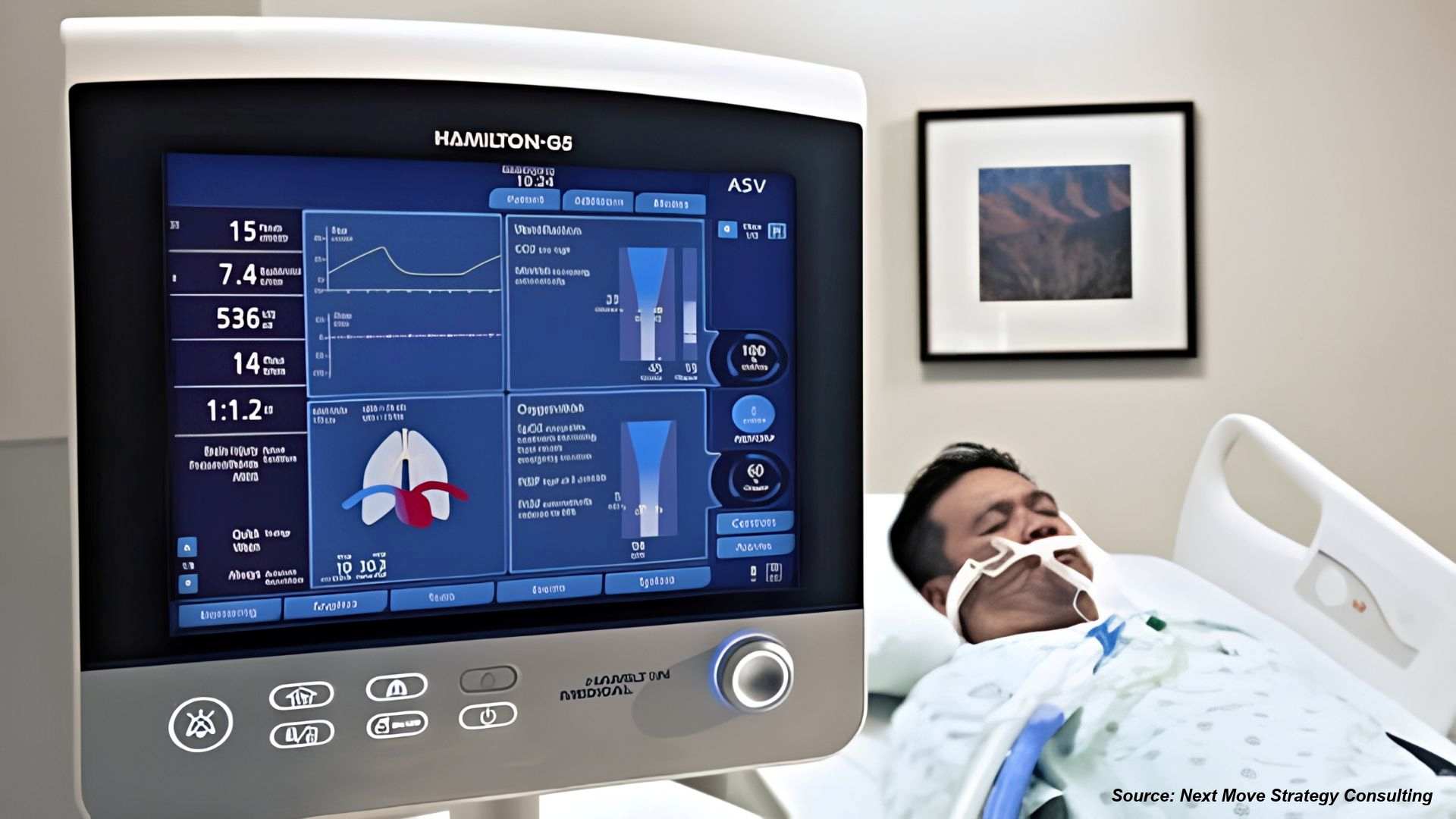
Against this backdrop of regulatory scrutiny, Hamilton Medical's world premiere of the reinvented HAMILTON-C6 at the European Society of Intensive Care Medicine (ESICM) Congress in Munich in September 2025 represented a significant commercial milestone for the intelligent ventilation segment. The new HAMILTON-C6 features a 17-inch detachable touch screen, configurable screen setups, and an App World interface designed to reduce the cognitive load on ICU clinicians by enabling two-step access to the main ventilation application. The platform is engineered to individualize ventilation across the full patient journey — from acute ICU admission through weaning — and supports adults, pediatric, and neonatal patients.
The HAMILTON-C6 launch is commercially significant because it directly targets the premium critical care segment, where hospitals are increasingly willing to pay for platforms that reduce ventilator-induced lung injury (VILI) through automated, data-driven titration. This positions Hamilton Medical to capture share from legacy ICU ventilator installations as hospital systems in North America and Europe undertake capital equipment refresh cycles.
NMSC Strategic Perspective: Quality Failures as a Market Restructuring Force
From NextMSC's proprietary research and analysis, the dual FDA recalls of 2026 are not isolated quality events — they represent a structural inflection in how the mechanical ventilators market will be competed going forward. Manufacturers that have invested in closed-loop manufacturing validation, real-time production monitoring, and post-market surveillance infrastructure will gain a durable procurement advantage over those relying on periodic batch testing. The recalls have also accelerated hospital systems' interest in service contracts and remote device monitoring capabilities, expanding the addressable market for the "Services" component segment beyond traditional maintenance agreements. NextMSC's analysis indicates that the services sub-segment is positioned to grow at a rate exceeding the overall market CAGR as health systems seek to transfer post-market risk back to manufacturers through comprehensive managed-service arrangements.
Section Summary:
The first half of 2026 has been defined by two forces pulling in opposite directions: regulatory enforcement that has exposed manufacturing vulnerabilities in home care and hospital ventilator platforms, and product innovation — exemplified by the HAMILTON-C6 — that is raising the performance ceiling for ICU ventilation.
-
The FDA's Class I recall of React Health VOCSN V+Pro Ventilators (May 2026) and the Philips Trilogy Evo Platform recall (April 2026) have elevated compliance costs and procurement scrutiny across the sector.
-
Hamilton Medical's HAMILTON-C6 debut at ESICM 2025 introduced a modular, AI-assisted ICU ventilator designed to reduce clinician cognitive burden and individualize patient ventilation.
-
NextMSC's analysis identifies the services sub-segment as a high-growth area, as hospital systems seek managed-service arrangements to transfer post-market device risk.
-
Manufacturers with validated closed-loop production testing protocols are positioned to gain procurement preference as hospital systems tighten supplier qualification criteria.
Industry Impact Analysis
The Respiratory Disease Burden: A Structural Demand Driver That Cannot Be Modeled Away
The mechanical ventilators market does not grow because of abstract "rising healthcare expenditure." It grows because the underlying patient population requiring respiratory support is expanding in ways that are demographically and epidemiologically measurable.
COPD alone accounts for 3.4 million deaths annually, according to the WHO, making it the third leading cause of death globally. In the United States, the Centers for Disease Control and Prevention (CDC) reported that COPD was the fifth leading cause of death in 2023, resulting in 141,733 deaths — a figure that translates directly into ICU admissions requiring mechanical ventilatory support. Globally, the IHME's Global Burden of Disease data confirms that chronic respiratory diseases affected 569.2 million people in 2023, with deaths from these conditions reaching 4.3 million — up from 3.0 million in 1990.
Tobacco consumption remains the primary modifiable risk factor amplifying this burden. The WHO reports that tobacco-related complications claim over 8 million lives annually, with approximately 1.3 million non-smokers dying from second-hand smoke exposure. The United Nations Development Programme (UNDP) has identified Asia as home to seven of the world's top ten countries by number of smokers — Bangladesh, China, India, Indonesia, Japan, the Philippines, and Vietnam — creating a concentrated, geographically defined pipeline of future COPD patients who will require respiratory support infrastructure.
Asia-Pacific: Demographic Aging Converts Epidemiological Risk Into Capital Expenditure
The Asia-Pacific region's aging demographic profile is converting the tobacco-driven COPD burden into concrete hospital capital expenditure on ventilation equipment. WHO China estimates that people aged 60 and above will account for 28% of China's population, or approximately 402 million people, by 2040.Elderly patients face disproportionately higher rates of COPD, pneumonia, and respiratory failure — conditions that frequently require mechanical ventilation for acute management. This demographic shift is not a forecast abstraction; it is a capital planning reality for hospital systems across China, Japan, India, and South Korea that are currently expanding ICU capacity.
AI Integration: From Decision Support to Autonomous Titration
The integration of artificial intelligence into mechanical ventilation management has moved from academic proof-of-concept to clinical deployment. A 2026 peer-reviewed study published in the International Journal of Emergency Medicine (Springer) found that AI models represent a valuable decision support tool for ventilator management in emergency settings, with most AI models demonstrating good to excellent discriminative performance, with reported area under the curve (AUC) values indicating strong predictive accuracy for patient deterioration. A 2025 study published in PMC (National Institutes of Health) confirmed that AI algorithms can predict potential respiratory deterioration by analyzing trends in ventilation parameters in real time, enabling proactive adjustment of ventilator settings before clinical deterioration becomes apparent.
This capability is commercially significant because it directly reduces the incidence of ventilator-induced lung injury (VILI) — one of the most costly complications of mechanical ventilation — and shortens ICU length of stay. Hospitals that can demonstrate reduced VILI rates through AI-assisted ventilation gain both clinical and financial advantages under value-based care reimbursement models, creating a pull-through demand for AI-enabled ventilator platforms that extends beyond the device itself into software licensing and data analytics services.
Section Summary:
The mechanical ventilators market's demand structure is anchored in three converging forces: a measurable and growing global respiratory disease burden, a demographically aging Asia-Pacific population, and the clinical validation of AI-assisted ventilation as a tool for reducing preventable ICU complications.
-
WHO data confirms COPD causes 3.4 million deaths annually; IHME data shows chronic respiratory diseases affected 569.2 million people in 2023 — a patient population that directly generates demand for mechanical ventilation.
-
The CDC reported 141,733 COPD deaths in the U.S. in 2023, underscoring the depth of the domestic market for critical care ventilation.
-
China's population aged 60+ is projected to reach 402 million by 2040, creating a structural, multi-decade demand signal for respiratory care equipment across Asia-Pacific.
-
AI-assisted ventilation platforms are demonstrating clinically validated reductions in patient deterioration risk, creating a new revenue layer in software and analytics that supplements hardware sales.
Pros and Cons of Recent Market Developments
|
Development |
Pros |
Cons |
|
FDA Class I Recall — React Health VOCSN V+Pro (May 2026) |
Strengthens post-market surveillance standards; incentivizes investment in closed-loop manufacturing validation across the industry |
Disrupts home care ventilation supply for affected patients; increases short-term procurement costs for hospital systems replacing recalled units |
|
FDA Recall — Philips Trilogy Evo Platform (April 2026) |
Software-based remediation (v1.05.15.00) demonstrates the viability of OTA updates as a post-market risk mitigation tool |
Three serious injuries reported; erodes clinician and patient confidence in home care ventilator platforms; increases regulatory scrutiny on Philips' broader respiratory portfolio |
|
Hamilton Medical HAMILTON-C6 World Premiere (ESICM 2025) |
Raises the performance ceiling for ICU ventilation; detachable touch screen and App World interface reduce clinician cognitive burden; supports full patient journey from acute care to weaning |
Premium pricing limits adoption to well-capitalized hospital systems; requires staff retraining; creates competitive pressure on mid-tier ventilator manufacturers |
|
AI Integration in Ventilator Management (2025–2026) |
Clinically validated reduction in patient deterioration risk; enables proactive ventilator titration; supports value-based care reimbursement models |
Regulatory pathway for AI-enabled ventilator software remains complex; data privacy and cybersecurity requirements add compliance overhead; algorithm bias risks in underrepresented patient populations |
|
Aging Asia-Pacific Demographics |
Creates a multi-decade structural demand signal for both critical care and home care ventilators across China, Japan, India, and South Korea |
Healthcare infrastructure gaps in lower-income Asia-Pacific markets limit near-term commercial conversion; reimbursement frameworks for home care ventilation remain underdeveloped in several countries |
Key Data & Statistics
Global Respiratory Disease Burden — Key Institutional Statistics
|
Indicator |
Figure |
|
Global COPD annual deaths |
3.4 million |
|
People living with chronic respiratory diseases globally (2023) |
569.2 million |
|
COPD deaths in the United States (2023) |
141,733 |
|
Annual deaths from tobacco-related complications |
Over 8 million |
|
Non-smoker deaths from second-hand smoke annually |
~1.3 million |
|
China's population aged 60+ projected by 2040 |
402 million (28% of total) |
|
Americans with asthma |
~24.9 million (7.7% of population) |
|
Asia's share of world's top 10 countries by smoker count |
7 of 10 countries |
Future Outlook & Forecast
From Critical Care to Continuum of Care: The Home Ventilation Shift
NextMSC's proprietary research and analysis projects the global mechanical ventilators market to reach USD 8.31 billion by 2030 at an 11.0% CAGR, with the growth trajectory increasingly shaped by the expansion of ventilation beyond the ICU into home care and ambulatory settings. The transport and portable mechanical ventilators segment is gaining commercial momentum as hospital systems seek to discharge stable ventilator-dependent patients to home care settings — reducing inpatient costs while maintaining clinical oversight through connected device platforms.
This shift is structurally supported by the aging demographics of North America and Asia-Pacific, where the proportion of elderly patients with chronic respiratory conditions requiring long-term ventilatory support is rising. The American College of Allergy, Asthma & Immunology reports that approximately 7.7% of Americans — around 24.9 million individuals, of whom 20.2 million are adults and 4.6 million are children — live with asthma, a condition that in its severe forms can require non-invasive ventilatory support. As this population ages, the transition from episodic hospital-based ventilation to continuous home-based support will expand the total addressable market for portable and transport ventilators.
AI and Connectivity: The Next Competitive Frontier
The 2026 peer-reviewed literature on AI in mechanical ventilation — including a study published in Heart & Lung (Ovid) demonstrating AI's transformative potential in managing patient-ventilator asynchrony (PVA) through real-time detection and improved synchrony — signals that the next competitive frontier in this market will be software-defined ventilation intelligence, not hardware specifications alone. Manufacturers that can demonstrate measurable reductions in PVA events, VILI incidence, and ICU length of stay through AI-assisted titration will command premium pricing and preferred supplier status in hospital procurement processes.
The WHO's European Region report projects COPD cases to increase by 23% globally by 2050, driven by an aging population and multiple intertwined environmental and behavioral risk factors. This long-range epidemiological projection provides a durable demand foundation for the mechanical ventilators market well beyond the current forecast horizon.
Neonatal and Pediatric Ventilation: An Underserved Growth Segment
The neonatal and infant ventilators segment represents a structurally underserved area within the broader market. Premature birth rates and neonatal respiratory distress syndrome (NRDS) continue to generate demand for specialized neonatal ventilation platforms, particularly in Asia-Pacific markets where neonatal ICU infrastructure is expanding. NextMSC's proprietary research and analysis identifies this segment as one where product differentiation — through pressure-mode and combined-mode ventilation capabilities tailored to neonatal lung mechanics — will be a key determinant of market share.
Section Summary:
The mechanical ventilators market's growth trajectory through 2030 is underpinned by three structural forces: the epidemiological expansion of chronic respiratory disease, the demographic aging of key global markets, and the commercial maturation of AI-assisted ventilation platforms.
-
NextMSC projects the market to reach USD 8.31 billion by 2030 at an 11.0% CAGR, with portable and home care ventilators emerging as a high-growth sub-segment as hospital systems shift stable patients to home-based respiratory support.
-
The WHO projects a 23% global increase in COPD cases by 2050, providing a long-range demand foundation that extends well beyond the current forecast period.
-
AI-assisted ventilation — validated in 2025–2026 peer-reviewed literature for its ability to detect patient-ventilator asynchrony and predict respiratory deterioration — is transitioning from a clinical research tool to a commercial differentiator.
-
The neonatal and infant ventilators segment represents a structurally underserved growth opportunity, particularly in Asia-Pacific markets expanding neonatal ICU capacity.
Next Steps for Stakeholders
For Hospital Systems and Procurement Officers:
The dual FDA recalls of 2026 make supplier qualification a board-level risk management issue, not a procurement department function. Hospital systems should require ventilator manufacturers to provide documented evidence of closed-loop manufacturing validation protocols, post-market surveillance infrastructure, and software update capabilities before awarding multi-year supply contracts. The Philips Trilogy Evo correction demonstrates the value of software-update capabilities for post-market remediation; whether OTA updating should be a procurement requirement depends on the buyer's clinical, technical, and regulatory criteria.
For Medical Device Manufacturers:
The HAMILTON-C6 launch at ESICM 2025 establishes a new benchmark for ICU ventilator design — modular, AI-assisted, and clinician-centric. Manufacturers competing in the critical care segment must accelerate investment in AI-driven decision support features and connectivity infrastructure. In the home care segment, the React Health recall underscores that manufacturing process validation — not just clinical performance — is the primary determinant of market access and brand equity.
For Institutional Investors:
The mechanical ventilators market's 11.0% CAGR through 2030, as projected by NextMSC's proprietary research and analysis, is supported by epidemiological demand drivers that are not cyclical. COPD prevalence, aging demographics in Asia-Pacific, and the structural shift toward home-based ventilation create a durable revenue base. However, the 2026 recall events highlight that regulatory risk is a material factor in valuation — companies with robust post-market surveillance and manufacturing quality systems warrant a lower risk premium than those with demonstrated compliance gaps.
For Policymakers and Health Ministries:
The WHO's projection of a 23% increase in global COPD cases by 2050 requires proactive investment in respiratory care infrastructure, including ventilator stockpiling, home care reimbursement frameworks, and clinical training programs for ventilator management. Asia-Pacific governments, in particular, should align national aging care strategies with respiratory device procurement planning to avoid supply shortfalls as elderly populations expand.
Conclusion
The global mechanical ventilators market is not simply expanding — it is being restructured. The dual FDA recalls of 2026 have raised the compliance floor for all manufacturers, while Hamilton Medical's HAMILTON-C6 and the growing body of peer-reviewed evidence on AI-assisted ventilation have raised the performance ceiling. The epidemiological foundation — 569.2 million people living with chronic respiratory diseases globally, COPD causing 3.4 million deaths annually, and Asia-Pacific's aging demographic wave — ensures that demand for mechanical ventilation will remain structurally robust through the decade. According to NextMSC's proprietary research and analysis, the market's trajectory from USD 4.03 billion in 2023 to USD 8.31 billion by 2030 reflects this convergence of clinical necessity, technological advancement, and demographic inevitability. Stakeholders who align their strategies with the market's quality, intelligence, and care-continuum imperatives will be best positioned to capture value in this critical segment of global healthcare infrastructure.
About the Author
 Sanyukta Deb
— Sanyukta Deb is Digital Marketing Team Lead at Next Move Strategy Consulting, where she has led content strategy and technical SEO for the firm's B2B market research publications for over 2 years. Her editorial process translates NextMSC's primary and secondary research — spanning technology, industrial, and consumer sectors — into commercial narratives, backed by search-intent, keyword, and competitive analysis. She brings 5 years of overall experience in digital marketing and content strategy.
Sanyukta Deb
— Sanyukta Deb is Digital Marketing Team Lead at Next Move Strategy Consulting, where she has led content strategy and technical SEO for the firm's B2B market research publications for over 2 years. Her editorial process translates NextMSC's primary and secondary research — spanning technology, industrial, and consumer sectors — into commercial narratives, backed by search-intent, keyword, and competitive analysis. She brings 5 years of overall experience in digital marketing and content strategy.
About the Reviewer
 Debashree Dey
— Debashree Dey is Assistant Manager at Next Move Strategy Consulting, where she supports cross-vertical market content and communications across diverse industries for 6 years. Her professional background includes senior content writing, communications, and published manuscript authorship, with experience developing audience-focused business narratives and maintaining clear, consistent messaging. Her role supports research-led content development and editorial quality across NextMSC publications.
Debashree Dey
— Debashree Dey is Assistant Manager at Next Move Strategy Consulting, where she supports cross-vertical market content and communications across diverse industries for 6 years. Her professional background includes senior content writing, communications, and published manuscript authorship, with experience developing audience-focused business narratives and maintaining clear, consistent messaging. Her role supports research-led content development and editorial quality across NextMSC publications.


















Add Comment