Metalworking Fluids Market: Key Trends & Forecasts for 2026
Introduction
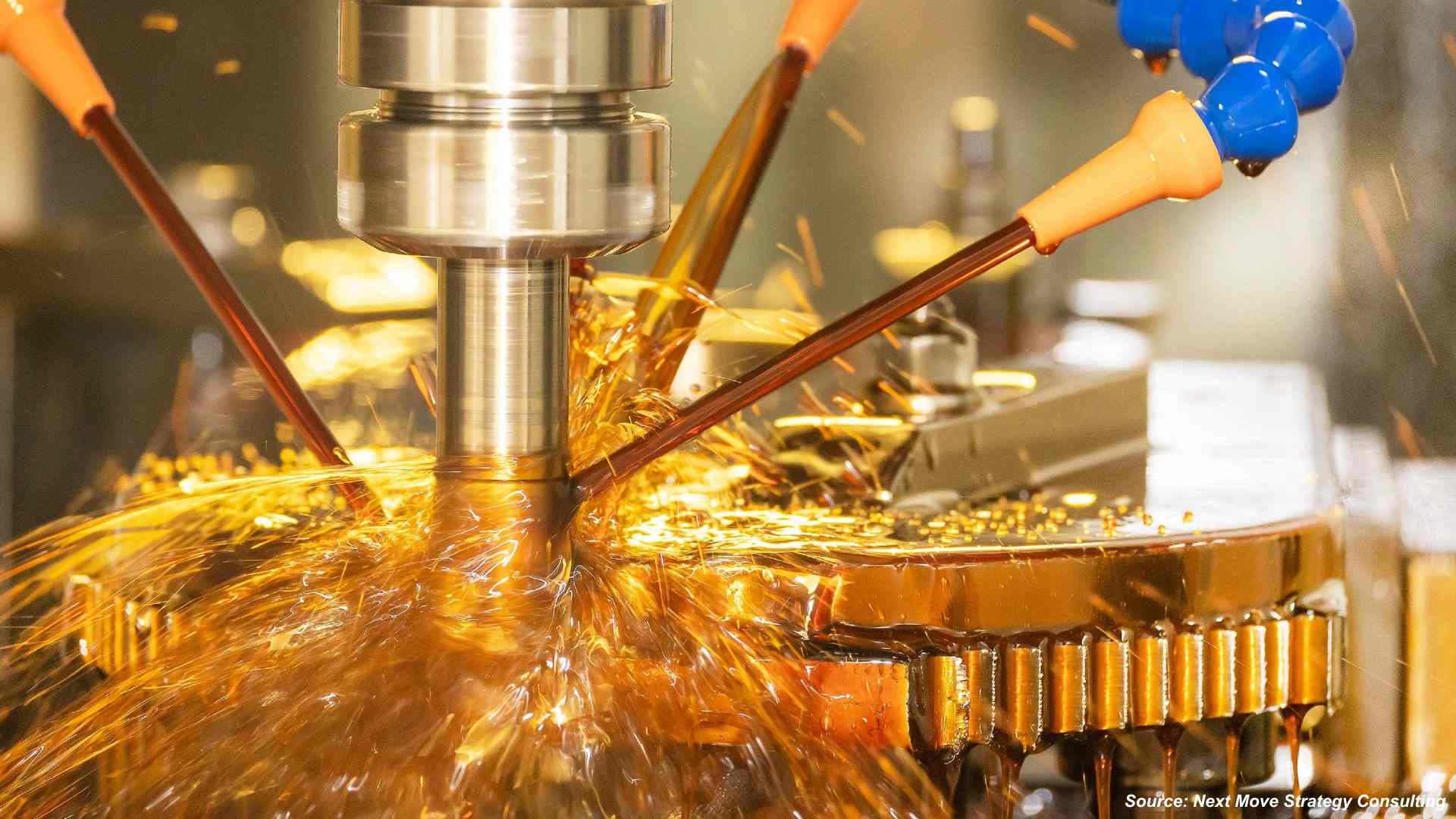
The global metalworking fluids market stands at a pivotal crossroads in 2026. Once considered a behind-the-scenes industrial commodity, metalworking fluids — the coolants, lubricants, and corrosion inhibitors that underpin virtually every precision manufacturing operation — are now at the center of a sweeping regulatory, environmental, and technological transformation. From PFAS chemical bans reshaping fluid chemistry to OSHA's updated Hazard Communication Standard demanding new compliance frameworks, the forces acting on this market are both urgent and far-reaching.
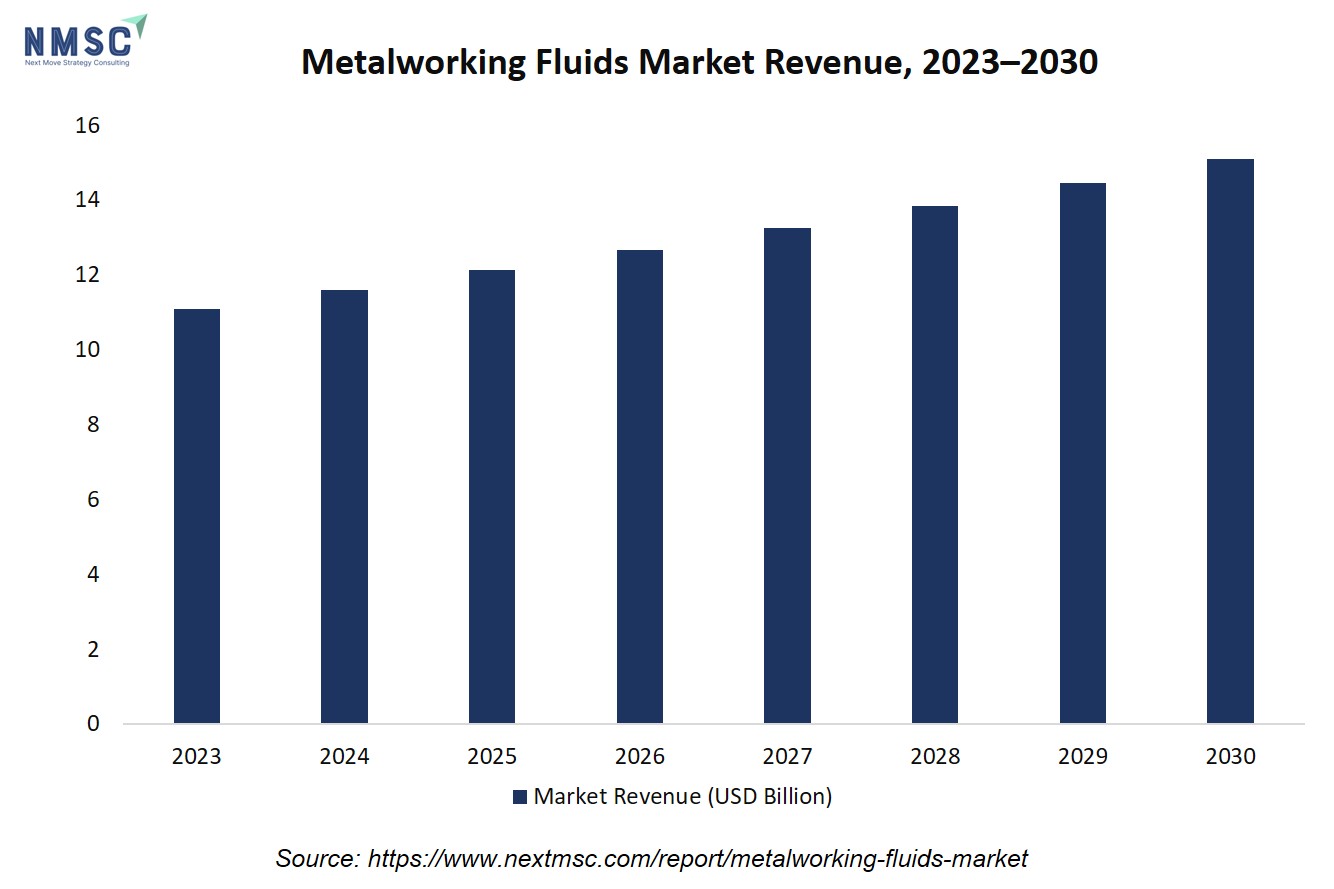
For C-level executives, procurement leaders, and institutional investors tracking the metalworking fluids market, the current landscape demands more than passive observation. The convergence of tightening environmental regulations, accelerating demand from the automotive and aerospace sectors, and the rapid emergence of bio-based and synthetic fluid alternatives is fundamentally redefining competitive advantage in this space. According to Next Move Strategy Consulting (NMSC), the Metalworking Fluids Market is projected to reach USD 15.1 billion by 2030, growing at a CAGR of 4.5% from 2024 to 2030.
For More Information: Download FREE Sample on Metalworking Fluids Market Report
Regulatory Disruption and Green Chemistry: The Forces Reshaping the Metalworking Fluids Market
OSHA's HazCom Overhaul: A Compliance Imperative for 2026
One of the most consequential regulatory developments affecting the metalworking fluids market in 2026 is the phased implementation of OSHA's updated Hazard Communication Standard. OSHA finalized a major revision to this standard in May 2024, aligning it with the seventh revision of the Globally Harmonized System of Classification and Labelling of Chemicals (GHS Revision 7). The rule took effect on July 19, 2024, and directly impacts how metalworking fluid chemicals are classified, labeled, and documented through Safety Data Sheets (SDS).
In January 2026, OSHA published a final rule extending upcoming compliance deadlines by four months in response to industry requests for additional implementation time. Because metalworking fluids are classified as mixtures rather than pure substances, the SDS and label update obligations for most coolants and cleaners now extend into 2027 and 2028. This phased timeline places a significant administrative and operational burden on manufacturers, who must simultaneously comply with the 2012 standard, the 2024 update, or a combination of both during the transition period.
PFAS Regulations: A Tectonic Shift for Fluid Chemistry
Perhaps the most structurally disruptive force acting on the metalworking fluids market in 2026 is the accelerating global regulatory action against Per- and Polyfluoroalkyl Substances (PFAS). These synthetic chemicals — long valued in specialty lubricants and metalworking concentrates for their thermal stability, low surface tension, and extreme pressure resistance — are now subject to sweeping restrictions across the United States and the European Union.
In the United States, the EPA's finalized National Primary Drinking Water Regulation (NPDWR) — announced in 2024 — set maximum contaminant levels for six specific PFAS compounds, including PFOA and PFOS. While primarily targeting water utilities, the downstream effects on industrial dischargers, including metalworking fluid manufacturers, are substantial. State-level water quality standards are aligning with federal thresholds, placing immense pressure on manufacturers to treat wastewater to near-zero PFAS levels. In July 2026, the EPA released draft guidance to help wastewater utilities, landowners, and the public reduce risk from PFOA and PFOS contamination.
In the European Union, the REACH regulation's landmark proposal to restrict all PFAS as a broad chemical class is advancing toward implementation. For the lubricants and metalworking fluids sector, this trajectory points toward a near-complete ban on PFAS in non-essential applications, compelling an industry-wide shift to fluorine-free alternatives.
EPA's Formaldehyde Risk Evaluation: Biocide Uncertainty in Water-Based Fluids
A third regulatory development with significant implications for the metalworking fluids market is the EPA's December 2024 finalization of its risk evaluation for formaldehyde under the Toxic Substances Control Act (TSCA). The agency determined that formaldehyde presents an unreasonable risk of injury to human health under many of its conditions of use. In December 2025, the EPA released an updated draft risk calculation while continuing work toward a proposed risk management rule.
This development is particularly consequential for water-based metalworking fluids, which rely heavily on formaldehyde-releasing biocides to control microbial contamination in sumps. Industry experts note that if formaldehyde-releasing biocides are restricted, formulators will face a significant challenge in identifying approved, cost-effective, and reliably sourced alternatives.
The Bio-Based Fluids Imperative
Alongside regulatory pressure, the shift toward bio-based metalworking fluids is gaining momentum, driven by both environmental mandates and performance improvements. Vegetable oil-based metalworking fluids offer several documented advantages: newer formulations perform comparably to — and in some cases better than — mineral oil-based fluids; they present lower toxicity and irritant hazards to workers; and they break down into environmentally benign substances.
Notably, the flash points for bio-based metalworking fluids run approximately 200 degrees higher than those for conventional fluids, increasing safety in enclosed workspaces. The polar nature of bio-based oils also enables them to form corrosion-protective, lubricating coatings on metal surfaces that resist being wiped off — a critical performance attribute in precision machining.
However, adoption remains uneven. Industry practitioners note that bio-based fluids are more vulnerable to microbial contamination, more prone to oxidation in open sump environments, and can perform less effectively in humid or warm conditions. The regulatory restriction of formaldehyde-releasing biocides — the primary tool for controlling microbial growth in bio-based fluid sumps — adds a further layer of complexity to widespread adoption.
NMSC Strategic Perspective: Navigating the Regulatory and Sustainability Inflection Point
From Next Move Strategy Consulting's analytical standpoint, the simultaneous convergence of PFAS restrictions, OSHA HazCom updates, and formaldehyde biocide scrutiny represents a structural inflection point — not merely a compliance cycle — for the metalworking fluids market. The regulatory pressure is not isolated to one geography or one chemical class; it is a coordinated, multi-jurisdictional tightening that will force portfolio-wide reformulation across the industry.
NMSC's assessment is that manufacturers who proactively invest in fluorine-free chemistry, bio-based base stock development, and advanced fluid monitoring systems will be best positioned to capture market share as legacy formulations face obsolescence. The transition cost is real and significant, but the competitive differentiation for early movers — particularly in the automotive, aerospace, and precision machinery segments — is equally substantial. The metalworking fluids market's projected growth to USD 15.1 billion by 2030 will increasingly be driven by premium, compliant, and sustainable formulations rather than commodity mineral oil products.
Section Summary
The metalworking fluids market in 2026 is being reshaped by a convergence of regulatory, environmental, and technological forces that demand immediate strategic attention from manufacturers and end-users alike.
-
OSHA's GHS Revision 7 alignment extends SDS and label compliance obligations for metalworking fluid mixtures into 2027–2028, creating near-term administrative complexity for manufacturers.
-
PFAS regulations in both the U.S. and EU are forcing the reformulation of specialty lubricants and metalworking concentrates, with near-zero PFAS discharge standards creating substantial capital investment requirements.
-
EPA's formaldehyde risk evaluation introduces significant uncertainty around biocide availability for water-based and bio-based metalworking fluids.
-
Bio-based fluids offer compelling performance and sustainability advantages but face adoption barriers related to microbial stability, oxidation, and biocide restrictions.
Industry Impact Analysis
Impact on Manufacturing Operations and Supply Chains
The regulatory and sustainability transformation underway in the metalworking fluids market is generating cascading effects across the entire manufacturing value chain. For machine shops and industrial manufacturers, the immediate operational impact is felt in three primary areas: fluid reformulation costs, compliance documentation burdens, and supply chain vulnerability.
On the supply chain front, upstream PFAS chemical manufacturers are already exiting certain markets in anticipation of regulatory restrictions, creating supply shortages and price volatility for formulators who have not yet identified alternative chemistries. Lubricant manufacturers must now scrutinize their entire raw material stream, demanding PFAS-free certifications from all suppliers — a process that requires advanced data management systems and significantly enhanced supply chain due diligence.
The reformulation challenge is compounded by the complexity of replacing chlorinated paraffins — a class of extreme pressure additives that has historically provided broad-spectrum lubricity across a wide temperature range. Short-chain chlorinated paraffins have been banned in the U.S., Canada, the EU, and China (effective beginning of 2024). Some plant operations that switched to non-chlorinated metalworking fluids have reported fluid usage increases of a factor of 10 to 20 due to significantly shorter service life of the replacement products.
Automotive and Aerospace Sectors: Primary Demand Drivers
The automotive and aerospace industries remain the most significant demand drivers for the metalworking fluids market. The International Organization of Motor Vehicle Manufacturers reported approximately 85 million vehicles sold in 2022, compared to approximately 80 million in 2021, reflecting the robust production volumes that underpin metalworking fluid consumption in cutting, grinding, and stamping operations.
In the aerospace segment, the shift toward advanced alloys and lightweight materials — including aluminum and titanium superalloys — is driving demand for specialized synthetic and semi-synthetic metalworking fluids. Automotive manufacturers' transition from steel to aluminum components, driven by vehicle lightweighting imperatives, is also reshaping fluid requirements. Aluminum does not react with traditional extreme pressure additives containing chlorine, sulfur, or phosphorus in the same manner as steel, necessitating the use of vegetable-derived fatty acids or esters that form electrostatic bonds with the metal surface.
Asia Pacific: The Dominant Regional Market
Asia Pacific holds the dominant share of the global metalworking fluids market and is expected to maintain this position through the forecast period. This regional leadership is anchored by the scale of the automotive manufacturing sector in China — the world's largest automotive manufacturing country — and by the rapidly growing demand for electricity and industrial equipment across the region. According to World Energy & Climate Statistics, China accounted for 31% of global electricity consumption in 2021, reflecting the scale of industrial activity that drives metalworking fluid demand.
North America, meanwhile, is demonstrating steady growth supported by a well-established healthcare manufacturing sector, robust infrastructure investment, and stringent environmental regulations that are accelerating the adoption of premium, low-toxicity fluid formulations. In May 2023, the U.S. government announced an investment of USD 220 billion across 32,000 infrastructure projects in 4,500 communities — a commitment that directly supports demand for metalworking fluids in construction and transportation equipment manufacturing.
Worker Health and Safety: The Compliance Cost of Inaction
OSHA's metalworking fluids guidelines acknowledge that health effects — including respiratory conditions and dermatitis — are possible even below currently enforced permissible exposure limits. The National Institute for Occupational Safety and Health (NIOSH) recommends considerably lower exposure levels than current OSHA PELs for mineral oil mist.
For manufacturers, the cost of non-compliance extends well beyond regulatory fines. Neglected fluid sumps generate more mist, harbor more bacteria, degrade faster, and produce more hazardous waste — simultaneously driving up exposure risk, disposal costs, and documentation liabilities. Conversely, well-maintained metalworking fluid systems demonstrably reduce dermatitis and respiratory complaints, lower absenteeism, extend tool life, and reduce scrap and rework rates.
Section Summary
The industry impact of current regulatory and market developments in the metalworking fluids market is broad, affecting supply chains, product portfolios, worker safety frameworks, and regional demand dynamics.
-
Supply chain disruption from PFAS chemical exits and chlorinated paraffin bans is creating raw material shortages and price volatility, requiring manufacturers to accelerate alternative chemistry development.
-
Automotive and aerospace demand remains the primary growth engine, with aluminum lightweighting trends driving the need for specialized, vegetable-derived fluid formulations.
-
Asia Pacific maintains its dominant regional position, anchored by China's automotive manufacturing scale and industrial electricity consumption.
-
Worker health compliance is increasingly a financial imperative, with well-maintained fluid systems delivering measurable cost savings in tool life, scrap reduction, and absenteeism.
Pros and Cons of Recent Market Developments
|
Development |
Pros |
Cons |
|
PFAS Regulatory Restrictions |
Drives innovation in fluorine-free chemistry; reduces long-term environmental liability; opens market for next-generation sustainable formulations |
Forces costly and time-consuming reformulation; creates supply chain disruption as PFAS suppliers exit markets; performance gaps in extreme-pressure applications |
|
OSHA HazCom GHS Revision 7 Update |
Standardizes global chemical labeling; improves worker safety through clearer SDS documentation; aligns U.S. standards with international frameworks |
Extended compliance timelines create administrative complexity; dual-standard transition period increases documentation burden for manufacturers |
|
EPA Formaldehyde Risk Evaluation |
Accelerates development of safer biocide alternatives; reduces long-term worker health liability |
Restricts the most effective and cost-efficient biocide class for water-based fluids; no adequate approved alternatives currently available at scale |
|
Bio-Based Fluid Adoption |
Lower toxicity and environmental impact; higher flash points improve workplace safety; excellent lubricity from polar base oils; biodegradable end-of-life profile |
Higher susceptibility to microbial contamination; oxidation instability in open sump environments; higher initial cost compared to mineral oil alternatives |
|
Chlorinated Paraffin Bans |
Eliminates persistent, bioaccumulative toxic compounds from manufacturing environments |
Replacement formulations can increase fluid usage by 10–20x; requires complex multi-additive combinations to replicate performance |
|
Automotive Lightweighting (Aluminum Shift) |
Creates demand for specialized, higher-value fluid formulations; drives R&D investment in new chemistries |
Requires complete reformulation of EP additive packages; aluminum's sensitivity to pH and staining demands tighter fluid management protocols |
Key Regulatory Developments Impacting the Metalworking Fluids Market (2024–2026)
|
Regulation / Development |
Issuing Authority |
Effective Date / Status |
Primary Impact on MWF Market |
|
Hazard Communication Standard (GHS Rev. 7) |
OSHA (U.S.) |
Finalized May 2024; mixture compliance extended to 2027–2028 (Jan 2026 extension) |
Mandatory SDS and label updates for all metalworking fluid mixtures |
|
PFAS National Primary Drinking Water Regulation (NPDWR) |
U.S. EPA |
Finalized 2024; implementation ongoing in 2026 |
Near-zero PFAS discharge standards for industrial manufacturers; wastewater treatment investment required |
|
Formaldehyde TSCA Risk Evaluation |
U.S. EPA |
Finalized December 2024; risk management rule in development |
Potential restriction of formaldehyde-releasing biocides used in water-based MWFs |
|
REACH Universal PFAS Restriction |
European Chemicals Agency (ECHA) |
Proposal advancing; near-total ban on non-essential PFAS use |
Forced reformulation of PFAS-containing lubricants and metalworking concentrates in EU markets |
|
Short-Chain Chlorinated Paraffin Ban |
U.S., Canada, EU, China |
China ban effective January 2024 |
Elimination of key EP additive class; complex multi-additive replacement formulations required |
|
PFAS Toxics Release Inventory (TRI) Expansion |
U.S. EPA |
Ongoing expansion through 2026 |
Unprecedented supply chain transparency requirements for PFAS tracking from production to disposal |
Future Outlook & Forecast
NMSC Market Forecast: USD 15.1 Billion by 2030
According to Next Move Strategy Consulting, the global metalworking fluids market is projected to grow USD 15.1 billion by 2030, at a CAGR of 4.5% over the 2024–2030 forecast period. This growth trajectory reflects the sustained demand from automotive, aerospace, construction, and healthcare manufacturing sectors, combined with the accelerating adoption of premium synthetic and bio-based fluid formulations driven by regulatory compliance requirements.
Synthetic and Bio-Based Segments: The Growth Frontier
Within the metalworking fluids market, the synthetic and bio-based segments are positioned as the primary growth frontiers. Synthetic fluids offer superior thermal stability, longer service life, and lower misting characteristics compared to mineral oil-based alternatives — attributes that align directly with both regulatory compliance requirements and total cost of ownership optimization. Bio-based fluids, while facing adoption barriers related to microbial stability and biocide availability, are benefiting from sustained R&D investment and growing OEM acceptance, particularly in European markets where sustainability mandates are most stringent.
Emerging Technologies: MQL, Nanofluids, and Smart Fluid Monitoring
Beyond formulation chemistry, the metalworking fluids market is witnessing the emergence of transformative application technologies. Minimum Quantity Lubrication (MQL) and MQL nanofluids — which incorporate nanosized solid particles in a liquid carrier to improve heat transfer and tribological properties — are demonstrating strong performance in reducing interface temperatures, cutting forces, and power consumption while delivering superior surface finishes.
Smart fluid monitoring systems — incorporating sensors that continuously track concentration, pH, bacterial load, and fluid condition — are also gaining traction in larger manufacturing operations. These systems enable early detection of fluid degradation, reducing unplanned downtime and extending fluid service life. The introduction of biodegradable synthetic fluids and smart fluids capable of monitoring and adjusting to temperature changes represents a significant opportunity horizon for the metalworking fluids market through 2030.
Competitive Landscape: Key Players and Strategic Moves
The metalworking fluids market features a competitive landscape dominated by global energy and specialty chemical majors. Key players include Houghton International Inc., Blaser Swisslube AG, BP plc, Exxon Mobil Corp., TotalEnergies SE, Fuchs Petrolub SE, Chevron Corp., China Petroleum & Chemical Corp., Castrol, Clariant, Quaker Chemical Corporation, Master Fluid Solutions, and Biosynthetic Technologies, among others.
Strategic product launches are a primary competitive lever. In September 2022, Clariant launched a range of additives specifically designed to develop lubricity in fully synthetic metalworking fluids, extending support to manufacturers of synthetic metalworking solutions. Biosynthetic Technologies launched a new line of oleo-derived, high-performance bio-based additives for metalworking fluid applications in October 2020, produced with naturally derived oils that improve formulated fluid quality while meeting biodegradability standards.
Section Summary
The future outlook for the metalworking fluids market is defined by sustained growth, driven by premium formulation adoption, emerging application technologies, and expanding end-use demand across automotive, aerospace, and infrastructure sectors.
-
Synthetic and bio-based fluid segments represent the highest-growth opportunity, driven by regulatory compliance requirements and OEM sustainability mandates.
-
MQL, nanofluids, and smart monitoring systems are emerging as the next frontier of competitive differentiation in metalworking fluid application technology.
-
Key players are accelerating product launches in synthetic and bio-based additive categories to capture share in the premium, compliant formulation segment.
Next Steps for Stakeholders
For C-level executives, procurement leaders, and institutional investors operating in or adjacent to the metalworking fluids market, the following strategic actions are recommended based on the current regulatory and market environment:
1. Conduct a Comprehensive PFAS and Restricted Substance Inventory
Map every point where PFAS, chlorinated paraffins, and formaldehyde-releasing biocides enter or leave your facility — from incoming raw materials to product formulations and wastewater streams. This is the foundational step for regulatory compliance and supply chain risk management.
2. Accelerate R&D Investment in Fluorine-Free and Bio-Based Formulations
Dedicate substantive resources to the development and validation of PFAS-free alternatives, including novel synthetic esters, polyalkylene glycols (PAGs), and bio-based base stocks. Collaborate with additive suppliers and end-users to understand performance requirements and validate new formulations under real operating conditions.
3. Update HazCom Compliance Programs Proactively
Confirm that fluid suppliers are delivering updated SDS and labels aligned with GHS Revision 7. Refresh written HazCom programs and retrain operators on new label elements ahead of the 2027–2028 mixture compliance deadlines. Treat the transition as a structured housekeeping exercise rather than a last-minute compliance sprint.
4. Invest in Advanced Wastewater Treatment Infrastructure
For manufacturers and major users of PFAS-containing products, investment in granulated activated carbon (GAC), ion exchange resins, and advanced oxidation processes (AOPs) is essential for meeting imminent discharge standards under the EPA's NPDWR framework.
5. Implement Disciplined Fluid Monitoring and Maintenance Programs
Establish daily concentration and pH monitoring protocols using refractometers and titration. Maintain comprehensive sump logs, document clean-outs, and record operator training. Well-maintained fluid systems demonstrably extend fluid life, reduce disposal costs, protect tool life, and lower worker health liability — delivering measurable ROI on compliance investment.
6. Evaluate Asia Pacific Market Exposure and Supply Chain Resilience
Given Asia Pacific's dominant and growing share of the metalworking fluids market, institutional investors and multinational manufacturers should assess their regional exposure, supply chain dependencies, and the regulatory divergence between Asian and Western markets — particularly regarding chlorinated paraffin restrictions and bio-based fluid adoption rates.
Conclusion
The metalworking fluids market in 2026 is not simply growing — it is being fundamentally restructured. The simultaneous pressure of PFAS regulatory restrictions, OSHA's updated Hazard Communication Standard, EPA's formaldehyde risk evaluation, and the accelerating shift toward bio-based and synthetic formulations is compelling every participant in this market — from chemical formulators to machine shop operators — to reassess their product portfolios, compliance frameworks, and supply chain strategies.
The growth trajectory projected by Next Move Strategy Consulting — from USD 11.1 billion in 2023 to USD 15.1 billion by 2030 at a CAGR of 4.5% — reflects a market that is expanding in value even as it contracts in the use of legacy chemistries. The winners in this environment will be those who move decisively: investing in compliant formulations, building supply chain transparency, and leveraging emerging technologies such as MQL, nanofluids, and smart monitoring systems to deliver superior total cost of ownership to their customers.
For stakeholders seeking a rigorous, data-driven foundation for strategic decision-making in the metalworking fluids market, Next Move Strategy Consulting's comprehensive market intelligence report provides the quantitative analysis, competitive benchmarking, and segment-level forecasting required to navigate this complex and rapidly evolving landscape.
About the Author
 Sanyukta Deb
— Sanyukta Deb is Digital Marketing Team Lead at Next Move Strategy Consulting, where she has led content strategy and technical SEO for the firm's B2B market research publications for over 2 years. Her editorial process translates NextMSC's primary and secondary research — spanning technology, industrial, and consumer sectors — into commercial narratives, backed by search-intent, keyword, and competitive analysis. She brings 5 years of overall experience in digital marketing and content strategy.
Sanyukta Deb
— Sanyukta Deb is Digital Marketing Team Lead at Next Move Strategy Consulting, where she has led content strategy and technical SEO for the firm's B2B market research publications for over 2 years. Her editorial process translates NextMSC's primary and secondary research — spanning technology, industrial, and consumer sectors — into commercial narratives, backed by search-intent, keyword, and competitive analysis. She brings 5 years of overall experience in digital marketing and content strategy.
About the Reviewer
 Debashree Dey
— Debashree Dey is Assistant Manager at Next Move Strategy Consulting, where she supports cross-vertical market content and communications across diverse industries for 6 years. Her professional background includes senior content writing, communications, and published manuscript authorship, with experience developing audience-focused business narratives and maintaining clear, consistent messaging. Her role supports research-led content development and editorial quality across NextMSC publications.
Debashree Dey
— Debashree Dey is Assistant Manager at Next Move Strategy Consulting, where she supports cross-vertical market content and communications across diverse industries for 6 years. Her professional background includes senior content writing, communications, and published manuscript authorship, with experience developing audience-focused business narratives and maintaining clear, consistent messaging. Her role supports research-led content development and editorial quality across NextMSC publications.

















Add Comment