Secondary Aluminium Market: Scrap Wars & $213Bn | NextMSC
Introduction
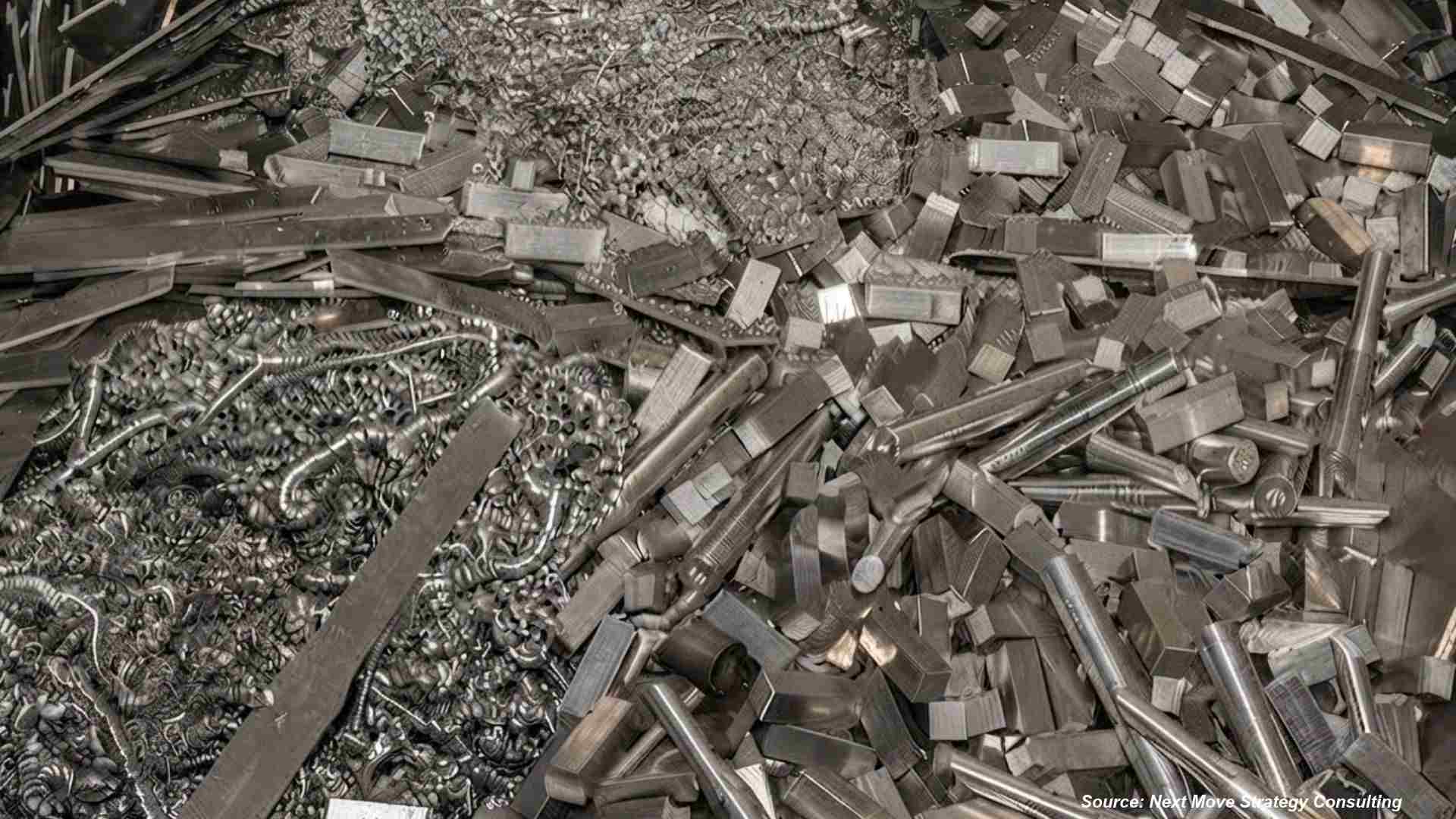
The global secondary aluminium market stands at a structural inflection point — one shaped not by cyclical demand swings, but by simultaneous regulatory interventions on two continents, a hydrogen-powered decarbonisation breakthrough in industrial recycling, and a fundamental reassessment of where aluminium scrap should flow. According to Next Move Strategy Consulting's Secondary Aluminium Market report, the global secondary aluminium market was valued at USD 110.49 billion in 2025 and is projected to reach USD 213.33 billion by 2035, growing at a CAGR of 6.80% from 2026 to 2035.
This trajectory is not simply a function of rising aluminium demand. It reflects a structural shift in how governments, manufacturers, and recyclers are repositioning secondary aluminium — produced by reprocessing scrap rather than smelting bauxite ore — as a strategic industrial input. Recycled aluminium requires approximately 95% less energy than primary production, according to European Aluminium, making it central to decarbonisation commitments across the automotive, packaging, and construction sectors. The question now confronting C-suite decision-makers and institutional investors is not whether secondary aluminium will grow, but which supply chains, geographies, and technologies will capture the value as trade policy and climate regulation converge.
For More Information: Download FREE Sample on Secondary Aluminium Market Report
Scrap Wars: How Trade Policy Is Redrawing the Secondary Aluminium Supply Map
The EU's Scrap Export Restriction: A Feedstock Crisis Becomes a Policy Crisis
The most consequential regulatory development reshaping the secondary aluminium market in the current period is the European Commission's move to restrict aluminium scrap exports. On November 18, 2025, EU Trade Commissioner Maroš Šefčovič confirmed at a Brussels sector event that the Commission had begun preparatory work on a new measure targeting "scrap leakage," with the plan expected to be finalised and adopted in spring 2026, according to Fastmarkets (November 19, 2025).
The scale of the problem is specific and measurable. EU aluminium scrap exports reached a record 1.26 million tonnes in 2024 — roughly 50% higher than five years earlier — with the bulk flowing to Asia, according to European Aluminium. The consequence for domestic recyclers has been severe: an estimated 15% of EU recycling furnace capacity is currently offline, and the industry is short approximately 2 million tonnes of scrap per year to run plants at full utilisation.
A structural distortion in US trade policy has compounded the problem. The United States currently imposes a 50% tariff on primary aluminium imports while exempting scrap, making European scrap more attractive to American buyers and simultaneously redirecting Asian buyers — who previously sourced from the US — toward European supply. This tariff asymmetry has effectively turned EU scrap into a globally contested commodity, leaving European recyclers competing against export premiums they cannot match.
Paul Voss, Director General of European Aluminium, described the Commission's announcement as "a strong and timely statement of intent," adding: "Europe's future will to a large extent depend on its ability to secure access to the raw materials that our economy and our society require." Market participants estimate that a 25–30% export tariff — the level many producers are calling for — would add €50–150 per tonne to the cost of scrap leaving the EU, with domestic scrap prices rising by €20–40 per tonne for high-grade material.
Recycled aluminium already contributes 60% of Europe's entire aluminium supply, according to AlCircle's June 2026 spotlight on Europe's aluminium recycling industry, making scrap availability a matter of industrial security rather than a commercial inconvenience.
The US Response: Section 232 Tariffs and the Secure Aluminum Supply Chains Act
On the other side of the Atlantic, the United States is pursuing a parallel but distinct strategy. On April 2, 2026, President Trump announced revised Section 232 tariff rules applying a 50% duty on primary aluminium and a 25% duty on selected derivative products, calculated on the full customs value of imported goods rather than only their metal content — a structural change that closes a previously exploited valuation loophole, according to the US Geological Survey (USGS) Mineral Industry Survey as reported by AlCircle (July 23, 2026).
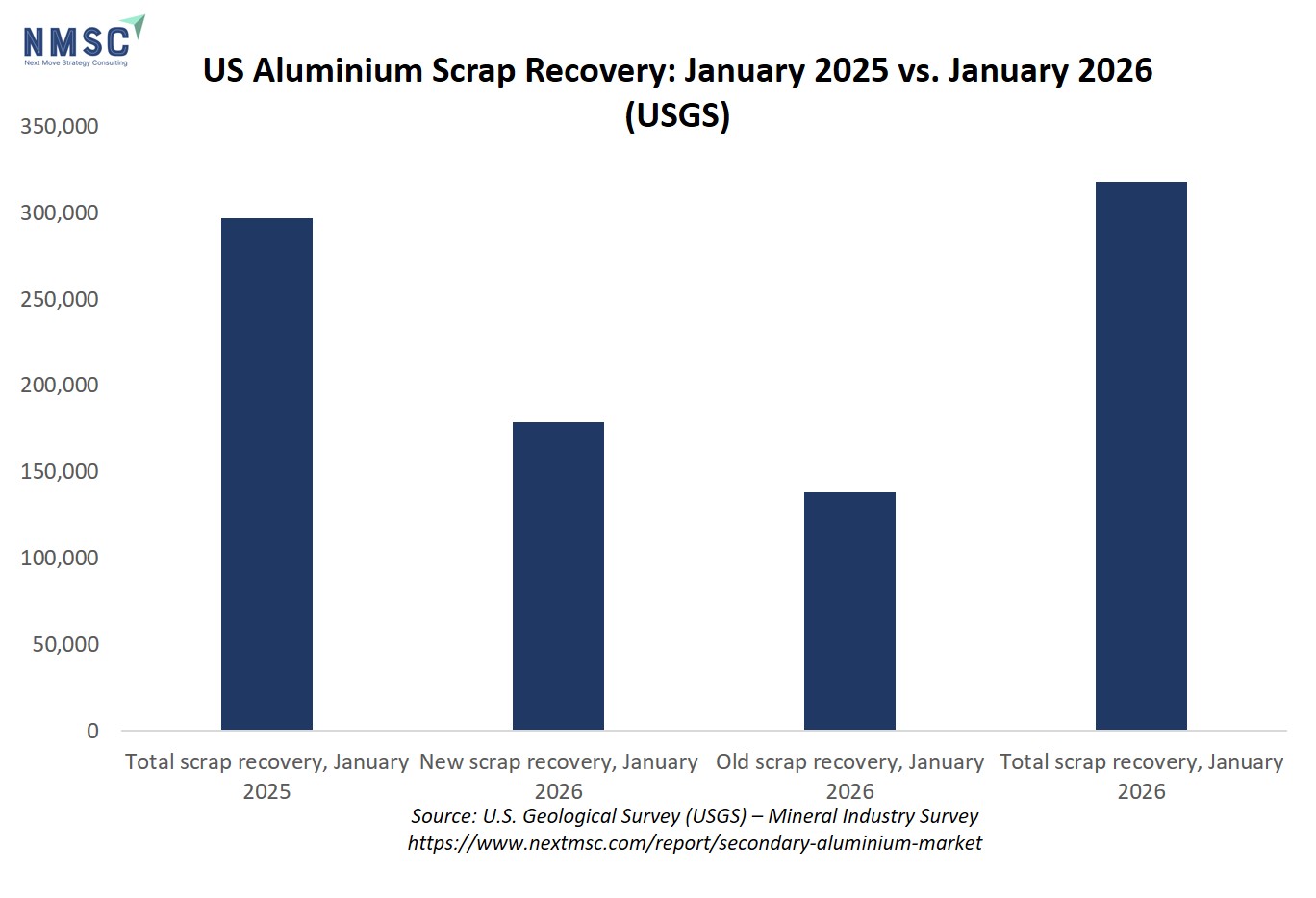
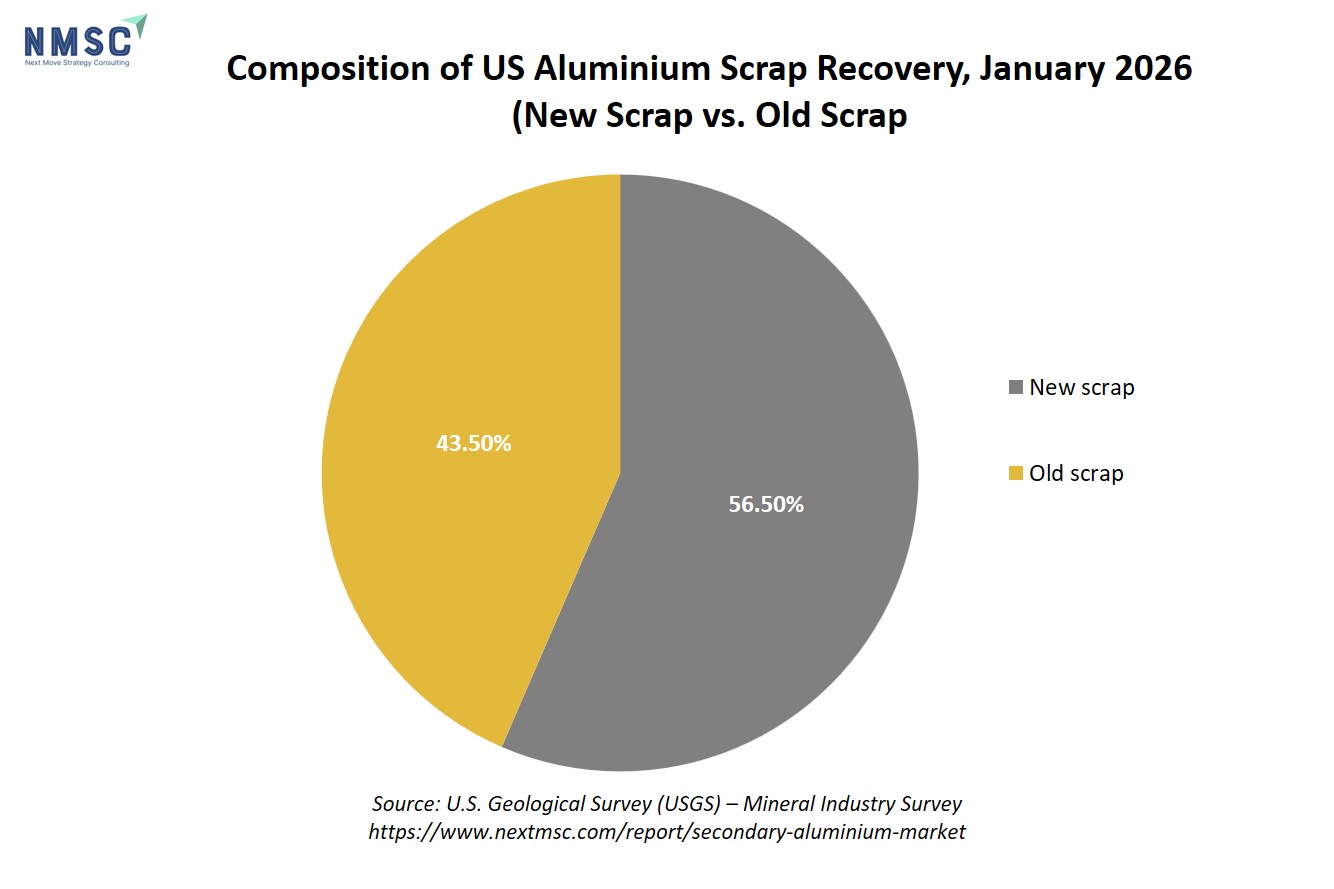
The tariff revision is already producing measurable results in domestic scrap recovery. A total of 318,000 metric tonnes of aluminium was recovered from scrap in January 2026, up 14% year-on-year from 297,000 tonnes in January 2025, according to the USGS Mineral Industry Survey. Of this total, 179,000 metric tonnes came from new scrap and 138,000 metric tonnes from old scrap. Meanwhile, the average US spot price for primary aluminium reached USD 2.42 per pound in January 2026, rising 10% from December 2025 and 71% compared with January 2025 — a price signal that is directly incentivising domestic scrap collection and processing investment.
On June 4, 2026, Representative Haley Stevens (D-MI) introduced HB 9161, the Secure Aluminum Supply Chains Act, directing the US International Trade Commission (USITC) to investigate the national and economic security risks posed by US scrap aluminium exports to adversarial nations, according to Resource Recycling (June 9, 2026). The Aluminum Association's white paper, Scrap the Exports, Save U.S. Supply, documented that the US consumes between 5 and 6 million metric tonnes of aluminium scrap annually while exporting more than 2 million metric tonnes — material that often re-enters the US market as finished goods manufactured in non-market economies.
"Smart, targeted export controls that keep our highest-quality scrap, like used beverage containers, within our borders will help to build a stronger US aluminum industry," said Charles Johnson, President and CEO of the Aluminum Association, in a statement published by Resource Recycling (June 9, 2026).
NMSC Strategic Perspective: The Scrap Sovereignty Paradigm
NextMSC primary research and analysis identifies the concurrent EU and US policy interventions as the emergence of what can be termed a "scrap sovereignty" paradigm — a structural shift in which aluminium scrap is reclassified from a commodity traded on price signals alone to a strategic industrial input subject to national security and decarbonisation policy frameworks. This paradigm has three direct implications for the secondary aluminium market's growth trajectory.
First, domestic secondary aluminium producers in both the EU and the US are positioned to benefit from captive feedstock advantages as export restrictions tighten scrap availability for overseas competitors. Second, the premium for low-carbon, domestically sourced recycled aluminium will widen as manufacturers in automotive, packaging, and construction face mandatory recycled-content requirements. Third, the technology gap between advanced sensor-sorting and AI-powered scrap processing facilities and legacy operations will become a competitive moat — operators who can upgrade mixed-grade and contaminated scrap into specification-grade alloys will capture disproportionate margin as high-grade scrap becomes scarcer.
Section Summary:
The secondary aluminium market's near-term trajectory is being shaped by simultaneous regulatory interventions on both sides of the Atlantic, each designed to retain scrap within domestic supply chains.
-
EU aluminium scrap exports hit a record 1.26 million tonnes in 2024, leaving 15% of EU recycling capacity offline due to feedstock shortages; the European Commission is preparing export restrictions expected to be finalised in 2026.
-
The US revised Section 232 tariffs (April 2026) apply a 50% duty on primary aluminium imports on full customs value, directly incentivising domestic scrap recovery — which rose 14% year-on-year to 318,000 metric tonnes in January 2026.
-
HB 9161 (June 2026) would direct the USITC to investigate national security risks from US scrap exports to adversarial nations, potentially triggering further export controls.
-
NextMSC analysis identifies a structural "scrap sovereignty" paradigm in which secondary aluminium feedstock is increasingly treated as a strategic industrial asset rather than a freely traded commodity.
Industry Impact Analysis
Automotive and EV Manufacturing: The Lightweighting Imperative Meets Recycled Content Mandates
The automotive sector is the single largest end-use driver of secondary aluminium demand, and the dynamics within it are specific to this market in ways that no other material can replicate. The International Aluminium Institute (IAI) reports that the transportation sector recycles the highest proportion of aluminium products, accounting for 86% of total aluminium materials recycled, and that the global Recycling Efficiency Rate (RER) of aluminium currently stands at 76%.
The electric vehicle transition is compressing the aluminium content per vehicle upward — EV battery enclosures, structural frames, and thermal management components all require aluminium alloys — while simultaneously creating a new scrap stream from end-of-life EV components that will reach meaningful volumes within the forecast period. China's domestic automotive production, expected to reach 35 million vehicles by 2025 according to the International Trade Administration, is the single largest volume driver for secondary aluminium in the Asia-Pacific region, which currently holds the dominant share of the global secondary aluminium market.
Hydrogen-Powered Furnaces: Novelis Validates a New Decarbonisation Pathway
In February 2025, Novelis Inc. successfully completed an industrial-scale test using hydrogen fuel in a recycling furnace at its Latchford, UK plant — a milestone that the company's own press release (February 20, 2025) states could reduce CO₂e emissions by up to 90% compared with conventional natural gas combustion. The project received a £4.6 million grant from the UK Government and is expected to move toward commercial deployment. This is not an incremental efficiency gain — it is a proof-of-concept that the most energy-intensive step in secondary aluminium production can be decarbonised without sacrificing throughput, directly expanding the addressable market for low-carbon recycled aluminium in sectors where Scope 3 emissions reporting is becoming mandatory.
Norsk Hydro's Torija Plant and Europe's Recycling Capacity Build-Out
Norsk Hydro's new recycling plant in Torija, Spain — construction of which began in March 2025 — is expected to come on stream in 2026, adding meaningful post-consumer scrap processing capacity to Europe's supply chain, according to Hydro's official website. Hydro's stated strategy is to increase its recycling of post-consumer aluminium scrap to between 850,000 and 1.2 million tonnes annually. In Q2 2026, Hydro reported its highest recycling results since 2023, according to the company's Q2 2026 results published on hydro.com.
However, the scrap shortage is already constraining expansion plans elsewhere. AlCircle reported in 2026 that Constellium SE may halt its EU aluminium recycling expansion as the scrap shortage deepens — a direct illustration of how feedstock availability, not capital or technology, has become the binding constraint on secondary aluminium capacity growth in Europe.
North America: The Fastest-Growing Regional Market
North America is identified by NextMSC primary research and analysis as the fastest-growing regional market for secondary aluminium. The IAI reports that 57% of the total aluminium metal produced in North America originates from scrap materials — the highest Recycling Input Rate (RIR) in the world. The combination of the revised Section 232 tariff structure, the proposed Secure Aluminum Supply Chains Act, and Century Aluminum's restart of previously idled potlines at its Mt. Holly smelter in South Carolina (announced April 16, 2026, with full production expected by June 2026) collectively signal a sustained policy commitment to expanding domestic aluminium production capacity.
Section Summary:
The industry impact of current market developments is concentrated in three areas: feedstock scarcity, decarbonisation technology, and regional policy divergence.
-
The automotive sector — which accounts for 86% of aluminium materials recycled globally (IAI) — is the primary demand anchor for secondary aluminium, with EV production in China and North America driving volume growth.
-
Novelis's successful hydrogen furnace test (February 2025) validates a pathway to up to 90% CO₂e reduction in recycling operations, creating a new competitive differentiator for operators who can deploy the technology at scale.
-
Norsk Hydro's Torija plant (Spain, 2026) adds post-consumer scrap processing capacity in Europe, but Constellium's potential halt of its own expansion illustrates that feedstock availability — not capital — is the binding constraint.
-
North America's 57% Recycling Input Rate (IAI) and the revised Section 232 tariff structure position the region as the fastest-growing secondary aluminium market globally.
Pros and Cons of Recent Market Developments
|
Development |
Pros |
Cons |
|
EU Aluminium Scrap Export Restrictions (2026) |
Retains feedstock for domestic EU recyclers; supports decarbonisation goals; reduces EU dependence on primary aluminium imports |
Scrap suppliers face lower prices and reduced market access; mixed-grade scrap may be stockpiled; potential job losses in the scrap trading sector |
|
US Section 232 Tariff Revision (April 2026) |
Incentivises domestic scrap recovery (14% YoY jump in January 2026); supports US manufacturing competitiveness; closes valuation loophole |
Raises input costs for US manufacturers using imported aluminium derivatives; potential retaliatory trade measures from trading partners |
|
HB 9161 – Secure Aluminum Supply Chains Act (June 2026) |
Provides legislative framework to assess national security risks of scrap exports; aligns with domestic manufacturing priorities |
Regulatory uncertainty may delay investment decisions; recyclers warn that export restrictions could undermine recycling economics if domestic demand is insufficient |
|
Novelis Hydrogen Furnace Test (February 2025) |
Demonstrates up to 90% CO₂e reduction potential; positions secondary aluminium as a genuinely low-carbon material; opens access to green procurement mandates |
High capital cost of hydrogen infrastructure; commercial deployment timeline uncertain; hydrogen supply chain not yet mature at industrial scale |
|
Norsk Hydro Torija Plant (Spain, 2026) |
Adds post-consumer scrap processing capacity in Europe; strengthens circular economy supply chains |
Scrap shortage may limit utilisation rates; EU export restriction uncertainty complicates feedstock sourcing strategy |
|
Constellium Potential Expansion Halt |
Signals market discipline; prevents overcapacity in a feedstock-constrained environment |
Reduces Europe's long-term secondary aluminium production capacity; may widen the gap between recycled aluminium demand and supply |
Key Data & Statistics
Secondary Aluminium Market — Key Industry Developments
|
Event |
Entity |
Date |
Significance |
|
Hydrogen furnace industrial-scale test |
Novelis Inc. (Latchford, UK) |
February 2025 |
Up to 90% CO₂e reduction potential; first industrial-scale validation of hydrogen in aluminium recycling |
|
EU scrap export restriction announcement |
European Commission |
November 2025 |
Targets record 1.26 million tonne scrap outflow; 15% of EU recycling capacity offline |
|
Revised Section 232 tariffs |
US Government |
April 2, 2026 |
50% duty on primary aluminium on full customs value; 14% YoY jump in US scrap recovery |
|
Century Aluminum Mt. Holly restart |
Century Aluminum |
April 16, 2026 |
229,000 tonne annual capacity; part of US domestic aluminium expansion strategy |
|
Secure Aluminum Supply Chains Act (HB 9161) |
US Congress (Rep. Haley Stevens) |
June 4, 2026 |
USITC investigation into national security risks of US scrap exports to adversarial nations |
|
Torija recycling plant commissioning |
Norsk Hydro |
2026 |
New post-consumer scrap processing capacity in Spain; part of 850,000–1.2 million tonne recycling strategy |
|
Metlen recycled aluminium capacity expansion |
Metlen |
2026 |
€25 million investment to expand recycled aluminium capacity in Greece |
|
Constellium expansion review |
Constellium SE |
2026 |
May halt EU recycling expansion due to deepening scrap shortage |
Future Outlook & Forecast
The Path to USD 213.33 Billion: What the CAGR of 6.80% Actually Means
According to NextMSC primary research and analysis, the global secondary aluminium market is projected to grow from USD 118.01 billion in 2026 to USD 213.33 billion by 2035, at a CAGR of 6.80%. This growth rate is not uniform across segments or geographies — it is the aggregate of several distinct structural forces that are specific to secondary aluminium's position at the intersection of decarbonisation policy, circular economy regulation, and industrial supply chain security.
The automotive segment will remain the dominant end-use driver throughout the forecast period. As electric vehicle production scales globally — particularly in China, which the International Trade Administration projects will produce 35 million vehicles annually — the demand for cast aluminium alloys used in battery enclosures, structural components, and powertrain housings will sustain above-market growth in secondary aluminium consumption.
The packaging segment — particularly used beverage containers (UBCs) — represents the most liquid and highest-recycling-rate scrap stream. The Aluminum Association's data shows that UBCs are among the most contested scrap grades in the current trade policy debate, with both the EU and the US seeking to retain this material within domestic supply chains. The integration of robotics, AI-powered sensor sorting (XRT/LIBS technology), and automated material handling into secondary aluminium facilities is progressively reducing the cost of processing mixed-grade and contaminated scrap — expanding the effective scrap supply without requiring new collection infrastructure.
The building and construction segment will see accelerating demand as green building standards in Europe, North America, and Asia-Pacific increasingly specify recycled-content aluminium for facades, window frames, and structural elements. The EU's Carbon Border Adjustment Mechanism (CBAM), which applies a carbon price to imported goods based on their embedded emissions, creates a direct financial incentive for European manufacturers to source secondary aluminium over primary imports from high-carbon producers.
Japan's secondary aluminium production reached 669,800 metric tonnes in 2023, growing 0.8% year-on-year from 664,800 metric tonnes in 2022, according to the Japan Aluminium Association — a data point that illustrates the maturity and stability of Asia-Pacific's secondary aluminium base even before accounting for China's scale.
Section Summary:
The secondary aluminium market's path to USD 213.33 billion by 2035 is underpinned by structural demand from automotive electrification, packaging recycled-content mandates, and green building standards — not by generic industrial growth.
-
The automotive sector's transition to EVs is increasing aluminium content per vehicle while simultaneously creating a new post-consumer scrap stream that will reach meaningful volumes within the forecast period.
-
AI-powered sensor sorting (XRT/LIBS) and hydrogen-fuelled furnaces are expanding the processable scrap universe and reducing the carbon intensity of secondary aluminium production — two developments that directly support premium pricing and regulatory compliance.
-
The EU's CBAM and mandatory recycled-content regulations are creating a structural price premium for low-carbon secondary aluminium that will persist throughout the forecast period.
-
Asia-Pacific will maintain its dominant market share, anchored by China's automotive production scale and Japan's mature secondary aluminium industry, while North America registers the fastest regional growth rate.
Next Steps for Stakeholders
For C-Level Executives in Aluminium Production and Processing:
-
Audit feedstock exposure immediately. The EU scrap export restriction — expected to be finalised in spring 2026 — will materially alter the cost and availability of aluminium scrap for non-EU buyers. Producers outside the EU who currently source European scrap should model supply scenarios under a 25–30% export tariff and identify alternative scrap streams or domestic collection partnerships.
-
Accelerate investment in sensor-sorting and AI-powered scrap processing. The binding constraint on secondary aluminium capacity growth in Europe is feedstock quality and availability, not capital. Operators who can upgrade mixed-grade and contaminated scrap into specification-grade alloys will capture disproportionate margin as high-grade scrap becomes scarcer. XRT and LIBS sensor-sorting technologies are commercially proven and should be prioritised in capital allocation.
-
Evaluate hydrogen furnace readiness. Novelis's February 2025 industrial-scale validation at Latchford demonstrates that hydrogen combustion in recycling furnaces is technically feasible at scale. Operators with facilities in regions where green hydrogen infrastructure is developing — the UK, Germany, the Netherlands — should begin feasibility assessments now to avoid being locked into natural gas infrastructure as carbon pricing escalates.
-
Engage proactively with US trade policy developments. HB 9161 is in committee, but the Aluminum Association's active lobbying for export controls signals that further restrictions on US scrap exports are a credible near-term risk. Domestic US secondary aluminium producers should engage with the USITC process to ensure their capacity expansion plans are reflected in the investigation's findings.
For Institutional Investors:
-
Prioritise integrated recyclers over merchant smelters in portfolio construction. Integrated recyclers — who control both scrap collection and remelting — are structurally insulated from feedstock price volatility in a way that merchant smelters are not. As scrap sovereignty policies tighten, the value of vertical integration in the secondary aluminium supply chain will increase.
-
Monitor the EU export restriction timeline as a near-term catalyst. The formal adoption of EU aluminium scrap export restrictions in spring 2026 will be a binary event for European secondary aluminium producers. Operators with captive scrap supply — through long-term collection contracts, deposit return scheme participation, or automotive OEM partnerships — will see margin expansion as export-driven competition for domestic scrap diminishes.
Conclusion
The secondary aluminium market is undergoing a structural transformation that extends well beyond the demand-supply dynamics captured in any single forecast figure. The convergence of EU scrap export restrictions, US Section 232 tariff revisions, the Secure Aluminum Supply Chains Act, and Novelis's hydrogen furnace breakthrough has created a market environment in which feedstock security, decarbonisation technology, and trade policy are as important as end-use demand in determining competitive positioning.
According to NextMSC primary research and analysis, the market's projected growth from USD 110.49 billion in 2025 to USD 213.33 billion by 2035 at a CAGR of 6.80% reflects a decade-long structural shift — not a cyclical upturn. The operators, investors, and policymakers who recognise secondary aluminium as a strategic industrial input rather than a commodity byproduct will be best positioned to capture the value this transition generates. Those who do not will find themselves competing for increasingly scarce, increasingly expensive scrap in a market where the rules of engagement are being rewritten in Brussels, Washington, and Beijing simultaneously.
About the Author
 Sanyukta Deb
— Sanyukta Deb is Digital Marketing Team Lead at Next Move Strategy Consulting, where she has led content strategy and technical SEO for the firm's B2B market research publications for over 2 years. Her editorial process translates NextMSC's primary and secondary research — spanning technology, industrial, and consumer sectors — into commercial narratives, backed by search-intent, keyword, and competitive analysis. She brings 5 years of overall experience in digital marketing and content strategy.
Sanyukta Deb
— Sanyukta Deb is Digital Marketing Team Lead at Next Move Strategy Consulting, where she has led content strategy and technical SEO for the firm's B2B market research publications for over 2 years. Her editorial process translates NextMSC's primary and secondary research — spanning technology, industrial, and consumer sectors — into commercial narratives, backed by search-intent, keyword, and competitive analysis. She brings 5 years of overall experience in digital marketing and content strategy.
About the Reviewer
 Debashree Dey
— Debashree Dey is Assistant Manager at Next Move Strategy Consulting, where she supports cross-vertical market content and communications across diverse industries for 6 years. Her professional background includes senior content writing, communications, and published manuscript authorship, with experience developing audience-focused business narratives and maintaining clear, consistent messaging. Her role supports research-led content development and editorial quality across NextMSC publications.
Debashree Dey
— Debashree Dey is Assistant Manager at Next Move Strategy Consulting, where she supports cross-vertical market content and communications across diverse industries for 6 years. Her professional background includes senior content writing, communications, and published manuscript authorship, with experience developing audience-focused business narratives and maintaining clear, consistent messaging. Her role supports research-led content development and editorial quality across NextMSC publications.

















Add Comment