Recycling Equipment Market: Investment and Technology Shaping Circular Economy
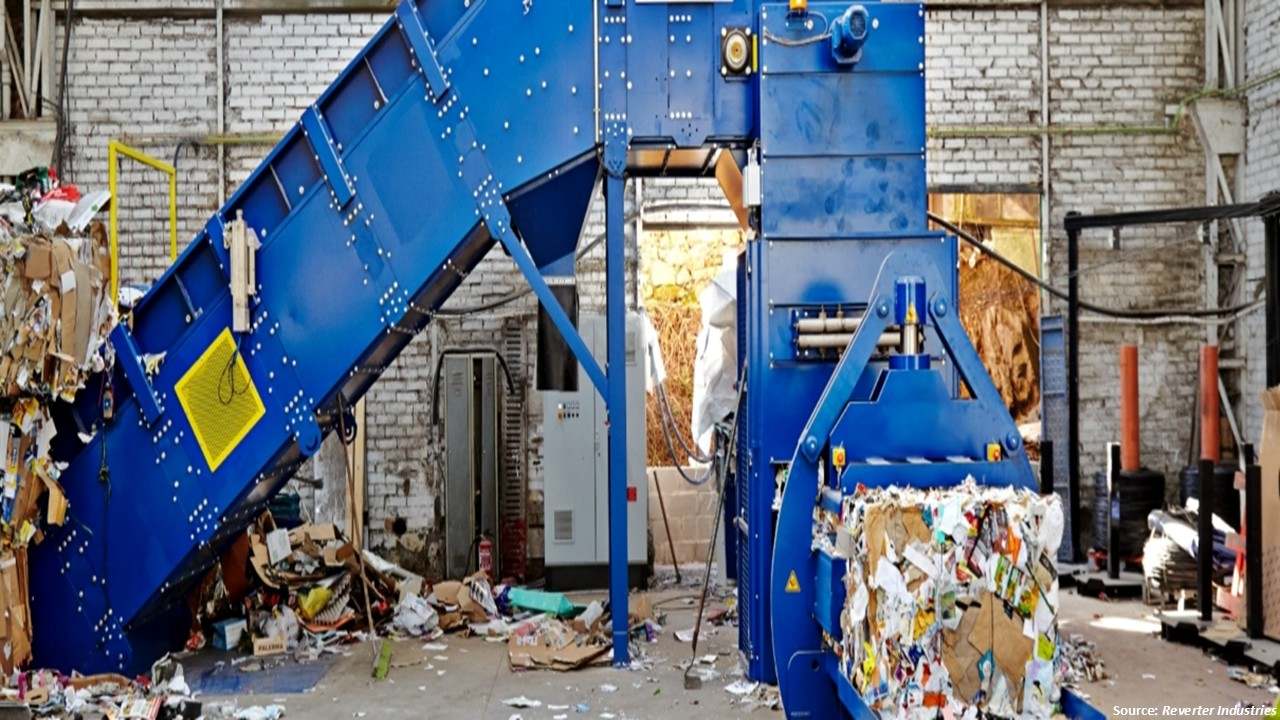
The recycling equipment market is gaining traction as industries and governments increase efforts toward waste reduction and resource recovery. Recent partnerships, project investments, and technological expansion highlight how stakeholders are strengthening recycling infrastructure worldwide. These developments are improving processing efficiency, reducing landfill dependency, and supporting sustainability targets.
Growing Demand Driving the Recycling Equipment Market
Infrastructure Expansion Accelerating Recycling Equipment Market Adoption
The recycling equipment market is experiencing steady growth due to increased investments in waste management infrastructure. For instance, Uzbekistan announced plans to implement waste recycling equipment projects worth approximately USD 10 million in collaboration with Turkish company MT-Makina by 2027. These projects aim to modernize recycling operations and improve waste processing capabilities across the country.
The initiative highlights the rising importance of advanced recycling equipment in supporting environmental regulations and circular economy objectives. Governments are investing in equipment upgrades to reduce environmental pollution and improve material recovery rates.
Expanding Industrial Recycling Needs
Increasing urbanization and industrialization are contributing to higher waste volumes, requiring advanced shredding, screening, and sorting equipment. Companies are strengthening operational capacity through acquisitions and partnerships to meet rising demand.
Key Takeaways:
-
Governments are funding recycling infrastructure development.
-
Industrial expansion is increasing demand for advanced recycling equipment.
-
Circular economy initiatives are encouraging equipment modernization.
Strategic Partnerships Boosting Recycling Equipment Market
Collaborations Supporting Recycling Equipment Market Growth
Industry partnerships are playing a significant role in expanding recycling equipment distribution and service capabilities. Viably recently partnered with Maverick Environmental Equipment to distribute shredders and screens used in wood and organic waste recycling across Michigan and Ohio.
This partnership allows both companies to strengthen equipment availability while improving after-sales support for recycling operators. By expanding product reach, equipment manufacturers can address region-specific recycling challenges and improve customer accessibility.
Focus on Specialized Recycling Solutions
Shredding and screening equipment is becoming increasingly critical for processing wood waste and organic materials. These machines improve material preparation, which increases recycling efficiency and reduces contamination.
Key Takeaways:
-
Partnerships help manufacturers expand regional distribution networks.
-
Specialized recycling equipment supports diverse waste streams.
-
Improved service support enhances operational efficiency.
Technology Advancements Transforming Recycling Equipment Market
Advanced Processing Equipment Driving Market Innovation
Modern recycling equipment now focuses on improving processing speed, automation, and material separation accuracy. Equipment such as industrial shredders and screening systems help streamline recycling workflows and increase output quality.
According to industry developments, equipment manufacturers are emphasizing multi-functional systems that can handle various waste materials, including wood and organic waste.
These technologies support sustainability goals by increasing recycling rates and reducing operational costs.
Automation Enhancing Recycling Efficiency
Automation technologies are enabling operators to improve productivity and reduce manual intervention. Automated screening systems help separate recyclable materials more accurately, improving overall recycling outcomes.
Key Takeaways:
-
Automation improves recycling productivity.
-
Multi-functional equipment increases operational flexibility.
-
Technology upgrades support sustainability objectives.
Regional Developments Influencing Recycling Equipment Market
Emerging Economies Driving Recycling Equipment Market Investments
Emerging markets are becoming major contributors to recycling infrastructure development. Uzbekistan’s collaboration with MT-Makina demonstrates how developing economies are adopting modern recycling technologies to strengthen environmental management.
The project aims to install advanced recycling equipment and expand waste management capabilities nationwide.
North America Expanding Recycling Equipment Deployment
The partnership between Viably and Maverick Environmental Equipment shows how North American recycling operators are focusing on improving organic and wood waste processing capabilities.
This reflects regional efforts to strengthen recycling infrastructure and meet sustainability regulations.
Key Takeaways:
-
Emerging economies are investing in recycling modernization.
-
North America is strengthening organic waste recycling infrastructure.
-
Regional partnerships support localized recycling solutions.
Key Developments in Recycling Equipment Market
|
Year |
Development |
Impact |
|
2026 |
Uzbekistan announced USD 10 million recycling equipment projects with MT-Makina |
Expands national recycling capacity |
|
2025 |
Viably partnered with Maverick Environmental Equipment |
Strengthens distribution of shredding and screening equipment |
Future Outlook of Recycling Equipment Market
The recycling equipment market is expected to grow as environmental sustainability becomes a core priority across industries and governments. Investments in advanced processing technologies and cross-border partnerships are expected to accelerate infrastructure development. Additionally, automation and multi-functional equipment will play a crucial role in improving recycling efficiency and reducing operational costs.
Key Takeaways:
-
Sustainability policies will increase recycling equipment demand.
-
Technology innovation will enhance recycling efficiency.
-
Global collaborations will expand equipment deployment.
Key Players Leading the Market
In May 2025, TOMRA Systems ASA introduced its next-generation X-TRACT unit designed for wood recycling, improving material purity and recovery efficiency through advanced sensor-based sorting. Similarly, in 2024, Vecoplan AG invested 13 million Euros to expand its Germany headquarters, upgrade production lines, and launch the VIZ 1300 shredder to enhance processing efficiency.
Eldan Recycling expanded its global presence by participating in industry exhibitions such as the Australasian Waste and Recycling Expo in Sydney, showcasing advanced recycling systems for tires, cables, and electronic waste. Additionally, in 2025, ANDRITZ Group strengthened its recycling portfolio by acquiring ATN Engineering B.V. and collaborating with HolyPoly to develop circular recycling solutions.

Next Move Strategy Consulting (NMSC) Viewpoint
Next Move Strategy Consulting highlights that the Recycling Equipment Market is gaining momentum due to rising infrastructure investments and strategic industry partnerships. Projects such as Uzbekistan’s USD 10 million recycling equipment initiative demonstrate increasing government focus on improving waste processing capabilities and recycling efficiency.
Additionally, collaborations like the partnership between Viably and Maverick Environmental Equipment reflect industry efforts to expand equipment accessibility and strengthen recycling service networks.
Key Highlights:
-
Infrastructure investments are accelerating equipment adoption.
-
Partnerships are improving distribution and operational support.
-
Advanced technologies are strengthening recycling efficiency.
Next Steps
Organizations and stakeholders can leverage emerging opportunities in the recycling equipment market through the following actions:
-
Invest in automated recycling equipment to improve operational efficiency.
-
Build partnerships with equipment manufacturers to enhance distribution networks.
-
Focus on specialized recycling technologies for handling diverse waste streams.
-
Support infrastructure projects in emerging markets to expand recycling capabilities.
About the Author
 Prakhyat Chowdhury
— Prakhyat Chowdhury is a results-driven Market Analyst and data strategist specializing in business intelligence, trend forecasting, and performance-focused market growth. His competitive intelligence frameworks, and data-driven insights enhances strategic planning, operational efficiency, and organizational authority. Known for strong communication, analytical thinking, and multilingual proficiency, he delivers rigorous, objective-led solutions that support scalable business outcomes across industries with professionalism. He consistently aligns quantitative and qualitative analysis with global business goals.
Prakhyat Chowdhury
— Prakhyat Chowdhury is a results-driven Market Analyst and data strategist specializing in business intelligence, trend forecasting, and performance-focused market growth. His competitive intelligence frameworks, and data-driven insights enhances strategic planning, operational efficiency, and organizational authority. Known for strong communication, analytical thinking, and multilingual proficiency, he delivers rigorous, objective-led solutions that support scalable business outcomes across industries with professionalism. He consistently aligns quantitative and qualitative analysis with global business goals.
About the Reviewer
 Sanyukta Deb
— Sanyukta Deb is Digital Marketing Team Lead at Next Move Strategy Consulting, where she has led content strategy and technical SEO for the firm's B2B market research publications for over 2 years. Her editorial process translates NextMSC's primary and secondary research — spanning technology, industrial, and consumer sectors — into commercial narratives, backed by search-intent, keyword, and competitive analysis. She brings 5 years of overall experience in digital marketing and content strategy.
Sanyukta Deb
— Sanyukta Deb is Digital Marketing Team Lead at Next Move Strategy Consulting, where she has led content strategy and technical SEO for the firm's B2B market research publications for over 2 years. Her editorial process translates NextMSC's primary and secondary research — spanning technology, industrial, and consumer sectors — into commercial narratives, backed by search-intent, keyword, and competitive analysis. She brings 5 years of overall experience in digital marketing and content strategy.


















Add Comment