Why Sovereign Gold Coins Remain a Preferred Asset in Times of Economic Uncertainty

Gold has a way of returning to the conversation whenever confidence in the broader economy starts to slip and 2026 has given investors plenty of reasons to look. Gold traded above $5,500 per troy ounce in late January before easing to roughly $4,300 by mid-September, silver more than doubled off its 2025 close before pulling back, and central banks kept buying through it all. Amid that volatility, sovereign gold coins have held on to a distinctive role in the Precious Metals Market, prized for combining physical ownership with government-backed authenticity.
What makes sovereign coins stand apart from other forms of physical gold is that combination: a coin minted by a national authority carries an implied guarantee of purity and weight, which makes it easier to sell or trade across markets. That built-in liquidity matters when conditions call for a fast response and 2026 has tested that thesis more than most years in recent memory.
Why Investors Still Turn to Sovereign Gold Coins
Sovereign gold coins occupy a specific, well-established role in uncertain times. They combine gold's safe-haven appeal with the added credibility of government backing, making them easier to recognize, verify, and resell across a wide range of markets. Physical gold held in coin form sits outside the banking system entirely its value doesn't depend on any institution remaining solvent or any platform staying operational, which is a meaningful feature for investors who have grown cautious about paper-based exposure.
Sovereign coins also address the store-of-value question directly. During inflation, market volatility, or geopolitical tension, assets tied to fiat currency systems tend to lose real purchasing power, and gold has historically held its ground in those conditions. Unlike bars or ETFs, sovereign coins bring together direct physical ownership, government-backed authenticity, and broad global liquidity a combination that becomes especially relevant when economic uncertainty is elevated, as it has been for most of 2026.
What's Driving Precious Metals Prices in 2026
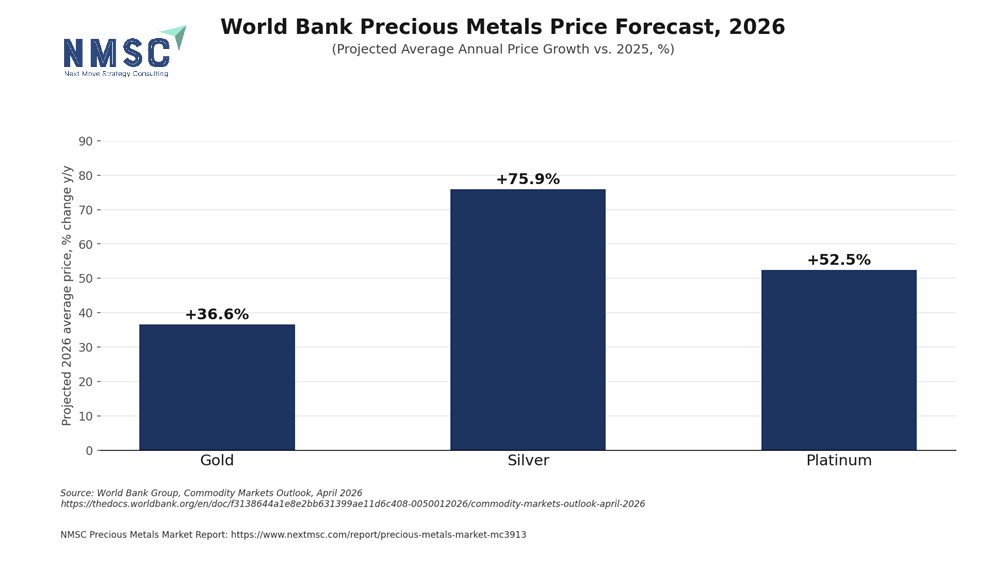
The precious metals market has been reshaped this year by a rare convergence of forces. According to the World Bank Group's April 2026 Commodity Markets Outlook, gold prices rose 17% quarter-on-quarter in the first three months of 2026 and silver jumped 55% over the same period, with the war in the Middle East and the resulting disruption to shipping through the Strait of Hormuz acting as what the World Bank called a historic shock to commodity markets. The Bank's precious metals price index is projected to rise 42% for full-year 2026, more than double any other commodity category, before moderating by roughly 8% in 2027 as tensions ease.
That rally hasn't been a straight line. By June, gold had pulled back roughly 25% from its February peak and silver and platinum were down about a quarter from their January records, as a firmer U.S. dollar, rising rate expectations, and profit-taking set in. Spot gold was trading around $4,300 per ounce and silver near $63 per ounce in mid-September still up double digits year-on-year, but well off the highs.
World Bank precious metals price forecasts, 2024–2027
|
Metal |
Unit |
2024 (Actual) |
2025 (Actual) |
2026 (Forecast) |
2027 (Forecast) |
2026 % Change (y/y) |
|
Gold |
$/toz |
2,388 |
3,442 |
4,700 |
4,300 |
+36.6% |
|
Silver |
$/toz |
28.3 |
39.8 |
70.0 |
65.0 |
+75.9% |
|
Platinum |
$/toz |
955 |
1,278 |
1,950 |
1,700 |
+52.5% |
Central Bank Buying Adds Another Trust Signal
The behavior of central banks remains one of the clearer indicators of how gold is valued at an institutional level. The World Gold Council's 2026 Central Bank Gold Reserves Survey, published June 16, 2026 conducted mostly after the Middle East conflict began found that 89% of reserve managers expect global central bank gold holdings to keep rising over the next 12 months, and a record 45% plan to add to their own reserves. Central banks have accumulated an average of roughly 1,000 tonnes of gold a year over the past four years, roughly double the 500-tonne average of the decade before that.
That pattern carries weight beyond monetary policy. When institutions responsible for managing national reserves consistently treat gold as a strategic holding, it reinforces the same qualities retail investors look for during economic uncertainty: a long-term store of value and a hedge against systemic risk. Investment demand tells a similar story gold flowed into bars, coins, and ETFs at a record pace in 2025, with total global gold demand (including OTC transactions) topping 5,000 tonnes for the first time, according to the World Gold Council.
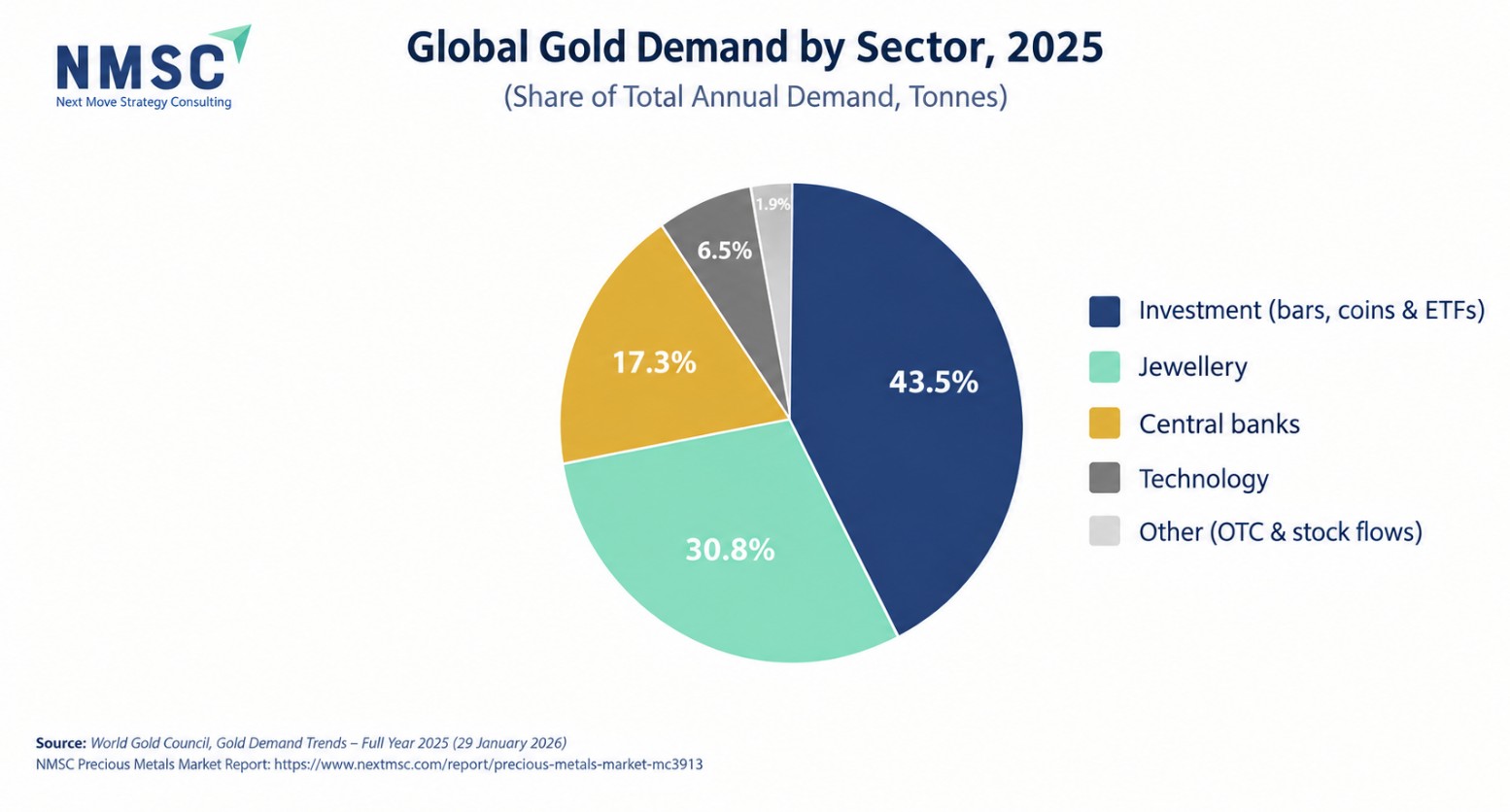
For investors weighing sovereign gold coins specifically, this institutional demand signals something practical: gold demand doesn't disappear when conditions deteriorate it tends to deepen. That dynamic also shapes the broader Gold Market, which sits alongside platinum and silver as the core pillars of the precious metals complex.
Section summary: 2026 has delivered one of the most volatile and consequential years for precious metals in decades a historic geopolitical shock, record central bank buying, and a Q2 pullback that tested (but didn't break) the broader rally.
-
Gold, silver, and platinum all hit record highs in Q1 2026 before pulling back 15–25% by mid-year
-
The World Bank projects its precious metals price index to rise 42% for full-year 2026
-
89% of central banks expect global gold reserves to keep rising, with a record 45% planning to buy more themselves
-
Global gold demand topped 5,000 tonnes in 2025 for the first time, led by investment demand
Industry Impact: How Leading Producers Are Responding
The world's largest gold and silver producers have spent 2026 restructuring, consolidating, and investing at a pace that reflects just how elevated prices have become. Coverage below draws on company filings, press releases, and Reuters/Bloomberg-level financial reporting rather than competing market-research estimates.
Newmont and Barrick Mining Corporation made the year's most consequential single move: on August 9, 2026, the two companies agreed to expand their Nevada Gold Mines joint venture by swapping in previously excluded properties Barrick’s Fourmile project and Newmont's Mike and Fiberline claims with Newmont paying Barrick a $1.95 billion cash top-up, according to Barrick's SEC filing. The deal resolved all outstanding NGM disputes. Newmont separately reported record Q1 2026 free cash flow and authorized an additional $6 billion in share buybacks, while continuing to ramp up its Ahafo North expansion in Ghana. Barrick, for its part, is advancing an initial public offering of a minority stake in "North American Barrick” a new entity holding Nevada Gold Mines, Pueblo Viejo, and Fourmile targeted for completion by the end of 2026, even as it slowed development at its Reko Diq copper-gold project in Pakistan through mid-2027 because of regional security risks.
Freeport-McMoRan has spent much of 2026 recovering from a fatal mudslide that struck its Grasberg Block Cave mine in Indonesia in September 2025. The company has repeatedly trimmed its 2026 guidance as the phased restart has taken longer than expected full-year 2026 output is now guided at roughly 0.7 billion pounds of copper and 650,000 ounces of gold, down from an original forecast of 1.7 billion pounds and 1.6 million ounces with a return to pre-incident production rates not expected until 2027. In February 2026, Freeport Indonesia and the Indonesian government signed a memorandum of understanding to extend its mining permit beyond 2041.
Eldorado Gold hit a major construction-to-operations milestone on September 8, 2026, producing first copper-gold concentrate at its Skouries project in Greece, with commercial production still on track for the fourth quarter. Skouries is expected to add roughly 140,000 ounces of gold and 67 million pounds of copper a year once ramped up, transforming Eldorado from a pure gold miner into a diversified gold-copper producer alongside its McIlvenna Bay project in Canada.
Northern Star Resources used its FY26 results (year ended June 30, 2026) to report Group Mineral Resources up 26% to 88.9 million ounces and Ore Reserves up 27% to 28.4 million ounces, with its Hemi project acquired through the De Grey Mining takeover included in the resource base for the first time. Revenue rose 19% to A$7.6 billion, and Stage 1 of the company's KCGM mill expansion entered commissioning during the year.
Section summary: The largest producers are using record prices to fund consolidation, restructuring, and project execution rather than pure expansion a sign that operational discipline, not just higher gold prices, is driving the sector's current cash generation.
-
Newmont and Barrick resolved their Nevada Gold Mines dispute via a $1.95 billion asset swap; Barrick is separately pursuing a North American IPO by year-end 2026
-
Freeport-McMoRan's Grasberg recovery remains the industry's most closely watched supply disruption, with full restoration not expected until 2027
-
Eldorado Gold's Skouries project reached first concentrate production in September 2026, adding meaningful copper exposure to the gold sector
-
Northern Star's Hemi integration lifted its resource base by roughly a quarter in a single year
Precious Metals Market report snapshot
|
Parameter |
Detail |
|
Market size, 2026 |
USD 422.56 billion |
|
Revenue forecast, 2035 |
USD 858.87 billion |
|
Growth rate |
CAGR of 8.2%, 2026–2035 |
|
Base year |
2025 |
|
Forecast period |
2026–2035 |
|
Companies profiled |
15 |
|
Countries covered |
33 |
|
Key segments |
Metal type (gold, silver, PGMs, others); product form (bullion bars, coins, minted products); application (jewelry, investment, industrial & technology) |
Competitive Landscape: Consolidation and Diversification
Beyond the year's biggest headlines, mid-tier and specialist producers have been just as active. AngloGold Ashanti won board approval in May 2026 for a $2.0 billion share buyback after a strong Q1, and disclosed a first-time 4.9-million-ounce mineral reserve at its Arthur Gold Project in Nevada one of the largest U.S. greenfield gold discoveries in years while completing the integration of Sukari as a Tier 1 asset following its Centamin acquisition. Kinross Gold posted a fourth consecutive quarterly record for free cash flow (roughly $840 million in Q1 2026) and advanced its Lobo-Marte project in Chile, submitting its Environmental Impact Assessment in April 2026 for a mine expected to produce 4.7 million gold-equivalent ounces over 16 years. Agnico Eagle Mines moved to consolidate Finland's Central Lapland Greenstone Belt in April 2026 through simultaneous acquisitions of Rupert Resources and Aurion Resources plus a stake buy-in from B2Gold, and separately approved a Hope Bay redevelopment in Nunavut targeting 400,000-plus ounces of annual production.
Silver-focused producers have leaned into M&A. Fresnillo, the world's largest primary silver producer, agreed to acquire Probe Gold for roughly $548 million in its record first-half 2026, when revenue climbed 74.7% on the metals rally. Pan American Silver reported record quarterly shareholder returns of $300 million in Q2 2026 and reached an important milestone at its La Colorada Skarn project in Mexico envisioned under a revised feasibility study as a 37-year, top-tier silver mine. First Majestic Silver completed its acquisition of Gatos Silver in early 2026, adding a 70% interest in the high-grade Cerro Los Gatos mine, while agreeing to sell its San Martin mine for $90 million. Hecla Mining, the largest U.S. silver producer, reported new high-grade drill results extending its Keno Hill district in the Yukon and new vein discoveries at its Midas mine in Nevada.
Harmony Gold used its FY26 results (released August 27, 2026) to report record adjusted free cash flow, up 54% to roughly $1 billion, crediting both higher gold prices and its first full year of copper sales from the CSA mine in Australia, acquired via its ~$1 billion purchase of MAC Copper a deal management called a defining step in Harmony's evolution into a diversified gold-and-copper producer. PJSC Polyus, Russia's largest gold producer, reported first-half 2026 revenue up 27% to $4.7 billion, though adjusted net profit fell 59% on higher mineral extraction taxes and costs; the company continues to direct the bulk of its capital toward Sukhoi Log, one of the world's largest undeveloped gold deposits, targeting 6 million ounces of annual group output by 2030. Gold Fields reported sharply higher first-half 2026 cash flow and reached an Impact Benefit Agreement with the Cree Nation of Waswanipi covering its Windfall project in Quebec, a key step toward final investment decision.
Where several producers are converging on the same trend, it's diversification and reserve replacement rather than pure output growth: gold miners adding copper exposure (Harmony, Eldorado, Freeport's ongoing copper focus), and silver producers consolidating district-scale assets (Fresnillo, Pan American, First Majestic) to secure supply in a market the World Gold Council and CME Group both describe as running a persistent structural deficit.
How Coins Compare with Bars and Gold ETFs
Physical gold comes in several forms, and each solves a different problem. Bars, particularly larger ones, offer storage efficiency and tend to carry lower premiums per ounce, which makes them attractive for investors building significant positions. Coins, by contrast, offer divisibility that bars rarely match selling a portion of a large bar requires cutting it or selling the whole thing, while sovereign coins let an investor liquidate exactly what they need. That flexibility becomes especially relevant during market volatility, when gold demand spikes and sellers benefit from being able to respond quickly and precisely.
Gold ETFs offer genuine convenience: they trade on exchanges, require no storage, and provide straightforward exposure to price movements a big part of why global ETF inflows hit a record $89 billion in 2025, according to the World Gold Council. The trade-off is counterparty risk. ETF investors hold a financial claim on gold, not the metal itself, so their position depends on the solvency of the fund and its custodians. Physical gold sidesteps that dependency entirely. Sovereign coins like the 1 oz Canadian Maple Leaf gold coin sit firmly in this category offering a safe-haven asset that requires no platform, no counterparty, and no ongoing institutional solvency to retain its value. Where ETFs solve for trading convenience, sovereign coins solve for crisis assurance; each format serves a different priority rather than competing on the same terms.
Tax Treatment and Legal Tender Status Can Matter
Beyond their physical properties, sovereign gold coins carry a legal distinction that other forms of bullion don't: formal legal tender status. While no investor buys a Maple Leaf or Britannia expecting to spend it at face value, that designation can matter for tax purposes. In certain jurisdictions, legal tender status may support more favorable tax treatment some countries exempt recognized sovereign gold coins from capital gains tax or value-added tax in ways that don't apply to bars or private mint products. Tax outcomes vary considerably by country, investor residency, and individual circumstances, so professional tax advice is always appropriate before drawing conclusions. What remains consistent is that legal tender status reinforces institutional recognition, which in turn supports liquidity: buyers across different markets are more willing to transact in coins they can identify and trust.
What Should Investors Weigh Before Buying
Sovereign gold coins offer genuine advantages, but physical ownership comes with real tradeoffs. Premiums over spot price, secure storage costs, and insurance all add to the total cost of ownership in ways a gold ETF doesn't, and buy-sell spreads vary between dealers, meaning entry and exit prices are rarely identical a dynamic that's become more pronounced in 2026 as premiums have stayed elevated on strong physical demand and periodic supply-chain constraints at mints. It's also worth remembering that physical gold protects differently from income-producing assets: coins don't generate dividends or interest, they preserve value rather than grow it. That points toward portfolio diversification as the right framework sovereign coins work best as one component of a broader strategy, particularly during periods of market volatility, rather than as a standalone allocation.
Future Outlook (2026–2035)
According to NMSC's proprietary research, the Precious Metals Market was valued at $422.56 billion in 2026 and is projected to reach $858.87 billion by 2035, a CAGR of 8.2%. That growth is underpinned by three structural forces rather than a single cyclical event: continued central bank de-dollarization and gold accumulation; electrification-driven industrial demand for silver and platinum-group metals, particularly from solar photovoltaic manufacturing and data-center buildouts; and the growing financialization of metals through ETFs and digital/tokenized products that are broadening investor access.
On the supply side, primary mine output continues to expand slowly relative to demand given long project lead times, while secondary recycled supply jewelry scrap, e-waste, and industrial catalysts is growing as a share of total availability. For sovereign gold coins specifically, that combination of firm structural demand and constrained primary supply supports the same liquidity and trust characteristics that have long defined the category, even as near-term prices stay volatile.
Section summary: The long-term case for the precious metals market rests on structural rather than cyclical drivers and those same forces continue to support sovereign gold coins' role as a liquid, government-backed store of value.
-
NMSC projects the precious metals market will nearly double from $422.56 billion in 2026 to $858.87 billion by 2035
-
De-dollarization, electrification, and financial-product innovation are the three structural demand pillars
-
Constrained primary mine supply and growing recycled supply will continue to define the market's cost structure through the forecast period
Conclusion
Sovereign gold coins draw their enduring appeal from a combination few other assets can replicate: government-backed recognition, physical ownership free of counterparty exposure, and a long history of holding value through economic uncertainty. That case has only strengthened through 2026's historic run in the broader precious metals market record prices, record central bank buying, and a wave of producer consolidation all point to the same conclusion. For investors weighing their options, the decision comes down to what role the asset needs to play. As a safe-haven asset within a diversified strategy, sovereign gold coins continue to earn their position.
Download Free Sample of NMSC's full Precious Metals Market report for detailed segment-level forecasts, regional breakdowns, and competitive benchmarking through 2035.
About the Author
 Sanyukta Deb
— Sanyukta Deb is Digital Marketing Team Lead at Next Move Strategy Consulting, where she has led content strategy and technical SEO for the firm's B2B market research publications for over 2 years. Her editorial process translates NextMSC's primary and secondary research — spanning technology, industrial, and consumer sectors — into commercial narratives, backed by search-intent, keyword, and competitive analysis. She brings 5 years of overall experience in digital marketing and content strategy.
Sanyukta Deb
— Sanyukta Deb is Digital Marketing Team Lead at Next Move Strategy Consulting, where she has led content strategy and technical SEO for the firm's B2B market research publications for over 2 years. Her editorial process translates NextMSC's primary and secondary research — spanning technology, industrial, and consumer sectors — into commercial narratives, backed by search-intent, keyword, and competitive analysis. She brings 5 years of overall experience in digital marketing and content strategy.
About the Reviewer
 Debashree Dey
— Debashree Dey is Assistant Manager at Next Move Strategy Consulting, where she supports cross-vertical market content and communications across diverse industries for 6 years. Her professional background includes senior content writing, communications, and published manuscript authorship, with experience developing audience-focused business narratives and maintaining clear, consistent messaging. Her role supports research-led content development and editorial quality across NextMSC publications.
Debashree Dey
— Debashree Dey is Assistant Manager at Next Move Strategy Consulting, where she supports cross-vertical market content and communications across diverse industries for 6 years. Her professional background includes senior content writing, communications, and published manuscript authorship, with experience developing audience-focused business narratives and maintaining clear, consistent messaging. Her role supports research-led content development and editorial quality across NextMSC publications.
















Add Comment