Smart Home Displays: The Future of Home Management

Smart home displays are no longer just devices for checking the weather or streaming music. In 2026, they have evolved into central hubs for automation, AI integration, and enhanced user interaction. Companies like Amazon, Apple, and Google are redefining what these devices can do, creating smarter, more intuitive homes.
Next-Generation Features of Smart Home Displays
Smart home displays today offer advanced capabilities that extend far beyond simple voice commands. Leading devices now include:
-
AI Integration: Apple is reportedly preparing a smart display that incorporates AI-powered Siri around the iOS 27 rollout, allowing predictive actions and context-aware responses for users.
-
Enhanced Automation: Google Home now supports fully integrated home automation, allowing devices to communicate and act autonomously based on user habits and routines.
-
High-Definition Displays: Amazon Echo Show 11 features a high-definition screen combined with Omnisense, an ambient AI platform, enhancing both visual and interactive experiences.
-
Smart Processors: Devices like the Echo Show 11 use proprietary processors (AZ3 Pro) to improve responsiveness and manage AI workloads efficiently.
Smart home displays are increasingly becoming indispensable home hubs; Next Move Strategy Consulting notes that companies are investing in AI and automation not just for convenience, but to position these devices as central to a connected lifestyle.
Amazon Echo Show 11: A Case Study in Smart Display Evolution
The Amazon Echo Show 11 represents a significant leap in smart display technology. Key features include:
|
Feature |
Details |
|
Processor |
AZ3 Pro silicon for faster AI processing |
|
AI Platform |
Omnisense for ambient intelligence |
|
Display |
High-definition screen, ideal for streaming and smart home dashboards |
|
Home Automation |
Seamless integration with entertainment, security, and daily routines |
The Echo Show 11 exemplifies how hardware and AI integration can create a compelling, all-in-one home management solution; Next Move Strategy Consulting notes that its success reflects growing consumer demand for multifunctional devices over isolated smart gadgets.
Apple’s Upcoming AI-Powered Smart Display
Apple is reportedly entering the smart home display market with a device designed to integrate AI-driven Siri features directly into the display. Expected around the iOS 27 rollout, the device aims to anticipate user needs and provide context-sensitive suggestions, further blurring the line between mobile devices and home hubs.
Apple’s entry may accelerate innovation in the smart home sector; our observations at Next Move Strategy Consulting indicate that by leveraging AI for predictive services, it can raise user expectations for responsiveness and personalization across all smart home devices.
Google Home Automation Advancements
Google Home has unlocked a new level of automation in 2025, enabling devices to operate autonomously based on user patterns. For example:
-
Lighting, HVAC, and security systems can respond automatically without user prompts.
-
Smart displays can coordinate with other connected devices to create seamless routines.
Google’s automation strategy demonstrates the potential for smart displays to act as orchestrators of the entire home ecosystem, reinforcing the concept of a centralized control hub, with Next Move Strategy Consulting noting that this approach underscores the growing importance of unified, intelligent home management solutions.
Market Dynamics and Consumer Adoption
Consumer interest in smart home displays is growing rapidly due to:
-
Desire for convenience and seamless home management.
-
Integration of entertainment, security, and productivity tools in one device.
-
Increasing AI and IoT capabilities enabling smarter decision-making at home.
Pricing strategies also play a role. For instance, Amazon targets premium segments with the Echo Show 11 in India, appealing to both first-time adopters and technology enthusiasts looking to expand their connected home ecosystem.
Adoption trends indicate that consumers are willing to invest in devices that combine multiple functionalities, highlighting the market’s preference for integrated solutions over single-purpose gadgets, as observed by Next Move Strategy Consulting, which notes that this trend underscores growing demand for all-in-one smart home solutions rather than isolated devices.
Leading Key Players of the Market
The smart home display industry features several key players, including Google LLC, Amazon.com, Inc., Apple Inc., ABB Ltd., Johnson Controls Inc., Schneider Electric SE, Xiaomi Inc., Vivint Smart Home, Inc., Savant Systems, Inc., Crestron Electronics, Inc., Honeywell International Inc., Koninklijke Philips N.V., Legrand, Emerson Electric Co., and Mitsubishi Electric Trane HVAC US LLC, among others. These companies are actively adopting strategies such as new product launches and technology upgrades to remain competitive and strengthen their positions in the growing smart home market.
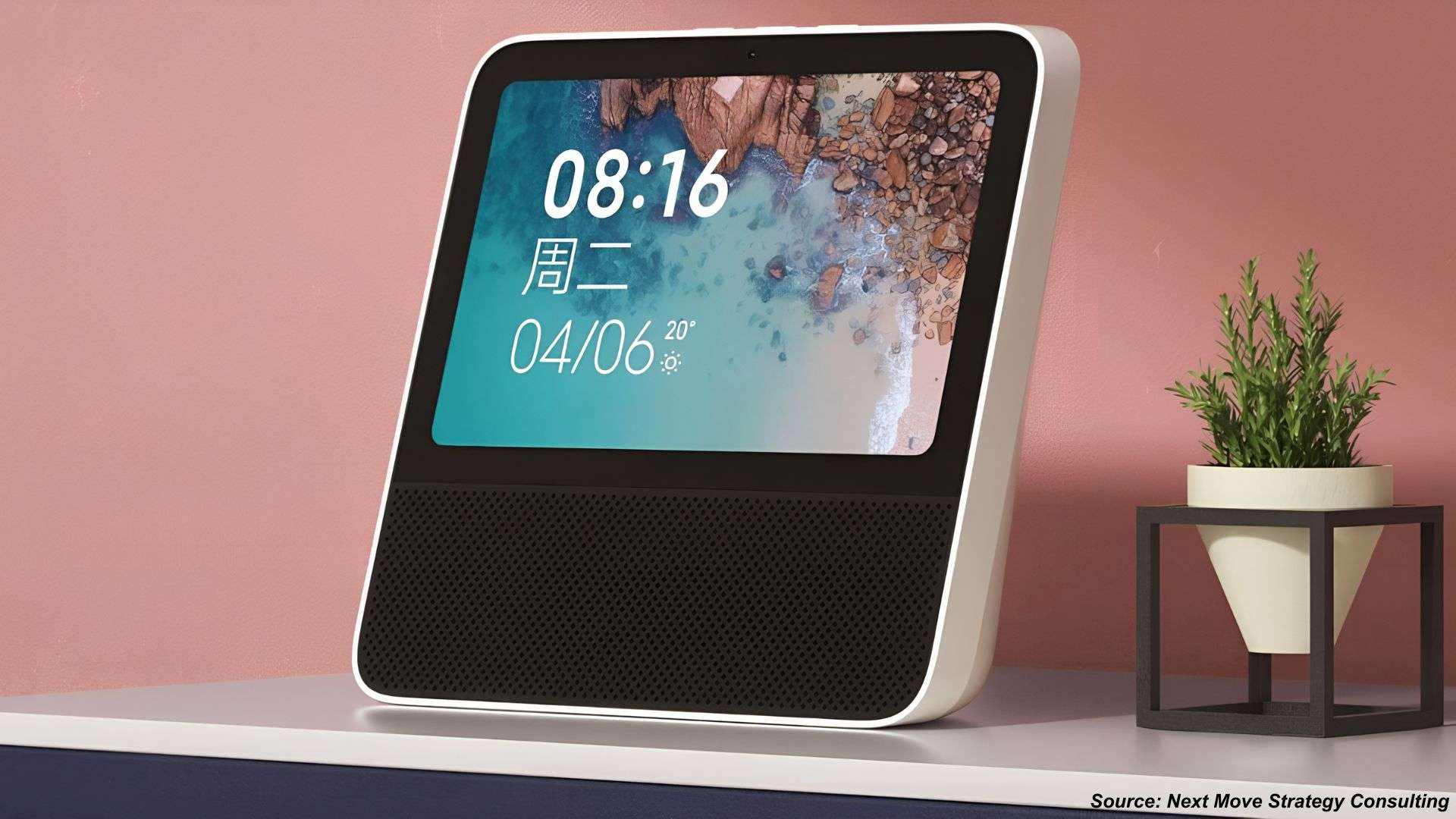
For example, in April 2022, Xiaomi introduced the Smart Display 10 in China, designed to act as an intelligent controller for connected households. This device integrates multiple smart capabilities into a single appliance, enhancing user comfort and engagement within the home. Similarly, in January 2022, Google launched the Nest Hub Second Generation smart display in India, featuring a 7-inch touchscreen and seamless compatibility with a range of smart home devices, thereby expanding Google’s smart home product ecosystem.

According to Next Move Strategy Consulting: Industry Impact
-
Acceleration of AI Adoption: Smart Home Displays are setting new benchmarks for AI integration in consumer devices.
-
Consolidation of Home Devices: Centralized smart displays reduce the need for multiple smart gadgets, streamlining home ecosystems.
-
Innovation in User Experience: Companies are focusing on predictive and context-aware features to differentiate in a competitive market.

Next Steps for Smart Home Enthusiasts
-
Evaluate your current home setup to identify integration opportunities with smart displays.
-
Prioritize devices with AI and automation capabilities for long-term usability.
-
Monitor software updates that enhance functionality, such as predictive routines and contextual AI.
-
Consider premium devices like Echo Show 11 for robust processing and advanced home management.
-
Stay informed on upcoming Apple devices for potential ecosystem advantages.
Smart home displays are no longer optional. With AI, automation, and high-definition interfaces, they are becoming central to how households interact with technology. As Amazon, Apple, and Google continue to innovate, the future promises fully intelligent and adaptive home environments.
About the Author
 Joydeep Dey
— Joydeep Dey is a content writer and analyst fueled by creativity, research, and continuous learning. He combines compelling storytelling with market insights to turn complex information into engaging, impactful content. Passionate about emerging trends, digital strategy, and innovation-driven communication, he believes curiosity and consistent growth are key to creating meaningful influence in every project.
Joydeep Dey
— Joydeep Dey is a content writer and analyst fueled by creativity, research, and continuous learning. He combines compelling storytelling with market insights to turn complex information into engaging, impactful content. Passionate about emerging trends, digital strategy, and innovation-driven communication, he believes curiosity and consistent growth are key to creating meaningful influence in every project.
About the Reviewer
 Debashree Dey
— Debashree Dey is Assistant Manager at Next Move Strategy Consulting, where she supports cross-vertical market content and communications across diverse industries for 6 years. Her professional background includes senior content writing, communications, and published manuscript authorship, with experience developing audience-focused business narratives and maintaining clear, consistent messaging. Her role supports research-led content development and editorial quality across NextMSC publications.
Debashree Dey
— Debashree Dey is Assistant Manager at Next Move Strategy Consulting, where she supports cross-vertical market content and communications across diverse industries for 6 years. Her professional background includes senior content writing, communications, and published manuscript authorship, with experience developing audience-focused business narratives and maintaining clear, consistent messaging. Her role supports research-led content development and editorial quality across NextMSC publications.

















Add Comment