Smart Sensors: From Intelligent Research Labs to Everyday Living
Smart sensors are quietly reshaping how devices interact with the world. Unlike traditional sensors that simply capture raw signals, smart sensors combine sensing, processing, and communication capabilities within a single system. This allows them to interpret data locally and deliver meaningful insights rather than just transmitting numbers.
Recent developments show that smart sensor innovation is moving in three powerful directions: embedded intelligence, mainstream consumer adoption, and material-integrated wearables. Let us explore what this means in practical terms.
Intelligent Smart Sensors: Research Advancements at Northeastern University
In June 2025, researchers at Northeastern University introduced a new generation of wireless smart sensors capable of performing computations directly on the sensor tag itself. Instead of sending raw data to external systems for processing, these devices analyze environmental inputs in real time before transmitting meaningful outcomes.
This innovation uses a computational model based on Ising dynamics, a physics-inspired approach that allows the sensor to make complex multi-parameter decisions efficiently. The result is reduced energy usage, improved accuracy, and lower dependency on centralized cloud systems. Importantly, the sensor operates without a traditional battery power system, enhancing sustainability and operational longevity.
The significance of this research lies in autonomy. By embedding intelligence directly into the sensing unit, system latency decreases and energy consumption is minimized. For industrial Internet of Things (IoT) environments, this means faster decision-making with fewer infrastructure demands.
Smart Sensors Enter Everyday Homes: IKEA’s Affordable Range
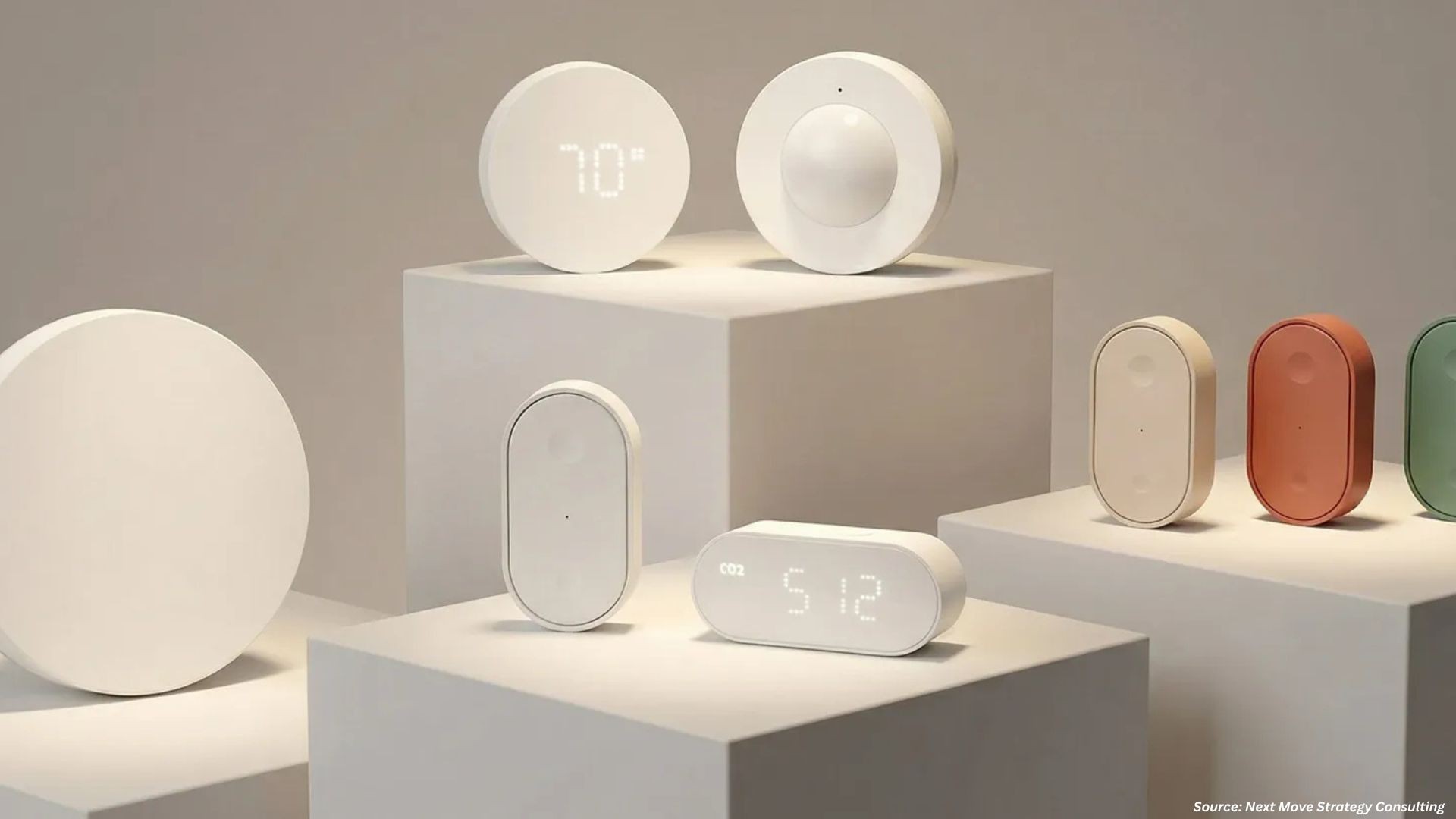
Smart sensor technology is no longer confined to laboratories or industrial facilities. In 2025, IKEA launched a new line of accessible smart home sensors designed to simplify daily life.
According to the report, the range includes practical, low-cost devices intended to monitor environmental factors such as air quality and indoor conditions. The emphasis is on simplicity, affordability, and ease of integration within existing smart home ecosystems. Some devices are priced as low as USD 6, making smart sensor adoption significantly more accessible to average households.
The move highlights two important market signals. First, consumers are increasingly interested in health-related and environmental monitoring within their homes. Second, affordability is becoming a competitive differentiator. By lowering price barriers, IKEA is helping normalize sensor-based monitoring in everyday spaces.
Smart sensors in homes now support proactive awareness. Instead of reacting to discomfort or poor air quality, users receive timely data that enables preventive action.
Smart Sensors Embedded in Performance Products: Arkema and Movmenta
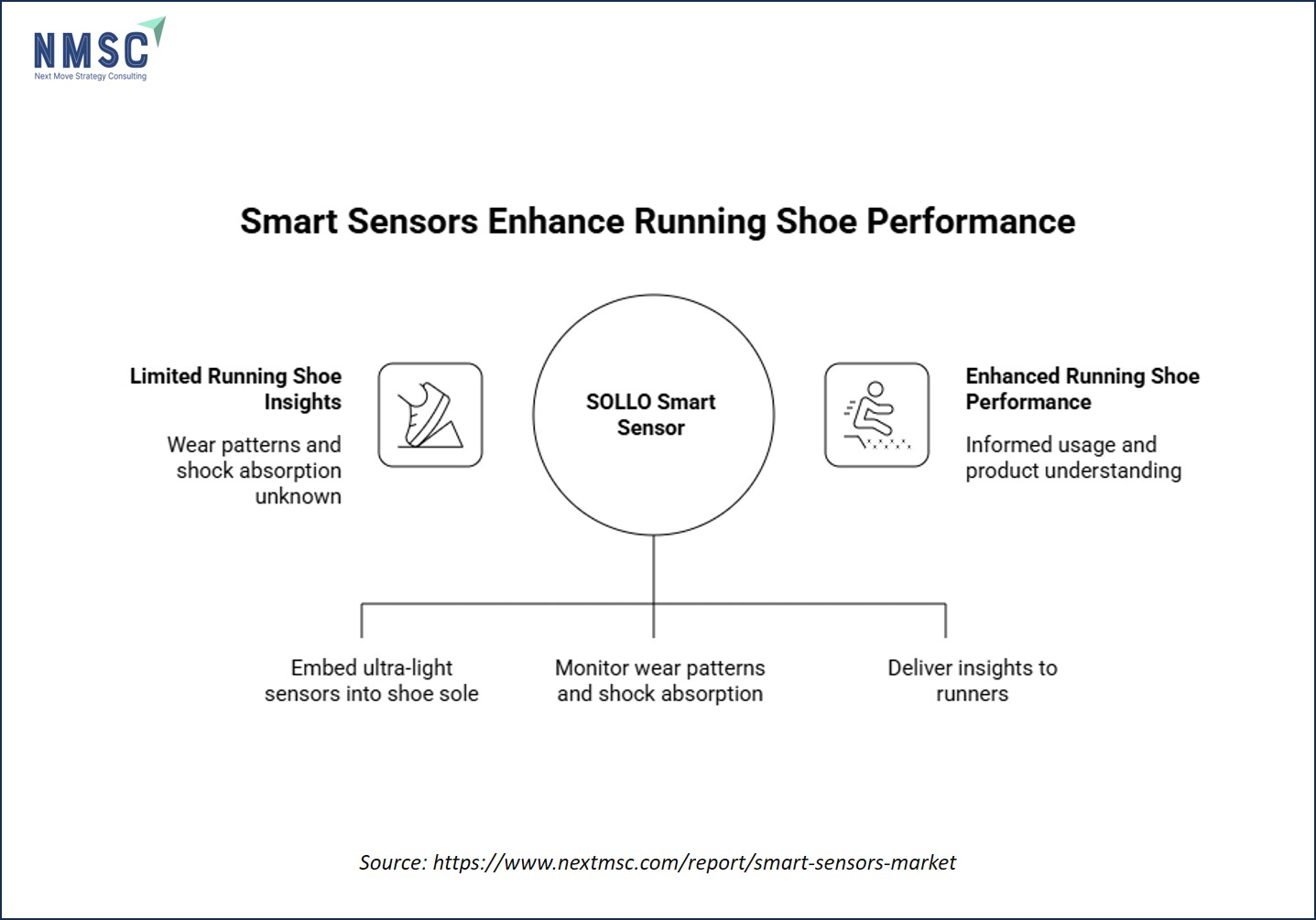
Smart sensing is also expanding into wearable and performance equipment. In September 2025, Arkema partnered with startup Movmenta to integrate ultra-light, battery-free smart sensors into running shoes.
The solution, known as SOLLO Smart Sensor technology, weighs approximately 1.5 g and is embedded directly into the shoe sole. It provides real-time data regarding wear patterns and shock absorption. The sensor connects to a mobile application, delivering insights that can help runners adjust usage or understand product performance over time.
What makes this development important is the battery-free architecture. Eliminating batteries reduces weight, increases comfort, and supports sustainability objectives. Additionally, Arkema plans to make the technology available through its global network, indicating potential large-scale industry adoption.
This partnership illustrates how smart sensors are moving beyond monitoring environments toward monitoring human movement and product lifecycle performance.
According to Next Move Strategy Consulting: Industry Impact
According to Next Move Strategy Consulting, the smart sensor developments indicate three major industry transitions.
First, decentralized intelligence is becoming a design priority. Embedded computation, as demonstrated by Northeastern University, reduces reliance on cloud processing and improves energy efficiency across IoT networks.
Second, mass-market adoption is accelerating. IKEA’s affordable sensor line reflects growing consumer demand for real-time environmental awareness and health-focused monitoring solutions.
Third, smart sensors are enabling product intelligence. Arkema’s partnership demonstrates how materials and IoT technologies are converging to create responsive products that deliver continuous feedback.
Collectively, these developments signal that smart sensors are evolving from passive measurement tools into decision-enabling systems integrated directly into infrastructure, homes, and wearable goods.
Visual Overview: Smart Sensor Evolution
|
Application Area |
Example |
Core Innovation |
Industry Impact |
|
Research & IoT |
Northeastern University |
Embedded computation on sensor tag |
Reduced energy use, decentralized processing |
|
Smart Homes |
IKEA |
Low-cost environmental sensors |
Mainstream adoption, accessibility |
|
Wearables |
Arkema & Movmenta |
Battery-free embedded shoe sensors |
Product intelligence, real-time performance data |
Next Steps: What Businesses Should Consider
-
Prioritize Embedded Intelligence: Invest in sensor systems that process data locally to reduce latency and infrastructure costs.
-
Design for Affordability: Consumer adoption accelerates when smart sensors are positioned as accessible tools rather than premium upgrades.
-
Integrate Sensors into Materials: Explore embedding sensing capabilities directly into products to enhance lifecycle value.
-
Focus on Sustainability: Battery-free or low-power architectures will gain competitive advantage in environmentally conscious markets.
-
Build Data-Driven Ecosystems: Pair smart sensors with intuitive applications to transform raw measurements into actionable insights.
Smart sensors are not merely detecting changes. They are interpreting environments, guiding user decisions, and reshaping product design. From intelligent wireless research tags to affordable home devices and embedded wearable systems, the trajectory is clear: sensing technology is becoming smarter, smaller, and seamlessly integrated into everyday life.
About the Author
 Sanyukta Deb
— Sanyukta Deb is Digital Marketing Team Lead at Next Move Strategy Consulting, where she has led content strategy and technical SEO for the firm's B2B market research publications for over 2 years. Her editorial process translates NextMSC's primary and secondary research — spanning technology, industrial, and consumer sectors — into commercial narratives, backed by search-intent, keyword, and competitive analysis. She brings 5 years of overall experience in digital marketing and content strategy.
Sanyukta Deb
— Sanyukta Deb is Digital Marketing Team Lead at Next Move Strategy Consulting, where she has led content strategy and technical SEO for the firm's B2B market research publications for over 2 years. Her editorial process translates NextMSC's primary and secondary research — spanning technology, industrial, and consumer sectors — into commercial narratives, backed by search-intent, keyword, and competitive analysis. She brings 5 years of overall experience in digital marketing and content strategy.
About the Reviewer
 Debashree Dey
— Debashree Dey is Assistant Manager at Next Move Strategy Consulting, where she supports cross-vertical market content and communications across diverse industries for 6 years. Her professional background includes senior content writing, communications, and published manuscript authorship, with experience developing audience-focused business narratives and maintaining clear, consistent messaging. Her role supports research-led content development and editorial quality across NextMSC publications.
Debashree Dey
— Debashree Dey is Assistant Manager at Next Move Strategy Consulting, where she supports cross-vertical market content and communications across diverse industries for 6 years. Her professional background includes senior content writing, communications, and published manuscript authorship, with experience developing audience-focused business narratives and maintaining clear, consistent messaging. Her role supports research-led content development and editorial quality across NextMSC publications.
















Add Comment