Gas Sensors: Safety Innovation, Advanced Materials, and Industrial Detection
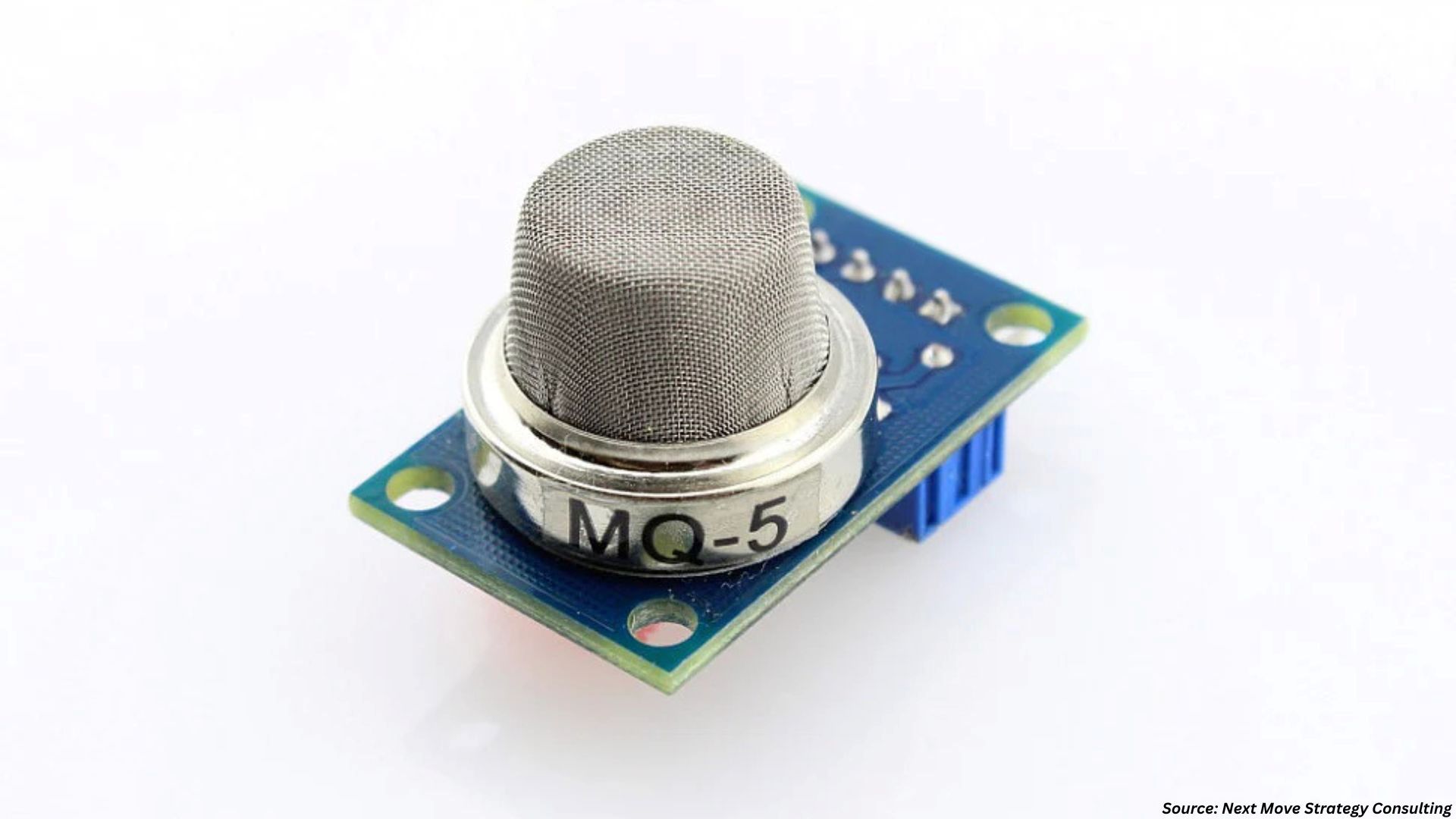
Gas sensors are essential devices used to detect and measure the presence of hazardous gases in industrial and environmental settings. They play a critical role in ensuring worker safety, preventing accidents, and maintaining operational stability. In 2026, the industry is witnessing technological advancements in infrared sensing and material science, significantly improving detection accuracy, response time, and energy efficiency.
Gas Sensors in Modern Industrial Systems
Gas sensors are widely deployed in environments where hazardous gases such as methane, propane, butane, and nitrogen dioxide (NO₂) may be present. These include industrial facilities, underground spaces, and manufacturing plants.
A typical gas sensing system works by detecting changes in physical or chemical properties when a target gas is present. Based on this interaction, the system measures gas concentration and triggers alerts when levels exceed safe thresholds.
Modern systems are evolving to improve:
-
Detection accuracy
-
Response speed
-
Durability in harsh environments
These improvements are critical for industries where even small gas leaks can pose significant safety risks.
Our observations at Next Move Strategy Consulting indicate that gas sensors are increasingly becoming core safety components in industrial operations, with growing emphasis on reliability and continuous monitoring capabilities.
Infrared Gas Sensors Enhancing Industrial Safety
A major development in 2026 comes from Honeywell, which introduced a new gas sensor based on non-dispersive infrared (NDIR) technology for detecting flammable gases such as methane, propane, and butane.
The NDIR Hydrocarbon Gas Sensor is designed for use in industries such as mining, oil and gas, petrochemical, and plastics manufacturing.
Key Innovation Features
-
Uses optical NDIR technology for accurate gas detection
-
Detects flammable gases including methane, propane, and butane
-
Designed for harsh environments such as mines and processing facilities
-
Includes a condensation reduction system for performance in humid conditions
-
Offers high resistance to poisoning, reducing sensor failure and false positives
-
Enables lower power consumption, extending device battery life

The sensor is designed to integrate into both fixed and portable gas detection systems, allowing workers to monitor gas exposure in real time across industrial environments.
Unlike traditional catalytic bead sensors, which can degrade in harsh conditions, NDIR sensors maintain performance over longer periods, improving operational reliability.
Our analysis at Next Move Strategy Consulting indicates that infrared-based sensing technologies are setting new standards for durability and efficiency, particularly in high-risk industrial applications where reliability is critical.
Graphene-Based Gas Sensors: Breakthrough in Speed and Efficiency
In parallel with industrial innovation, research advancements reported by Dong-A Science highlight significant improvements in gas sensor materials.
The Korea Research Institute of Standards and Science developed a chlorinated graphene gas sensor using a simple saltwater (sodium chloride) treatment process.
Key Research Advancements
-
2.5× increase in sensitivity to nitrogen dioxide (NO₂)
-
Detection time reduced by 75.8% (157 seconds to 38 seconds)
-
Recovery time reduced by 86.4% (1485 seconds to 202 seconds)
-
Standby time reduced from ~25 minutes to ~3 minutes
-
Operates at room temperature without a heater, reducing power consumption

Innovation Mechanism
The process involves applying saltwater to graphene and using an electrochemical method to bond chlorine to its surface. This enhances gas interaction while enabling rapid recovery.
When clean air is introduced:
-
Oxygen molecules replace nitrogen dioxide
-
This allows the sensor to reset quickly without external heating
Additionally, the process avoids hazardous chemicals such as chlorine gas and reduces manufacturing complexity.
Insights from Next Move Strategy Consulting suggest that material innovation, particularly graphene-based sensing, is addressing long-standing challenges such as slow recovery time and high energy consumption.
Comparing Traditional and Modern Gas Sensors
|
Feature |
Traditional Sensors |
Modern 2026 Sensors |
|
Detection Method |
Catalytic / Electrochemical |
NDIR / Advanced Materials (Graphene) |
|
Accuracy |
Moderate |
High |
|
Maintenance |
Frequent |
Reduced |
|
Power Consumption |
High |
Low |
|
Response Time |
Slower |
Faster |
|
Recovery Time |
Long |
Significantly Reduced |
|
Operating Conditions |
Requires heating |
Room temperature operation |
Our observations at Next Move Strategy Consulting indicate that advancements in both sensing technology and materials are redefining performance benchmarks, making gas sensors more efficient and adaptable to diverse environments.
Industry Applications and Operational Importance
Gas sensors are widely used across industries where gas detection is critical for safety and compliance. Key applications include:
-
Industrial facilities: Detection of flammable and toxic gases
-
Underground environments: Monitoring gas buildup in confined spaces
-
Parking areas and pipelines: Continuous monitoring of harmful gases such as NO₂
-
Portable safety devices: Personal gas detectors used by workers
The ability to operate at low power and room temperature is enabling integration into compact systems, including wearable and portable devices.
Analysis from Next Move Strategy Consulting indicates that the expansion of application areas is being driven by improved sensor performance, particularly in terms of speed, sensitivity, and energy efficiency.
According to Next Move Strategy Consulting: Industry Impact
According to Next Move Strategy Consulting, recent developments in gas sensor technology indicate a clear shift toward:
-
Adoption of infrared sensing for improved durability and accuracy
-
Material innovation such as graphene for faster detection and recovery
-
Low-power sensor design enabling portable and compact applications
-
Improved safety systems across industrial environments

These trends suggest that gas sensors are evolving into more efficient and reliable systems, supporting safer operations and enhanced monitoring capabilities.
Next Steps for Industry Stakeholders
To align with evolving gas sensor technologies, stakeholders should consider:
-
Adopting NDIR-based sensors for improved industrial safety
-
Investing in advanced materials research such as graphene-based sensing
-
Upgrading legacy detection systems to improve response and recovery times
-
Focusing on low-power solutions for portable and wearable applications
-
Enhancing safety protocols with more reliable detection systems
Conclusion
The gas sensor industry in 2026 is undergoing a transformation driven by advancements in infrared technology and material science. Innovations such as Honeywell’s NDIR gas sensor and KRISS’s chlorinated graphene sensor highlight the industry’s focus on improving accuracy, speed, and energy efficiency. As these technologies continue to evolve, gas sensors will play an increasingly important role in ensuring safety and operational reliability across industrial environments.
Final analysis from Next Move Strategy Consulting indicates that the convergence of durable sensing technologies and advanced materials is setting a new benchmark for gas detection systems, positioning them as essential components in modern industrial safety frameworks.
About the Author
 Joydeep Dey
— Joydeep Dey is a content writer and analyst fueled by creativity, research, and continuous learning. He combines compelling storytelling with market insights to turn complex information into engaging, impactful content. Passionate about emerging trends, digital strategy, and innovation-driven communication, he believes curiosity and consistent growth are key to creating meaningful influence in every project.
Joydeep Dey
— Joydeep Dey is a content writer and analyst fueled by creativity, research, and continuous learning. He combines compelling storytelling with market insights to turn complex information into engaging, impactful content. Passionate about emerging trends, digital strategy, and innovation-driven communication, he believes curiosity and consistent growth are key to creating meaningful influence in every project.
About the Reviewer
 Debashree Dey
— Debashree Dey is Assistant Manager at Next Move Strategy Consulting, where she supports cross-vertical market content and communications across diverse industries for 6 years. Her professional background includes senior content writing, communications, and published manuscript authorship, with experience developing audience-focused business narratives and maintaining clear, consistent messaging. Her role supports research-led content development and editorial quality across NextMSC publications.
Debashree Dey
— Debashree Dey is Assistant Manager at Next Move Strategy Consulting, where she supports cross-vertical market content and communications across diverse industries for 6 years. Her professional background includes senior content writing, communications, and published manuscript authorship, with experience developing audience-focused business narratives and maintaining clear, consistent messaging. Her role supports research-led content development and editorial quality across NextMSC publications.















Add Comment