The Shift Toward Intelligent Cooling as Inverter, AI, and Heatwave Demand Redefine the RAC Market

Room air conditioners are moving beyond basic comfort appliances and becoming efficiency-led, software-enabled climate products. In 2026, three forces are shaping the market at the same time, including inverter technology, AI-based control, and stronger heatwave-driven demand. The result is a market where consumers are no longer buying only for cooling capacity, they are also evaluating power savings, automation, and resilience during extreme weather. The broader energy backdrop supports this shift, as IEA notes that global electricity demand is still rising strongly in 2025 and 2026, while higher cooling demand has already been linked to severe heatwaves in countries such as India and China.
According to Next Move Strategy Consulting, the Room Air Conditioner (RAC) Market size was valued at USD 80.62 billion in 2025, and is expected to be valued at USD 91.79 billion by the end of 2026. The industry is projected to grow, hitting USD 146.11 billion by 2035, with a CAGR of 5.3% between 2026 and 2035. In terms of volume, the market recorded 103 thousand units in 2025, with forecasts indicating growth to 120 thousand units by 2026 and further to 211 thousand units by 2035, reflecting a CAGR of 6.42% over the same period.
Want Insights on the Room Air Conditioner (RAC) Market? Access a FREE Sample Instantly
How Inverter ACs Are Redefining Cooling Standards Across Urban Markets?
NMSC’s analysis indicates that inverter RACs have become the clearest expression of the market’s shift toward lower operating costs and better load management. Unlike fixed-speed units, inverter systems can modulate compressor output more efficiently, which is exactly why brands are using high-efficiency inverter positioning in their latest portfolios. Daikin, for example, highlighted high-efficiency inverter air conditioners in its 2025 communications, reinforcing that inverter design remains central to product strategy across geographies. Panasonic also continued to expand its inverter-led portfolio in 2025 and 2026, including smart and premium models targeted at efficiency-conscious buyers.
For buyers, the appeal is simple, as lower power consumption, smoother temperature control, and better comfort over long usage cycles. For brands, inverter models help support premium pricing while answering the ongoing pressure from rising electricity bills and longer cooling seasons. That is why inverter RACs are no longer just a premium sub-category, they are increasingly the baseline expectation in many urban markets. This trend is especially relevant in high-heat markets where air conditioners run for longer hours, and consumers are more sensitive to lifetime energy cost.
AI Is Elevating RAC Comfort by Moving Beyond Cooling to Intelligence
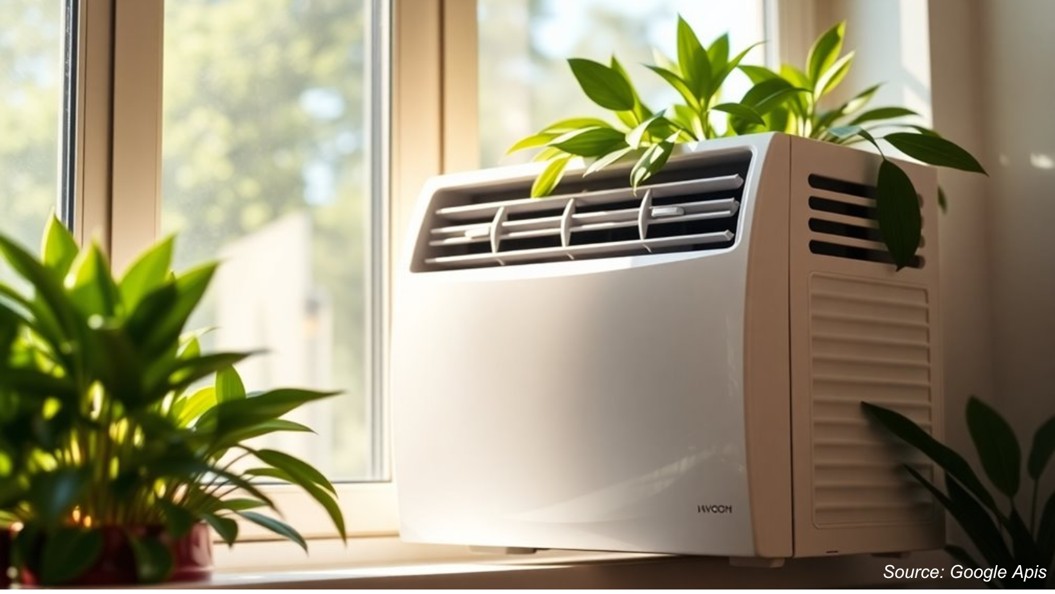
AI is rapidly transforming room air conditioners from static cooling appliances into intelligent, responsive comfort systems. By integrating machine learning, sensors, and connectivity, modern RACs now analyse user behaviour, ambient conditions, and usage patterns to automatically optimise temperature, airflow, and energy consumption. This shift is redefining the value proposition of air conditioners, from simple cooling to personalised, efficient, and connected climate control, making AI-enabled RACs a key driver of premiumization and differentiation in the market.
Our analysis indicates that AI is now the second major growth lever in the RAC market because it turns cooling into an adaptive, personalised experience. We found that Samsung’s 2026 lineup in India is a clear example, where the company announced a 100% Bespoke AI WindFree range with 23 models, positioning the portfolio around fast cooling, energy saving, easy maintenance, and SmartThings connectivity. Samsung also said its AI Energy mode helps consumers save up to 30% energy in its Bespoke AI ACs.
Further, Panasonic is also following a similar path, where in 2025, it expanded Matter-enabled smart ACs in India and said it had integrated Matter into 3-star inverter RACs through the Miraie platform to improve smart-home convenience. TCL is also pushing AI-led air conditioning, with its FreshIN 3.0 Air Conditioner featuring AI Health, Voice Control, and AI Energy Saving. Daikin has likewise highlighted AI-based energy tuning using heat-load predictions, showing that AI is moving beyond consumer marketing and into core HVAC optimisation.
Overall, we observed that AI delivers dual commercial value by enhancing user convenience while enabling brands to stand out in an increasingly competitive market. In practical terms, capabilities such as auto cooling, app-based control, motion sensing, usage learning, and energy optimisation allow OEMs to shift customers toward higher-value offerings without relying solely on tonnage or star ratings. By 2026, smart cooling has evolved into a core premiumization driver rather than a niche or novelty feature.
Heatwaves Are Becoming a Long-Term Growth Engine for the RAC Market
Our market assessments indicate that heatwaves are no longer short-term seasonal events but a structural force influencing RAC demand patterns. The IEA reports that rising temperatures have boosted air-conditioning demand and that severe heatwaves in 2024 contributed to higher electricity consumption in buildings. In its 2025 commentary, the IEA also noted that heat waves can push electricity peaks sharply higher, showing how cooling demand is becoming more system-critical as summers intensify.
This is especially important for the RAC market because heatwaves not only increase first-time purchases, they also accelerate replacement demand, premium upgrades, and faster adoption in markets where AC penetration is still rising. In practical market terms, this means brands must plan for both volume growth and supply-chain stress during peak summer months. Consumer evaluation criteria are undergoing a structural shift, moving beyond basic cooling performance toward efficiency and operating cost considerations. Purchase decisions are increasingly influenced by a unit’s ability to deliver consistent cooling under extreme temperature conditions while maintaining optimised energy consumption over extended usage cycles.
Implications for the RAC Market in 2026
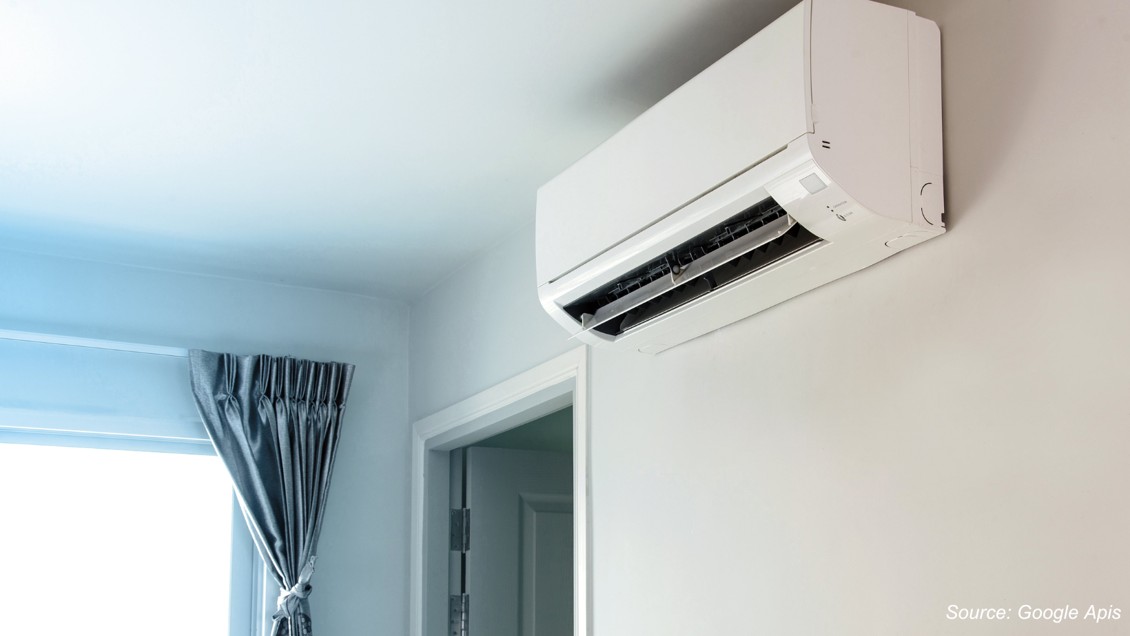
The 2026 RAC market is being shaped by a three-dimensional upgrade cycle:
-
Inverter technology is establishing the foundation for energy-efficient cooling
-
AI-enabled features are driving product differentiation and premium positioning
-
Heatwave intensity is reinforcing cooling as a recurring and essential need.
For manufacturers, this requires a strategic balance between energy efficiency, intelligent features, and climate adaptability. Further, for retailers, the value proposition is shifting from higher cooling capacity to intelligent, energy-efficient, and cost-optimised solutions. For consumers, purchase decisions are increasingly centered on the total cost of ownership rather than upfront pricing alone. These trends are not evolving independently; they collectively represent a broader transformation in how cooling solutions are designed, marketed, and adopted.
The RAC Market is Transitioning Toward Intelligent, Energy-Efficient, And Climate-Responsive Cooling Systems
Our analysis indicates that the Room Air Conditioner (RAC) industry is undergoing a clear structural transition driven by the convergence of technology innovation and climate-led demand. Recent strategic moves by leading manufacturers such as Samsung Electronics with its AI-led 2026 lineup, Panasonic Corporation expanding smart inverter portfolios, Daikin Industries integrating AI-based energy tuning, and TCL Technology introducing AI-enabled air-conditioning solutions collectively indicate a unified industry direction toward connected and intelligent cooling systems.
This evolution reflects a broader shift in market priorities, where performance is no longer assessed solely on cooling capacity but on a combination of energy efficiency, adaptive intelligence, and operational cost optimisation. RAC systems are increasingly being designed to respond dynamically to environmental conditions, user behaviour, and grid constraints, positioning them as active components within the wider smart home and energy ecosystem.
Furthermore, rising temperature volatility and prolonged heatwave conditions are reinforcing the need for reliable, high-efficiency cooling solutions, particularly in emerging high-growth markets. As a result, manufacturers are aligning product development with long-term climate resilience and affordability considerations, ensuring sustained relevance across diverse consumer segments. In 2026, the RAC market is clearly shifting from volume-led expansion to value-centric competition. Intelligent, energy-efficient, and climate-resilient systems are no longer premium differentiators but are fast becoming standard market expectations, redefining how manufacturers compete and where future growth will be captured.
About the Author
 Mayurima Roy
— Mayurima Roy is Research Analyst at Next Move Strategy Consulting, where she has spent 4 years working across the firm's full industry coverage rather than a single fixed vertical. Her work centers on structured research, ongoing trend tracking, competitive assessment, and insight-led content development, translating complex market data into clear, decision-ready narratives that support informed client decision-making across diverse global industries, market sectors, and world regions every day.
Mayurima Roy
— Mayurima Roy is Research Analyst at Next Move Strategy Consulting, where she has spent 4 years working across the firm's full industry coverage rather than a single fixed vertical. Her work centers on structured research, ongoing trend tracking, competitive assessment, and insight-led content development, translating complex market data into clear, decision-ready narratives that support informed client decision-making across diverse global industries, market sectors, and world regions every day.
About the Reviewer
 Supradip Baul
— Supradip Baul is an accomplished business consultant and strategist with over a decade of rich experience in market intelligence, strategy, technology, and business transformation. His work has included rigorous qualitative and quantitative analysis across multiple industries, helping clients shape investment decisions and long-term roadmaps. Earlier in his career, he was associated with Gartner, where he contributed to industry-leading reports and market share analyses. He has worked with leading global companies and holds an MBA with a dual specialization in Marketing and Finance.
Supradip Baul
— Supradip Baul is an accomplished business consultant and strategist with over a decade of rich experience in market intelligence, strategy, technology, and business transformation. His work has included rigorous qualitative and quantitative analysis across multiple industries, helping clients shape investment decisions and long-term roadmaps. Earlier in his career, he was associated with Gartner, where he contributed to industry-leading reports and market share analyses. He has worked with leading global companies and holds an MBA with a dual specialization in Marketing and Finance.
















Add Comment