Top companies driving innovation and transforming the Global Propylene Market
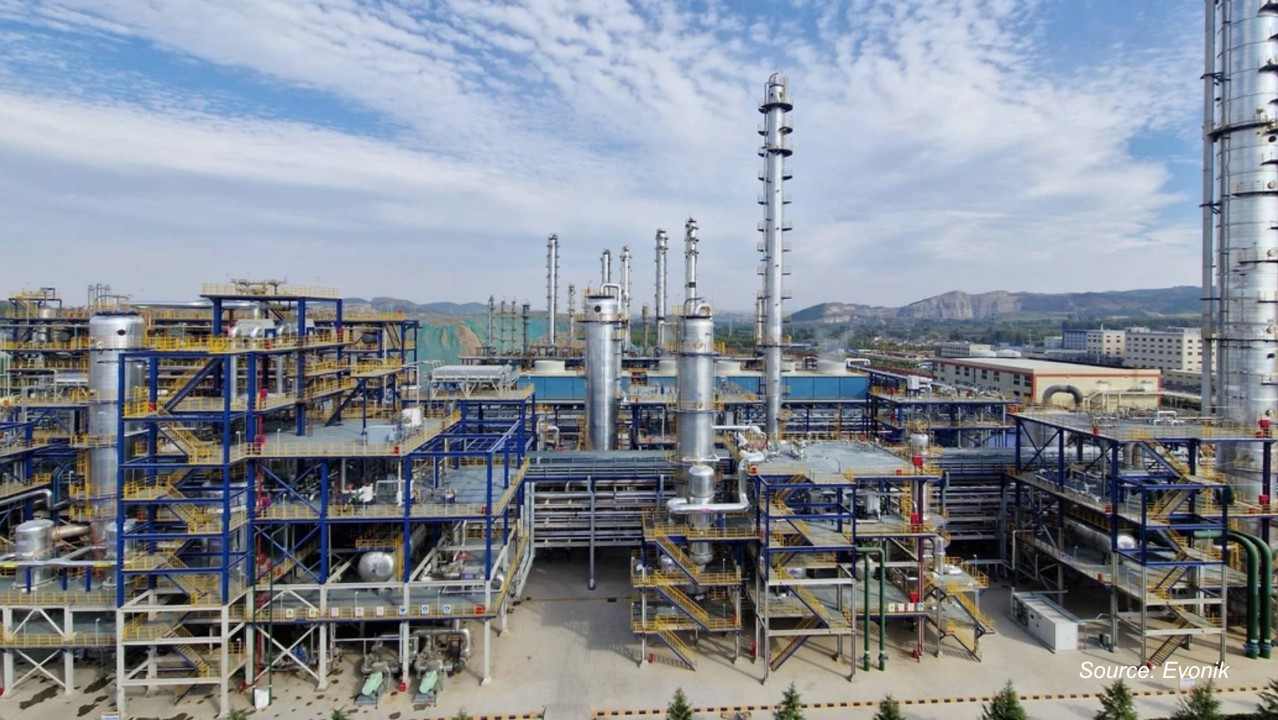
As per NMSC analysis, the global Propylene Market was valued at USD 134.2 billion in 2025 and is projected to reach USD 140.7 billion in 2026. Sustained demand from polypropylene production, derivative expansion, and emerging economy growth in Asia are forecast to propel the market to USD 200.7 billion by 2035, advancing at a CAGR of 4.02% from 2026 to 2035. In volume terms, the market stood at 100.54 Megatons in 2025 and is expected to reach 107.92 Megatons in 2026, further expanding to 175.92 Megatons by 2035, registering a CAGR of 5.58% from 2026 to 2035.
The global Propylene Market is undergoing a significant structural transformation, driven by converging forces across technology, regulation, feedstock dynamics, and end-user demand. We observed that the market is rapidly transitioning from conventional steam-cracking and fluid catalytic cracking (FCC) production models toward advanced on-purpose propylene technologies, including propane dehydrogenation (PDH), methanol-to-olefins (MTO), and coal-to-olefins (CTO) routes, particularly across Asia-Pacific. Our analysis indicates that this shift is reshaping cost structures and supply-demand balances at a global scale, as producers prioritize feedstock flexibility, yield optimization, and lower-carbon production pathways.
Based on our evaluation of current market developments, regulatory pressures around emissions reduction and circular plastics mandates in Europe and North America are accelerating investments in bio-based propylene and recycled polypropylene. Simultaneously, end-user industries such as automotive, packaging, construction, and healthcare are demanding higher-performance propylene derivatives, pushing producers to integrate digital process controls and AI-enabled quality management systems into manufacturing operations. The integration of automation and data-driven optimization across the propylene value chain marks a decisive movement from traditionally capital-intensive, commodity-driven operations toward differentiated, high-margin specialty platforms. These combined forces technological modernization, regulatory evolution, and shifting end-user preferences are collectively defining the next phase of growth for the global propylene industry through 2035.
Propylene Market Overview
The propylene market is witnessing steady expansion as demand continues to strengthen across the petrochemical, packaging, automotive, construction, and consumer goods industries. Based on our assessment, we found that propylene remains a critical feedstock for the production of polypropylene, propylene oxide, acrylonitrile, cumene, and other value-added derivatives that support a broad range of industrial applications. Increasing consumption of lightweight plastics, rising manufacturing activity, and growing infrastructure development are significantly contributing to market growth. At the same time, through our analysis of industry trends, we noticed that expanding demand for high-performance polymers and specialty chemicals is further reinforcing propylene consumption across both developed and emerging economies. Moreover, ongoing investments in petrochemical capacity expansions and integrated refining infrastructure continue supporting long-term market development, positioning propylene as a fundamental building block within the global chemicals value chain.
Furthermore, technological advancements and process optimisation initiatives are transforming the operational landscape of the propylene market. Through our engagement with industry stakeholders and technology providers, we found that improvements in steam cracking, fluid catalytic cracking, propane dehydrogenation, and on-purpose propylene production technologies are enhancing production efficiency and feedstock flexibility. In addition, increasing adoption of digital monitoring systems, predictive maintenance solutions, and advanced process control technologies is improving plant reliability and operational performance. Simultaneously, sustainability objectives are encouraging investments in energy-efficient production methods, carbon-emission reduction initiatives, and circular economy practices across the petrochemical sector. These developments, combined with growing efforts to optimise resource utilisation and production economics, are positioning the propylene market for sustained technological evolution and operational advancement.
Leading companies such as LyondellBasell Industries N.V., LG Chem, Ltd., Mitsubishi Chemical Group Corporation, Exxon Mobil Corporation, and PetroChina Company Limited are at the forefront of shaping the propylene market through continuous investments in production capacity, process innovation, and supply chain optimisation. Our analysis indicates that these companies are increasingly focusing on operational efficiency, feedstock diversification, and integration across petrochemical value chains to strengthen their market positions. Moreover, through our interaction with manufacturers and industry participants, we identified that strategic investments in advanced production technologies, sustainability initiatives, and infrastructure modernisation are supporting improved competitiveness and long-term growth. Additionally, collaborations across refining, chemical manufacturing, and downstream application industries are enabling the development of more efficient and diversified propylene supply networks. These efforts are collectively reshaping the competitive landscape, where companies are not only expanding production capabilities but also enhancing resilience, sustainability, and value creation throughout the global propylene ecosystem.
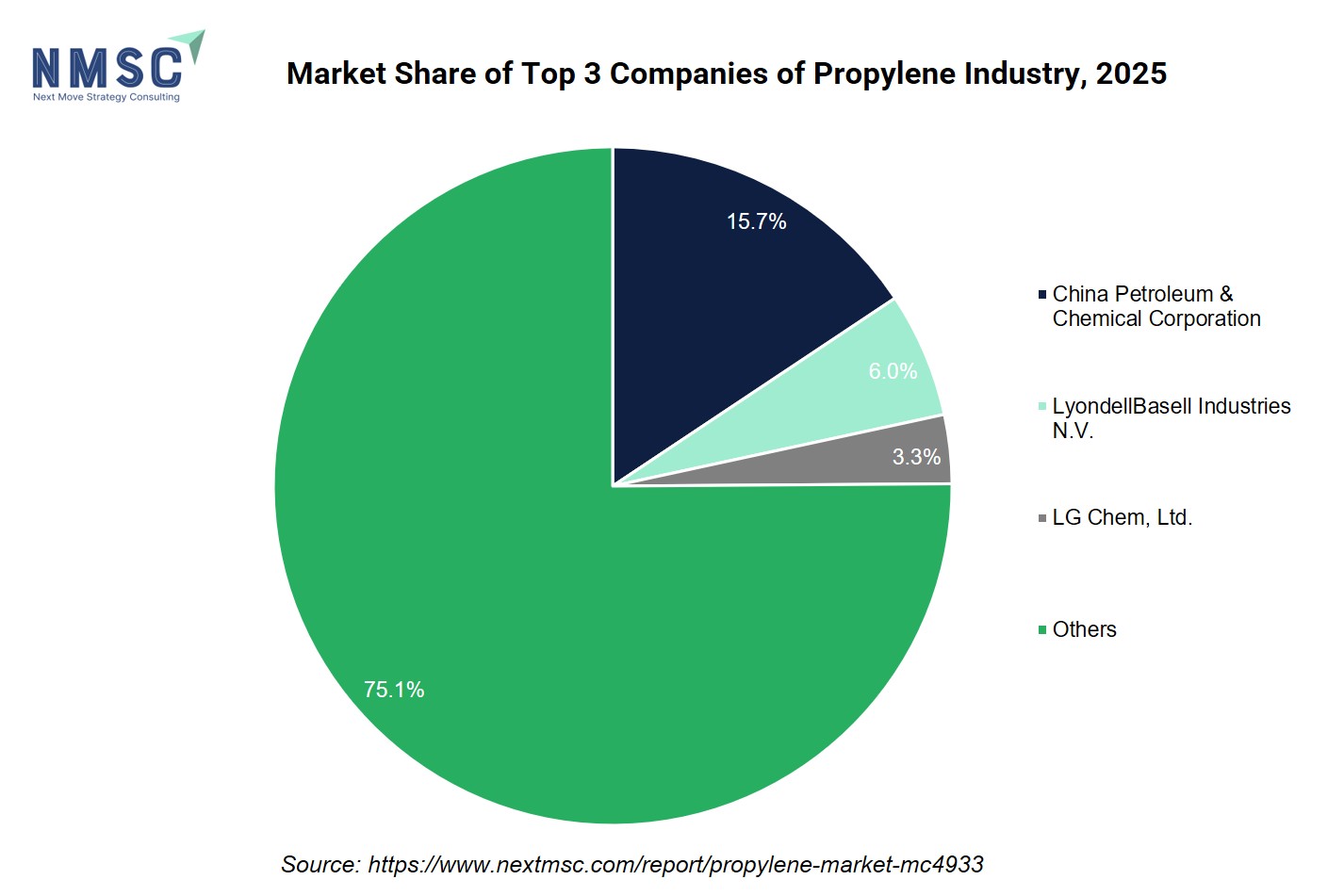
For the latest market share analysis and in-depth report on Propylene Industry insights, you can buy our latest report: Access the Report
Highlights Of Lyondellbasell Industries N.v.
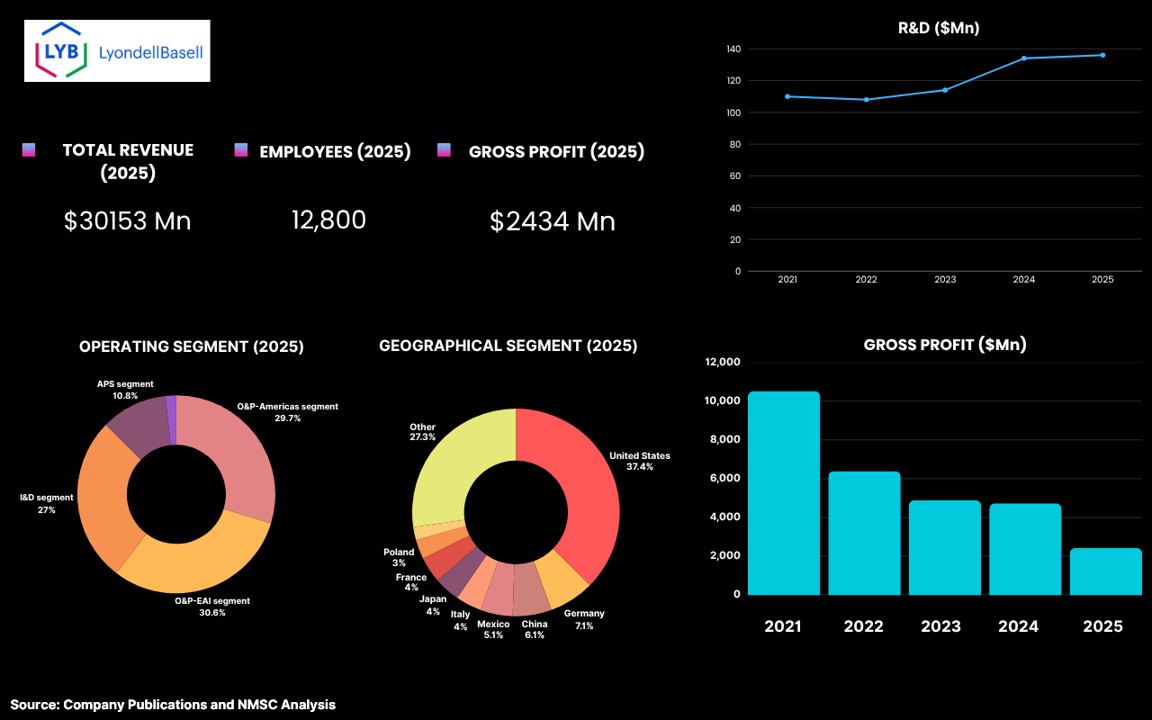
LyondellBasell Industries N.V. is a Netherlands-headquartered multinational chemical company with major operational hubs across the United States, Europe, and the Middle East. The company is one of the world's largest producers of polypropylene, propylene oxide, and polyethylene, operating through an integrated portfolio of olefin crackers, downstream derivatives units, and technology licensing platforms. LyondellBasell's core business spans Olefins & Polyolefins, Intermediates & Derivatives, and Advanced Polymer Solutions segments. The global Propylene Market is central to LyondellBasell's business model, as propylene and its derivatives particularly propylene oxide, polypropylene, and acetyls constitute foundational revenue streams and define the company's strategic positioning across packaging, automotive, construction, and consumer goods value chains globally.
Our assessment indicates that in March 2025, LyondellBasell announced an investment to expand propylene production capacity at its Channelview Complex in Texas, a key on-purpose propylene production site, though the company subsequently paused construction in response to market conditions to align capital pacing with demand recovery. Simultaneously, in 2025, LyondellBasell progressed a joint feasibility study with Sipchem for a world-scale, mixed-feed cracker project in Jubail, Saudi Arabia, in which it holds a 40% position, targeting a 1.5 million tonne per annum ethylene and propylene cracker with expected EBITDA benefits of approximately USD 150 million annually upon startup. The company also announced the sale of four European Olefins & Polyolefins assets to AEQUITA in 2025, strategically realigning its portfolio toward higher-margin, cost-advantaged propylene production platforms in North America and the Middle East.
Highlights Of Lg Chem, Ltd.
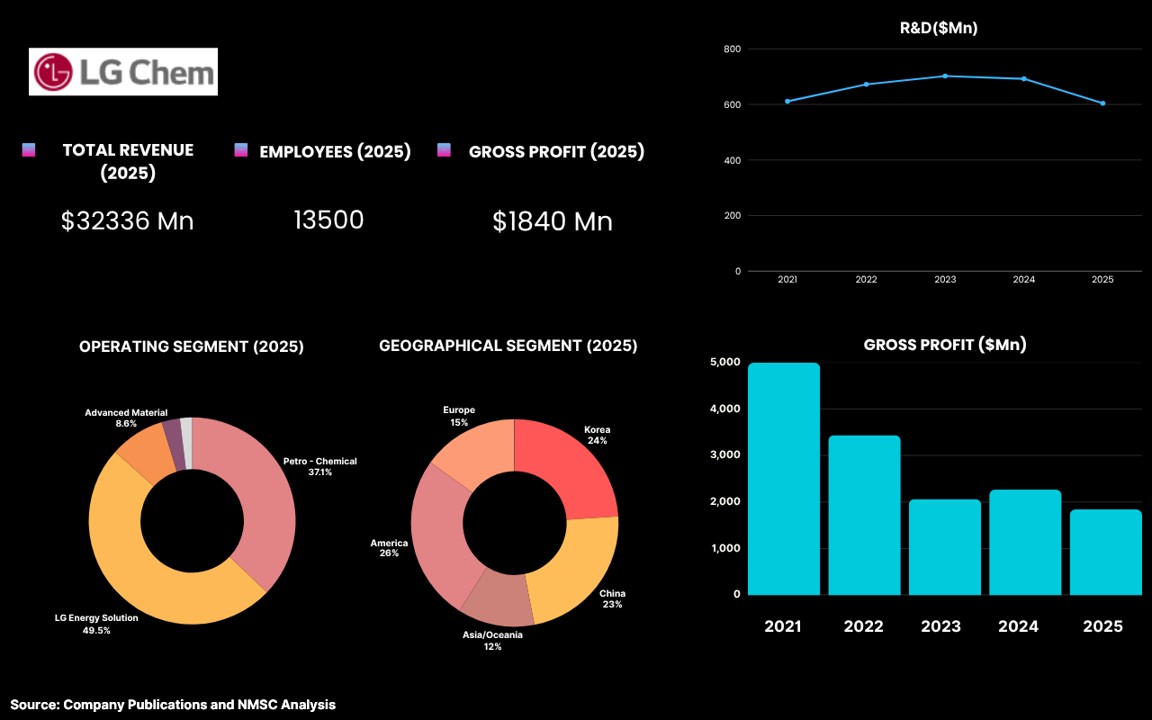
LG Chem, Ltd. is a South Korea-based diversified chemical company headquartered in Seoul, operating across Petrochemicals, Advanced Materials, Life Sciences, and LG Energy Solution segments. The company holds a leading position in Korean and Asian chemical markets, with world-class productivity driven by a vertically integrated system encompassing basic petrochemical feedstocks through to specialty downstream derivatives. LG Chem's Petrochemical segment directly engages the global Propylene Market by producing propylene through its naphtha cracking centers (NCC), subsequently converting it into polypropylene, ABS resins, synthetic rubber, and IPA a high-purity solvent derived from acetone and propylene which together serve automotive, electronics, packaging, and construction end markets across Asia-Pacific and global export channels.
Our findings suggest that in 2025, LG Chem began construction of a hydrotreated vegetable oil (HVO) plant at its Daesan complex in South Korea, developed through a joint venture with ENI, targeting 300,000 tonnes per annum of eco-friendly fuel production capacity. While the HVO initiative specifically targets renewable fuel output, it is strategically linked to LG Chem's broader effort to reposition its Daesan petrochemical complex a primary site for propylene and downstream derivative production toward sustainable, higher-margin platforms aligned with circular economy mandates. Additionally, LG Chem in 2025 focused on high-value-added propylene-derivative products such as semiconductor-grade IPA and high-performance SSBR rubber, strategically upgrading the propylene value chain within its NCC-integrated operations as a margin-enhancement response to prevailing petrochemical market headwinds.
Highlights Of Mitsubishi Chemical Group Corporation
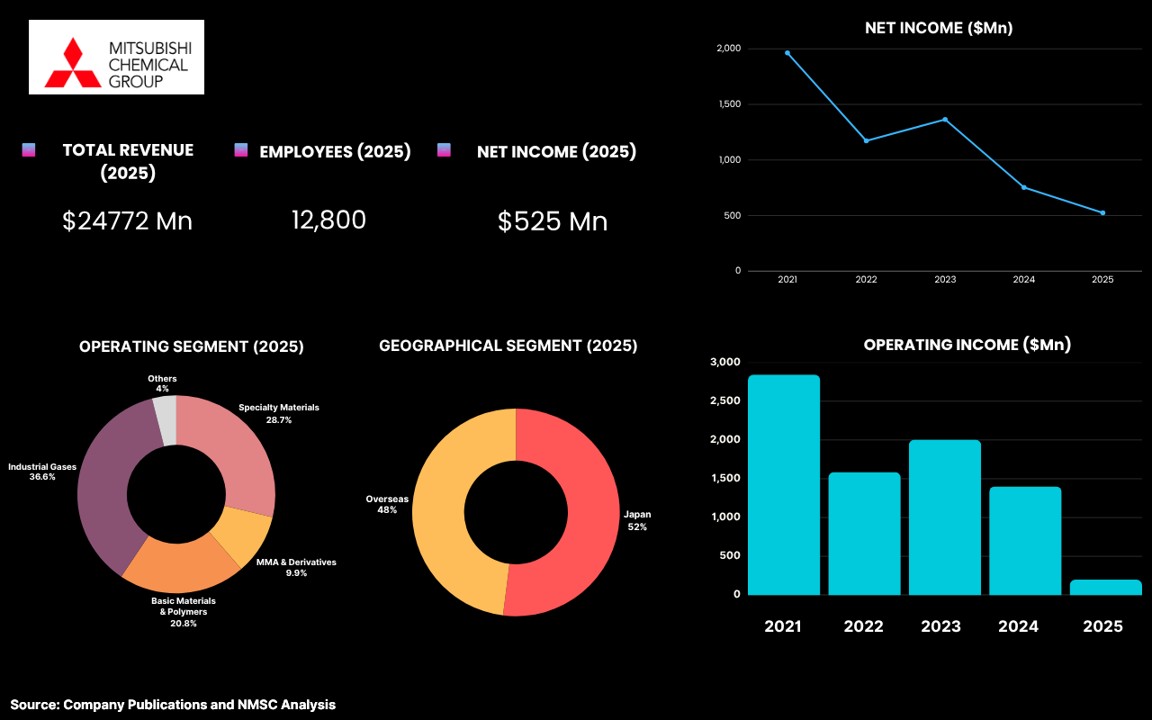
Mitsubishi Chemical Group Corporation (MCG) is a Japan-headquartered diversified materials and chemical company headquartered in Tokyo, operating globally across Performance Products, Chemicals, Industrial Gases, and Healthcare segments. The company is recognized for its broad specialty materials portfolio, including engineering plastics, carbon fiber composites, electronic chemicals, and pharmaceutical intermediates, serving mobility, semiconductor, and infrastructure markets. Mitsubishi Chemical Group engages the global Propylene Market through its Chemicals segment, where propylene serves as a foundational feedstock for acrylonitrile, propylene oxide, polypropylene compounds, and specialty polymer production key input streams that underpin the group's advanced materials and performance chemicals businesses across Japan, China, Europe, and North America.
Our assessment indicates that in 2025 and 2026, Mitsubishi Chemical Group advanced its strategic portfolio transformation by announcing plans to spin off its basic petrochemicals and bulk chemicals business, including propylene-related commodity operations, as a preparatory step toward potential future industry restructuring and mergers under its KAITEKI Vision 35 strategy targeting fiscal year 2028. Simultaneously, the company expanded flame-retardant compound production capacity at its MCPP facilities in China and France, with operations commencing in April 2025, leveraging propylene-derived polypropylene compounds for high-performance automotive and electronics applications. These decisions reflect MCG's deliberate strategy to exit low-margin commodity propylene segments and reorient capital toward specialty, high-margin performance materials connected to semiconductor, mobility, and infrastructure growth markets.
Highlights Of Exxon Mobil Corporation
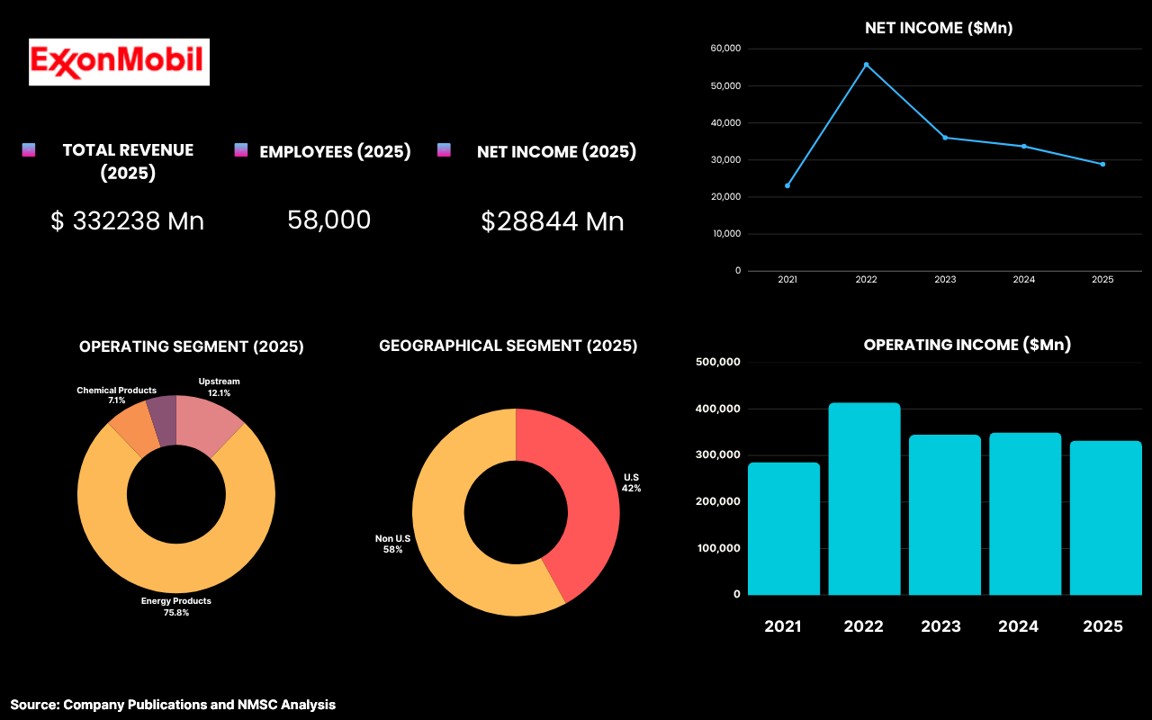
Exxon Mobil Corporation is a United States-based integrated energy and chemical company headquartered in Spring, Texas, operating across Upstream, Energy Products, Chemical Products, and Specialty Products segments. The company is among the world's largest integrated energy corporations by revenue and asset base, with chemical manufacturing facilities concentrated in the Gulf Coast region, Europe, Asia-Pacific, and the Middle East. ExxonMobil's chemical operations engage the global Propylene Market through its olefin production assets at facilities including Baytown, Texas and international chemical complexes, where propylene is produced via steam cracking and FCC refinery operations and subsequently converted into polypropylene, propylene oxide, and specialty chemical intermediates serving packaging, automotive, lubricants, and industrial end markets globally.
Our research indicates that in December 2025, ExxonMobil, Aramco, and Samref signed a Venture Framework Agreement to evaluate a significant upgrade of the Samref refinery in Yanbu, Saudi Arabia, and an expansion into an integrated petrochemical complex a development directly relevant to propylene production through increased liquids-to-chemicals conversion. Additionally, in 2025 ExxonMobil started up new chemical production units at its Baytown, Texas manufacturing facility, advancing its high-value chemicals portfolio. In December 2025, the company updated its Corporate Plan through 2030, forecasting USD 25 billion in incremental earnings growth driven by its Product Solutions portfolio a strategy that prioritizes high-value chemical outputs, including propylene derivatives, over traditional fuel-focused refining, reflecting a deliberate shift toward premium chemical value creation within its global asset base.
Highlights Of Petrochina Company Limited
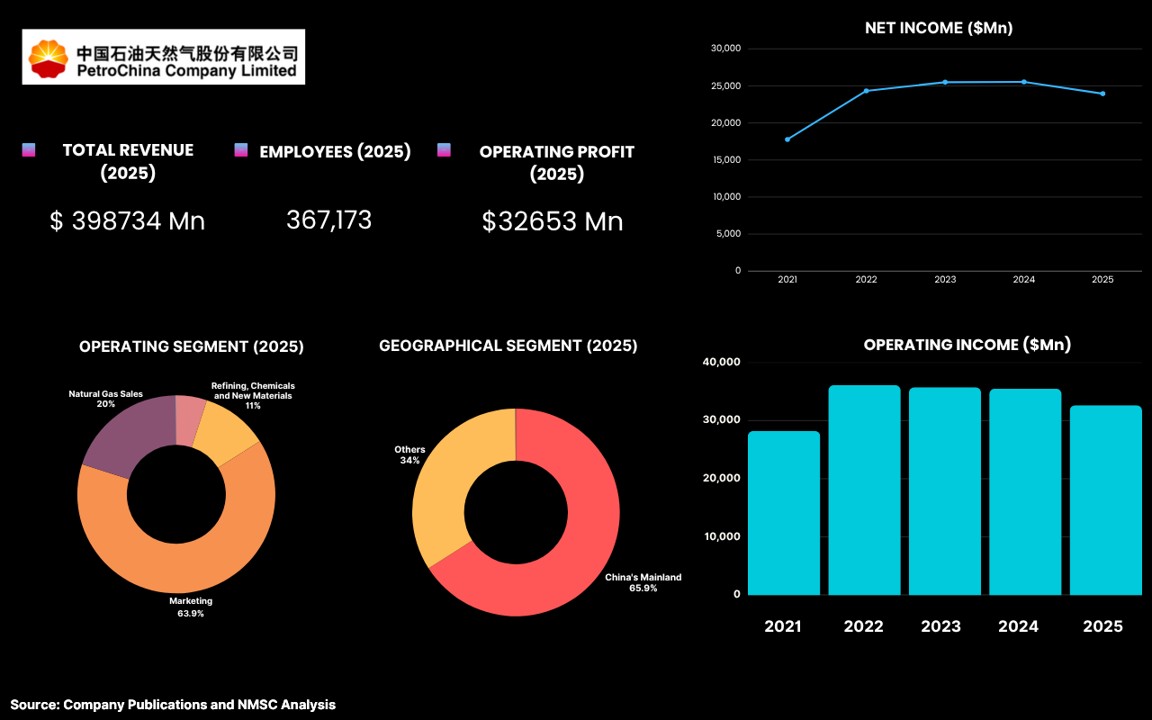
PetroChina Company Limited, headquartered in Beijing, China, is one of the world's largest integrated oil, gas, and petrochemical enterprises. The company operates across the entire energy value chain, including upstream exploration and production, refining, petrochemicals, natural gas processing, transportation, and marketing. PetroChina maintains an extensive refining and chemical manufacturing network across China and plays a significant role in the production of key petrochemical feedstocks and derivatives. The company's operations are closely linked to the global Propylene Market, where its large-scale refining complexes, catalytic cracking units, and integrated petrochemical facilities generate substantial volumes of propylene used in polypropylene, acrylonitrile, propylene oxide, and other downstream chemical applications. Consequently, market demand trends, feedstock economics, and downstream polymer consumption directly influence PetroChina's petrochemical growth strategy and capital investment decisions.
Our analysis indicates that PetroChina strengthened its position in the propylene value chain through major strategic initiatives during 2025. In July 2025, the company approved a new Dalian refinery and petrochemical complex incorporating a 1.4 million tpa ethylene unit and downstream polypropylene production facilities, directly supporting propylene derivative growth. Additionally, in November 2025, PetroChina announced plans to phase out aging refining and chemical units to focus on higher-value petrochemical products. These developments reflect China's broader industry modernization strategy and reinforce PetroChina's competitiveness across propylene and polypropylene markets
Summary Of The Propylene Market
The global Propylene Market is entering a period of sustained, technology-driven growth, underpinned by rising demand for polypropylene in packaging, automotive lightweighting, and healthcare applications, combined with increasing deployment of on-purpose propylene technologies that diversify production beyond conventional refinery-linked streams. Our analysis indicates that the market's trajectory reflects both structural demand growth in Asia-Pacific and the accelerating value-chain premiumization occurring across North America and Europe. Leading companies including China Petroleum & Chemical Corporation, LyondellBasell Industries N.V., LG Chem, Ltd., Mitsubishi Chemical Group Corporation, and Exxon Mobil Corporation are each advancing distinct strategic responses from large-scale capacity expansion and portfolio rationalization, to specialty derivative upgrading and sustainability-driven repositioning that collectively define the competitive frontier of the global propylene industry through the next decade.
About the Author
 Saista Faiyaz
— Saista Faiyaz is Research Associate at Next Move Strategy Consulting, where she has covered consumer markets and healthcare technologies for 3 years. Her work includes primary interview review, secondary-source validation, market sizing, and structured analysis of company and industry data. She supports research by comparing evidence across sources, organizing findings into market narratives, and documenting assumptions used in analysis. Her scope includes cross-market benchmarking, and reports.
Saista Faiyaz
— Saista Faiyaz is Research Associate at Next Move Strategy Consulting, where she has covered consumer markets and healthcare technologies for 3 years. Her work includes primary interview review, secondary-source validation, market sizing, and structured analysis of company and industry data. She supports research by comparing evidence across sources, organizing findings into market narratives, and documenting assumptions used in analysis. Her scope includes cross-market benchmarking, and reports.
About the Reviewer
 Supradip Baul
— Supradip Baul is an accomplished business consultant and strategist with over a decade of rich experience in market intelligence, strategy, technology, and business transformation. His work has included rigorous qualitative and quantitative analysis across multiple industries, helping clients shape investment decisions and long-term roadmaps. Earlier in his career, he was associated with Gartner, where he contributed to industry-leading reports and market share analyses. He has worked with leading global companies and holds an MBA with a dual specialization in Marketing and Finance.
Supradip Baul
— Supradip Baul is an accomplished business consultant and strategist with over a decade of rich experience in market intelligence, strategy, technology, and business transformation. His work has included rigorous qualitative and quantitative analysis across multiple industries, helping clients shape investment decisions and long-term roadmaps. Earlier in his career, he was associated with Gartner, where he contributed to industry-leading reports and market share analyses. He has worked with leading global companies and holds an MBA with a dual specialization in Marketing and Finance.















Add Comment