What Is Driving the Future of 5G Chipset Innovation in 2026?
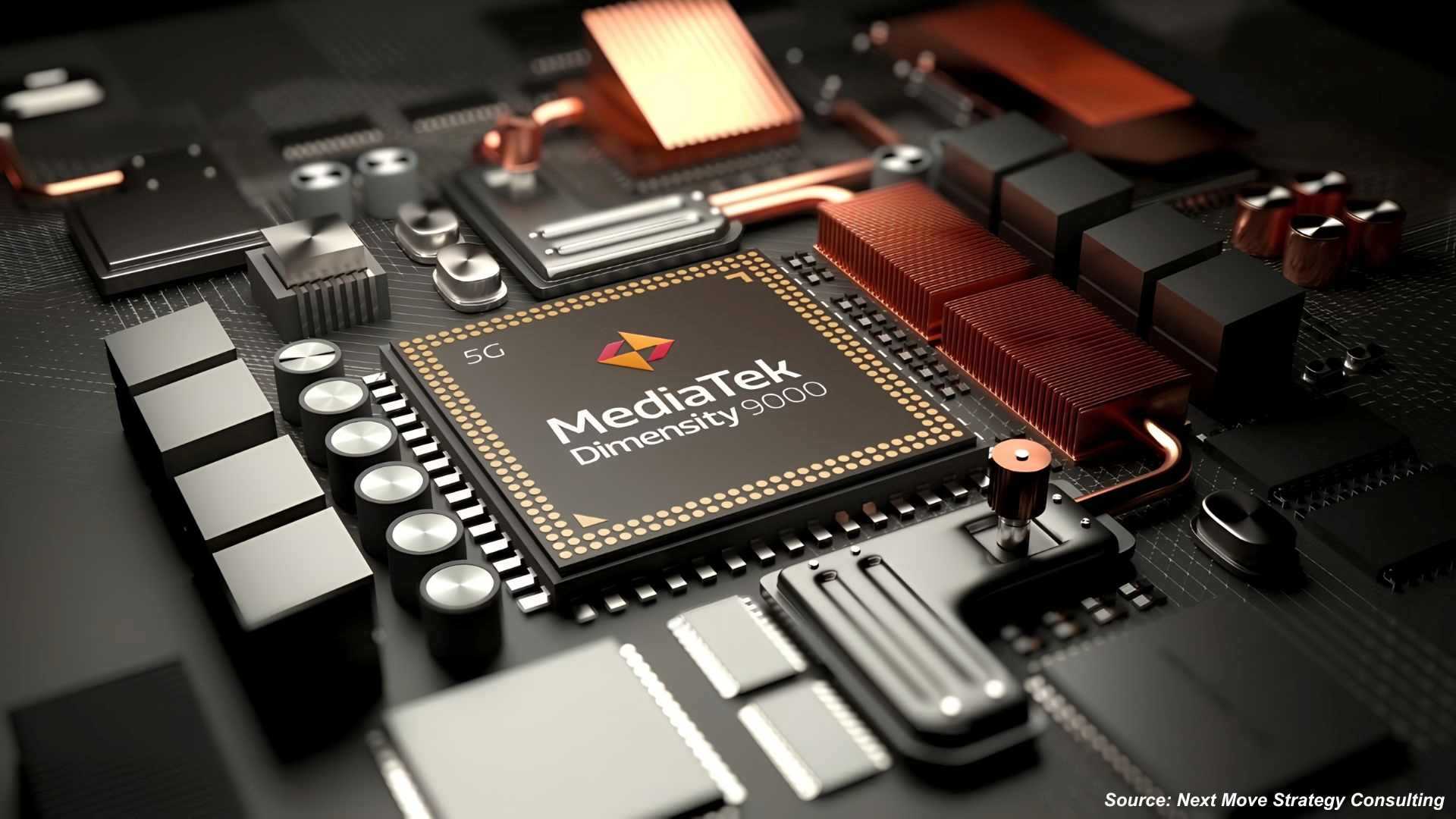
The global telecommunications and semiconductor industries are entering a new phase of transformation as advanced technologies in the 5G Chipset Market reshape wireless infrastructure, enterprise connectivity, and satellite communications. In 2026, the industry focus is no longer limited to faster download speeds. Market leaders are increasingly prioritizing uplink performance, wider network coverage, AI-driven connectivity, and seamless integration between terrestrial and satellite communication systems.
Recent developments from Samsung Electronics, Qualcomm Technologies, and GCT Semiconductor highlight how the evolving 5G Chipset Market is supporting next-generation enterprise applications, including autonomous systems, AR/VR environments, industrial automation, and high-bandwidth remote communications.
How Is 5G Fixed Wireless Access Reshaping Connectivity?
One of the most significant developments in 2026 comes from Samsung Electronics and Qualcomm Technologies, which achieved an industry-first validation of 5G Power Class 1 (PC1) capability for Fixed Wireless Access (FWA) using virtualized RAN infrastructure and the Qualcomm X85 Modem-RF chipset.
Power Class standards determine how strongly a device can transmit signals. According to Samsung, lower class numbers indicate higher transmission power. PC1 enables stronger uplink performance and wider coverage compared to the existing PC1.5 standard.
The validation demonstrated:
|
Performance Metric |
Reported Improvement |
|
Uplink throughput enhancement |
Up to 10x |
|
Coverage expansion |
Up to 40% |
|
Test environment |
Samsung R&D Lab |
|
Spectrum used |
3.7 GHz Massive MIMO |
The importance of this milestone extends beyond consumer broadband. AI-driven applications such as physical AI systems, industrial automation, autonomous technologies, and immersive AR/VR environments require consistent high-capacity uplink performance.
Samsung also confirmed that field testing has already taken place on a U.S. Tier 1 operator network, with commercial availability expected in 2027.
Why This Matters for Enterprises
Virtualized RAN architecture allows operators to deploy software-driven networks with greater flexibility and scalability. Combined with high-performance 5G chipsets, enterprises can potentially reduce infrastructure bottlenecks while supporting more data-intensive applications.
How LTE and 5G Standalone Networks Are Transforming Mobile Connectivity
The diagram presents a technical comparison between LTE networks, Non-Standalone (NSA) 5G deployments, and Standalone (SA) 5G architecture. It demonstrates how mobile operators are gradually evolving network infrastructure to support higher speeds, lower latency, and next-generation digital services.
In the LTE model, all network operations depend on LTE base stations and the Evolved Packet Core. The NSA architecture introduces 5G radio technology alongside LTE, enabling faster data performance while still relying on LTE for network control functions.
Overall, the image illustrates the telecom industry’s transition toward fully autonomous 5G networks capable of supporting future digital economies and advanced wireless services.

How Are Satellite Networks Expanding the Role of 5G Chipset Technology?
Another major industry development comes from GCT Semiconductor, which signed a reference platform agreement with a major satellite communications provider to accelerate global 5G deployment.
Under the agreement, GCT will provide a reference design based on its 5G and 4G chipsets to support the development of next-generation user equipment capable of operating across both satellite and terrestrial networks.
This development highlights an important market shift: 5G connectivity is no longer confined to traditional cellular infrastructure.
How 5G Messaging Platforms Are Transforming Smart Connectivity
This image illustrates the ecosystem of a 5G Messaging Platform integrated with Artificial Intelligence (AI), Big Data, IoT devices, and enterprise communication services. At the center of the architecture is the 5G messaging infrastructure, which connects smartphones, IoT devices, audio/video communication tools, and smart applications through Next-Generation Radio (NR) networks.
The diagram shows how advanced 5G networks enable high-speed communication between businesses, merchants, governments, industries, and smart home systems. AI and Big Data modules help optimize data processing, automation, and customer interaction, while Access Management controls secure communication across the ecosystem.
The Right Side of the Image Highlights Various Applications Such as:
-
Online and offline commerce
-
Customer service robots
-
IoT services
-
Daily life digital services
-
Smart home connectivity
Overall, the image demonstrates how 5G messaging infrastructure supports intelligent, real-time communication across enterprise and consumer environments.

Leading Companies Operating in the 5G Chipset Industry
The 5G chipset industry is characterized by intense competition, with several global technology and semiconductor companies driving innovation across wireless communication, AI-enabled connectivity, and next-generation network infrastructure. Key players operating in the market include Broadcom Inc., Huawei Technologies Co., Ltd., Intel Corporation, MediaTek Inc., Qualcomm Technologies, Inc., Qorvo, Inc., Samsung Electronics Co. Ltd, Keysight Technologies, Nokia Corporation, UNISOC (Shanghai) Technologies Co., Ltd., Fujitsu Limited, Analog Devices, Inc., NXP Semiconductors, Infineon Technologies AG, and Renesas Electronics Corporation, among others.

Future Outlook
The next phase of 5G chipset development will likely focus on three strategic priorities:
AI-Optimized Connectivity
As AI-powered applications generate larger volumes of real-time data, uplink-intensive network designs may become increasingly important.
Hybrid Infrastructure Expansion
Satellite-terrestrial integration could become a critical enabler for global enterprise connectivity strategies.
Software-Centric Telecom Networks
Virtualized and cloud-native networking solutions are expected to continue gaining momentum across telecom infrastructure deployments.
While commercial rollout timelines vary, the strategic direction of the industry is becoming clearer: future wireless ecosystems will prioritize flexibility, scalability, and intelligent connectivity.
Next Steps
-
For decision-makers evaluating the 5G chipset ecosystem, the following actions may support strategic planning:
-
Assess enterprise readiness for AI-driven connectivity
-
Monitor developments in satellite-enabled communications
-
Evaluate vRAN infrastructure opportunities
-
Strengthen semiconductor supply chain partnerships
-
Track commercialization timelines for advanced chipset platforms
Conclusion
The 5G chipset industry is entering a critical transition period driven by AI workloads, hybrid connectivity models, and next-generation telecom infrastructure requirements. Recent advancements from Samsung, Qualcomm Technologies, and GCT Semiconductor demonstrate how chipset innovation is extending beyond speed improvements toward broader enterprise and industrial capabilities.
For investors, operators, and procurement leaders, the ability to align infrastructure strategies with evolving 5G chipset developments may become a defining competitive advantage in the coming years.
About the Author
 Tania Dey
— Tania Dey is a content writer specializing in transformation-led, insight-driven storytelling. She develops research-backed, high-impact content aligned with evolving business priorities, digital behavior, and audience expectations. Her work helps organizations sharpen value propositions, strengthen visibility, and communicate strategic intent with clarity and precision. Grounded in data-informed storytelling, she brings a strong focus on relevance, consistency, and measurable digital impact across platforms.
Tania Dey
— Tania Dey is a content writer specializing in transformation-led, insight-driven storytelling. She develops research-backed, high-impact content aligned with evolving business priorities, digital behavior, and audience expectations. Her work helps organizations sharpen value propositions, strengthen visibility, and communicate strategic intent with clarity and precision. Grounded in data-informed storytelling, she brings a strong focus on relevance, consistency, and measurable digital impact across platforms.
About the Reviewer
 Debashree Dey
— Debashree Dey is Assistant Manager at Next Move Strategy Consulting, where she supports cross-vertical market content and communications across diverse industries for 6 years. Her professional background includes senior content writing, communications, and published manuscript authorship, with experience developing audience-focused business narratives and maintaining clear, consistent messaging. Her role supports research-led content development and editorial quality across NextMSC publications.
Debashree Dey
— Debashree Dey is Assistant Manager at Next Move Strategy Consulting, where she supports cross-vertical market content and communications across diverse industries for 6 years. Her professional background includes senior content writing, communications, and published manuscript authorship, with experience developing audience-focused business narratives and maintaining clear, consistent messaging. Her role supports research-led content development and editorial quality across NextMSC publications.


















Add Comment