What Is Driving the Future of Concept Cars in 2026?
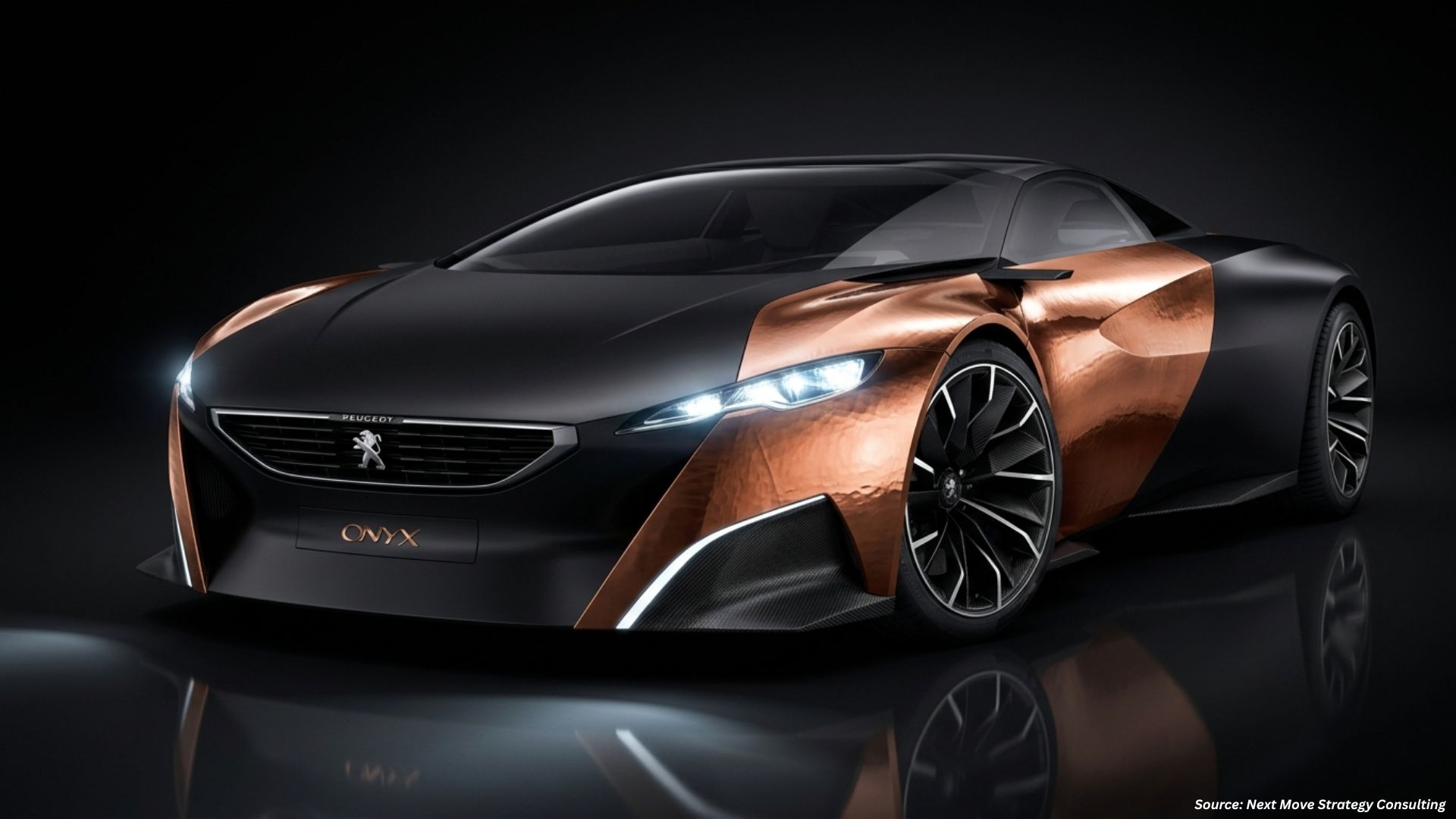
Concept Car Market have always represented the boldest ideas in automotive innovation. In 2026, manufacturers are not only showcasing futuristic designs but also integrating racing expertise, electrification, and off-road capabilities into experimental models. Recent announcements from Honda Motor Co., Ltd. and Hyundai Motor America highlight how concept vehicles are evolving into strategic tools for product development and brand storytelling.
How Is “Sports DNA” Shaping Concept Car Innovation?
Honda’s 2026 showcase at Tokyo Auto Salon demonstrates how legacy performance philosophy continues to influence modern concept development. The company introduced Sport Line and Trail Line, two new product directions rooted in its long-standing “Honda Sports DNA.”
The Sport Line focuses on on-road performance, integrating technologies derived from racing. Models such as the Civic Type R HRC Concept and Prelude HRC Concept incorporate engineering insights from Honda Racing Corporation (HRC), enhancing driving precision and responsiveness. These concept vehicles are designed to elevate the driving experience by translating motorsport expertise into road-ready innovations.
In summary, Honda’s concept strategy reinforces the importance of performance heritage, showing how racing knowledge continues to shape future vehicle design.
How Do Key Innovation Pillars Define Concept Cars in 2026?
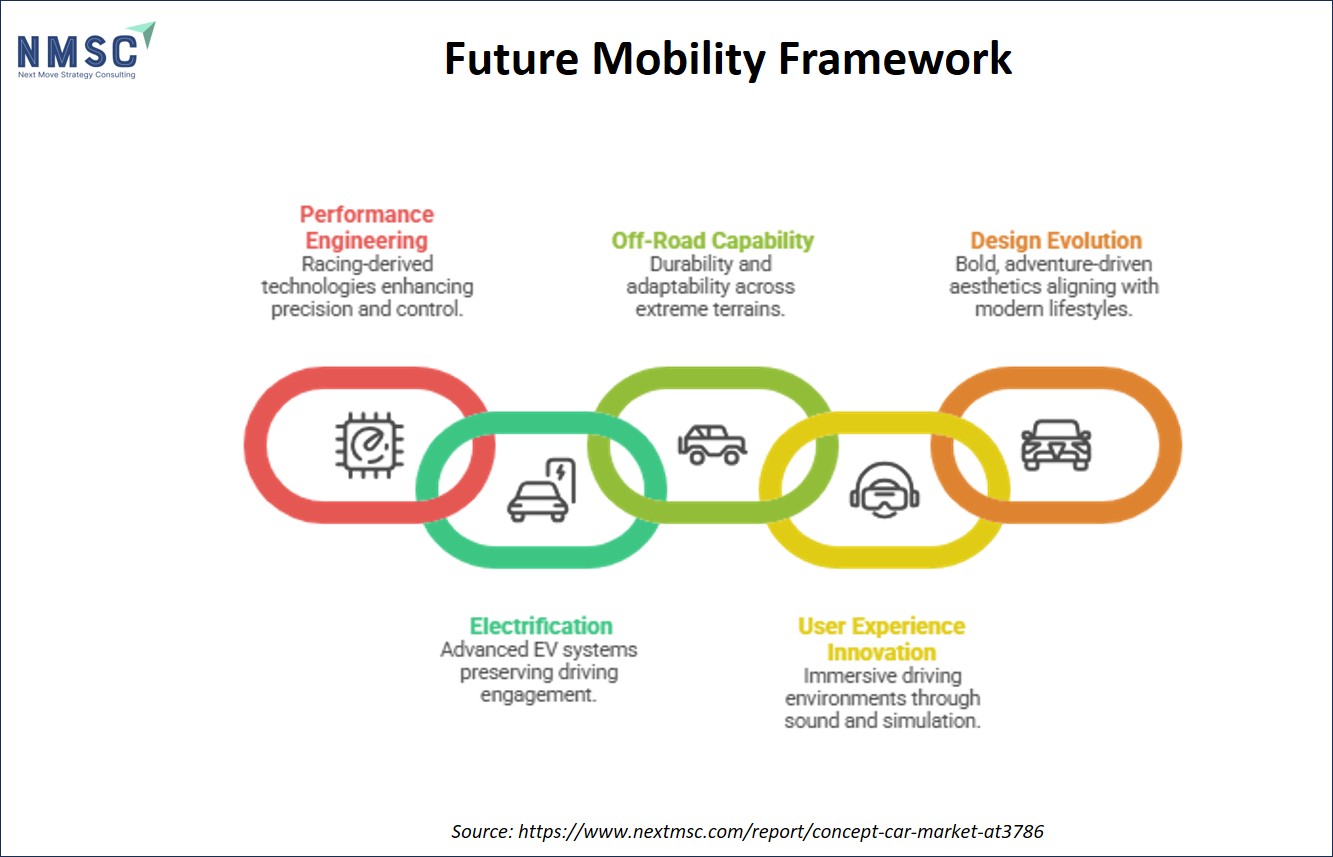
The 2026 concept car landscape, led by Honda Motor Co., Ltd. and Hyundai Motor America, can be visualized through five interconnected innovation pillars that collectively shape future mobility. At the core lies performance engineering, where racing-derived technologies enhance precision and control. This is closely followed by electrification, which integrates advanced EV systems while preserving driving engagement through simulated feedback mechanisms. Off-road capability emerges as another critical pillar, reflecting a growing focus on durability and adaptability across extreme terrains. Complementing these is user experience innovation, where features such as sound design and transmission simulation create a more immersive driving environment. Finally, design evolution ties all elements together, emphasizing bold, adventure-driven aesthetics that align with modern consumer lifestyles. Together, these pillars illustrate how concept cars are transitioning from experimental showcases into strategic blueprints for production-ready innovation.
What Role Do Off-Road Concepts Play in Future Mobility?
The evolution of concept cars is also being shaped by a growing emphasis on off-road capability. Hyundai’s CRATER Concept introduces a compact SUV designed to embody toughness and adaptability in extreme environments. Developed as a show vehicle, it reflects a design philosophy centered on durability and adventure.
Similarly, Honda’s Trail Line concept models demonstrate how off-road racing expertise is being integrated into vehicle development. These concepts highlight the importance of versatility, enabling vehicles to perform across diverse terrains while maintaining driving engagement.
In conclusion, off-road concept vehicles are no longer experimental outliers. They are becoming central to automotive innovation, influencing mainstream SUV development and expanding the scope of mobility solutions.
What Does the 2026 Concept Car Innovation Framework Look Like?
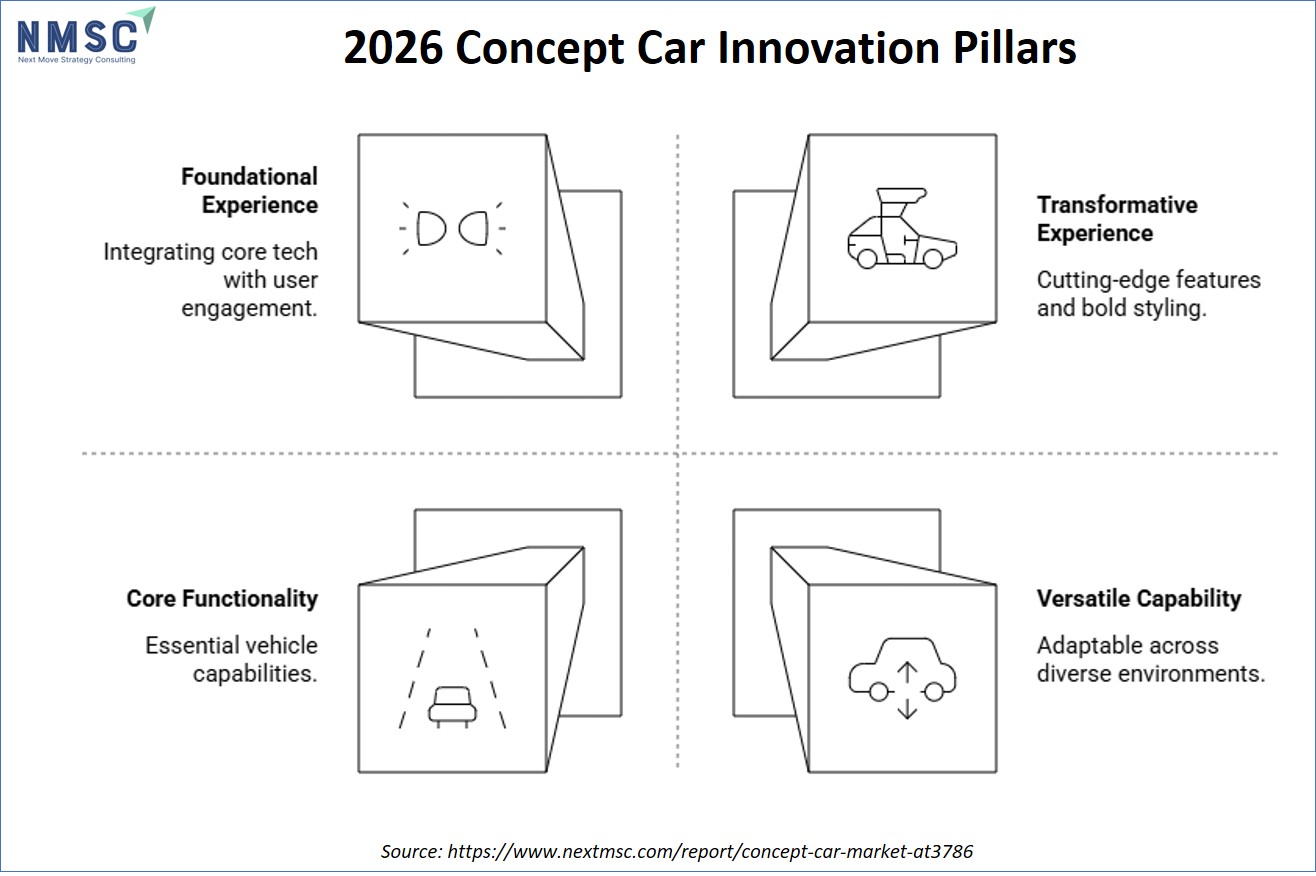
The concept car ecosystem in 2026 can be visualized as a layered innovation framework where multiple advancements work simultaneously to define future mobility. At the foundation lies technology integration, where automakers like Honda Motor Co., Ltd. and Hyundai Motor America combine electrified powertrains with performance-focused engineering. This base supports the next layer of functional capability, which includes both high-speed on-road dynamics and rugged off-road adaptability, ensuring vehicles are versatile across environments.
Above this, the framework is completed by experience and design transformation, where user-centric features and bold styling converge. Advanced sound systems, simulated driving mechanics, and intuitive controls enhance engagement, while design language communicates strength, adventure, and innovation. Together, these layers form a cohesive structure that illustrates how concept cars are evolving into holistic mobility solutions rather than isolated experimental models.
How Are Electrification and Driving Experience Being Balanced?
Electrification is a defining element of modern concept cars, yet manufacturers are also focused on preserving the emotional connection between driver and vehicle. Honda’s Super-ONE Prototype illustrates this balance by combining electric performance with features that simulate traditional driving sensations.
The model introduces a Boost Mode that increases power output, alongside a simulated multi-gear transmission and an Active Sound Control system that recreates engine-like audio feedback. This combination allows drivers to experience the responsiveness of electric mobility while retaining familiar sensory elements.
To summarize, concept vehicles are redefining electric mobility by ensuring that efficiency does not come at the cost of driving enjoyment.
What Do Concept Cars Reveal About Future Production Models?
Concept cars are increasingly serving as previews of upcoming production vehicles. Honda has indicated that models such as the Civic e:HEV RS Prototype and the Super-ONE Prototype are intended to transition into production before the end of 2026. This demonstrates a clear shift toward aligning concept development with real-world manufacturing plans.
Concept-to-Production Pipeline (2026)
|
Concept Model |
Key Feature |
Production Timeline |
|
Civic e:HEV RS Prototype |
Hybrid system with S+ Shift control |
Before end of 2026 |
|
Super-ONE Prototype |
Electric vehicle with simulated feel |
Before end of 2026 |
|
Prelude HRC Concept |
Performance-focused enhancements |
Based on 2025 model |
This trend highlights how concept cars are becoming practical development platforms rather than distant design exercises. The transition from concept to production is now faster and more structured.
In conclusion, concept vehicles are playing a crucial role in accelerating innovation and bringing advanced technologies to market more efficiently.
How Are Design and Adventure Themes Influencing Concept Cars?
Design in concept vehicles is becoming increasingly purposeful, reflecting both functionality and emotional appeal. Hyundai’s CRATER Concept emphasizes strength and resilience, while Honda’s Trail Line models incorporate dynamic styling that evokes exploration and adventure.
These design approaches go beyond aesthetics, aiming to communicate a lifestyle centered on performance, freedom, and versatility. Concept cars are therefore being used to connect with consumers on a deeper level by aligning vehicle design with real-world aspirations.
In summary, design is evolving into a strategic element that enhances both usability and brand identity.
How Is Innovation Investment Distributed Across Concept Car Development in 2026?
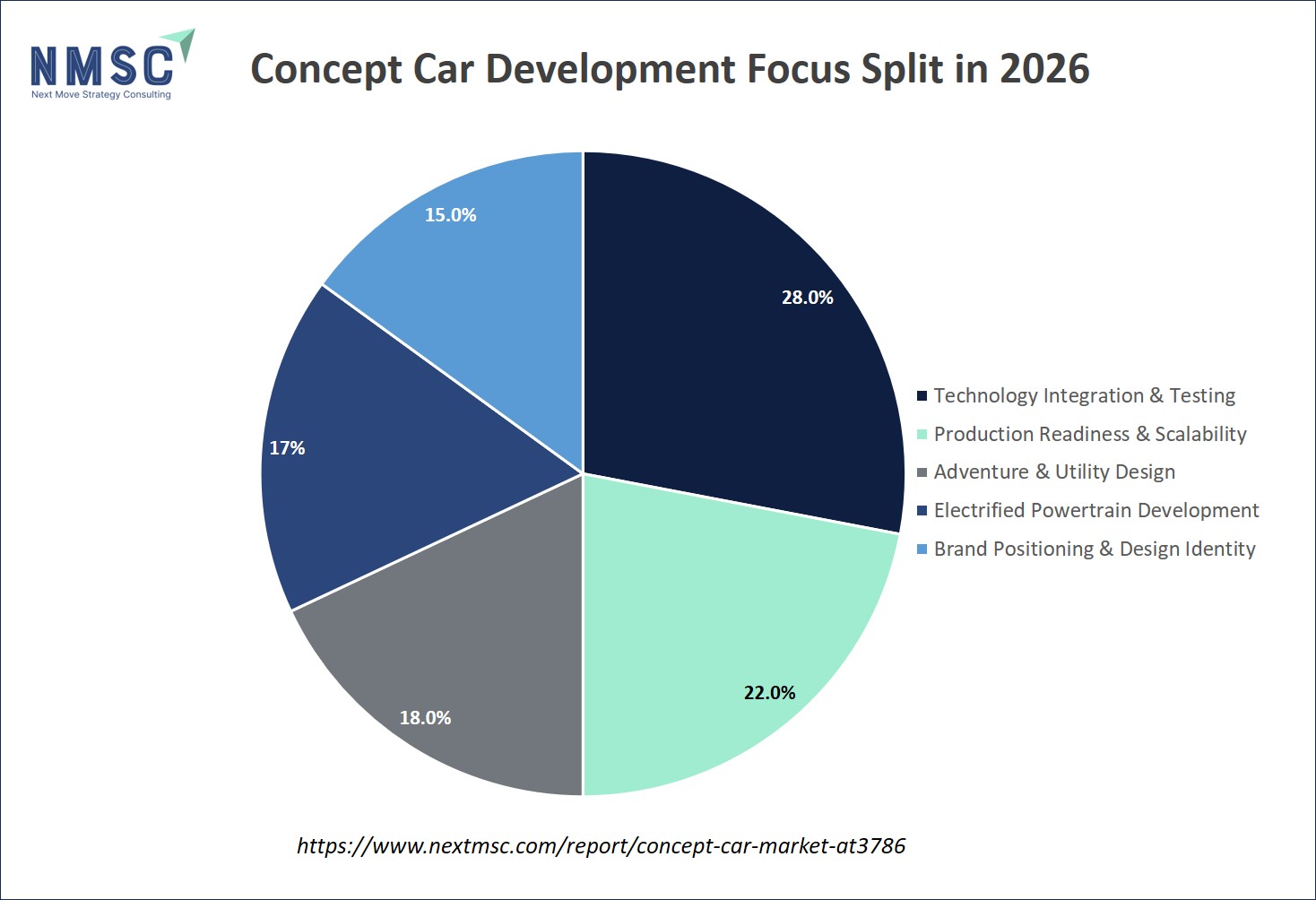
The pie chart presents a strategic view of how innovation efforts are allocated across different stages of concept car development in 2026. The largest share, Technology Integration & Testing (28%), indicates that automakers such as Honda Motor Co., Ltd. are heavily focused on validating new systems and ensuring multiple technologies work seamlessly together. This is followed by Production Readiness & Scalability (22%), highlighting a strong industry shift toward making concept vehicles closer to real-world manufacturing.
Mid-level investment areas include Adventure & Utility Design (18%) and Electrified Powertrain Development (17%), reflecting the growing importance of versatile vehicle capabilities and electrification trends, as seen in innovations from Hyundai Motor America. Finally, Brand Positioning & Design Identity (15%) shows that while visual and emotional appeal remains important, it is slightly secondary to technical and production priorities. Overall, the chart illustrates a balanced yet practical approach, where innovation is increasingly geared toward real-world application rather than purely conceptual exploration.
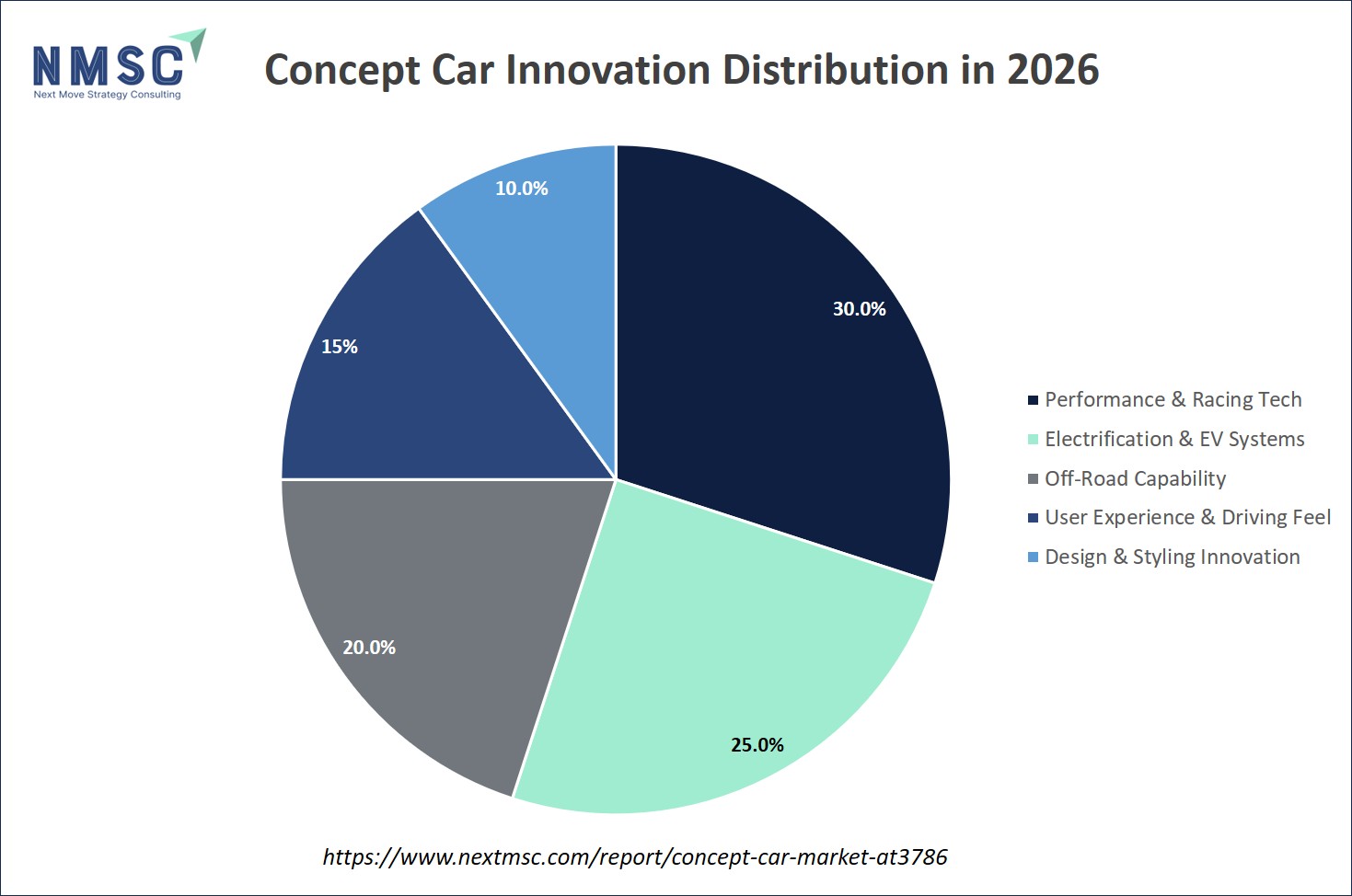
What Does the 2026 Concept Car Innovation Distribution Reveal?
The pie chart highlights how innovation efforts in 2026 concept cars are strategically distributed across key focus areas, with Performance & Racing Technology (30%) leading the segment. This indicates that automakers such as Honda Motor Co., Ltd. continue to prioritize motorsport-derived engineering to enhance driving dynamics and precision. Close behind is Electrification & EV Systems (25%), reflecting the industry-wide push toward sustainable mobility solutions without compromising performance.
Meanwhile, Off-Road Capability (20%) shows a growing emphasis on versatility and rugged design, aligning with trends seen in models from Hyundai Motor America. User Experience & Driving Feel (15%) highlights the importance of immersive features such as simulated driving feedback, while Design & Styling Innovation (10%) underscores the role of visual identity and consumer appeal. Overall, the chart demonstrates a balanced innovation approach, where performance, sustainability, and user-centric design collectively shape the future of concept cars.
Who Are the Leading Automakers Driving Concept Car Innovation?
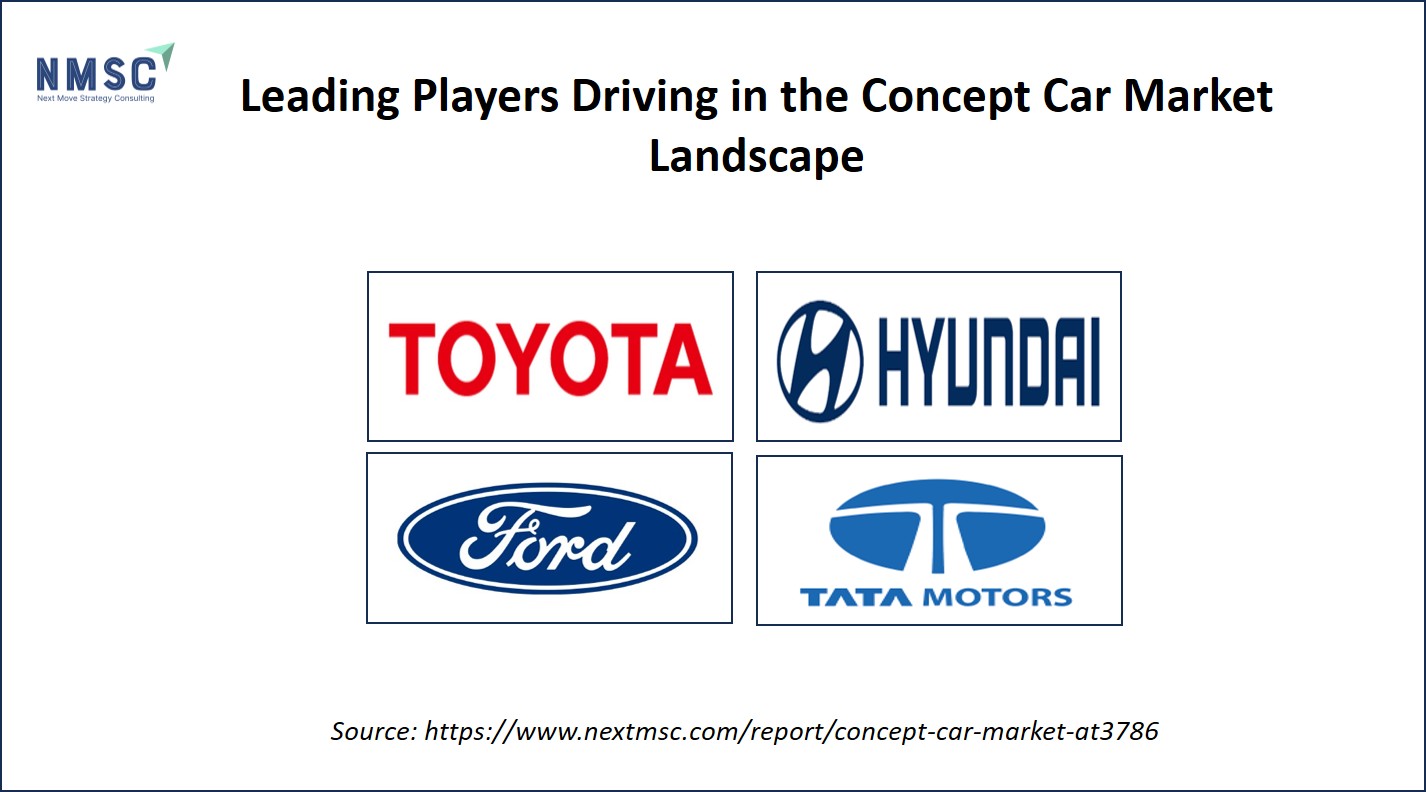
The global concept car landscape is shaped by a diverse group of leading automotive manufacturers that continue to push the boundaries of design, performance, and technology. Key players include Toyota Motor Corporation and Volkswagen, alongside premium innovators such as Mercedes-Benz Group AG and BMW AG. Major global contributors like Hyundai Motor Company, Stellantis N.V., General Motors Company, and Ford Motor Company are also actively advancing concept vehicle development. In addition, Asian manufacturers such as Nissan Motor Co., Ltd., Honda Motor Co., Ltd., Renault Group, BYD Company Limited, and Geely Auto Group are contributing significantly to electrification and innovation trends. Emerging market leaders like Tata Motors Limited and high-performance brands such as Ferrari N.V. further enrich the competitive landscape, collectively driving the evolution of next-generation concept cars worldwide.
What Are the Major Trends Shaping the Present?
The latest concept vehicles reveal a convergence of several important trends. Performance-driven engineering continues to play a central role, supported by racing expertise and technological refinement. At the same time, electrification is being integrated with features that enhance driver engagement rather than diminish it.
There is also a noticeable shift toward off-road and adventure-oriented designs, reflecting changing consumer preferences. Additionally, concept cars are increasingly aligned with production timelines, reducing the gap between innovation and commercialization.
Overall, these trends indicate that concept vehicles are evolving into comprehensive innovation platforms that combine performance, sustainability, and user-centric design.
What Should Industry Stakeholders Do Next?
-
Monitor concept-to-production transitions closely to identify emerging opportunities
-
Invest in technologies that enhance both performance and user experience
-
Explore growth potential in off-road and adventure-focused vehicle segments
-
Align product strategies with ongoing electrification advancements
-
Focus on design approaches that resonate with evolving consumer lifestyles
Final Thoughts
Concept cars in 2026 represent a significant shift in the automotive industry. They are no longer abstract ideas but practical indicators of future mobility. With companies like Honda and Hyundai leading the way, these vehicles demonstrate how performance heritage, electrification, and real-world usability can coexist.
As innovation continues to accelerate, concept cars will remain essential in bridging the gap between imagination and production, shaping the next generation of automotive experiences.
About the Author
 Sanyukta Deb
— Sanyukta Deb is Digital Marketing Team Lead at Next Move Strategy Consulting, where she has led content strategy and technical SEO for the firm's B2B market research publications for over 2 years. Her editorial process translates NextMSC's primary and secondary research — spanning technology, industrial, and consumer sectors — into commercial narratives, backed by search-intent, keyword, and competitive analysis. She brings 5 years of overall experience in digital marketing and content strategy.
Sanyukta Deb
— Sanyukta Deb is Digital Marketing Team Lead at Next Move Strategy Consulting, where she has led content strategy and technical SEO for the firm's B2B market research publications for over 2 years. Her editorial process translates NextMSC's primary and secondary research — spanning technology, industrial, and consumer sectors — into commercial narratives, backed by search-intent, keyword, and competitive analysis. She brings 5 years of overall experience in digital marketing and content strategy.
About the Reviewer
 Debashree Dey
— Debashree Dey is Assistant Manager at Next Move Strategy Consulting, where she supports cross-vertical market content and communications across diverse industries for 6 years. Her professional background includes senior content writing, communications, and published manuscript authorship, with experience developing audience-focused business narratives and maintaining clear, consistent messaging. Her role supports research-led content development and editorial quality across NextMSC publications.
Debashree Dey
— Debashree Dey is Assistant Manager at Next Move Strategy Consulting, where she supports cross-vertical market content and communications across diverse industries for 6 years. Her professional background includes senior content writing, communications, and published manuscript authorship, with experience developing audience-focused business narratives and maintaining clear, consistent messaging. Her role supports research-led content development and editorial quality across NextMSC publications.
















Add Comment