What Is Driving the Future of Warehouse Automation in 2026?
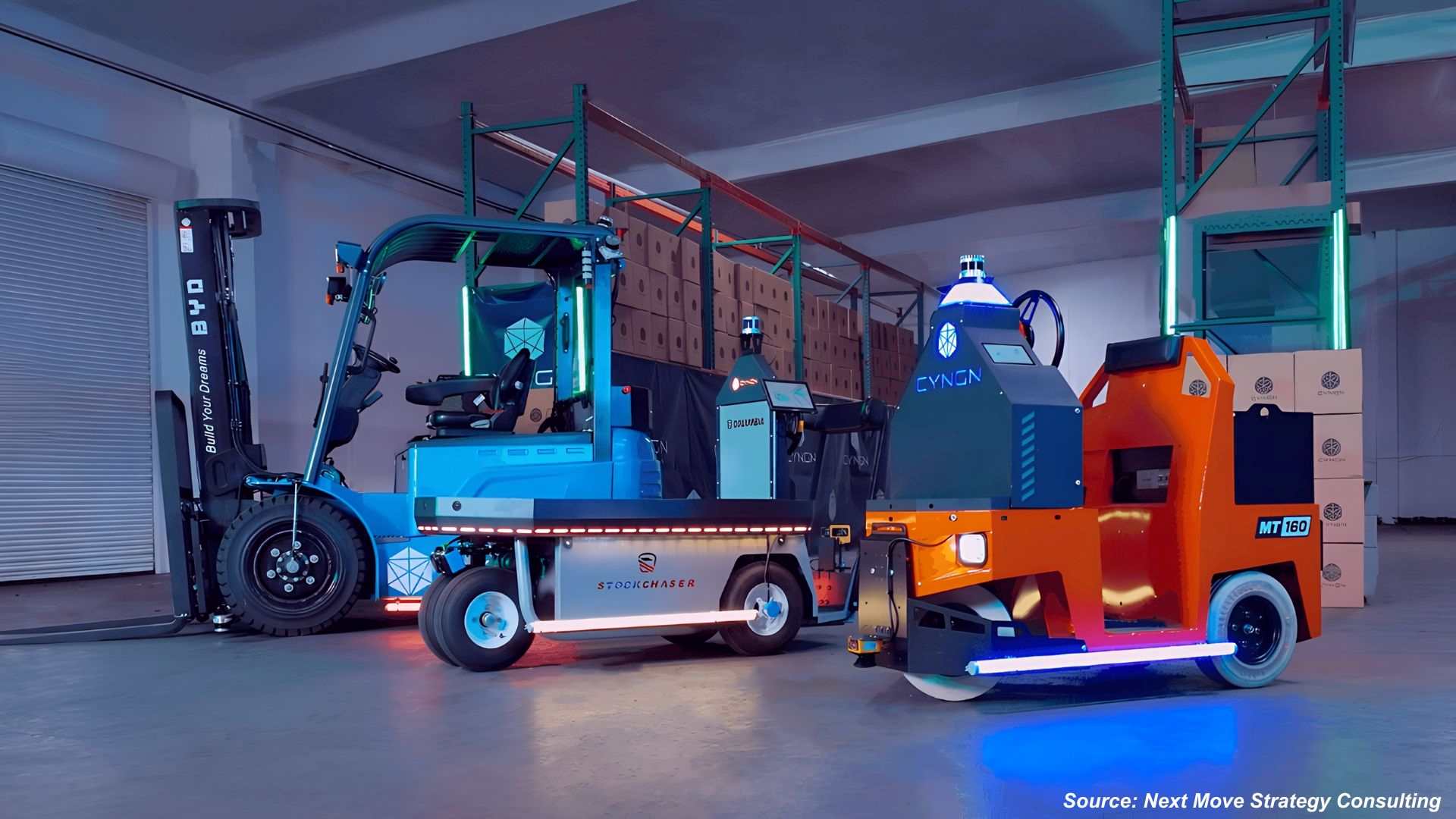
Warehouse automation is the deployment of specialized robotics, Artificial Intelligence (AI), and intelligent software—such as Warehouse Management Systems (WMS)—to streamline inventory, sorting, and fulfillment processes. These systems reduce manual labor reliance and significantly improve supply chain throughput.
The Warehouse Automation Market is rapidly becoming one of the most important strategic investments across the global logistics and supply chain industry. Companies handling large-scale fulfillment operations are under pressure to improve efficiency, reduce operational delays, and manage increasing delivery expectations while dealing with labor shortages and rising costs.
In 2026, automation is no longer limited to experimental warehouse pilots. Major logistics operators including DHL Group, United Parcel Service, and FedEx are deploying robotics, AI-powered systems, and autonomous technologies across their distribution networks. These investments are helping companies improve throughput, manage seasonal demand spikes, and modernize aging warehouse infrastructure.
The growing adoption of warehouse automation is also influencing broader business strategy. Investors, procurement leaders, and supply chain executives increasingly view automation as a long-term competitive advantage capable of improving operational resilience and scalability.
How Are Logistics Companies Expanding Warehouse Automation?
Expansion of Logistics Automation
In 2026, intelligent logistics is no longer limited to experimental pilots. Major operators are deploying robotics and Autonomous Mobile Robots (AMRs) across their distribution networks. These investments are helping companies improve throughput, manage seasonal demand spikes, and modernize aging infrastructure.
DHL Group
DHL expanded from 240 projects in 2020 to 10,000 projects globally by 2026. The company stated that autonomous technologies now support operations across 95% of its warehouses worldwide. Robotics systems handling item picking improved units picked per hour by 30%, while autonomous forklifts increased operational efficiency by 20% in certain facilities. To manage rising demand, DHL expanded robotic capacity by 30% during peak shopping periods.
UPS & FedEx
UPS is accelerating its modernization strategy, aiming for 68% of its U.S. package volume to move through automated facilities in 2026. Similarly, FedEx continues expanding its capabilities through robotic arms, AI-assisted package processing, and automated container unloading systems under its “Network 2.0” initiative.
Beyond internal infrastructure investments, strategic partnerships are also shaping the industry. The agreement between Hellmann Worldwide Logistics and Exotec demonstrates how logistics providers are partnering with robotics specialists to accelerate warehouse transformation initiatives globally.
Why Is Warehouse Automation Becoming a Strategic Priority?
Several structural challenges within the logistics industry are driving long-term investment in warehouse automation.
Several structural challenges within the logistics industry are driving long-term investment in Automated Storage and Retrieval Systems (ASRS) and robotics:
-
Labor Availability: Operators are finding it increasingly difficult to recruit workers for repetitive tasks. Robotics help maintain operational continuity while reducing dependency on physically demanding manual processes.
-
Demand Volatility: Seasonal spikes in e-commerce require networks to scale rapidly. Automated systems allow companies to increase throughput efficiently during peak periods.
-
Operational Visibility: AI-supported picking systems and WMS integration help logistics companies reduce processing times and optimize workflows.
Notably, 51% of factories globally expect to operate fully automated facilities by 2040, while 70% of logistics executives consider autonomous supply chains a top investment priority.
How Warehouse Automation Is Transforming Modern Supply Chains
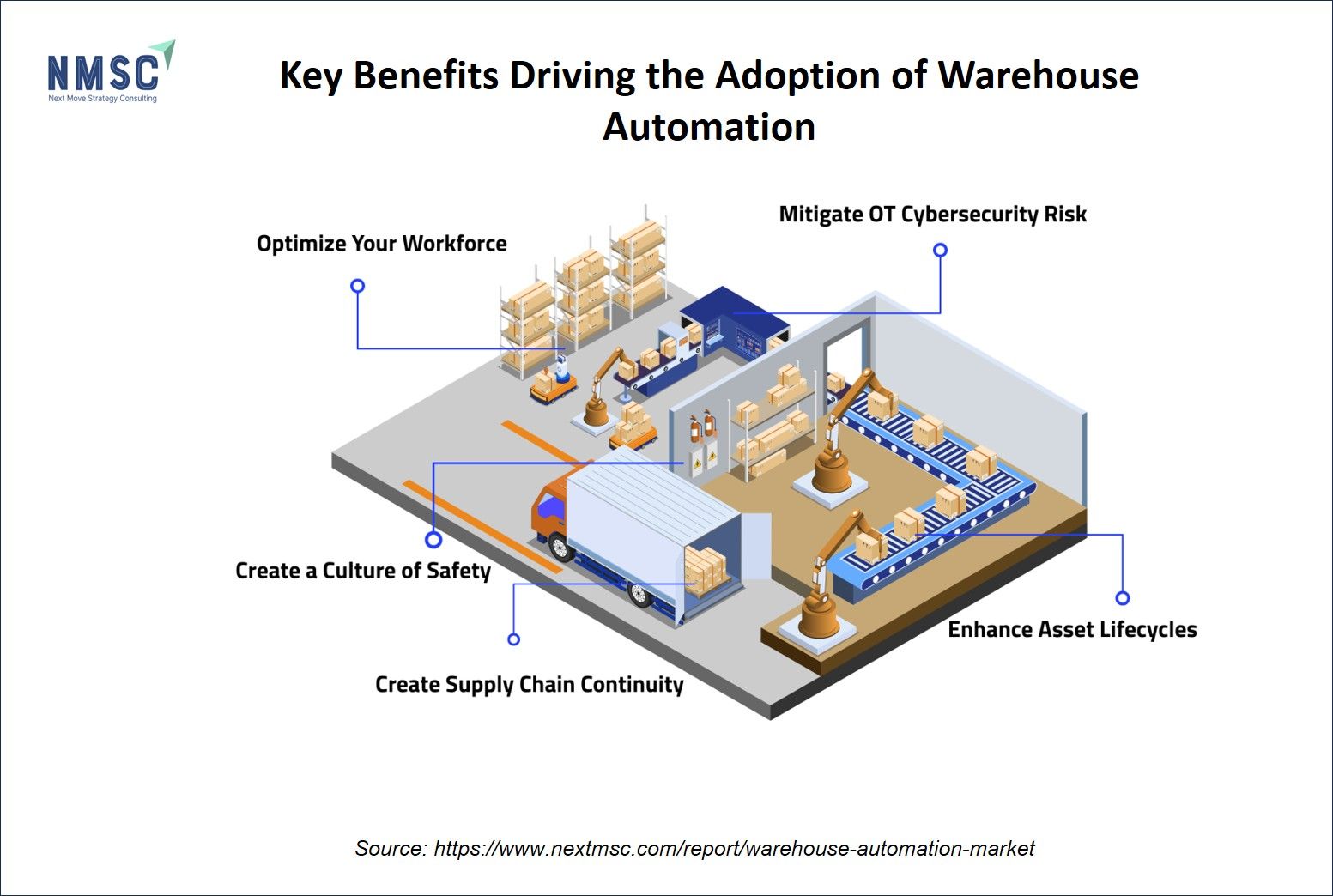
This image highlights the major operational benefits of warehouse automation within modern logistics and industrial facilities. It illustrates an advanced warehouse environment where robotics, automated conveyor systems, and smart logistics technologies are working together to improve supply chain performance.
The visual emphasizes five key strategic outcomes of automation. “Optimize Your Workforce” reflects how automation reduces repetitive manual tasks and allows employees to focus on higher-value operational activities. “Mitigate OT Cybersecurity Risk” points to the growing importance of securing operational technology systems as warehouses become increasingly connected and data-driven.
The image also showcases how automated systems help “Create a Culture of Safety” by minimizing workplace hazards and reducing human exposure to physically demanding tasks. “Create Supply Chain Continuity” represents the ability of intelligent logistics systems to maintain operational stability during demand fluctuations and disruptions. Finally, “Enhance Asset Lifecycles” highlights how automation improves equipment utilization, operational efficiency, and long-term infrastructure performance.
Overall, the image presents warehouse automation as a strategic tool for improving efficiency, resilience, safety, and operational scalability across the logistics industry.
Industry Impact Analysis
Warehouse automation is reshaping both operational models and workforce structures across the logistics industry.
On the operational side, companies are benefiting from faster package handling, improved fulfillment consistency, and stronger scalability during demand surges. Robotics systems are also reducing repetitive manual workloads and enabling companies to optimize warehouse layouts more effectively.
However, automation is also creating workforce-related concerns. UPS announced significant workforce reductions and facility closures as part of its broader efficiency strategy focused on automated and consolidated operations.
Labor organizations including the International Brotherhood of Teamsters emphasized that technological adoption should continue supporting workers rather than replacing them entirely. Industry experts cited by CNBC also noted that automation is increasing demand for technical and operational skill sets capable of managing robotics-enabled warehouse environments.
DHL executives stated that despite deploying thousands of collaborative robots globally, the company still hired 40,000 employees during the same period. This highlights how many logistics companies currently view automation as a workforce augmentation strategy rather than a complete labor replacement model.
Leading Companies Shaping Warehouse Automation Industry Trends
The warehouse automation industry is witnessing strong competition among major global players including Daifuku Co., Ltd., KION Group AG, Vanderlande Industries B.V., SSI SCHAEFER Group, TGW Logistics Group, Honeywell International Inc., KUKA AG, ABB Ltd., Omron Corporation, Yaskawa Electric Corporation, Schneider Electric SE, KNAPP AG, Jungheinrich AG, Crown Equipment Corporation, FANUC Corporation, Kawasaki Heavy Industries, Rockwell Automation, Inc., and others.
These companies are actively focusing on strategies such as product innovations, regional business expansion, strategic partnerships, and advanced robotics integration to strengthen their market presence and maintain competitive advantage within the evolving warehouse automation industry.
Future Outlook
Warehouse automation is expected to continue evolving from isolated robotics deployments into interconnected intelligent logistics ecosystems.
Companies are increasingly combining AI-driven warehouse management systems with autonomous robotics, advanced analytics, and scalable fulfillment technologies. Industry experts cited by CNBC stated that most companies are still in the early stages of warehouse automation development, meaning large-scale transformation will likely continue over the coming years.
At the same time, experts do not expect fully humanoid robotic warehouses to become mainstream in the near future. Human workers are expected to remain essential for complex operational tasks, warehouse oversight, and exception management.
The long-term industry direction suggests that the most successful logistics organizations will be those capable of balancing automation scalability with workforce adaptability.
Next Steps
Supply chain leaders and investors evaluating warehouse automation opportunities should focus on long-term operational readiness rather than short-term technology adoption alone.
Organizations may benefit from assessing warehouse scalability, workforce training requirements, robotics integration strategies, and infrastructure modernization priorities before expanding automation investments. Strategic technology partnerships and operational flexibility will likely become increasingly important as logistics networks continue evolving.
-
Assess current warehouse infrastructure and automation readiness
-
Identify repetitive processes suitable for robotics deployment
-
Evaluate AI-powered warehouse management systems
-
Develop workforce reskilling and technical training programs
-
Build strategic partnerships with warehouse automation providers
Conclusion
Warehouse automation is transforming global logistics operations in 2026 through robotics, artificial intelligence, and advanced fulfillment technologies. Companies including DHL, UPS, and FedEx are scaling automation initiatives to improve efficiency, manage labor challenges, and strengthen operational resilience.
Although automation is reshaping workforce structures, industry leaders continue emphasizing the importance of human expertise alongside robotics deployment. For investors, procurement executives, and supply chain strategists, warehouse automation is emerging as a critical component of long-term logistics competitiveness and infrastructure modernization.
About the Author
 Sanyukta Deb
— Sanyukta Deb is Digital Marketing Team Lead at Next Move Strategy Consulting, where she has led content strategy and technical SEO for the firm's B2B market research publications for over 2 years. Her editorial process translates NextMSC's primary and secondary research — spanning technology, industrial, and consumer sectors — into commercial narratives, backed by search-intent, keyword, and competitive analysis. She brings 5 years of overall experience in digital marketing and content strategy.
Sanyukta Deb
— Sanyukta Deb is Digital Marketing Team Lead at Next Move Strategy Consulting, where she has led content strategy and technical SEO for the firm's B2B market research publications for over 2 years. Her editorial process translates NextMSC's primary and secondary research — spanning technology, industrial, and consumer sectors — into commercial narratives, backed by search-intent, keyword, and competitive analysis. She brings 5 years of overall experience in digital marketing and content strategy.
About the Reviewer
 Debashree Dey
— Debashree Dey is Assistant Manager at Next Move Strategy Consulting, where she supports cross-vertical market content and communications across diverse industries for 6 years. Her professional background includes senior content writing, communications, and published manuscript authorship, with experience developing audience-focused business narratives and maintaining clear, consistent messaging. Her role supports research-led content development and editorial quality across NextMSC publications.
Debashree Dey
— Debashree Dey is Assistant Manager at Next Move Strategy Consulting, where she supports cross-vertical market content and communications across diverse industries for 6 years. Her professional background includes senior content writing, communications, and published manuscript authorship, with experience developing audience-focused business narratives and maintaining clear, consistent messaging. Her role supports research-led content development and editorial quality across NextMSC publications.

















Add Comment