What Is Driving the Next Phase of Autonomous Vehicle Adoption in 2026?
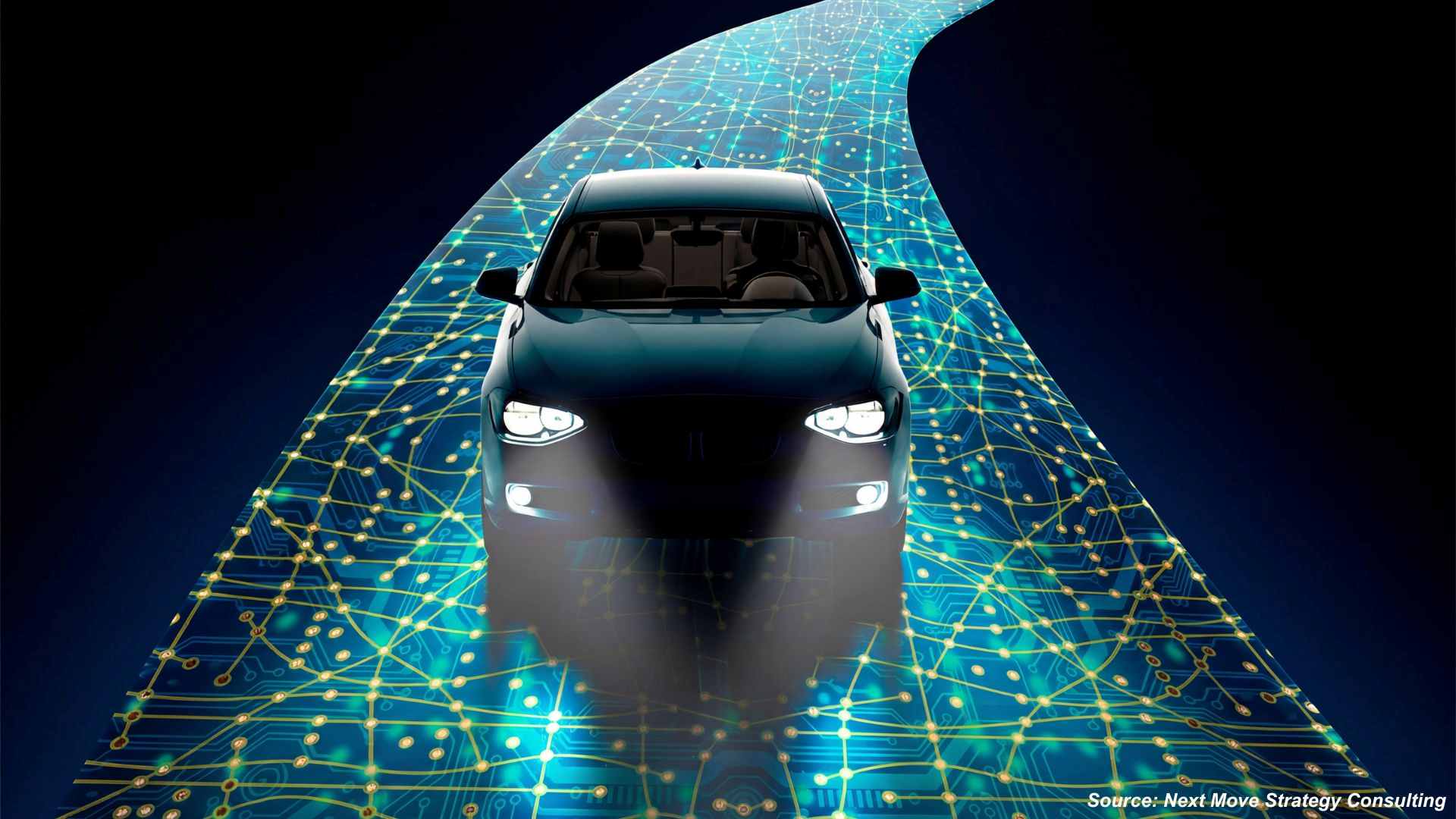
The Autonomous Vehicle Market is entering a new stage of commercialization. After years of research, testing, and pilot deployments, 2026 is emerging as a period where large-scale implementation is becoming a practical reality.
Recent announcements from NVIDIA, Uber, and QCraft highlight a significant shift in the industry. The focus is no longer solely on developing autonomous driving technology. Industry leaders are now concentrating on scaling fleets, standardizing vehicle platforms, improving safety certification, and accelerating mass production.
For investors, automotive manufacturers, logistics providers, and strategic decision-makers, these developments signal an important transition from experimentation to deployment. The ability to build scalable, safe, and commercially viable autonomous vehicle ecosystems will likely determine future competitive positioning across mobility and transportation markets.
How Are Autonomous Vehicle Ecosystems Becoming More Scalable?
One of the most significant developments announced by NVIDIA is its partnership with Uber to support the expansion of a global Level 4 autonomous mobility network.
The collaboration is designed to support Uber's long-term goal of scaling autonomous fleets beginning in 2027, with a target of 100,000 autonomous vehicles over time. Central to this strategy is NVIDIA DRIVE AGX Hyperion 10, a reference architecture that enables manufacturers to develop Level 4-ready vehicles using a standardized compute and sensor framework.

Why Does Standardization Matter?
Standardization is becoming increasingly important as the autonomous vehicle industry transitions from research and testing to large-scale deployment. Historically, autonomous driving solutions were developed using highly customized combinations of hardware, sensors, and software, creating challenges related to integration, scalability, and cost. Standardized architectures, such as NVIDIA's DRIVE AGX Hyperion 10 platform, provide a common foundation that enables automakers and autonomous vehicle developers to streamline engineering processes, reduce development expenses, accelerate deployment timelines, and improve interoperability across different vehicle models and software ecosystems. Standardization also simplifies over-the-air software updates, allowing manufacturers to deploy new features, performance improvements, and safety enhancements more efficiently.

How Is Artificial Intelligence Improving Autonomous Vehicle Performance?
Artificial intelligence has become the defining technology behind modern autonomous driving systems.
NVIDIA revealed that its autonomous driving strategy incorporates foundation AI models, generative AI, and Vision-Language-Action (VLA) models trained on trillions of real and synthetic driving miles.
These systems are designed to improve a vehicle's ability to understand complex traffic environments, interpret changing conditions, and respond to unpredictable scenarios.
Similarly, QCraft introduced its next-generation QPilot 2.0 solution featuring:
-
More than 500 TOPS of computing performance
-
VLA architecture
-
World Model technology
-
AI-driven closed-loop development capabilities
These technologies provide a shared foundation supporting both advanced driver assistance functions and future Level 4 autonomous operations.

What Makes VLA Models Important?
Vision-Language-Action (VLA) models represent a significant advancement in autonomous driving because they integrate visual perception, contextual reasoning, and action planning into a unified framework. Unlike traditional systems that primarily focus on detecting objects and interpreting road conditions, VLA models enable autonomous vehicles to understand complex driving environments, evaluate context, and make more intelligent decisions in real time. This capability helps vehicles analyze their surroundings more effectively, respond to dynamic traffic situations, and navigate unpredictable scenarios with greater accuracy. As the industry moves toward higher levels of autonomy, artificial intelligence is evolving from perception-based automation to reasoning-driven decision-making. Both NVIDIA and QCraft are advancing this transition through investments in AI foundation models, generative AI technologies, and VLA architectures designed to improve adaptability, operational safety, and real-world driving performance, making these models a critical component of next-generation autonomous vehicle systems.
How Is Mass Production Accelerating Autonomous Vehicle Deployment?
A major challenge for the industry has been moving beyond pilot projects and into large-scale deployment.
QCraft reported that its QPilot intelligent driving platform has already been installed in more than 1 million passenger vehicles across 23 vehicle models from nearly 10 automotive manufacturers.
The company also announced large-scale production of its single-chip Urban Navigation on Autopilot (NOA) solution based on Horizon Robotics Journey 6M.
In addition, more than 50 new vehicle models are expected to integrate QPilot technology during 2026.
These developments indicate that autonomous driving capabilities are increasingly being integrated into mainstream vehicle production programs.
How Is Autonomous Vehicle Technology Expanding Beyond Passenger Mobility?
While robotaxis continue to attract attention, autonomous technology is expanding into freight and logistics.
NVIDIA highlighted collaborations involving Aurora, Volvo Autonomous Solutions, and Waabi to develop Level 4 autonomous trucking systems using NVIDIA DRIVE technology.
QCraft has also entered the unmanned logistics segment through a partnership with Chery Commercial Vehicle.
This trend suggests that logistics automation may become one of the most important commercial applications of autonomous vehicle technology.
How Are Leading Companies Strengthening Their Position in the Autonomous Vehicle Industry?
The autonomous vehicle industry is characterized by the presence of several prominent technology developers, automotive manufacturers, and mobility innovators, including Tesla, Inc., Waymo LLC, Cruise LLC, Zoox, Inc., Mercedes-Benz Group AG, AB Volvo, BMW AG, Honda Motor Co., Ltd., Pony.ai, Inc., May Mobility, Karsan Otomotiv, Yutong Bus Co., Ltd., AutoX, Inc., Motional, Inc., WeRide Inc., Toyota Motor Corporation, Ford Motor Company, and Baidu Apollo. To strengthen their competitive position and expand market presence, these companies are actively pursuing strategic initiatives such as regional expansion, technology partnerships, ecosystem collaborations, and commercial deployment programs. Such strategies are helping industry leaders accelerate innovation, enhance scalability, and capitalize on emerging opportunities across the global autonomous vehicle landscape.

Future Outlook
The future of autonomous vehicle technology is increasingly centered on commercialization, scalability, and ecosystem-driven deployment. Recent developments from NVIDIA and QCraft indicate that the industry is moving beyond isolated technology demonstrations toward large-scale operational implementation. As autonomous mobility networks expand, companies are focusing on building larger ecosystems that connect automakers, ride-hailing platforms, logistics providers, and technology partners through common platforms and standards. At the same time, advanced artificial intelligence models, including foundation AI and Vision-Language-Action architectures, are becoming essential for improving real-world driving performance and decision-making capabilities.
Next Steps
For business leaders evaluating autonomous vehicle opportunities:
-
Monitor platform standardization initiatives.
-
Assess partnerships across mobility and logistics ecosystems.
-
Evaluate AI infrastructure requirements.
-
Track safety certification frameworks and compliance developments.
-
Identify commercialization opportunities beyond passenger transportation.
Conclusion
The autonomous vehicle industry is moving beyond proof-of-concept projects and toward scalable deployment models. NVIDIA's expanding Level 4 ecosystem and QCraft's mass-production achievements demonstrate that autonomous mobility is becoming increasingly integrated into real-world transportation networks.
For investors, executives, and strategic planners, the most important trend is not simply technological advancement. It is the industry's growing ability to deploy autonomous vehicle solutions at scale through standardized platforms, AI-powered architectures, and ecosystem-driven collaboration.
About the Author
 Tania Dey is a content writer specializing in transformation-led, insight-driven storytelling. She develops research-backed, high-impact content aligned with evolving business priorities, digital behavior, and audience expectations. Her work helps organizations sharpen value propositions, strengthen visibility, and communicate strategic intent with clarity and precision. Grounded in data-informed storytelling, she brings a strong focus on relevance, consistency, and measurable digital impact across platforms.
About the Reviewer
 Sanyukta Deb is a senior content writer and content analyst with expertise in content strategy, audience engagement, and research-driven storytelling. With a strong leadership approach and strategic mindset, she drives content initiatives that strengthen brand communication and audience connection. She combines creativity with analytical insight to develop impactful, value-led content while mentoring collaborative efforts across teams to ensure consistent, meaningful engagement and long-term brand growth across digital platforms.













Add Comment