What Is Driving the Rise of Warehouse Picking Robots in 2026?
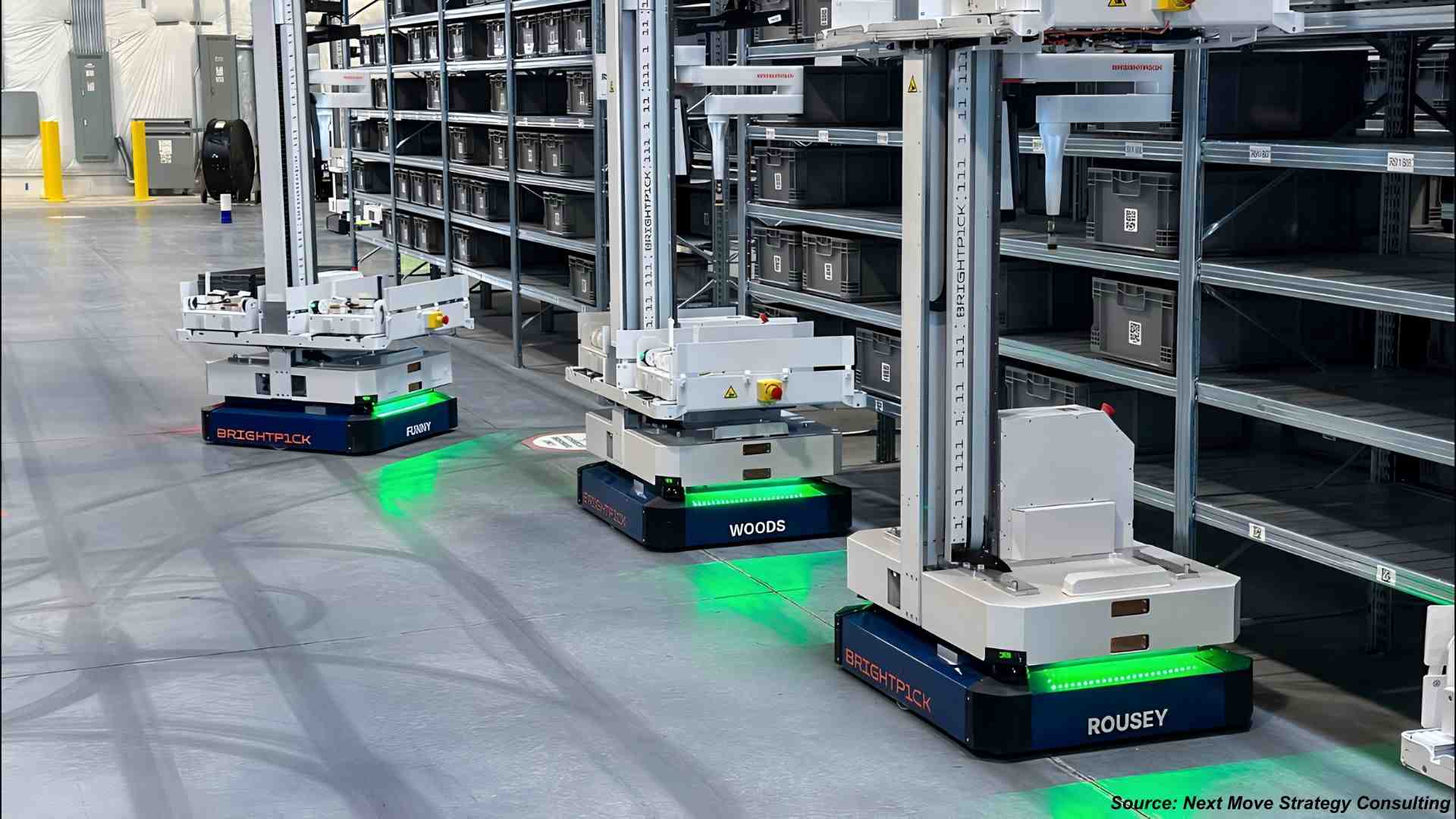
The Warehouse Picking Robots Market is no longer viewed as an experimental segment within warehouse automation. In 2026, it is evolving into a critical component of global fulfillment infrastructure as logistics providers work to manage rising order complexity, labor challenges, and the growing need for operational consistency.
Recent developments involving DHL, Locus Robotics, ABB Robotics, and Jacobi Robotics demonstrate how automation strategies are shifting beyond basic speed optimization. Companies are increasingly investing in robotics systems capable of scaling across global operations, adapting to fluctuating fulfillment demand, and integrating artificial intelligence into physical warehouse environments.
This transition is becoming increasingly important as modern warehouses face pressure from volatile e-commerce demand, faster delivery expectations, and labor-intensive workflows that are becoming more difficult to manage manually. As a result, the Warehouse Picking Robots Market is emerging as a key solution for improving fulfillment efficiency, operational reliability, and long-term supply chain resilience.
How Are Warehouse Picking Robots Reshaping Fulfillment Operations?
A major indicator of the industry’s rapid evolution came in March 2026, when DHL and Locus Robotics announced that their robots had completed one billion warehouse picks across DHL’s global fulfillment network.
The milestone demonstrates how deeply warehouse robotics has become embedded within large-scale logistics operations. DHL first partnered with Locus Robotics in 2017 to improve warehouse productivity and support rising e-commerce demand. Since then, the partnership has expanded significantly, with thousands of autonomous mobile robots now operating in more than 40 DHL-managed facilities worldwide.
These robots are coordinated through Locus Robotics’ warehouse execution platform, which allows automated systems and warehouse workers to operate together during order fulfillment. According to DHL, the deployment generated measurable operational improvements, including 30–180% increases in units picked per hour and an 80% reduction in employee training time.
What makes this development particularly significant is the broader operational context behind it. Warehouses are no longer dealing with predictable order patterns. Viral product trends, promotional spikes, and rapidly changing consumer behavior are creating unstable fulfillment environments that require greater flexibility and consistency.
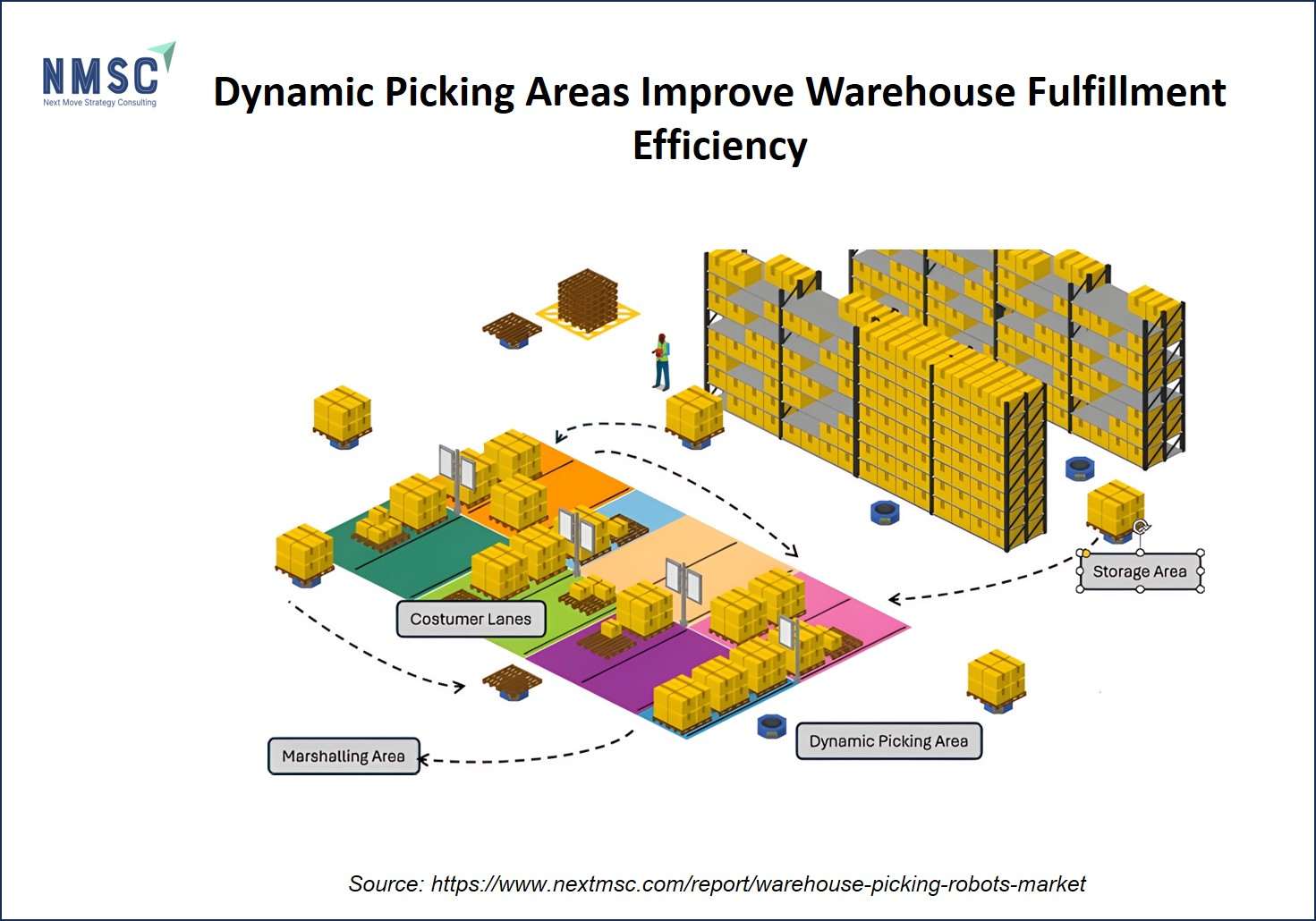
Warehouse Workflow Optimization Through Dynamic Picking and Storage Integration
This image demonstrates how modern warehouses optimize fulfillment operations by connecting storage systems, picking zones, customer lanes, and staging areas into a continuous inventory flow network.
The diagram shows inventory moving from high-density storage racks into a dynamic picking area where products are organized based on active order demand. This flexible workflow helps warehouses respond more efficiently to changing fulfillment requirements while reducing operational bottlenecks.
The customer lanes highlighted in the image represent structured fulfillment paths where picked products are consolidated for outgoing orders. Meanwhile, the marshalling area acts as a staging zone where completed shipments are grouped before dispatch.
By integrating these operational zones, warehouses can improve inventory accessibility, streamline order movement, and support higher fulfillment throughput. The layout also reflects how automation-ready warehouse designs are increasingly focused on flexibility, scalability, and faster order processing.
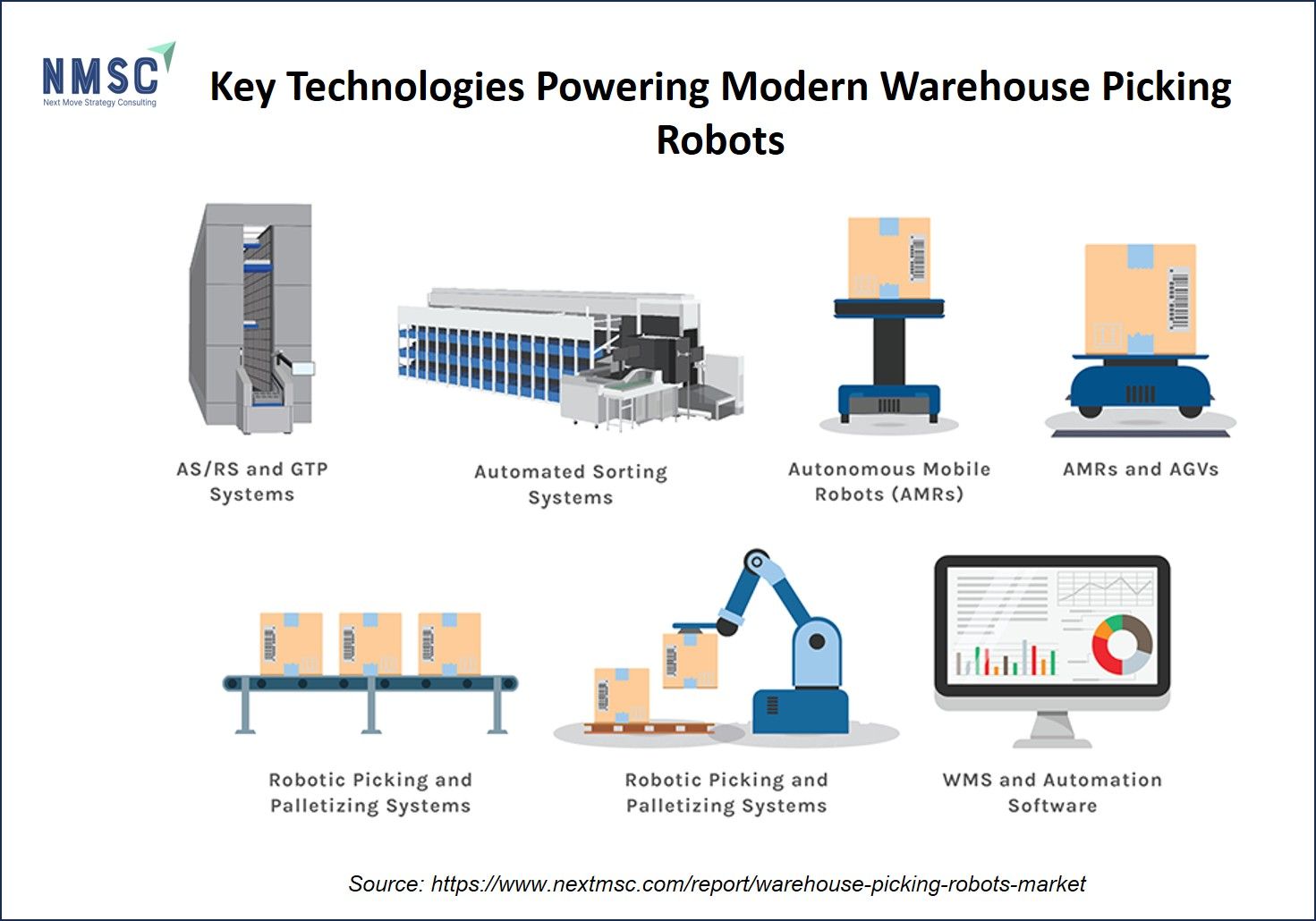
Core Automation Technologies Transforming Warehouse Picking Operations
This image highlights the core automation technologies transforming modern warehouse operations and fulfillment centers. It showcases how different robotic systems, storage solutions, and warehouse management platforms work together to improve picking accuracy, operational efficiency, and order fulfillment speed.
The illustration begins with AS/RS (Automated Storage and Retrieval Systems) and Goods-to-Person (GTP) systems, which automate inventory storage and retrieval processes. These systems reduce manual movement inside warehouses and help improve space utilization while accelerating order handling.
Next, the image presents Automated Sorting Systems, which are designed to organize and route packages efficiently across fulfillment workflows. These systems are particularly important in high-volume e-commerce operations where warehouses must process large numbers of orders with minimal delays.
The diagram also highlights Autonomous Mobile Robots (AMRs) and Automated Guided Vehicles (AGVs). These robots transport products throughout warehouse facilities with limited human intervention, helping companies improve workflow consistency and reduce repetitive labor tasks.
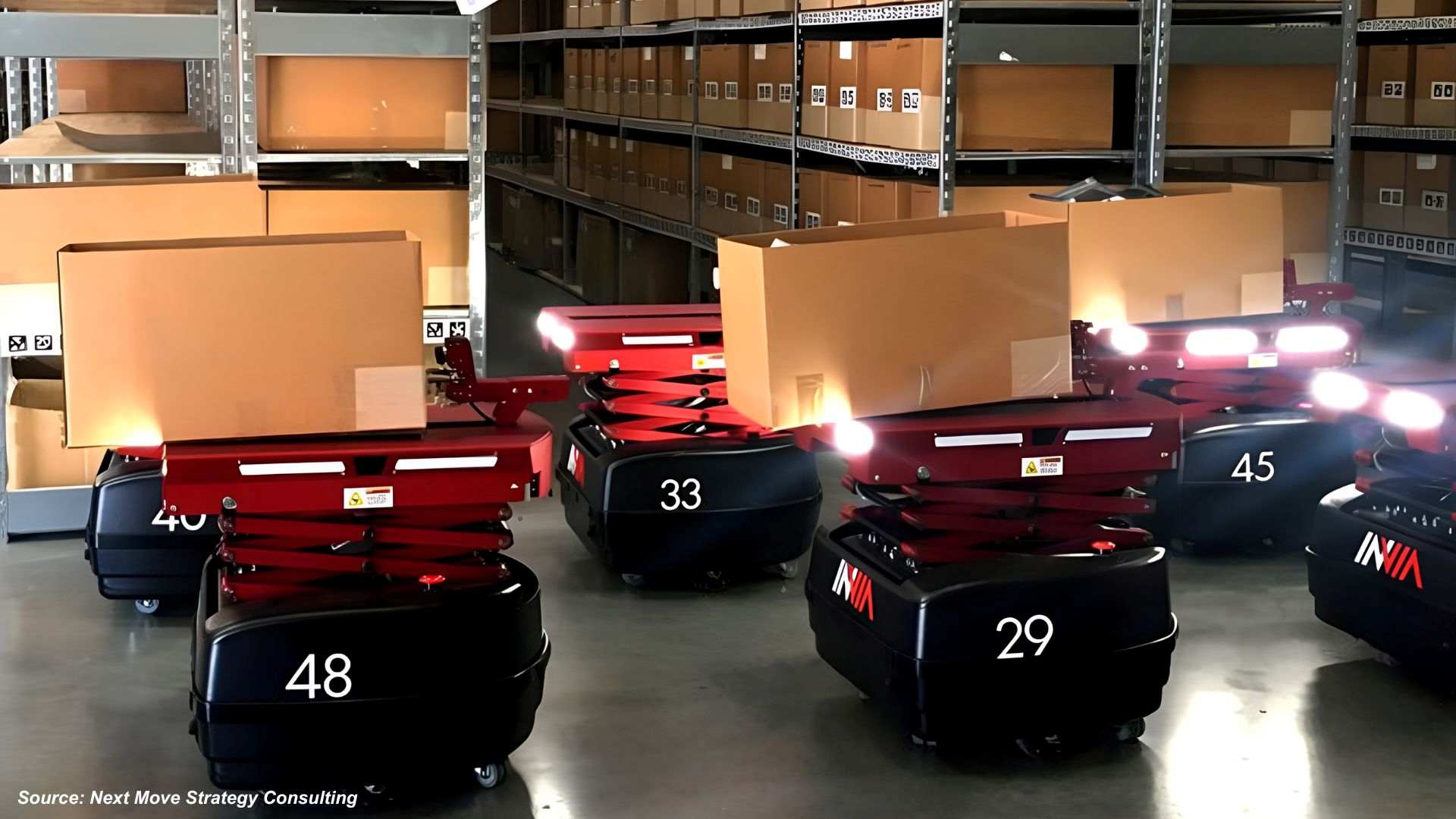
How Is Artificial Intelligence Expanding Warehouse Automation?
Artificial intelligence is now becoming one of the defining forces behind next-generation warehouse automation systems.
In April 2026, ABB Robotics partnered with Jacobi Robotics to integrate Jacobi’s OmniPalletizer AI software into ABB’s robotics ecosystem. The collaboration focuses on mixed-case palletizing, a warehouse process involving the creation of stable pallets from live, unsequenced case flows.
Despite being one of the most labor-intensive warehouse workflows, mixed-case palletizing has historically remained difficult to automate because traditional systems often require expensive sequencing infrastructure, extensive facility redesigns, and custom engineering work. According to Jacobi Robotics, the workflow costs the United States logistics industry more than $15 billion annually in direct labor expenses alone.
The new collaboration aims to remove many of those barriers through a more flexible deployment approach. Jacobi’s OmniPalletizer system is designed for brownfield deployment, meaning it can integrate into existing conveyor systems without requiring major operational shutdowns or complete warehouse redesigns.
Another notable aspect of the system is its use of digital-twin validation. Before deployment, the software simulates warehouse operations using actual order history data to validate throughput, pallet quality, and expected return on investment. This reduces uncertainty for operators considering automation investments
Key Factors Accelerating Warehouse Picking Robot Adoption
This pie chart illustrates the primary factors driving the adoption of warehouse picking robots in modern logistics and fulfillment operations.
Operational consistency holds the largest share at 35%, highlighting the growing need for stable warehouse performance during fluctuating order volumes and unpredictable e-commerce demand. Productivity improvement follows at 25%, reflecting how robotics helps increase picking speed, accuracy, and overall fulfillment efficiency.
Labor optimization accounts for 20%, as companies continue reducing repetitive manual tasks and improving workforce efficiency through automation. AI integration contributes 12%, driven by advancements in intelligent robotics, digital-twin simulation, and adaptive warehouse systems.
The remaining 8% represents scalability and flexibility, showing the increasing demand for automation solutions that can integrate into existing warehouse infrastructure and expand across multiple facilities.
Overall, the chart demonstrates how warehouse picking robots are evolving into scalable, AI-enabled systems that support long-term supply chain efficiency and operational resilience.

Leading Companies Shaping the Warehouse Picking Humanoid Robots Industry
Major companies operating in the warehouse picking humanoid robots industry include Amazon, Agility Robotics, Boston Dynamics, Figure AI, Tesla, Apptronik, ABB, FANUC, Locus Robotics, and Honeywell, among others. These companies are actively focusing on strategies such as new product launches and robotics innovation to strengthen their market presence and maintain competitiveness in the global industry.

Industry Impact Analysis
Warehouse picking robots are reshaping supply chain operations across multiple strategic areas.
One of the most immediate impacts is labor optimization. Automated systems reduce repetitive manual tasks while helping warehouses maintain operational continuity during workforce shortages and demand surges. This is particularly important in fulfillment environments where staffing fluctuations can directly affect delivery timelines.
Another major impact is operational consistency. Warehouses increasingly require systems capable of maintaining stable throughput under changing order conditions. Robotics platforms help reduce variability while improving reliability across fulfillment workflows.
The growing emphasis on brownfield deployment is also influencing procurement and infrastructure strategy. Many companies prefer automation technologies that integrate into existing facilities instead of requiring expensive greenfield projects. This lowers deployment barriers and shortens implementation timelines.
From an investment perspective, scalable robotics ecosystems may become more attractive than isolated automation tools because they can expand across multiple warehouse functions over time.
Future Outlook
Warehouse picking robots are expected to play an increasingly central role in fulfillment infrastructure as logistics operators pursue higher efficiency and operational resilience.
The latest industry developments suggest that future warehouse automation strategies will focus heavily on scalability, AI integration, and deployment flexibility. Robotics systems capable of operating inside existing facilities without major infrastructure redesigns may see stronger adoption across both large-scale and mid-sized distribution operations.
Artificial intelligence is also likely to expand into additional warehouse workflows beyond picking and palletizing. As robotics systems continue learning through operational data and software updates, companies may increasingly treat warehouse automation as a continuously improving operational platform rather than a fixed hardware investment.
Next Steps
Organizations evaluating warehouse picking robots should focus on operational scalability, integration compatibility, and deployment flexibility before making automation investments.
Decision-makers should also assess whether robotics providers can support evolving fulfillment requirements without forcing major warehouse redesigns. Technologies that combine artificial intelligence, modular deployment, and long-term service support may offer stronger operational value as fulfillment complexity continues increasing.
-
Evaluate whether warehouse picking robots can scale across multiple fulfillment facilities instead of solving a single operational bottleneck.
-
Assess compatibility with existing warehouse management systems, conveyor infrastructure, and fulfillment workflows before deployment.
-
Prioritize robotics platforms that support brownfield deployment to avoid expensive facility redesigns or operational shutdowns.
Conclusion
Warehouse picking robots are rapidly becoming a core component of modern logistics infrastructure. The latest developments involving DHL, Locus Robotics, ABB Robotics, and Jacobi Robotics demonstrate how warehouse automation is evolving toward scalable, AI-driven operational systems capable of supporting increasingly complex fulfillment networks.
As supply chains face greater demand volatility and operational pressure, robotics platforms that improve consistency, flexibility, and long-term scalability are likely to become increasingly important for logistics operators, investors, and procurement leaders alike.
About the Author
 Sanyukta Deb
— Sanyukta Deb is Digital Marketing Team Lead at Next Move Strategy Consulting, where she has led content strategy and technical SEO for the firm's B2B market research publications for over 2 years. Her editorial process translates NextMSC's primary and secondary research — spanning technology, industrial, and consumer sectors — into commercial narratives, backed by search-intent, keyword, and competitive analysis. She brings 5 years of overall experience in digital marketing and content strategy.
Sanyukta Deb
— Sanyukta Deb is Digital Marketing Team Lead at Next Move Strategy Consulting, where she has led content strategy and technical SEO for the firm's B2B market research publications for over 2 years. Her editorial process translates NextMSC's primary and secondary research — spanning technology, industrial, and consumer sectors — into commercial narratives, backed by search-intent, keyword, and competitive analysis. She brings 5 years of overall experience in digital marketing and content strategy.
About the Reviewer
 Debashree Dey
— Debashree Dey is Assistant Manager at Next Move Strategy Consulting, where she supports cross-vertical market content and communications across diverse industries for 6 years. Her professional background includes senior content writing, communications, and published manuscript authorship, with experience developing audience-focused business narratives and maintaining clear, consistent messaging. Her role supports research-led content development and editorial quality across NextMSC publications.
Debashree Dey
— Debashree Dey is Assistant Manager at Next Move Strategy Consulting, where she supports cross-vertical market content and communications across diverse industries for 6 years. Her professional background includes senior content writing, communications, and published manuscript authorship, with experience developing audience-focused business narratives and maintaining clear, consistent messaging. Her role supports research-led content development and editorial quality across NextMSC publications.

















Add Comment