What Will Drive the Next Stage of Growth in the Smart Glasses Market?
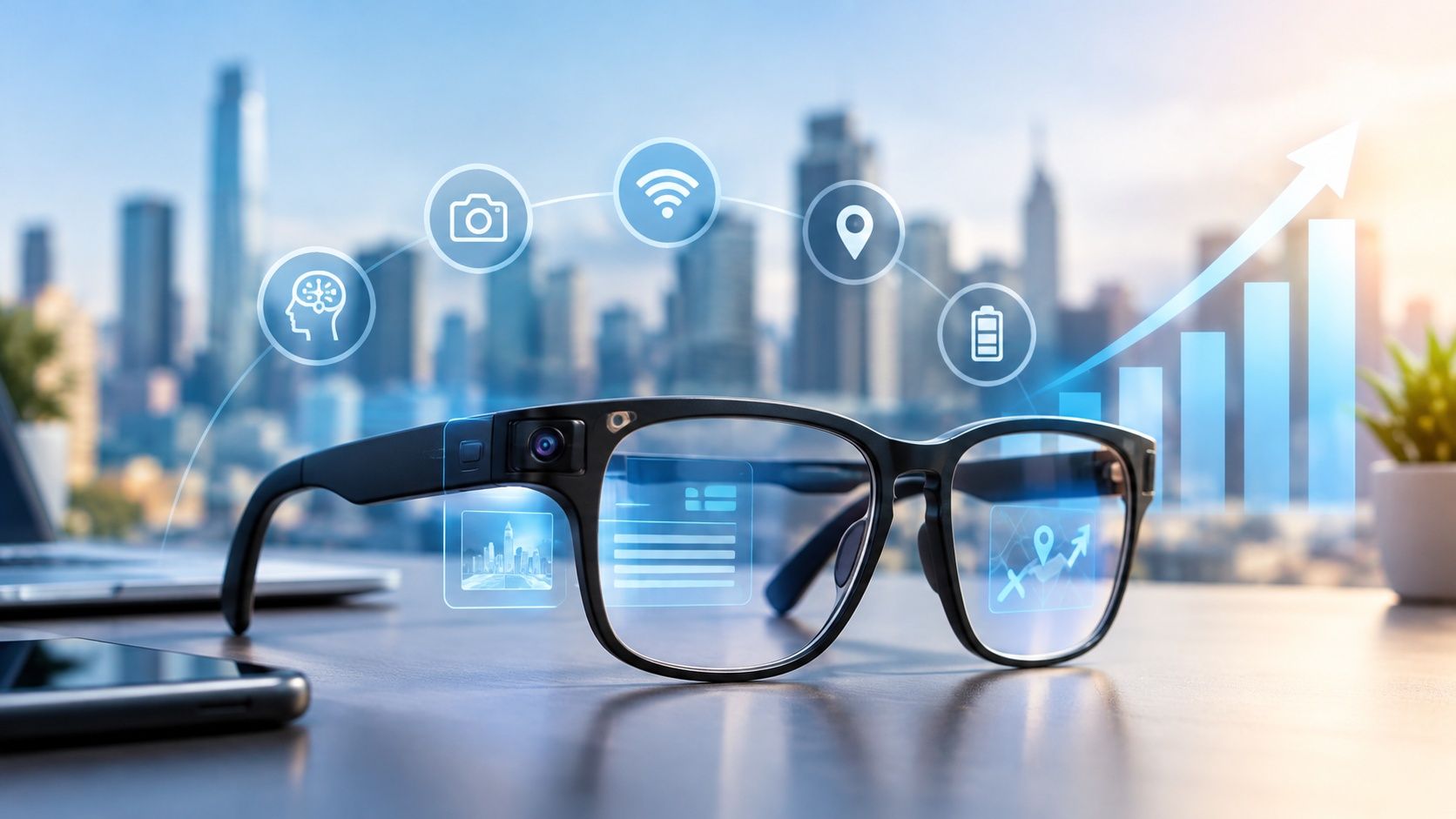
Smart glasses have spent years moving between excitement and hesitation. Early versions showed what the technology could do, but many consumers were not ready to wear obvious devices on their faces every day. The hardware looked too experimental, the use cases were limited, and the social questions around cameras and privacy were not easy to ignore.
The market looks different now. Smart glasses are no longer only about futuristic displays or niche enterprise tools. They are starting to look like regular eyewear, connect with familiar apps, and solve smaller everyday problems. That shift matters because consumer technology usually grows when it stops feeling like a separate gadget and starts fitting into normal routines.
The next stage of growth will not come from one feature alone. It will depend on design, artificial intelligence, comfort, price, retail access, battery life, privacy expectations, and better reasons to wear the product daily. The companies that understand this mix will have a stronger chance of turning smart glasses from a curiosity into a mainstream wearable category.
Everyday Design Will Matter More Than Futuristic Looks
Smart glasses sit on the face, so design is not a minor detail. People may tolerate a bulky phone, a thick laptop, or a large gaming headset if the product is useful enough. Eyewear is different. Glasses affect how a person looks in meetings, photos, restaurants, airports, and casual daily life. If the frame looks awkward, many consumers will not wear it often, even if the technology inside is impressive.
This is why the next phase of growth will likely be led by models that look closer to normal sunglasses or prescription glasses. Consumers want technology that does not announce itself too loudly. They want frames that fit their face shape, match their style, and feel acceptable in public.
Fashion partnerships will continue to play a role here. Eyewear brands already understand frame shapes, lens options, fit, sizing, and retail presentation. Technology companies understand chips, software, microphones, cameras, and AI assistants. The market needs both sides because smart glasses are not only electronics. They are also something people wear as part of their identity.
The more normal the product feels, the easier adoption becomes. A traveler might wear smart glasses for hands free photos. A commuter might use them for calls and audio. A parent might capture a quick family moment. None of these uses require the product to look like science fiction. In fact, the less dramatic the design feels, the more likely people are to keep wearing it.
AI Will Give Smart Glasses a Clearer Purpose
For years, smart glasses were often judged by their hardware. People asked whether they had a display, camera, speakers, or touch controls. Those features still matter, but AI is changing the conversation. The more useful question now is what the glasses can help the user understand, remember, capture, or do in real time.
AI gives smart glasses a reason to exist beyond recording video or playing audio. When glasses can see what the wearer sees, hear what is happening, and respond through voice, they become more than a small camera on a frame. They can become a travel helper, shopping assistant, translation tool, productivity aid, accessibility support, or learning companion.
This is where consumer expectations are starting to shift. A model like this version of Meta glasses shows how buyers may begin expecting smart glasses to combine camera, audio, voice control, and AI help in a wearable form rather than treating each feature as separate. Meta’s own AI glasses page describes products with a built-in camera, audio, and AI that users can talk to, which reflects the wider move toward more natural, context aware wearable computing. You can see that positioning on the official Meta AI glasses page.
The important growth driver is not AI as a buzzword. It is AI that fits the moment. If a person can ask what they are looking at, translate a sign, identify a plant, remember where they parked, summarize a conversation, or get walking directions without pulling out a phone, the product starts to feel useful in ordinary life.
Hands Free Capture Will Keep Pulling in Consumers
One of the strongest use cases for smart glasses is simple: capturing moments without holding a phone. This matters because phone cameras are excellent, but they interrupt the moment. People have to stop, unlock the phone, open the camera, frame the shot, and hold the device up. Smart glasses can make some of that feel more natural.
Travel is a clear example. A person walking through a food market, biking through a coastal town, hiking a trail, or watching a street performance may want to capture what they are seeing without stopping every few seconds. Parents may want to record a child’s first ski run or a family walk through a theme park. Creators may want point of view clips that feel more immediate than phone footage.
This does not mean smart glasses will replace phones. Phones offer bigger screens, better editing, stronger cameras, and more control. But smart glasses can capture moments from a different perspective. That difference is enough to create demand among travelers, content creators, sports users, and people who simply want less friction.
For market growth, the key will be making capture feel easy while also making it socially acceptable. Camera indicators, privacy education, recording limits, and clear user controls will all matter. Consumers need to trust the device, and people around the wearer need some level of comfort too.
Audio and Communication May Drive Daily Use
Not every smart glasses use case needs a camera or display. Audio may become one of the most important drivers of repeat use. Open ear speakers allow users to listen to music, podcasts, navigation prompts, calls, and messages while still hearing the world around them.
That is valuable in many daily settings. A cyclist can hear directions without blocking traffic noise. A traveler can listen to a walking tour while staying aware of the street. A commuter can take a quick call without wearing earbuds. A person working from home can move around while staying connected.
Audio also makes the product feel less like a special device that is only useful for recording. If smart glasses are comfortable enough to wear for several hours, audio features can turn them into a daily companion. The more often people use them for small tasks, the more comfortable they become with the larger idea of wearable AI.
For manufacturers, this means speaker quality, microphone clarity, wind reduction, call performance, and comfort will influence growth as much as camera quality. If the glasses work well for normal calls and listening, they have a better chance of staying on the user’s face.
Battery Life and Comfort Will Decide Repeat Use
Many consumer gadgets fail not because they lack features, but because they are annoying to use every day. Smart glasses face this risk clearly. If they are too heavy, pinch the nose, slide down the face, run out of battery quickly, or need constant charging, users may enjoy them for a week and then leave them at home.
Battery life is especially important because smart glasses are expected to behave like eyewear, not like a phone that sits on a desk while charging. People may want them during a full commute, a half day of sightseeing, a conference, or a long walk. A charging case helps, but the glasses still need enough power to be useful between charges.
Comfort is just as important. Weight distribution, temple pressure, heat, lens quality, and frame fit all affect whether someone keeps wearing the product. This is one reason eyewear expertise is so valuable in the category. A device can have strong software and still fail if it feels uncomfortable after an hour.
The next growth stage will reward companies that treat comfort as a core feature. Buyers may be impressed by AI, but they will keep using the product only if it feels easy to wear.
Prescription Support Will Expand the Addressable Market
Prescription lens support could become one of the biggest growth factors. Many people already wear glasses every day. If smart glasses can be fitted with prescription lenses, the product becomes less of an extra accessory and more of a possible replacement for daily eyewear.
This creates a larger market than sunglasses alone. Sunglasses are useful outdoors, on vacation, and while driving, but prescription glasses are part of everyday life for millions of people. If buyers can choose familiar frame styles, lens types, and prescription options, the adoption barrier becomes lower.
Retail fitting will also matter. People want to try frames on, check comfort, confirm prescription options, and ask practical questions. Online try on tools can help, but physical retail remains important for eyewear because fit is personal. The next stage of growth may depend as much on opticians and eyewear stores as on tech launch events.
Insurance and vision benefits could also influence adoption. If smart glasses remain fully out of pocket, some buyers will treat them as luxury gadgets. If prescription options and vision care channels make them easier to purchase, the category could reach a wider audience.
Price Needs to Match Clear Value
Smart glasses do not have to be cheap to grow, but the price needs to make sense. Consumers compare them with sunglasses, headphones, action cameras, smartwatches, and phones. If a pair of smart glasses costs much more than those alternatives, the value must be very clear.
The market will likely develop in layers. Some models will focus on audio, camera, and AI at a more accessible price. Others will add displays, advanced sensors, or specialized sports features at a higher price. This range is healthy because not every consumer needs the same device.
The risk is confusion. If buyers cannot easily understand the difference between models, they may delay the purchase. Clear positioning will matter. Is the product mainly for everyday calls and capture? Is it for fitness? Is it for navigation? Is it for workplace productivity? The better companies explain the use case, the easier it becomes for consumers to choose.
Privacy Will Shape Trust and Regulation
Privacy is one of the biggest challenges for smart glasses. A phone camera is visible because a person usually has to hold it up. Smart glasses are more subtle, which can make people uncomfortable. This concern will not disappear as the market grows. It may become more important.
Companies will need to make recording indicators clear and difficult to misuse. They will also need transparent policies around data, AI processing, voice recordings, images, and user controls. Consumers want convenience, but they also want to know what is being captured and how it is handled.
Public spaces may develop their own rules. Schools, offices, gyms, concerts, hospitals, private clubs, and government buildings may restrict smart glasses in certain areas. That does not mean the category cannot grow. It means the category needs social norms, just as smartphones and drones did.
The companies that handle privacy carefully may gain a competitive advantage. Trust will be part of the product. A smart glasses brand that feels careless with data or recording behavior could limit its own growth, even if the hardware is strong.
The Next Stage Is About Normal Use
The smart glasses market is moving into a more serious phase. The question is no longer whether the technology is possible. The question is whether people will wear it often enough for it to become a real category.
Growth will come from products that look good, feel comfortable, last long enough, respect privacy, support prescriptions, and provide useful AI help in real situations. Hands free capture, open ear audio, travel assistance, translation, and quick visual questions are all practical use cases that can make the product easier to understand.
The winning products will not ask consumers to change their lives completely. They will fit into habits people already have: wearing glasses, taking calls, listening to audio, traveling, capturing memories, asking questions, and moving through the world with a phone nearby.
That is what makes the next stage of the market interesting. Smart glasses do not need to replace smartphones to succeed. They need to reduce small moments of friction and make everyday tasks feel easier. If they can do that in a form people actually want to wear, the category may finally move from early interest to lasting growth.
About the Author
 Sanyukta Deb
— Sanyukta Deb is Digital Marketing Team Lead at Next Move Strategy Consulting, where she has led content strategy and technical SEO for the firm's B2B market research publications for over 2 years. Her editorial process translates NextMSC's primary and secondary research — spanning technology, industrial, and consumer sectors — into commercial narratives, backed by search-intent, keyword, and competitive analysis. She brings 5 years of overall experience in digital marketing and content strategy.
Sanyukta Deb
— Sanyukta Deb is Digital Marketing Team Lead at Next Move Strategy Consulting, where she has led content strategy and technical SEO for the firm's B2B market research publications for over 2 years. Her editorial process translates NextMSC's primary and secondary research — spanning technology, industrial, and consumer sectors — into commercial narratives, backed by search-intent, keyword, and competitive analysis. She brings 5 years of overall experience in digital marketing and content strategy.
About the Reviewer
 Debashree Dey
— Debashree Dey is Assistant Manager at Next Move Strategy Consulting, where she supports cross-vertical market content and communications across diverse industries for 6 years. Her professional background includes senior content writing, communications, and published manuscript authorship, with experience developing audience-focused business narratives and maintaining clear, consistent messaging. Her role supports research-led content development and editorial quality across NextMSC publications.
Debashree Dey
— Debashree Dey is Assistant Manager at Next Move Strategy Consulting, where she supports cross-vertical market content and communications across diverse industries for 6 years. Her professional background includes senior content writing, communications, and published manuscript authorship, with experience developing audience-focused business narratives and maintaining clear, consistent messaging. Her role supports research-led content development and editorial quality across NextMSC publications.

















Add Comment