What's Scent-sational in 2025? Exploring the Flavors and Fragrances Market Trends

Introduction
The global flavors and fragrances industry is undergoing a structural transformation — driven simultaneously by surging consumer demand for sensory-enhanced products, sweeping regulatory reform, and a wave of strategic portfolio realignments among the world's largest ingredient houses. According to Next Move Strategy Consulting's Flavors and Fragrances Market report, the global flavors and fragrances market is projected to reach USD 43.24 billion by 2030, growing at a CAGR of 4.8% from 2025 to 2030. This trajectory reflects not merely incremental volume growth, but a fundamental shift in how ingredient manufacturers position themselves — moving from commodity suppliers toward innovation-led, sustainability-anchored partners for global brand owners.
Three converging forces are reshaping the competitive landscape in real time: the European Union's enforcement of its expanded 82-allergen fragrance labelling mandate as of July 31, 2026; Givaudan's acquisition of a majority stake in Eurofragance to deepen its fine fragrance footprint in high-growth regional markets; and International Flavors & Fragrances Inc.'s (IFF) USD 4.3 billion divestiture of its Food Ingredients business to CVC Capital Partners — a decisive pivot toward its higher-margin Taste, Scent, and Health & Biosciences segments. Each of these developments carries direct implications for market structure, competitive positioning, and investment strategy across the flavors and fragrances value chain.
For More Information: Download FREE Sample on Flavors and Fragrances Market Report
Consolidation, Compliance, and Capability: The Forces Rewriting the F&F Playbook
Givaudan's Eurofragance Acquisition: Scaling Regional Fine Fragrance
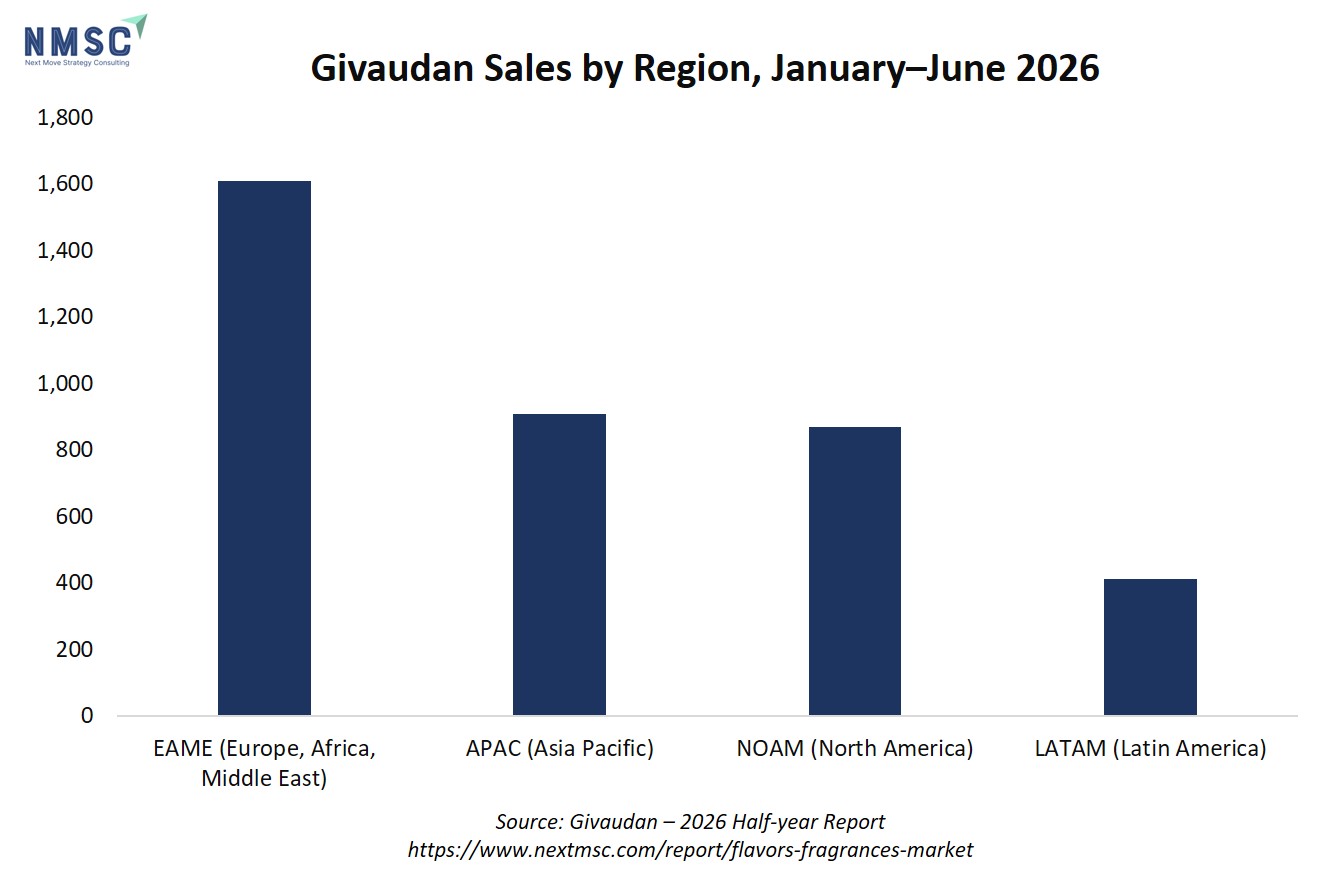
On June 5, 2026, Givaudan — the global leader in Fragrance & Beauty — announced it had reached an agreement to acquire a majority stake in Eurofragance, a Barcelona-based pure-play fragrance house with manufacturing operations in Spain, Singapore, and Mexico. Eurofragance's business would have represented approximately CHF 185 million of incremental sales to Givaudan's results in 2025 on a proforma basis, according to Givaudan's official announcement.
The strategic rationale is precise: Eurofragance's established presence across Europe, the Middle East, Asia, Africa, and Latin America fills a specific gap in Givaudan's 2030 strategy — namely, the ability to serve local and regional brand owners who require agile, culturally attuned fragrance creation rather than standardized global formulations. Givaudan achieved CHF 7.5 billion in sales in 2025, employing over 17,500 people worldwide.
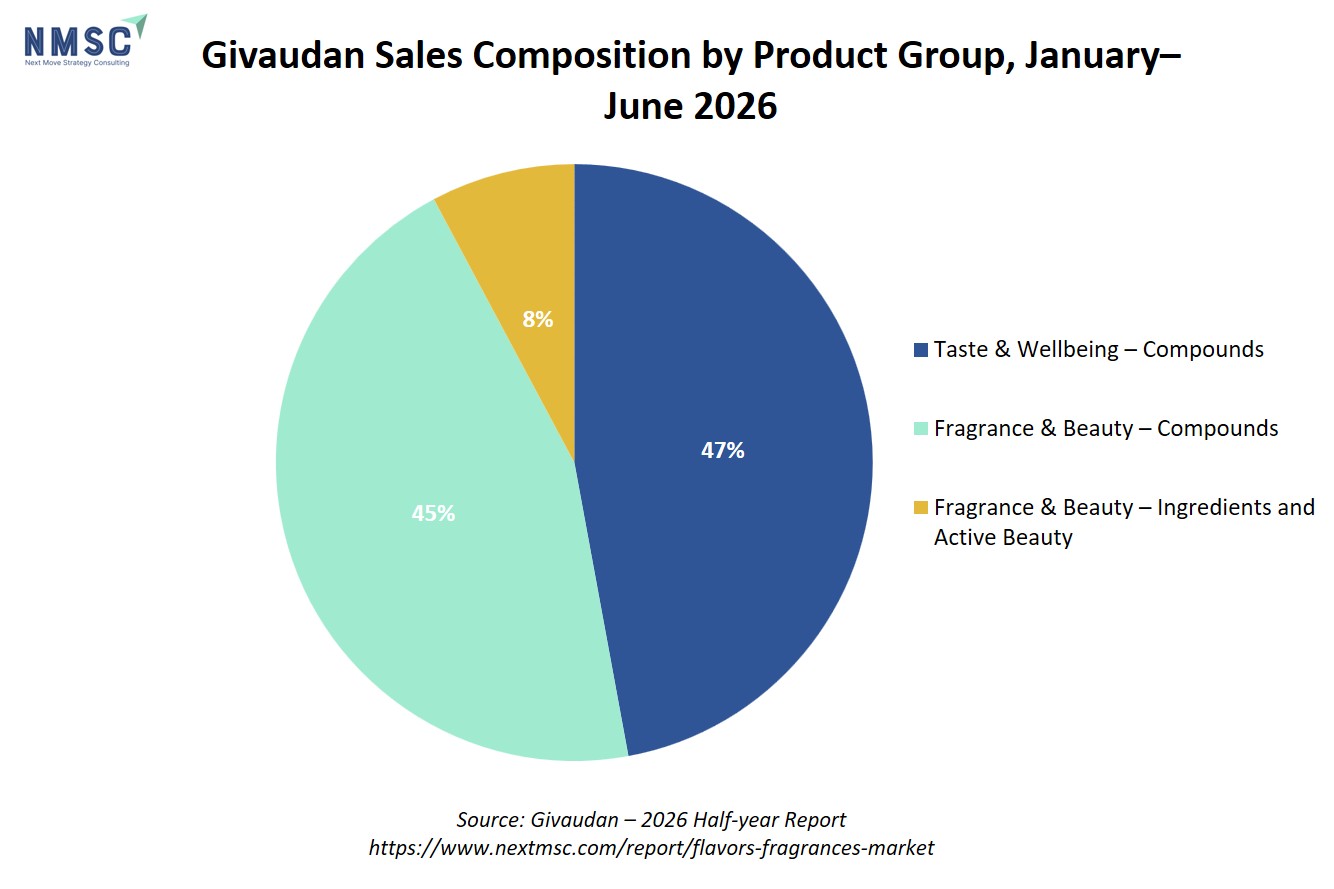
"Eurofragance is a respected player with deep roots in fine fragrances and strong relationships in high growth markets. By joining forces, we are perfectly aligned with our 2030 strategy for growth and our mission to continue shaping the future of fine fragrance creation," said Maurizio Volpi, President Fragrance & Beauty at Givaudan, in the company's official media release dated June 5, 2026.
This acquisition signals a broader industry pattern: the largest fragrance houses are no longer competing solely on scale, but on geographic granularity — the ability to deliver locally relevant olfactive solutions at speed. For mid-tier fragrance houses without Givaudan's global infrastructure, this deal raises the competitive bar considerably.
IFF's USD 4.3 Billion Divestiture: A Portfolio Pivot Toward Scent and Biosciences
On May 29, 2026, IFF (NYSE: IFF) announced it had entered into an agreement to sell its Food Ingredients business to funds advised by CVC Capital Partners, in a transaction valued at approximately USD 4.3 billion — representing an enterprise value-to-EBITDA multiple of approximately 10x. In 2025, the Food Ingredients business generated nearly USD 3.1 billion in annual sales and approximately USD 430 million of EBITDA. IFF retains an approximately 10% minority equity interest, valued at approximately USD 200 million, preserving a degree of commercial collaboration.
The divestiture is the culmination of a multi-year portfolio rationalization: including this transaction, IFF has divested 13 non-core businesses, generating nearly USD 10 billion in gross proceeds. The company's remaining three segments — Taste, Scent, and Health & Biosciences — are each positioned around long-term megatrends in health, well-being, and sustainability.
"This transaction represents an important strategic milestone in our ongoing portfolio optimization initiative, allowing us to further concentrate resources on our higher-growth, higher-margin segments," said Erik Fyrwald, CEO of IFF, in the company's official press release dated May 29, 2026. IFF expects full-year 2026 sales in the range of USD 10.5 billion to USD 10.8 billion and full-year 2026 adjusted operating EBITDA in the range of USD 2.05 billion to USD 2.15 billion.
The implications for the broader flavors and fragrances market are significant: IFF's sharpened focus on Scent and biotechnology-enabled Health & Biosciences will intensify R&D investment in fermentation-derived and naturals-based fragrance ingredients — directly competing with dsm-firmenich and Symrise in the premium, science-led segment.
NMSC Strategic Perspective: What These Moves Signal for Market Structure
NextMSC primary research and analysis indicates that the simultaneous occurrence of Givaudan's regional expansion via Eurofragance and IFF's portfolio concentration toward Scent and biosciences reflects a structural bifurcation in the flavors and fragrances industry. On one side, the largest players are consolidating regional fragrance creation capabilities to serve the growing middle-class consumer base in the Middle East, Southeast Asia, and Latin America — markets where fine fragrance penetration remains well below Western European levels. On the other side, the same players are accelerating investment in biotechnology-derived ingredients to reduce dependence on petrochemical aroma chemicals and geographically concentrated natural raw material supply chains.
For brand owners and contract manufacturers — the two largest customer segments in the NMSC report's segmentation — this bifurcation translates into a narrowing window to negotiate ingredient pricing and formulation flexibility before the top-tier suppliers complete their capability build-out. Procurement strategies that were adequate in 2023 will require revision by 2027.
Section Summary:
-
Givaudan's June 2026 acquisition of a majority stake in Eurofragance (representing ~CHF 185 million in proforma incremental sales) extends its fine fragrance reach into high-growth regional markets across the Middle East, Asia, Africa, and Latin America.
-
IFF's USD 4.3 billion divestiture of its Food Ingredients business to CVC Capital Partners sharpens its focus on Taste, Scent, and Health & Biosciences — segments with higher margins and stronger long-term growth profiles.
-
dsm-firmenich's Taste, Texture & Health division delivered 4% organic sales growth and a 20.6% Adjusted EBITDA margin in 2025, underscoring the financial resilience of integrated flavor-fragrance platforms.
-
NextMSC analysis identifies a structural bifurcation: the largest F&F houses are simultaneously scaling regional fragrance creation and accelerating biotechnology-derived ingredient capabilities, compressing the competitive space for mid-tier suppliers.
Industry Impact Analysis
The EU's 82-Allergen Mandate: Compliance Costs and Reformulation Pressure
The most consequential regulatory development affecting the global fragrances market in 2026 is the European Union's enforcement of its expanded fragrance allergen labelling requirements. Since July 31, 2026, cosmetic products placed on the EU market must individually disclose 56 additional fragrance allergens — expanding the mandatory disclosure list from 26 to 82 substances — under Commission Regulation (EU) 2023/1545, which amended Annex III to the Cosmetics Regulation. The presence of a covered allergen must be indicated when its concentration exceeds 0.001% in leave-on products or 0.01% in rinse-off products.
Products placed on the market before July 31, 2026 may continue to be made available until July 31, 2028 under the transition provisions — but any new product entering the EU market after the deadline must comply in full.
The practical impact on fragrance manufacturers is threefold. First, formulations containing any of the 56 newly regulated substances above threshold concentrations require label redesign — a cost that falls disproportionately on smaller fragrance houses without dedicated regulatory affairs teams. Second, some brand owners are proactively reformulating to remove newly listed allergens entirely, rather than disclose them, which generates incremental demand for alternative aroma chemicals and natural substitutes. Third, the expanded disclosure list creates a de facto transparency standard that is already influencing purchasing decisions in markets outside the EU, as multinational brands seek to maintain a single global formulation wherever possible.
The International Fragrance Association (IFRA) is simultaneously preparing to present its 52nd Amendment to the IFRA Standards at the Global Cosmetics Regulations 2026 conference on November 24, 2026 — a development that will introduce further ingredient-level restrictions and usage guidelines across fragrance categories.
Personal Care, Pharmaceutical, and Food Processing: The Three Demand Engines
The flavors and fragrances market's growth trajectory is anchored in three end-use industries, each of which is expanding at a pace that directly increases the addressable market for sensory ingredient suppliers.
The global personal care and beauty industry reached USD 1.21 trillion in 2023, according to the Global Wellness Institute, with continued growth anticipated — a scale that compels manufacturers to differentiate through unique scent profiles rather than compete on price alone. In North America specifically, the U.S. cosmetics and personal care industry contributed USD 308.7 billion to GDP and generated USD 82.3 billion in tax payments, according to the Personal Care Council's 2024 report — a figure that illustrates the sector's economic weight and its capacity to sustain premium fragrance ingredient spend.
The global pharmaceutical market reached USD 1.39 trillion in 2023, according to the European Federation of Pharmaceutical Industries and Associations' 2024 report. This scale drives demand for flavor masking agents — compounds that render the bitter or chemically unpleasant taste of active pharmaceutical ingredients palatable — as well as for fragrance components used in topical formulations and oral care products. In Canada, sales from patented medicines reached USD 19.9 billion in 2023, an increase of 8.2% over 2022, with R&D expenditure rising 17% to USD 1.06 billion over the same period, according to the Government of Canada.
In Asia-Pacific — the fastest-growing regional market in NMSC's analysis — India's food processing sector is estimated to reach USD 1,274 billion in 2027 from USD 866 billion in 2022, a 47.1% expansion, according to the Indian Ministry of Commerce and Industry's 2024 report. This growth directly expands the demand for flavor compounds used in processed foods, beverages, dairy, and bakery products — the core application segments in the NMSC report's product-type segmentation.
Biotechnology and Fermentation: Redefining the Ingredient Supply Chain
Beyond regulatory compliance and end-use demand, the most structurally significant shift in the flavors and fragrances industry is the accelerating adoption of biotechnology-derived ingredients. Fermentation-based production — using microbial or enzymatic systems to synthesize aroma compounds from renewable feedstocks — is progressively displacing both petrochemical synthesis and geographically constrained natural extraction for a growing range of high-value ingredients.
In July 2025, Debut Biotechnology launched a plant cell platform to produce cultivation-free fragrance ingredients, directly targeting supply limitations associated with botanically sourced raw materials, according to InsightAce Analytic's reporting on the biotech-derived cosmetic ingredients sector. The DECHEMA Bioflavour 2025 summit — the prime international conference on sustainable production of functional food ingredients and flavors — convened in 2025 to address precisely this transition, reflecting the scientific community's recognition that fermentation is no longer a niche alternative but a mainstream production pathway.
For the flavors and fragrances market, biotechnology integration carries a dual commercial implication: it reduces raw material price volatility (a persistent margin risk for formulators dependent on citrus, patchouli, or sandalwood supply chains) and it enables the creation of novel aroma compounds that cannot be economically extracted from natural sources at commercial scale. dsm-firmenich's Taste, Texture & Health division — which encompasses flavors, natural extracts, and taste modulation solutions — delivered 4% organic sales growth and a 20.6% Adjusted EBITDA margin in 2025, according to the company's Integrated Annual Report 2025, demonstrating that biotechnology-enabled flavor platforms can sustain premium margins even in a cost-pressured environment.
Section Summary:
-
The EU's July 31, 2026 enforcement of its 82-allergen fragrance labelling mandate under Regulation (EU) 2023/1545 is generating reformulation demand and label redesign costs across the personal care and fine fragrance supply chain, with transition provisions extending to July 31, 2028 for products already on market.
-
Three end-use industries — personal care (USD 1.21 trillion globally), pharmaceuticals (USD 1.39 trillion globally), and food processing (India alone targeting USD 1,274 billion by 2027) — are expanding at rates that structurally increase the addressable market for flavor and fragrance ingredients.
-
Biotechnology-derived ingredients are transitioning from niche to mainstream, with fermentation-based production reducing supply chain concentration risk and enabling novel aroma compounds at commercial scale.
-
dsm-firmenich's TTH division achieved a 20.6% Adjusted EBITDA margin in 2025, validating the financial case for integrated, science-led flavor platforms.
Key Industry Events and Financial Benchmarks — Flavors and Fragrances Sector (2025–2026)
|
Event / Metric |
Entity |
Value / Detail |
Source |
|
Eurofragance acquisition (majority stake) |
Givaudan |
~CHF 185M proforma incremental sales (2025 basis) |
Givaudan official media release, June 5, 2026 |
|
Givaudan total sales (2025) |
Givaudan |
CHF 7.5 billion |
Givaudan official media release, June 5, 2026 |
|
Food Ingredients divestiture to CVC |
IFF |
USD 4.3 billion enterprise value (~10x EV/EBITDA) |
IFF official press release, May 29, 2026 |
|
Food Ingredients annual sales (2025) |
IFF |
~USD 3.1 billion |
IFF official press release, May 29, 2026 |
|
IFF full-year 2026 sales guidance |
IFF |
USD 10.5B–USD 10.8B |
IFF official press release, May 29, 2026 |
|
TTH organic sales growth (2025) |
dsm-firmenich |
4% |
dsm-firmenich Integrated Annual Report 2025 |
|
TTH Adjusted EBITDA margin (2025) |
dsm-firmenich |
20.6% |
dsm-firmenich Integrated Annual Report 2025 |
|
Symrise medium-term organic sales growth CAGR target (2025–2028) |
Symrise |
5%–7% |
Symrise official investor communications |
|
EU fragrance allergen labelling expansion |
European Commission |
26 → 82 allergens (effective July 31, 2026) |
EU Commission Regulation (EU) 2023/1545 |
|
Global personal care & beauty industry (2023) |
Global Wellness Institute |
USD 1.21 trillion |
Global Wellness Institute report |
|
Global pharmaceutical market (2023) |
EFPIA 2024 report |
USD 1.39 trillion |
European Federation of Pharmaceutical Industries and Associations |
|
India food processing sector target (2027) |
Indian Ministry of Commerce and Industry |
USD 1,274 billion |
Indian Ministry of Commerce and Industry, 2024 |
Future Outlook & Forecast
From USD 32.58 Billion to USD 43.24 Billion: The Growth Architecture
According to NextMSC proprietary research and analysis, the global flavors and fragrances market is projected to grow from USD 32.58 billion in 2024 to USD 43.24 billion by 2030 at a CAGR of 4.8%. This growth is not uniformly distributed across segments or geographies — and understanding its architecture is essential for capital allocation decisions.
North America will maintain its position as the dominant regional market, underpinned by the U.S. cosmetics and personal care industry's USD 308.7 billion GDP contribution and the continued expansion of the pharmaceutical sector. The U.S. FDA's ongoing development of mandatory fragrance allergen labelling rules — parallel to the EU's 82-allergen framework — will create additional compliance-driven reformulation demand that benefits suppliers of alternative aroma chemicals and natural extracts.
Asia-Pacific will sustain its status as the fastest-growing region, with India's food processing sector expansion (USD 866 billion in 2022 to an estimated USD 1,274 billion by 2027) generating the most concentrated incremental demand for flavor compounds in the forecast period. China's premiumization trend in personal care — where domestic brands are increasingly competing with multinational players on fragrance sophistication — will expand the addressable market for fine fragrance ingredients beyond the traditional export-oriented manufacturing base.
Biotechnology as a structural growth multiplier: NextMSC analysis identifies biotechnology integration as the single most consequential long-term growth driver for the flavors and fragrances market — not because it expands end-use demand, but because it expands the range of commercially viable ingredients. Fermentation-derived aroma compounds that were previously uneconomical to produce at scale are becoming cost-competitive with both synthetic and naturally extracted alternatives, opening new formulation possibilities for brand owners and creating new revenue streams for ingredient manufacturers with established bioprocessing infrastructure.
Regulatory compliance as a demand catalyst: The EU's 82-allergen mandate, IFRA's 52nd Amendment (to be presented in November 2026), and the FDA's evolving allergen labelling framework collectively create a sustained pipeline of reformulation projects — each of which requires ingredient substitution, stability testing, and regulatory documentation. For suppliers of compliant alternative aroma chemicals and natural extracts, this regulatory cycle represents a predictable, multi-year demand driver that is independent of macroeconomic conditions.
Section Summary:
-
NMSC projects the global flavors and fragrances market to reach USD 43.24 billion by 2030 at a 4.8% CAGR, with North America leading by share and Asia-Pacific leading by growth rate.
-
India's food processing sector expansion — from USD 866 billion (2022) to a projected USD 1,274 billion (2027) — represents the most concentrated single-country demand driver for flavor compounds in the forecast period.
-
Biotechnology integration expands the commercially viable ingredient universe, enabling fermentation-derived aroma compounds to compete on cost and sustainability credentials with both synthetic and naturally extracted alternatives.
-
The EU's 82-allergen mandate and IFRA's 52nd Amendment create a multi-year reformulation pipeline that generates sustained, regulation-driven demand for compliant ingredient alternatives — independent of broader economic cycles.
Next Steps for Stakeholders
For C-Level Executives at Flavor and Fragrance Manufacturers:
The Givaudan-Eurofragance deal establishes a new competitive benchmark for regional market access. Manufacturers without established creative centers in the Middle East, Southeast Asia, or Latin America should evaluate whether organic expansion or targeted acquisition can close this gap before the window narrows further. The EU's 82-allergen mandate also demands an immediate audit of all EU-facing formulations: any product containing newly regulated substances above threshold concentrations that has not yet been reformulated or relabelled is a compliance liability with a hard July 31, 2028 sell-through deadline.
For Brand Owners and Contract Manufacturers:
IFF's divestiture of its Food Ingredients business signals that the company's innovation investment will concentrate in Taste, Scent, and Health & Biosciences. Brand owners with significant IFF supply relationships in food ingredients should proactively engage with the new CVC-owned entity to ensure continuity of supply and pricing terms. Simultaneously, the accelerating biotechnology capabilities of dsm-firmenich, IFF, and Givaudan create an opportunity to co-develop next-generation fragrance and flavor profiles that carry verifiable sustainability credentials — a differentiator that is increasingly material to retail buyers and ESG-focused investors.
For Institutional Investors:
The flavors and fragrances sector's 4.8% CAGR through 2030, as projected by NextMSC, is supported by three structurally durable demand drivers: personal care premiumization, pharmaceutical palatability requirements, and food processing expansion in emerging markets. The sector's current consolidation phase — characterized by Givaudan's regional acquisitions and IFF's portfolio rationalization — is compressing the number of independent mid-tier suppliers, which historically precedes a period of margin expansion for the remaining scaled players. Investors should monitor the regulatory approval timeline for the Givaudan-Eurofragance transaction and IFF's progress on stranded overhead cost elimination as near-term value indicators.
Conclusion
The global flavors and fragrances market is at an inflection point. The USD 32.58 billion industry of 2024 is being reshaped by forces that are simultaneously structural and immediate: a European regulatory mandate that has already altered the compliance calculus for every fragrance manufacturer serving the EU market; a USD 4.3 billion portfolio divestiture that redefines IFF's competitive identity; and a majority-stake acquisition that extends Givaudan's fine fragrance reach into the regional markets where the next decade of growth will be concentrated. Against this backdrop, NextMSC's projection of USD 43.24 billion by 2030 at a 4.8% CAGR reflects a market that is not simply growing, but reorganizing — around biotechnology-enabled ingredients, regulatory-compliant formulations, and geographically granular creative capabilities. Stakeholders who align their strategies with these structural shifts, rather than the legacy dynamics of the industry, will be best positioned to capture the value that this reorganization creates.
About the Author
 Sanyukta Deb
— Sanyukta Deb is Digital Marketing Team Lead at Next Move Strategy Consulting, where she has led content strategy and technical SEO for the firm's B2B market research publications for over 2 years. Her editorial process translates NextMSC's primary and secondary research — spanning technology, industrial, and consumer sectors — into commercial narratives, backed by search-intent, keyword, and competitive analysis. She brings 5 years of overall experience in digital marketing and content strategy.
About the Reviewer
 Debashree Dey
— Debashree Dey is Assistant Manager at Next Move Strategy Consulting, where she supports cross-vertical market content and communications across diverse industries for 6 years. Her professional background includes senior content writing, communications, and published manuscript authorship, with experience developing audience-focused business narratives and maintaining clear, consistent messaging. Her role supports research-led content development and editorial quality across NextMSC publications.















Add Comment