Wi-Fi 6E: Unlocking High-Performance Connectivity in 2026
Introduction: Why Wi-Fi 6E Matters Now
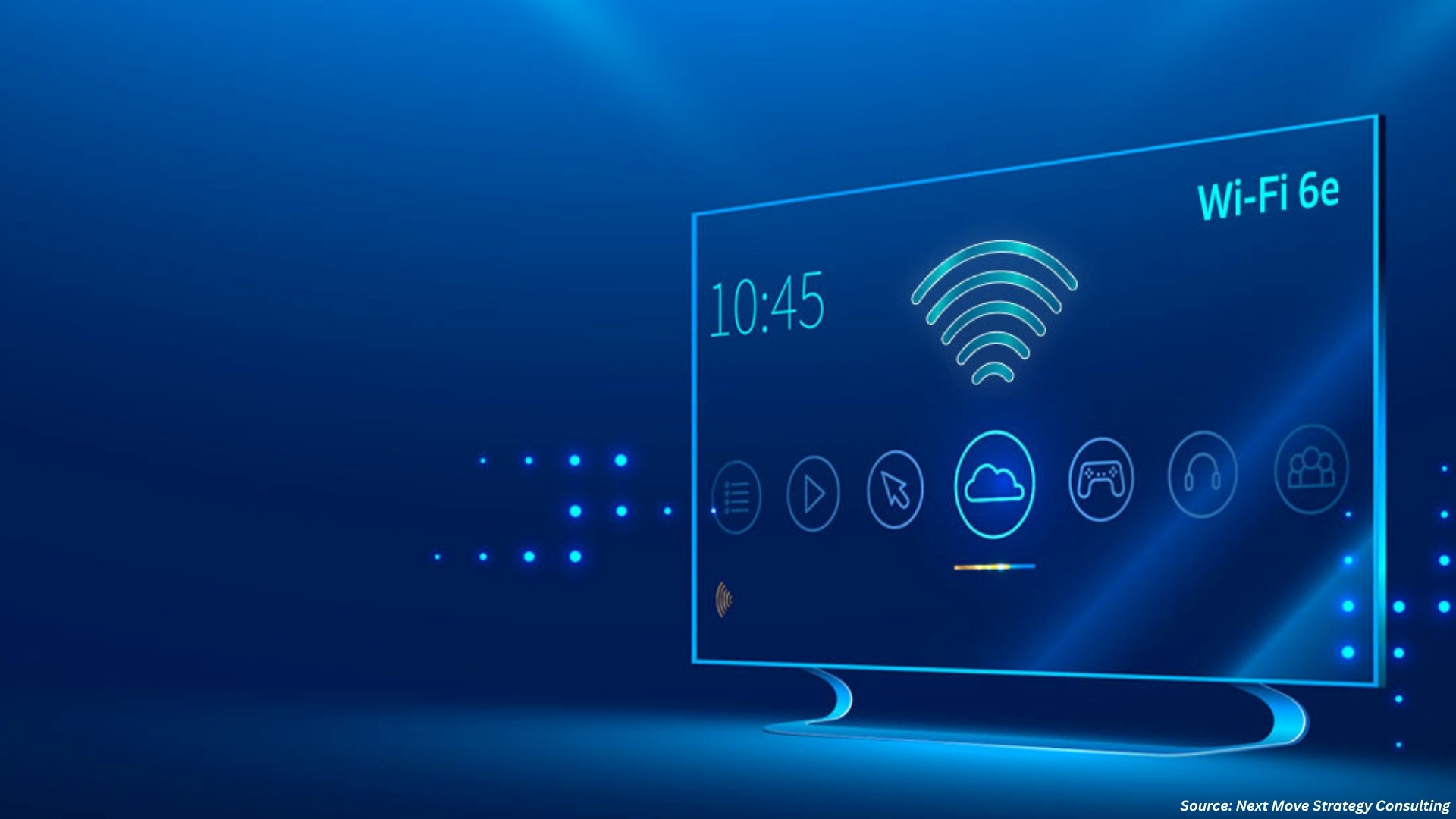
The demand for faster, more reliable wireless connectivity has intensified in 2025 as households and enterprises rely on connected devices more than ever. Wi-Fi 6E, an extension of Wi-Fi 6, introduces access to the 6 GHz spectrum, offering expanded bandwidth, lower latency, and reduced congestion.
Recent developments highlight how device manufacturers and networking companies are accelerating adoption through advanced routers and modules designed to handle dense environments and data-heavy applications.
Insights from Next Move Strategy Consulting indicates that the transition toward Wi-Fi 6E reflects a broader shift toward high-capacity wireless ecosystems, where performance consistency and scalability are becoming critical for both enterprise and consumer environments.
Key Innovation: Wi-Fi 6E Routers Enhancing Home Connectivity
One of the most visible developments in 2025-26 is the growing accessibility of Wi-Fi 6E routers. For example, the eero Pro 6E router has seen significant price reductions, making high-speed networking more accessible to consumers.
-
The router supports tri-band connectivity, including the 6 GHz band
-
It delivers improved speeds and reduced interference in crowded environments
-
A reported deal in 2025 brought the device to its lowest price point of the year, increasing adoption potential

Benefits of Wi-Fi 6E Routers
|
Feature |
Impact |
|
6 GHz Band |
Less congestion compared to 2.4 GHz and 5 GHz |
|
Higher Throughput |
Supports bandwidth-heavy applications |
|
Lower Latency |
Improves gaming, streaming, and remote work |
|
Device Density |
Handles multiple connected devices efficiently |
Analysis from Next Move Strategy Consulting signifies the pricing evolution of Wi-Fi 6E routers indicates a transition from premium technology to mainstream adoption, suggesting that cost barriers are gradually diminishing across global markets.
Breakthrough in Hardware: Advanced Wi-Fi 6E Modules
Another major advancement in 2025 is the introduction of next-generation Wi-Fi 6E modules designed for high-density environments.
A notable example is the new Wi-Fi 6E module from u-blox, engineered to maintain strong connectivity even when airwaves are crowded.
-
The module is designed for challenging radio environments
-
It ensures reliable performance in congested networks
-
It supports applications such as industrial automation, IoT devices, and enterprise systems
Module Capabilities Overview
|
Capability |
Description |
|
High Interference Resistance |
Performs well in dense wireless environments |
|
Industrial Application Support |
Suitable for IoT and automation |
|
Stable Connectivity |
Maintains consistent data transmission |
|
Advanced Spectrum Usage |
Utilizes 6 GHz for efficiency |
Our observations at Next Move Strategy Consulting indicates the emergence of robust Wi-Fi 6E modules signals a strong push toward industrial and enterprise-grade wireless solutions, where reliability under congestion is a key differentiator.
Key Players
Various market players operating in the wi-fi 6E market include Qualcomm Technologies, Inc., Broadcom Inc., Intel Corporation, MediaTek Inc., Marvell Technology Group Ltd., NXP Semiconductors N.V., Cisco Systems, Juniper Networks, TP-Link, Netgear Inc., HPE (Aruba Networks), ASUS, Dell Technologies, Infineon Technologies AG, Google (Nest), and others. These market players are adopting various strategies such as product launches and collaborations to remain dominant in the Wi-Fi 6E market.
For instance, in September 2025, Broadcom Inc. demonstrated a Wi-Fi technology capable of delivering nearly 10 Gbps throughput to a single device by combining the entire 6 GHz band with additional spectrum.
Moreover, in December 2023, Cisco Systems announced all Cisco Wi-Fi 6E access points are certified for standard power with AFC, enabling higher-power Wi-Fi deployments.

According to Next Move Strategy Consulting: Industry Impact
The developments in routers and modules collectively indicate a transformative phase for wireless networking in 2025.
-
Consumer Market Impact: Affordable routers are accelerating household adoption of high-speed networks
-
Enterprise Impact: Reliable modules enable deployment in dense and mission-critical environments
-
IoT Expansion: Enhanced connectivity supports the growing number of connected devices
-
Network Efficiency: Use of the 6 GHz band reduces congestion and improves performance
Insights from Next Move Strategy Consulting signifies the integration of Wi-Fi 6E into both consumer and industrial ecosystems demonstrates its role as a foundational technology for next-generation connectivity infrastructure.
Challenges and Considerations
Despite its advantages, Wi-Fi 6E adoption faces several challenges:
-
Device Compatibility: Not all devices currently support the 6 GHz band
-
Infrastructure Upgrade Costs: Enterprises may need to invest in new hardware
-
Spectrum Regulations: Availability of 6 GHz varies by region
Analysis from Next Move Strategy Consulting shows that while adoption barriers remain, ongoing innovation and pricing strategies are expected to mitigate these challenges, enabling broader deployment across sectors.
Conclusion
Wi-Fi 6E is redefining wireless connectivity in 2025 by addressing the growing need for speed, capacity, and reliability. With advancements in routers and modules, the technology is becoming more accessible and practical across industries.
As adoption accelerates, Wi-Fi 6E is expected to play a pivotal role in supporting next-generation applications, from smart homes to industrial automation.
We have observed the ongoing evolution of Wi-Fi 6E highlights its importance as a cornerstone technology in the digital transformation journey, enabling seamless and efficient connectivity across diverse use cases.

Next Steps: Actionable Takeaways
-
Upgrade Strategically: Evaluate network needs before investing in Wi-Fi 6E routers or modules
-
Focus on Compatibility: Ensure devices support the 6 GHz spectrum
-
Leverage for IoT: Utilize Wi-Fi 6E in high-density device environments
-
Monitor Pricing Trends: Take advantage of decreasing costs for early adoption
-
Plan Infrastructure Transition: Gradually upgrade enterprise networks for long-term scalability
About the Author
 Prakhyat Chowdhury is a results-driven Market Analyst and data strategist specializing in business intelligence, trend forecasting, and performance-focused market growth. His competitive intelligence frameworks, and data-driven insights enhances strategic planning, operational efficiency, and organizational authority. Known for strong communication, analytical thinking, and multilingual proficiency, he delivers rigorous, objective-led solutions that support scalable business outcomes across industries with professionalism. He consistently aligns quantitative and qualitative analysis with global business goals.
About the Reviewer
 Sanyukta Deb is a senior content writer and content analyst with expertise in content strategy, audience engagement, and research-driven storytelling. With a strong leadership approach and strategic mindset, she drives content initiatives that strengthen brand communication and audience connection. She combines creativity with analytical insight to develop impactful, value-led content while mentoring collaborative efforts across teams to ensure consistent, meaningful engagement and long-term brand growth across digital platforms.
















Add Comment