Will Autonomous Emergency Braking Systems Dominate Road Safety in 2025?
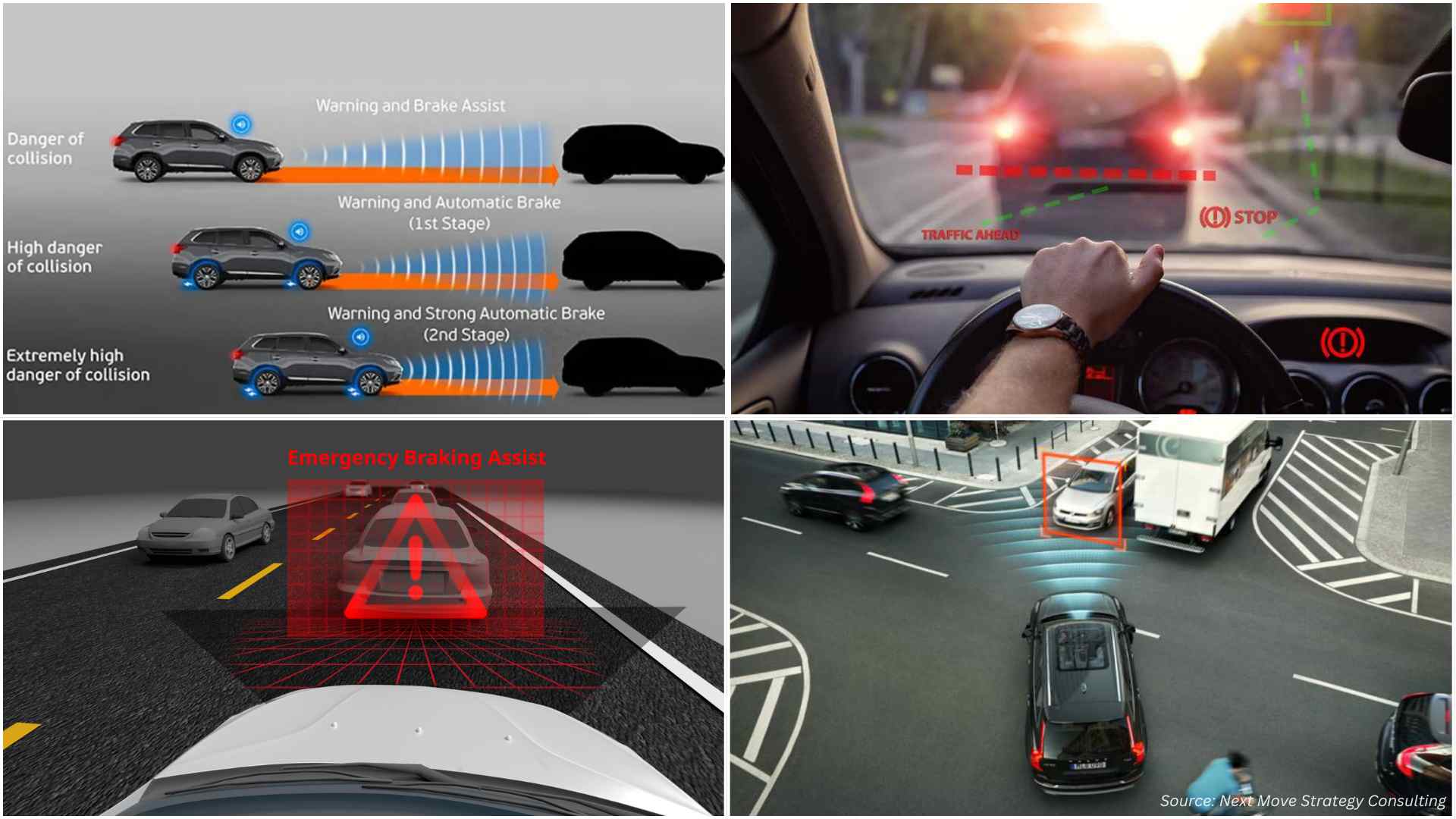
Imagine cruising down a foggy highway at dusk when a pedestrian suddenly steps into your path. In a split second, your vehicle detects the danger and slams on the brakes—without you lifting a finger. This is not science fiction; it is the reality of Autonomous Emergency Braking (AEB) systems, and in 2025, they are reshaping the automotive landscape.
As per the market research analysis by Next Move Strategy Consulting, the global Autonomous Emergency Braking System Market is valued at USD 71.30 billion in 2025, and is predicted to reach USD 145.29 billion by 2030, with a CAGR of 15.3%. AEB is not just as a safety feature but as a catalyst for industry growth.
But what drives this momentum? Let us dive into the latest developments to uncover how AEB is accelerating toward widespread adoption.
What Exactly Is an Autonomous Emergency Braking System?
Have you ever wondered how modern vehicles "see" the road ahead? An Autonomous Emergency Braking System uses sensors like cameras and radar to monitor surroundings in real time. If it spots an imminent collision—say, with a vehicle, pedestrian, or cyclist—and the driver does not react, the system automatically applies the brakes to avoid or mitigate the impact. This technology falls under Advanced Driver Assistance Systems (ADAS), providing those crucial extra seconds that can prevent tragedies.
In practical terms, AEB integrates seamlessly with other features for a layered safety net. For instance, the Tata Sierra SUV equips its Accomplished+ variant with AEB as part of a robust Level 2+ ADAS suite. This setup detects potential hazards and intervenes swiftly, enhancing protection for everyday drivers.
To illustrate key components, consider this breakdown:
|
AEB Component |
Function |
Example Benefit |
|
Forward-Facing Cameras |
Detect objects up to 200 meters ahead |
Identifies pedestrians in urban traffic |
|
Radar Sensors |
Measure speed and distance |
Works in rain or low light |
|
Brake Actuator |
Applies force automatically |
Reduces collision speed by up to 50% in tests |
How Are Governments Mandating AEB for Safer Fleets?
Why are regulators stepping up now? Road accidents claim countless lives annually, and governments are turning to technology for solutions. In India, the Ministry of Road Transport has proposed amendments to the Central Motor Vehicles Rules, making Advanced Emergency Braking Systems (AEBS) mandatory for all new large passenger vehicles—those with more than eight seats, including buses and trucks—starting April 2026. Existing models must comply by October 2026.
Under these rules, AEBS must detect potential forward collisions and activate brakes if the driver fails to respond, significantly mitigating impact severity. Complementing this are Driver Drowsiness and Attention Warning Systems (DDAWS), which monitor steering, lane position, and even facial cues to alert fatigued drivers, and Lane Departure Warning Systems (LDWS) that issue signals for unintended drifts. For buses and trucks, an onboard blind spot information system adds warnings for pedestrians and cyclists.
This policy targets a 20% reduction in rear-end collisions through automated interventions, aligning with global trends toward zero-fatality visions.
Strategic Innovations Adopted by Key Players
The leading companies in the global autonomous emergency braking system industry are driving growth by combining technological innovation, strategic partnerships, and regional expansion.
Notable companies include:
-
ZF Friedrichshafen AG
-
Hyundai Motor Company
-
Magna International Inc
-
Ficosa International SA
-
Autoliv Inc
-
Aisin Corporation
-
Nissan Motor Co., Ltd
-
Ford Motor Company
-
Volkswagen Group
-
Tesla Inc
-
NXP Semiconductors NV
-
Mobileye
-
Subaru Corporation

What Breakthroughs Are Redefining AEB Performance?
Can AEB handle the worst weather throws at us? Traditional systems struggle in fog, dust, or total darkness, but 2025 brings game-changing innovations. Enter Zeekr's world-first thermal AEB system, debuting in the Zeekr 9X SUV on the G-Pilot H9 platform. Powered by Raytron’s Horus 640D thermal camera, it uses infrared detection (8–14 μm spectrum) to spot heat signatures up to 300 meters away—even in zero-lux conditions.
Unlike visible-light cameras, thermal tech penetrates obscurants and differentiates living beings (like dark-clothed pedestrians or wildlife) from inanimate objects, slashing false positives. The compact sensor (32.5×60.5×43mm) mounts discreetly, operates from -40°C to +85°C, and supports Level 2+ ADAS with redundant perception for future autonomy.
Benefits shine in real-world risks:
-
Nighttime detection doubles headlight range, curbing animal strikes.
-
All-weather reliability boosts confidence on unlit rural roads.
-
Precise biological targeting enhances pedestrian safety.
How Is the Autonomous Emergency Braking System Market Evolving in 2025?
In analytical terms, the Autonomous Emergency Braking System market experiences robust expansion driven by regulatory pressures and technological leaps. Governments impose stringent requirements on Advanced Emergency Braking Systems to equip large passenger vehicles, thereby elevating baseline safety standards across commercial and personal fleets. This shift necessitates substantial investments in sensor fusion and software calibration, fostering a competitive ecosystem among original equipment manufacturers.
From our vantage at Next Move Strategy Consulting, these developments signal a market inflection point. The Indian mandate for AEBS in buses and trucks from April 2026 could drive a 15–20% increase in regional AEB component demand, as fleets retrofit to meet new requirements. Meanwhile, Zeekr’s thermal innovation may address longstanding limitations in adverse conditions, with early estimates suggesting up to 10% market share in premium SUV segments through integration with Level 2+ platforms. Tata's mainstream ADAS rollout democratizes access, pressuring incumbents to innovate and driving overall market penetration.
We project that by late 2025, AEB-equipped vehicles will represent over 40% of new sales in regulated markets, fueled by cost reductions in thermal sensors. This not only curtails accident-related economic losses—estimated at billions annually—but also unlocks opportunities in aftermarket upgrades and insurance partnerships.
Key market dynamics include:
-
Regulatory compliance as a primary growth lever.
-
Sensor diversification enhancing system reliability.
-
OEM collaborations accelerating feature standardization.
Next Steps: Actionable Insights for Stakeholders
Industry observers highlight several strategies companies are considering to align with emerging AEB trends:
-
Assess fleet readiness by auditing current vehicles against upcoming 2026 mandates.
-
Explore thermal sensing technology for improved low-visibility performance.
-
Monitor policy developments globally for harmonization opportunities.
-
Integrate AEB with broader ADAS features to strengthen compliance with Level 2+ safety standards.
As 2025 unfolds, AEB stands as a beacon of progress—saving lives while steering the market toward safer, smarter mobility.
About the Reviewer
 Sanyukta Deb is a senior content writer and content analyst with expertise in content strategy, audience engagement, and research-driven storytelling. With a strong leadership approach and strategic mindset, she drives content initiatives that strengthen brand communication and audience connection. She combines creativity with analytical insight to develop impactful, value-led content while mentoring collaborative efforts across teams to ensure consistent, meaningful engagement and long-term brand growth across digital platforms.












Add Comment