8K Technology Market Faces AI-Driven Shift Amid Viewer Debate
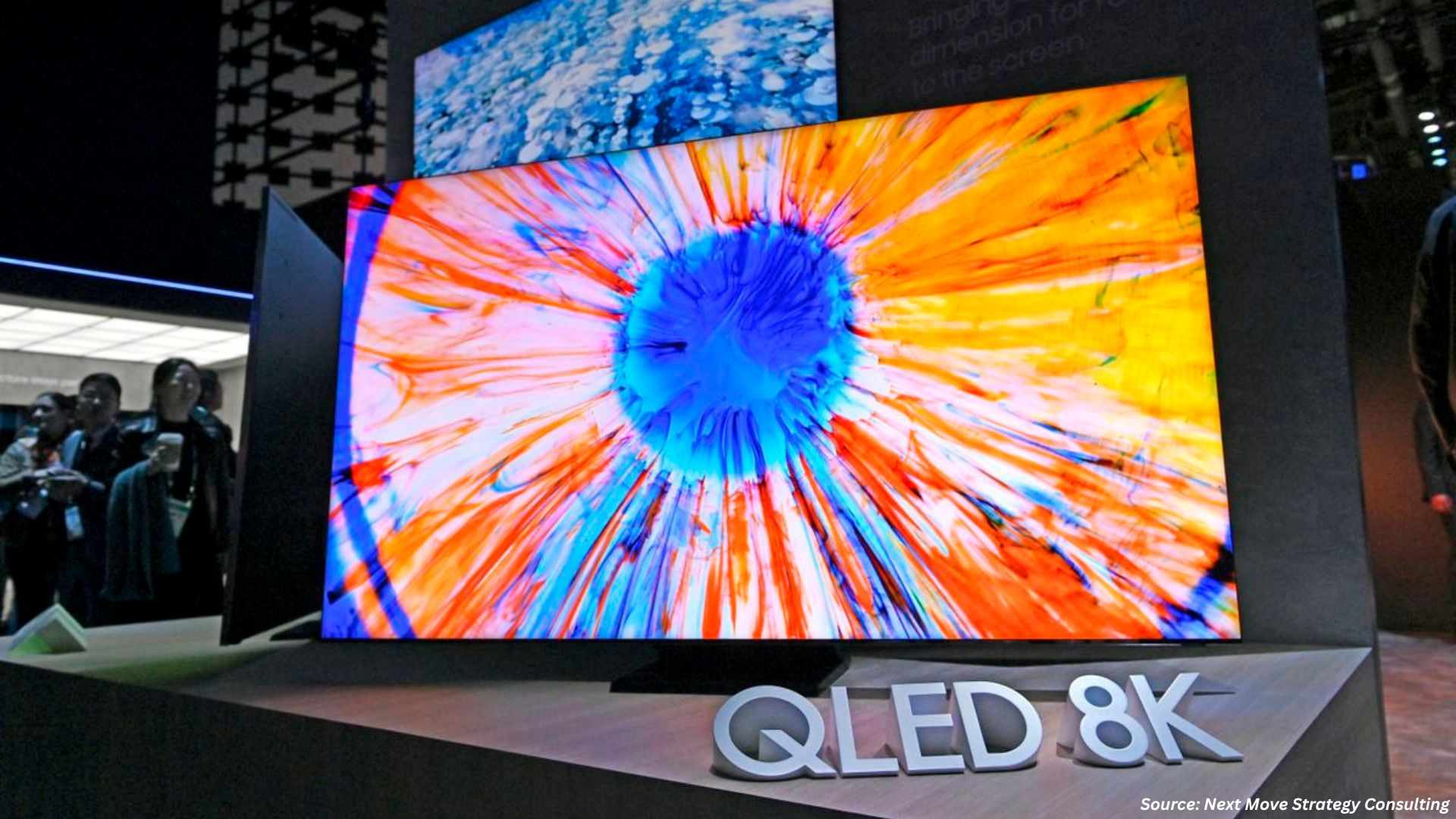
The global 8K Technology Market is entering a new phase of strategic debate after U.K. researchers concluded that most viewers cannot meaningfully distinguish between 8K and 4K resolution under standard viewing conditions, even as Samsung Electronics accelerated its premium display push through the launch of its 2025 Neo QLED 8K televisions powered by Samsung Vision AI.
The developments have intensified discussion across the consumer electronics and broadcasting industries regarding the future commercial viability of ultra-high-definition display technologies. According to the latest analysis from Next Move Strategy Consulting, the global 8K technology market, valued at USD 3.32 billion in 2019, is projected to reach USD 4.01 billion by 2030, expanding at a CAGR of 33.3% between 2020 and 2030.
The contrasting developments underscore a widening divide between scientific assessments of human visual perception and the electronics industry’s aggressive investment in AI-enhanced ultra-premium display ecosystems.
U.K. Researchers Challenge Consumer Value Proposition of 8K
A new study conducted by researchers from the University of Cambridge and Meta Reality Labs has reignited industry-wide questions surrounding the practical benefits of 8K resolution for mainstream consumers.
The study, published in Nature Communications and reported by TV Technology, concluded that under typical viewing conditions, most consumers are unable to perceive substantial differences between 8K, 4K, and even lower-resolution displays. Researchers evaluated visual perception across varying viewing distances, grayscale and color patterns, and peripheral viewing scenarios.

According to the findings, a 44-inch 4K or 8K television viewed from approximately 2.5 meters away in an average living room would provide little noticeable advantage over a Quad HD display of the same size.
The researchers further noted that increasing pixel density beyond certain thresholds results in diminishing perceptual returns while simultaneously increasing processing requirements, manufacturing costs, and energy consumption.
“As large engineering efforts go towards improving the resolution of mobile, AR and VR displays, it’s important to know the maximum resolution at which further improvements bring no noticeable benefit,” said Dr. Maliha Ashraf of the University of Cambridge.
The study also introduced a new online calculator designed to help consumers determine optimal display resolution based on room size and viewing distance.
Samsung Counters With AI-Driven Premium TV Strategy
Despite the growing skepticism surrounding native 8K demand, Samsung Electronics America announced the launch of its 2025 Neo QLED 8K and 4K television portfolio powered by Samsung Vision AI.
The new lineup introduces AI-enhanced features including real-time content optimization, AI upscaling, adaptive sound processing, live translation capabilities, gesture-based controls, and personalized viewing recommendations.
Samsung’s flagship QN990F series leverages the NQ8 AI Gen3 Processor and 8K AI Upscaling Pro technology designed to transform SD, HD, and 4K content into enhanced ultra-high-resolution visuals.
The launch signals a broader shift within the television industry away from pure resolution competition toward AI-driven viewing ecosystems.
“Manufacturers increasingly recognize that AI-powered enhancement technologies may become more commercially important than native resolution alone,” said Jayanta Das, Research Analyst at Next Move Strategy Consulting. “The competitive landscape is shifting from hardware specifications toward intelligent content processing, immersive experiences, and ecosystem integration.”
Samsung also emphasized long-term software support through seven years of operating system updates, reinforcing the industry’s growing convergence between televisions, smart home ecosystems, and AI-enabled consumer computing platforms.
AI Upscaling Emerges as the Market’s Core Growth Driver
According to NMSC proprietary datasets, one of the biggest structural changes within the 8K ecosystem during the last 12 months has been the acceleration of AI-powered image enhancement technologies.
Manufacturers are increasingly relying on AI upscaling engines to compensate for the ongoing shortage of native 8K content across streaming and broadcasting platforms.
The lack of scalable 8K content libraries continues to represent a major constraint for market adoption, particularly as streaming providers face rising infrastructure and bandwidth costs associated with ultra-high-resolution delivery.
NMSC researchers identified increased investment activity in AI display processors, advanced image rendering technologies, and adaptive compression systems across South Korea, Japan, and North America.
Global 8K Technology Market Overview
|
Metric |
Value |
|
Market Value (2019) |
USD 3.32 Billion |
|
Forecast Value (2030) |
USD 4.01 Billion |
|
CAGR (2020–2030) |
33.3% |
|
Key Growth Driver |
AI-Powered Upscaling |
|
Largest Application |
Consumer Electronics |
Asia-Pacific Continues Dominating 8K Infrastructure Investments
Asia-Pacific remains the largest regional market for 8K technologies due to strong semiconductor manufacturing capabilities, advanced display panel production infrastructure, and aggressive investments from South Korean, Japanese, and Chinese electronics firms.
Samsung, Sony, Sharp, LG Electronics, and BOE Technology continue expanding their ultra-premium display portfolios despite slowing mainstream consumer adoption.
Industry analysts believe enterprise applications may ultimately provide stronger long-term monetization opportunities than residential entertainment demand.
Broadcasting, healthcare imaging, industrial inspection systems, defense surveillance, and immersive gaming platforms are increasingly emerging as high-value deployment segments for 8K visualization technologies.
Emerging Commercial Applications of 8K Technology
|
Sector |
Key Use Case |
Adoption Outlook |
|
Broadcasting |
Live sports production |
High Growth |
|
Healthcare |
Surgical imaging |
Rapid Adoption |
|
Gaming |
AI-enhanced immersive visuals |
Expanding |
|
Industrial Inspection |
Precision defect detection |
Stable Growth |
|
Smart Cities |
Surveillance systems |
Emerging Opportunity |
Industry Faces Critical Commercial Inflection Point
The latest developments reflect a broader inflection point for the display technology sector.
While manufacturers continue investing heavily in premium 8K ecosystems, recent scientific findings suggest that the industry may need to reposition future value propositions around artificial intelligence, adaptive computing, immersive interaction, and smart ecosystem integration rather than raw pixel density alone.
“The next stage of competition will likely focus on contextual AI experiences rather than resolution escalation,” Mehta added. “Companies capable of integrating AI personalization, energy efficiency, and cross-device connectivity into premium displays may ultimately define the future of the sector.”
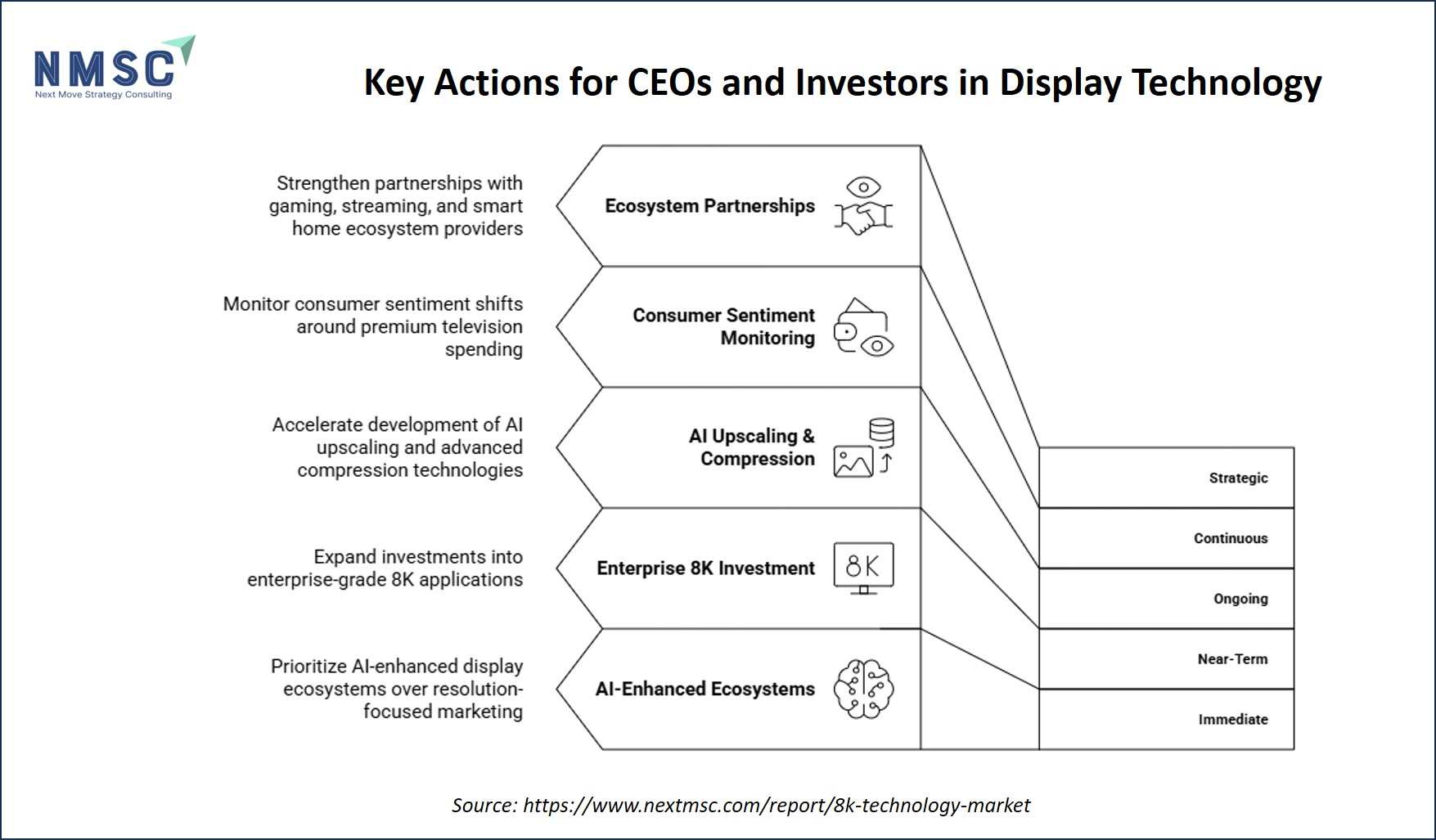
What CEOs and Investors Should Do Next
-
Prioritize AI-enhanced display ecosystems over resolution-focused marketing strategies.
-
Expand investments into enterprise-grade 8K applications including healthcare and industrial imaging.
-
Accelerate development of AI upscaling and advanced compression technologies.
-
Monitor consumer sentiment shifts around premium television spending.
-
Strengthen partnerships with gaming, streaming, and smart home ecosystem providers.
Competitive Landscape
Major companies operating in the global 8K technology market include:
-
Samsung Electronics
-
Sony Group Corporation
-
LG Electronics
-
Sharp Corporation
-
BOE Technology Group
-
Canon Inc.

About Next Move Strategy Consulting:
Next Move Strategy Consulting is a premier market research and management consulting firm that has been committed to provide strategically analysed well documented latest research reports to its clients. The research industry is flooded with many firms to choose from, what makes NMSC different from the rest is its top-quality research and the obsession of turning data into knowledge by dissecting every bit of it and providing fact-based research recommendation that is supported by information collected from over 500 million websites, paid databases, industry journals and one on one consultations with industry experts across a diverse range of industry sectors. The high-quality customized research reports with actionable insights and excellent end-to-end customer service help our clients to take critical business decisions that enables them to move beyond time and have competitive edge in the industry.
We have been servicing over 1000 customers globally that includes 90% of the Fortune 500 companies over a decade. Our analysts are constantly tracking various high growth markets and identifying hidden opportunities in each sector or the industry. We provide one of the industry’s best quality syndicate as well as custom research reports across 10 different industry verticals. We are committed to deliver high quality research solutions in accordance to your business needs. Our industry standard delivery solutions that ranges from the pre consultation to after-sales services, provide an excellent client experience and ensure right strategic decision making for businesses.
For more information, please contact:
Next Move Strategy Consulting
5th Floor 867
Boylston St, STE 500,
Boston, MA 02116, U.S.
E-Mail: [email protected]
Direct: +1-217-650-7991
Website: www.nextmsc.com
About the Author
 Sanyukta Deb
— Sanyukta Deb is Digital Marketing Team Lead at Next Move Strategy Consulting, where she has led content strategy and technical SEO for the firm's B2B market research publications for over 2 years. Her editorial process translates NextMSC's primary and secondary research — spanning technology, industrial, and consumer sectors — into commercial narratives, backed by search-intent, keyword, and competitive analysis. She brings 5 years of overall experience in digital marketing and content strategy.
Sanyukta Deb
— Sanyukta Deb is Digital Marketing Team Lead at Next Move Strategy Consulting, where she has led content strategy and technical SEO for the firm's B2B market research publications for over 2 years. Her editorial process translates NextMSC's primary and secondary research — spanning technology, industrial, and consumer sectors — into commercial narratives, backed by search-intent, keyword, and competitive analysis. She brings 5 years of overall experience in digital marketing and content strategy.
About the Reviewer
 Debashree Dey
— Debashree Dey is Assistant Manager at Next Move Strategy Consulting, where she supports cross-vertical market content and communications across diverse industries for 6 years. Her professional background includes senior content writing, communications, and published manuscript authorship, with experience developing audience-focused business narratives and maintaining clear, consistent messaging. Her role supports research-led content development and editorial quality across NextMSC publications.
Debashree Dey
— Debashree Dey is Assistant Manager at Next Move Strategy Consulting, where she supports cross-vertical market content and communications across diverse industries for 6 years. Her professional background includes senior content writing, communications, and published manuscript authorship, with experience developing audience-focused business narratives and maintaining clear, consistent messaging. Her role supports research-led content development and editorial quality across NextMSC publications.















Add Comment