Airbus A350 Output Plans and Aircraft Engine Market
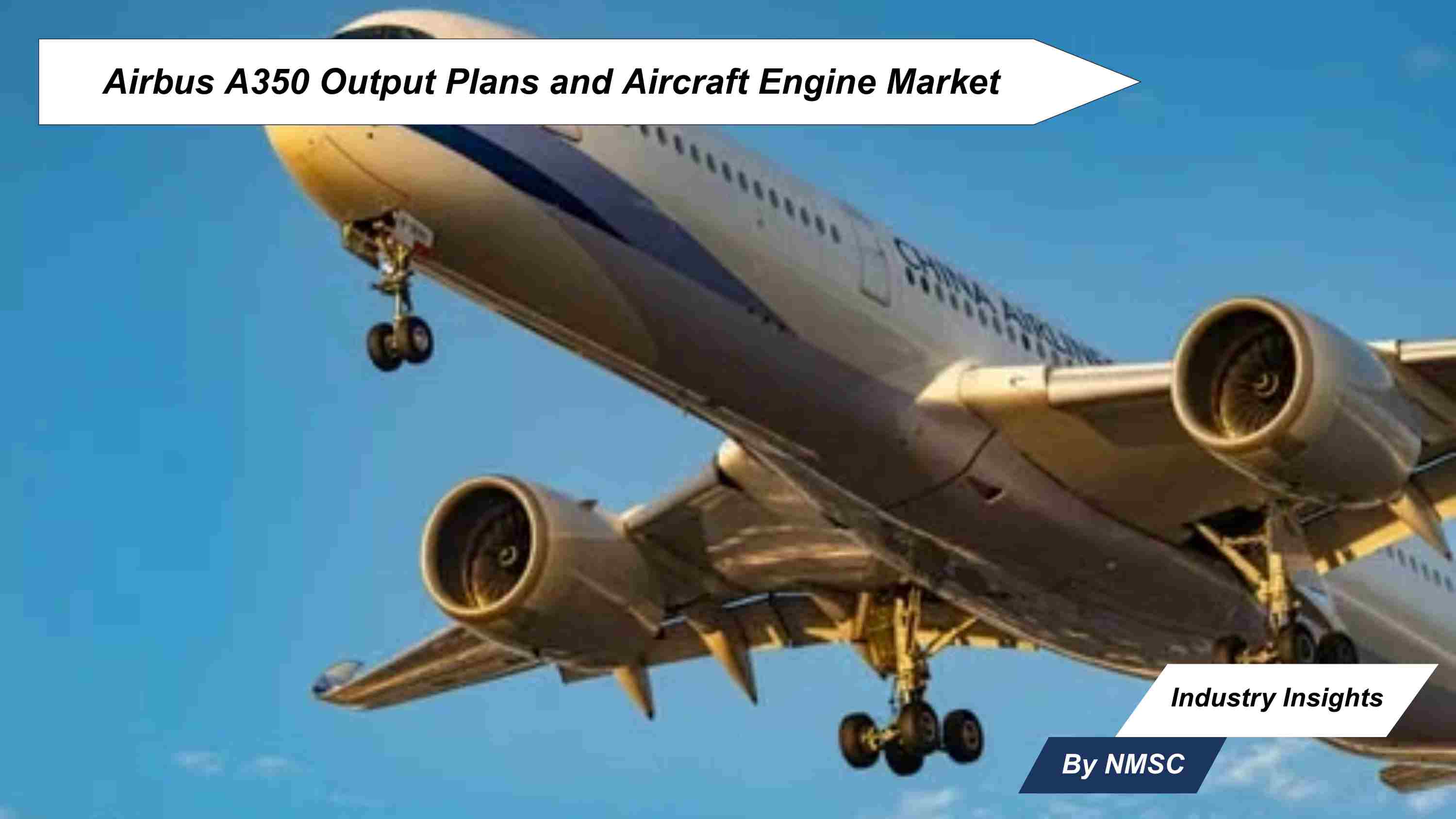
Airbus Eyes Earlier A350 Output Decision as Pratt & Whitney Engine Dispute Persists
TOULOUSE, France October 14, 2026 Airbus's commercial aircraft chief has signalled that a decision to expand production capacity for the A350 wide-body jet could arrive sooner than previously anticipated, even as unresolved engine-supply negotiations with Pratt & Whitney continue to weigh on the planemaker's near-term operational outlook. The development carries significant implications for the global Aircraft Engine Market, valued at USD 67.94 billion in 2024 and projected to reach USD 118.89 billion by 2030, growing at a CAGR of 9.8% from 2025 to 2030, according to Next Move Strategy Consulting.
Lars Wagner, Airbus's commercial CEO, told a news briefing on October 14 that the decision to raise the A350 production rate is "inevitable," citing clear market demand for additional wide-body aircraft. Airbus currently operates a single A350 assembly line configured for 12 to 13 aircraft per month; any rate increase would require the establishment of a new production line and a broader industrial system overhaul, Wagner noted.
Beyond the A350 rate question, Wagner confirmed that Airbus is actively studying a stretched A350-2000 variant and a larger A220-500 model, with decisions on both programmes expected toward the beginning of the company's five-year planning horizon. The planemaker is also working toward a "notional" 2030 launch date for an all-new single-aisle aircraft to succeed the A320 family, though industry analysts have expressed scepticism about that timeline given the pace of engine technology development.
On the engine-supply front, Airbus operations chief Florent Massou dit Labaquere confirmed that the company has yet to reach an agreement with Pratt & Whitney an RTX subsidiary on engine allocations beyond 2026. The two companies remain at odds over whether aircraft factories or airline maintenance shops should receive priority access to available engine inventory, and the number of in-service aircraft grounded due to spare engine shortfalls remains "still quite substantial," Massou said. Pratt & Whitney, which supplies approximately 40% of A320-family jets, stated it has increased annual engine deliveries since 2019 and continues to expand maintenance capacity.
Key Highlights:
-
Airbus commercial CEO Lars Wagner stated that a decision to increase A350 production rates will come "sooner rather than later," with board approval required before any formal announcement.
-
A rate increase beyond the current 12–13 aircraft per month would necessitate a second A350 assembly line and a comprehensive industrial system expansion.
-
Airbus and Pratt & Whitney have not reached an agreement on engine supply allocations beyond 2026, with a potential multi-billion-dollar damages claim still unresolved.
-
Rolls-Royce engines for the A350 are reported to be on track, though seat-supply delays continue to present a separate bottleneck for wide-body jet deliveries.
Analyst Insight:
According to analysts at Next Move Strategy Consulting, the Airbus-Pratt & Whitney supply dispute underscores a structural tension within the commercial aviation value chain, where engine production capacity has consistently lagged behind aircraft order backlogs. NMSC analysts note that with the global aircraft engine market on a trajectory toward USD 118.89 billion by 2030, propulsion supply constraints of this nature risk compressing delivery timelines across multiple aircraft programmes simultaneously, potentially accelerating airline interest in alternative engine sourcing arrangements for next-generation platforms.
Industry Outlook:
The convergence of Airbus's capacity expansion ambitions and unresolved engine-supply negotiations reflects a broader challenge confronting the commercial aviation sector: demand for new aircraft is outpacing the industrial ecosystem's ability to deliver propulsion systems at scale. As Airbus moves toward a board-level decision on A350 rate increases and simultaneously evaluates new aircraft variants, the resolution of engine-supply agreements with key partners will be a critical determinant of whether production targets can be met. The industry's ability to align airframe manufacturing capacity with engine output will remain a central variable shaping delivery performance and fleet renewal timelines through the remainder of the decade.
Source: Reuters
For More Information: Download FREE Sample on Aircraft Engine Market Report
Prepared By: Sanyukta Deb
About the Author
 Sanyukta Deb
— Sanyukta Deb is Digital Marketing Team Lead at Next Move Strategy Consulting, where she has led content strategy and technical SEO for the firm's B2B market research publications for over 2 years. Her editorial process translates NextMSC's primary and secondary research — spanning technology, industrial, and consumer sectors — into commercial narratives, backed by search-intent, keyword, and competitive analysis. She brings 5 years of overall experience in digital marketing and content strategy.
Sanyukta Deb
— Sanyukta Deb is Digital Marketing Team Lead at Next Move Strategy Consulting, where she has led content strategy and technical SEO for the firm's B2B market research publications for over 2 years. Her editorial process translates NextMSC's primary and secondary research — spanning technology, industrial, and consumer sectors — into commercial narratives, backed by search-intent, keyword, and competitive analysis. She brings 5 years of overall experience in digital marketing and content strategy.
About the Reviewer
 Debashree Dey
— Debashree Dey is Assistant Manager at Next Move Strategy Consulting, where she supports cross-vertical market content and communications across diverse industries for 6 years. Her professional background includes senior content writing, communications, and published manuscript authorship, with experience developing audience-focused business narratives and maintaining clear, consistent messaging. Her role supports research-led content development and editorial quality across NextMSC publications.
Debashree Dey
— Debashree Dey is Assistant Manager at Next Move Strategy Consulting, where she supports cross-vertical market content and communications across diverse industries for 6 years. Her professional background includes senior content writing, communications, and published manuscript authorship, with experience developing audience-focused business narratives and maintaining clear, consistent messaging. Her role supports research-led content development and editorial quality across NextMSC publications.
















Add Comment