Heathrow Third Runway Debate Puts ATM Market Under Scrutiny
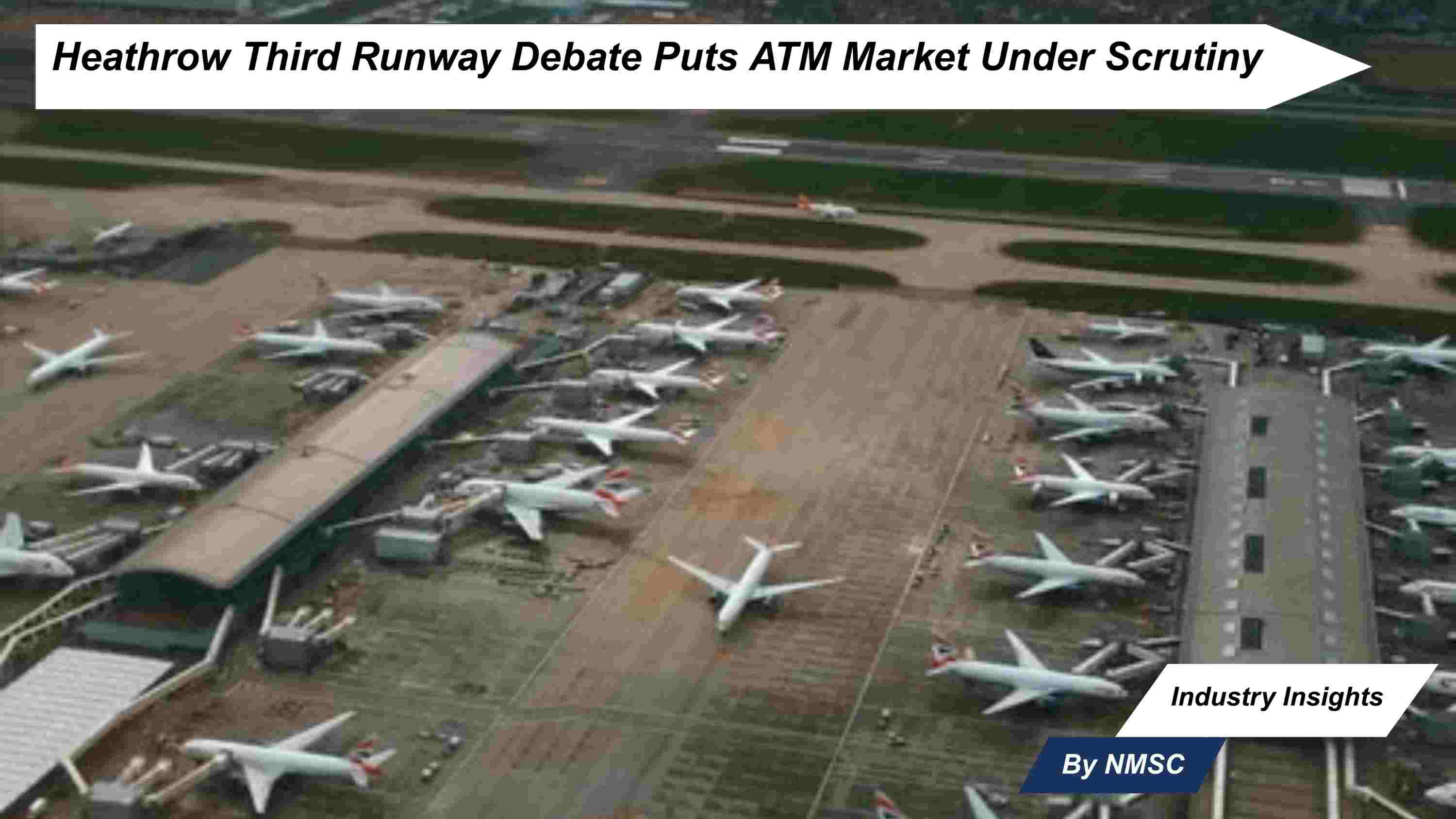
Heathrow CEO to Face Parliament as Third Runway Expansion Debate Intensifies in UK
LONDON, United Kingdom — October 14, 2026 — Heathrow Airport's chief executive Thomas Woldbye appeared before the United Kingdom's Parliament Transport Select Committee on October 14 to give evidence on the airport's proposed third runway, as lawmakers scrutinize the draft Heathrow Expansion National Policy Statement. The development has placed airspace planning, slot allocation, and capacity management at the center of a national policy debate with direct implications for the global Air Traffic Management (ATM) Market.
Heathrow reported that its expansion plans have secured backing from trade unions, airlines, regional airports, and investors ahead of the parliamentary session. The airport cited polling of more than 9,000 residents across nine local boroughs, with 68% expressing support for the expansion, citing employment and economic opportunities as primary drivers.
Woldbye stated that the expansion would unlock more than 100,000 jobs and £33 billion ($43.74 billion) of private investment across the United Kingdom. However, UK Prime Minister Andy Burnham declined to endorse the project, characterizing it as a matter for communities living near the airport. Heathrow separately disclosed that the third runway's opening could be delayed until 2039.
The airport's capacity constraints are acute: more than 40 airlines are currently seeking slots at Heathrow, and nearly 7.2 million passengers transited the airport in September 2026, a figure that was itself 2.3% below the prior year, partly attributable to a 20% decline in traffic to the Middle East region. The demand-capacity imbalance underscores the urgency of airspace modernization investment, a structural driver for the broader ATM sector. According to Next Move Strategy Consulting, the global Air Traffic Management Market was valued at USD 9.8 billion in 2025 and is projected to reach USD 20.1 billion by 2035, advancing at a CAGR of 7.5% from 2026 to 2035.
Key Highlights:
-
Parliamentary Scrutiny: Heathrow CEO Thomas Woldbye gave evidence to the Transport Select Committee on October 14 as part of the review of the draft Heathrow Expansion National Policy Statement.
-
Broad Stakeholder Support: Trade unions, airlines, regional airports, and investors have formally backed the expansion; 68% of surveyed local residents across nine boroughs expressed support.
-
Slot Demand Pressure: More than 40 airlines are seeking access to Heathrow slots, underscoring the structural capacity deficit that a third runway is intended to address.
-
Potential Delay: The third runway's operational opening could be deferred to 2039, extending the timeline for associated airspace infrastructure investment and ATM system upgrades.
Analyst Insight:
According to analysts at Next Move Strategy Consulting, the Heathrow expansion debate is emblematic of a broader structural tension facing major aviation hubs globally the gap between rising air traffic demand and the pace of airspace infrastructure investment. NMSC analysts note that any approved expansion at Heathrow would necessitate a comprehensive overhaul of approach, surface, and en-route ATM systems, representing a significant procurement opportunity for established ATM vendors including Thales, Indra, and Frequentis, which maintain strong installed-base positions across UK and European air navigation service provider frameworks. The firm's research further indicates that the UK ATM market, anchored by NATS Holdings, is among the most technologically advanced globally, with remote tower, space-based ADS-B, and AI-assisted sector management already in operational deployment capabilities that would be central to managing the increased traffic complexity a third runway would generate.
Industry Outlook:
The parliamentary review of Heathrow's expansion proposal arrives at a critical juncture for the UK's aviation infrastructure policy. Regardless of the final legislative outcome, the debate has elevated airspace planning and ATM capacity as priority considerations for policymakers, regulators, and airport operators. A third runway, if approved and constructed, would require substantial investment in new tower operations, advanced surface management systems, and expanded approach control infrastructure all core segments of the ATM market. The potential delay to 2039 extends the investment horizon but does not diminish the scale of the eventual procurement requirement. More immediately, the parliamentary scrutiny process is likely to accelerate regulatory dialogue on airspace modernization standards, slot management frameworks, and the integration of next-generation ATM technologies at one of the world's most congested aviation hubs.
Source: Reuters
For More Information: Download FREE Sample on Air Traffic Management Market Report
Prepared By: Sanyukta Deb
About the Author
 Sanyukta Deb
— Sanyukta Deb is Digital Marketing Team Lead at Next Move Strategy Consulting, where she has led content strategy and technical SEO for the firm's B2B market research publications for over 2 years. Her editorial process translates NextMSC's primary and secondary research — spanning technology, industrial, and consumer sectors — into commercial narratives, backed by search-intent, keyword, and competitive analysis. She brings 5 years of overall experience in digital marketing and content strategy.
Sanyukta Deb
— Sanyukta Deb is Digital Marketing Team Lead at Next Move Strategy Consulting, where she has led content strategy and technical SEO for the firm's B2B market research publications for over 2 years. Her editorial process translates NextMSC's primary and secondary research — spanning technology, industrial, and consumer sectors — into commercial narratives, backed by search-intent, keyword, and competitive analysis. She brings 5 years of overall experience in digital marketing and content strategy.
About the Reviewer
 Debashree Dey
— Debashree Dey is Assistant Manager at Next Move Strategy Consulting, where she supports cross-vertical market content and communications across diverse industries for 6 years. Her professional background includes senior content writing, communications, and published manuscript authorship, with experience developing audience-focused business narratives and maintaining clear, consistent messaging. Her role supports research-led content development and editorial quality across NextMSC publications.
Debashree Dey
— Debashree Dey is Assistant Manager at Next Move Strategy Consulting, where she supports cross-vertical market content and communications across diverse industries for 6 years. Her professional background includes senior content writing, communications, and published manuscript authorship, with experience developing audience-focused business narratives and maintaining clear, consistent messaging. Her role supports research-led content development and editorial quality across NextMSC publications.


















Add Comment