Aluminum Market Size Outlook Shifts on Price Surge
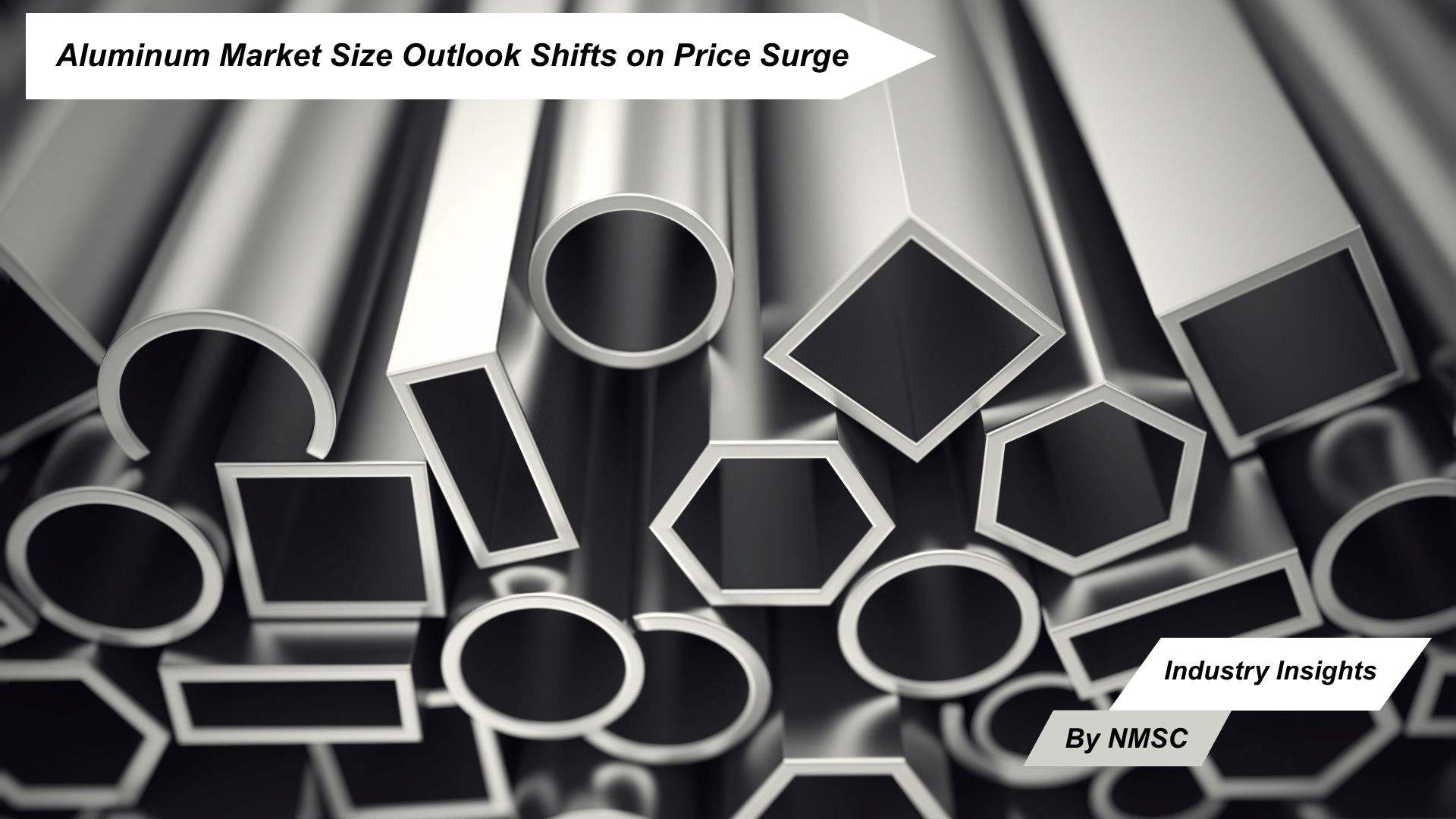
Aluminum Prices Outrun World Bank Forecast as Supply Shock Deepens Industry Outlook
LONDON, United Kingdom — April 30, 2026 — The global aluminum market is entering a more aggressive pricing cycle than previously anticipated after benchmark exchange prices remained above the World Bank’s projected annual average for nearly two consecutive months, signaling that supply-side stress and geopolitical energy shocks are accelerating faster than institutional forecasts had modeled.
In its latest Commodity Markets Outlook released on April 28, the World Bank projected aluminum prices to rise 21.6% in 2026, implying an annual average near $3,200 per metric ton. Yet London Metal Exchange three-month aluminum contracts have already been trading materially above that level since early March, closing near $3,538/mt on April 28 — a clear indication that the market has shifted into a tighter-than-expected pricing regime.
This divergence is rapidly changing the strategic conversation around non-ferrous metals procurement, industrial hedging, and long-term manufacturing cost assumptions.
Tight Inventories and Gulf Disruptions Are Repricing the Market
The immediate trigger behind the aluminum rally is not a single supply outage, but a convergence of structural constraints:
-
LME registered inventories fell to critically lean levels in late March
-
Non-Russian deliverable aluminum availability has narrowed sharply
-
Energy inflation linked to Middle East conflict has raised global smelting costs
-
Shipping dislocation through the Strait of Hormuz continues to distort regional metal movement
S&P Global commodity analysts note that visible inventories no longer reflect comfortable market liquidity, especially as Western consumers continue avoiding Russian-origin units, effectively shrinking the pool of freely acceptable aluminum.
That distinction matters because headline warehouse tonnage may appear stable, while usable premium-grade supply remains under pressure.
World Bank Baseline Now Appears Conservative
The World Bank itself acknowledged in its April report that upside risks remain “markedly tilted” higher across industrial commodities due to prolonged war-driven energy disruptions and stronger-than-expected demand from electrification sectors.
Those risks are now materializing faster in aluminum than in many adjacent base metals.
According to analysts at Next Move Strategy Consulting, the current aluminum trajectory suggests the market is no longer operating under a standard cyclical rebound, but under an emerging supply segmentation model where regional metal accessibility, freight cost volatility, and power pricing are beginning to dictate premiums more than nominal exchange supply.
“This is no longer simply a metals inflation story — it is a deliverability story,” notes Saista Faiyaz, Research Analyst at Next Move Strategy Consulting. “When benchmark prices remain above global bank assumptions for weeks rather than days, it signals that procurement desks are pricing in sustained scarcity, not temporary speculation.”
China’s Output Ceiling Removes the Traditional Safety Valve
Historically, China’s smelting system has acted as the global aluminum market’s shock absorber.
That safety valve is now weakening.
With Chinese annual production nearing its self-imposed 45 million metric ton cap, the room for aggressive primary output expansion is increasingly limited. At the same time, European smelters remain structurally disadvantaged due to elevated power costs, while Gulf-origin shipments face rising geopolitical transport risk.
This leaves the global market with fewer immediate balancing mechanisms than in previous commodity upcycles.
Key emerging stress points include:
-
Reduced elasticity in primary smelting supply
-
Higher dependence on recycled aluminum streams
-
Premium widening between exchange metal and physically accepted units
-
Growing industrial restocking from EV, transmission, and renewable infrastructure sectors
Industrial Demand Is Holding Despite Macro Slowdown
Under normal economic conditions, rising inflation and slower manufacturing growth would soften aluminum demand.
That has not happened meaningfully in 2026.
Instead, demand from the following segments continues to absorb supply:
-
Electric vehicle battery casings and lightweight chassis
-
Grid modernization and transmission cable expansion
-
Solar panel framing systems
-
Wind turbine structural applications
-
Data center and AI infrastructure cooling systems
The World Bank specifically highlighted that AI-linked industrial expansion and renewable power installations are creating stronger-than-modeled demand resilience across base metals, including aluminum.
According to proprietary Next Move Strategy Consulting estimates, this means aluminum’s pricing floor is increasingly being set by energy-transition procurement rather than traditional construction alone.
Why This Matters for the Broader Aluminum Industry
The significance of aluminum surpassing forecast assumptions is broader than a simple commodity price beat.
It indicates:
-
procurement costs for automotive and electronics manufacturers may be understated,
-
packaging margins could tighten further in H2 2026,
-
aerospace material contracts may undergo repricing,
-
and recycled aluminum investment could accelerate as buyers seek alternative feedstock security.
S&P Global’s latest commodity watch has already revised aluminum expectations upward, citing persistent energy costs and constrained Gulf-region production channels as central reasons for extended price support through the remainder of the year.
Aluminum Market Enters a New Strategic Pricing Phase
What initially appeared to be a manageable 21.6% annual rise is now evolving into a broader industrial metals repricing event.
With benchmark prices staying above institutional forecasts, inventories functionally tighter than reported, and geopolitical energy costs feeding directly into smelter economics, the aluminum industry is showing early signs of a prolonged premium environment rather than a short-lived spike.
According to Next Move Strategy Consulting analysts, if Gulf trade disruptions persist into the second half and Chinese output remains capped, the aluminum market could enter one of its most structurally constrained pricing windows since the post-pandemic commodity rebound.
The implication is clear: aluminum is no longer merely following the global commodity cycle — it is beginning to lead it.
Source: S&P Global Commodity Insights
Prepared By: Joydeep Dey
About the Author
 Joydeep Dey
— Joydeep Dey is a content writer and analyst fueled by creativity, research, and continuous learning. He combines compelling storytelling with market insights to turn complex information into engaging, impactful content. Passionate about emerging trends, digital strategy, and innovation-driven communication, he believes curiosity and consistent growth are key to creating meaningful influence in every project.
Joydeep Dey
— Joydeep Dey is a content writer and analyst fueled by creativity, research, and continuous learning. He combines compelling storytelling with market insights to turn complex information into engaging, impactful content. Passionate about emerging trends, digital strategy, and innovation-driven communication, he believes curiosity and consistent growth are key to creating meaningful influence in every project.
About the Reviewer
 Sanyukta Deb
— Sanyukta Deb is Digital Marketing Team Lead at Next Move Strategy Consulting, where she has led content strategy and technical SEO for the firm's B2B market research publications for over 2 years. Her editorial process translates NextMSC's primary and secondary research — spanning technology, industrial, and consumer sectors — into commercial narratives, backed by search-intent, keyword, and competitive analysis. She brings 5 years of overall experience in digital marketing and content strategy.
Sanyukta Deb
— Sanyukta Deb is Digital Marketing Team Lead at Next Move Strategy Consulting, where she has led content strategy and technical SEO for the firm's B2B market research publications for over 2 years. Her editorial process translates NextMSC's primary and secondary research — spanning technology, industrial, and consumer sectors — into commercial narratives, backed by search-intent, keyword, and competitive analysis. She brings 5 years of overall experience in digital marketing and content strategy.















Add Comment