Steel Market: US-Canada Tariff Standoff Escalates to 50%
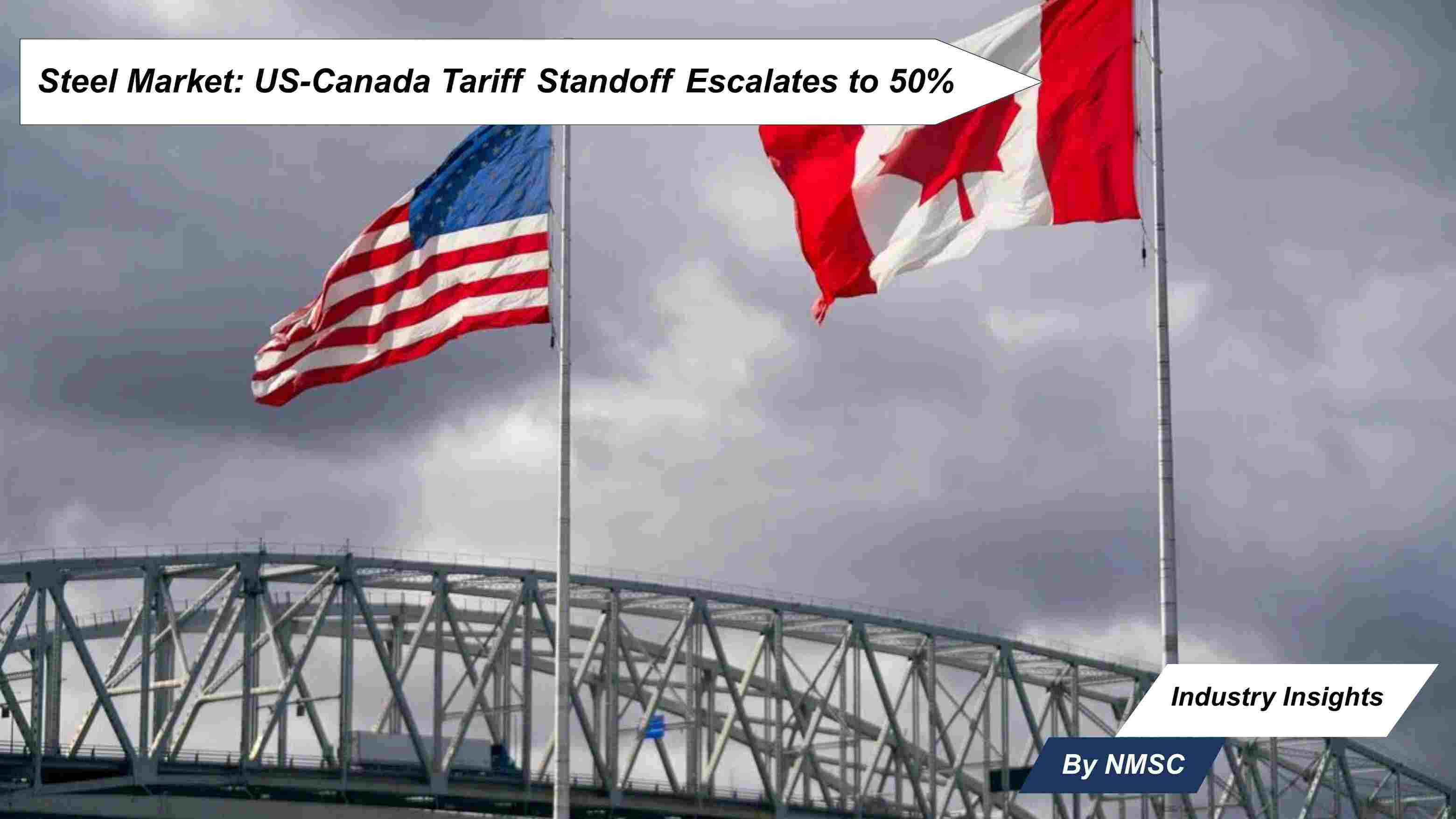
U.S. and Canada Threaten 50% Steel Tariffs After Trade Negotiations Collapse
WASHINGTON, United States August 25, 2026 U.S. President Donald Trump has announced that the United States will raise tariffs on Canadian automobiles, auto parts, and steel to 50% effective January 1, 2027, while Canada has moved to impose reciprocal 50% tariffs on U.S. steel beginning September 8, 2026 a direct consequence of the collapse of bilateral trade negotiations over the weekend. The escalating trade standoff carries significant implications for the global Steel Market where cross-border supply chains, pricing dynamics, and production strategies are acutely sensitive to shifts in North American trade policy.
The United States and Canada failed to reach a trade agreement following weeks of intensive negotiations, with both governments attributing the breakdown to demands made by the opposing side that proved irreconcilable. The New York Times reported that Trump's tariff threat covering Canadian cars, car parts, and steel at the 50% rate followed directly from the failure to conclude a deal over the weekend, marking a sharp deterioration in one of the world's most integrated bilateral trade relationships.
Canadian Prime Minister Mark Carney characterized the situation in stark terms on Saturday, stating that the two countries were "at war" over trade and pledging retaliatory measures. Canada's retaliatory tariff package, announced Tuesday, extends beyond steel to encompass a broad range of American goods, with levies ranging from 15% to 50% across multiple product categories. The Wall Street Journal reported that the measures were designed to protect Canadian domestic markets from the impact of existing U.S. tariffs.
The development marks a significant escalation from the tariff environment that had prevailed in recent months, during which the two countries had been engaged in active negotiations aimed at reducing trade barriers on steel, aluminum, and automobiles. The abrupt collapse of those talks and the subsequent announcement of reciprocal 50% steel tariffs introduces a new layer of uncertainty for steel producers, distributors, and end-users operating across the U.S.-Canada corridor.
Key Highlights:
-
50% U.S. Tariffs on Canadian Steel Effective January 1, 2027: President Trump announced the United States will impose 50% tariffs on Canadian steel, automobiles, and auto parts from the start of 2027, following the failure of bilateral trade negotiations.
-
Canada's Retaliatory 50% Steel Tariffs Effective September 8, 2026: Canada has announced reciprocal 50% tariffs on U.S. steel, effective September 8, 2026, alongside broader retaliatory measures covering American goods at rates between 15% and 50%.
-
Trade Deal Collapse After Weeks of Negotiations: Both governments confirmed that trade talks broke down over the weekend, with each side attributing the failure to unacceptable demands from the other party.
-
Prime Minister Carney Declares Trade "War": Canadian Prime Minister Mark Carney publicly stated that the two countries are "at war" over trade, signaling a hardened negotiating posture and the likelihood of sustained bilateral trade friction in the near term.
Analyst Insight:
According to analysts at Next Move Strategy Consulting, the global Steel Market was valued at USD 1.16 trillion in 2024 and is projected to reach USD 1.46 trillion by 2030, expanding at a CAGR of 3.8% from 2025 to 2030. NMSC analysts note that the imposition of reciprocal 50% steel tariffs between the United States and Canada represents one of the most consequential bilateral trade disruptions in the North American steel sector in recent decades. The tariff escalation is expected to accelerate supply chain realignment, prompt domestic capacity investment in both countries, and exert upward pressure on steel prices across the region dynamics that could reshape competitive positioning among North American producers and alter trade flow patterns for flat-rolled, long steel, and specialty steel products through the forecast period.
Industry Outlook:
The breakdown of U.S.-Canada trade negotiations and the subsequent imposition of 50% reciprocal steel tariffs introduce a period of heightened uncertainty for the North American steel industry. Producers on both sides of the border face the prospect of disrupted export channels, elevated input costs, and compressed margins as the tariff regime takes effect in the coming weeks and months.
For the broader global steel market, the development underscores the growing role of trade policy as a structural variable in market forecasting, alongside traditional demand drivers such as infrastructure investment, automotive production, and green steel transition. Steel manufacturers, distributors, and downstream industries particularly in construction, automotive, and manufacturing will need to reassess procurement strategies, inventory positioning, and pricing models in response to the evolving tariff landscape.
The trajectory of U.S.-Canada trade relations in the months ahead will be closely monitored by market participants globally, as any further escalation or, conversely, a resumption of negotiations could have material implications for steel trade volumes, pricing benchmarks, and investment decisions across the North American market and beyond.
Source: Association for Iron & Steel Technology (AIST)
For More Information: Download FREE Sample on Steel Market Report
Prepared By: Sanyukta Deb
About the Author
 Sanyukta Deb
— Sanyukta Deb is Digital Marketing Team Lead at Next Move Strategy Consulting, where she has led content strategy and technical SEO for the firm's B2B market research publications for over 2 years. Her editorial process translates NextMSC's primary and secondary research — spanning technology, industrial, and consumer sectors — into commercial narratives, backed by search-intent, keyword, and competitive analysis. She brings 5 years of overall experience in digital marketing and content strategy.
Sanyukta Deb
— Sanyukta Deb is Digital Marketing Team Lead at Next Move Strategy Consulting, where she has led content strategy and technical SEO for the firm's B2B market research publications for over 2 years. Her editorial process translates NextMSC's primary and secondary research — spanning technology, industrial, and consumer sectors — into commercial narratives, backed by search-intent, keyword, and competitive analysis. She brings 5 years of overall experience in digital marketing and content strategy.
About the Reviewer
 Debashree Dey
— Debashree Dey is Assistant Manager at Next Move Strategy Consulting, where she supports cross-vertical market content and communications across diverse industries for 6 years. Her professional background includes senior content writing, communications, and published manuscript authorship, with experience developing audience-focused business narratives and maintaining clear, consistent messaging. Her role supports research-led content development and editorial quality across NextMSC publications.
Debashree Dey
— Debashree Dey is Assistant Manager at Next Move Strategy Consulting, where she supports cross-vertical market content and communications across diverse industries for 6 years. Her professional background includes senior content writing, communications, and published manuscript authorship, with experience developing audience-focused business narratives and maintaining clear, consistent messaging. Her role supports research-led content development and editorial quality across NextMSC publications.


















Add Comment