Ashok Leyland’s FY28 Battery Plant Rushes India’s EV Market
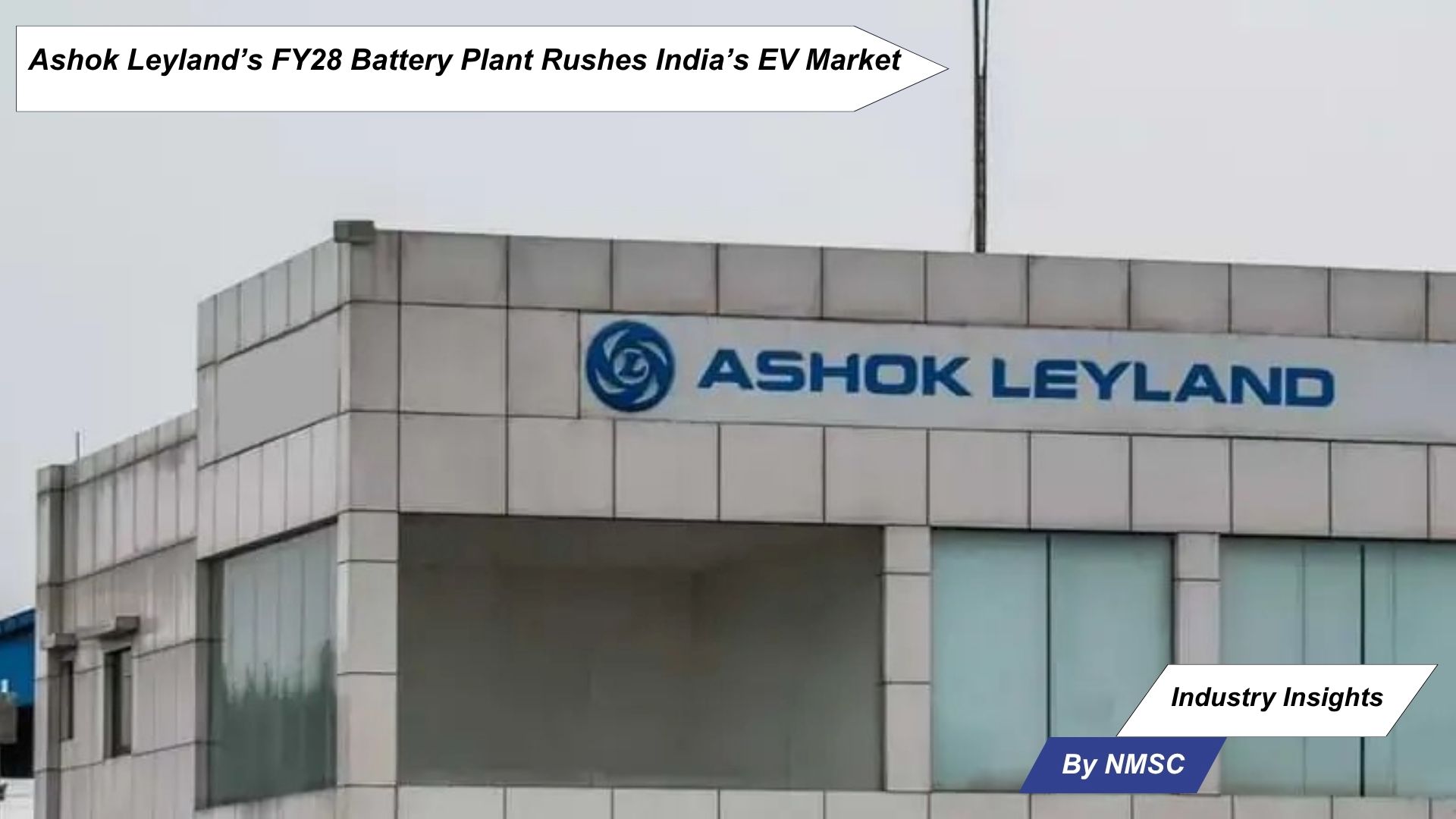
Ashok Leyland Finalizes H1 FY28 Timeline for Chennai EV Battery Plant; Indian Commercial Fleet Ecosystem Undergoes Structural Valuation
CHENNAI, India — May 30, 2026 — In a move that fundamentally reshapes the domestic component ecosystem for zero-emission commercial transport, Indian automotive major Ashok Leyland has formalized its deployment schedule for its greenfield electric vehicle battery pack manufacturing facility. Developed in technical collaboration with global battery manufacturer CALB, the upcoming plant is track-validated to commence commercial-tier production during the first half of fiscal year 2028, accelerating India’s shift toward fully localized zero-emission freight and transit architectures.
Decoupling the Supply Chain from Import Vulnerabilities
For years, Indian commercial automakers faced tight structural pressure due to an over-reliance on imported cell configurations and battery sub-assemblies, leaving factory margins exposed to volatile logistics costs and supply disruptions. Ashok Leyland's localized factory layout directly counters this vulnerability.
Located at Pillaipakkam near Chennai, the automated assembly infrastructure will build high-density, integrated power packs tailored specifically for the heavy duty-cycles of public transit and municipal cargo networks. This facility ensures that the enterprise can insulate its production lines from external global battery blockades while preserving competitive cost boundaries.
Key Capabilities and Scale Metrics at a Glance:
-
Targeted Production Window: Onboard engineering teams confirm commercial commissioning is locked for Q1 or Q2 of Fiscal Year 2027–2028.
-
Dedicated Product Customization: Purpose-built assembly workflows to engineer specialized battery enclosures for heavy electric buses and light commercial vehicles (e-LCVs).
-
Subsidiary Volume Traction: Direct vertical integration to feed Switch Mobility, which logged a 238% annual explosion in e-bus sales by delivering 1,530 units during FY26.
-
Strategic Fleet Alignment: Direct industrial supply pipeline mapped to support mega-scale municipal procurements, following more than 15,000 electric bus tenders issued across major states.
Industry Response and Market Implications
The acceleration toward captive, localized battery optimization matches a wider push by private logistics consortia to transition high-tonnage cargo platforms to alternate fuel formats. Industry analysts expect domestic assembly of heavy duty packs to compress the total cost of ownership (TCO) for fleet operators, opening up immediate adoption corridors across heavy-tonnage industrial freight segments.
"The introduction of high-capacity domestic battery lines signals that India's heavy transport architecture is entering a self-sustaining era of manufacturing," notes a Senior Automotive Strategy Analyst at Next Move Strategy Consulting. "According to NMSC analysts, localized battery engineering is the single most critical variable dictating the expansion curve of the regional commercial EV market size. Our market intelligence shows that building captive assembly systems helps manufacturers clear regional content criteria for government subsidies while insulating assembly lines from international component bottlenecks—a move that structurally positions local production ecosystems to handle dense long-haul logistics."
Dictating the Localized Clean Energy Frontier
Backed by a newly inaugurated electric bus facility in Lucknow and reinforced by ongoing research into hydrogen-powered powertrains, Ashok Leyland's upcoming facility secures a resilient baseline for domestic manufacturing. By proving that high-voltage, heavy-duty commercial energy modules can be assembled safely and cost-effectively within localized borders, the enterprise sets the operational cadence for alternative fuel vehicles across emerging global economies.
Source: Saur Energy Network
Prepared By: Prakhyat Chowdhury
About the Author
 Sanyukta Deb
— Sanyukta Deb is Digital Marketing Team Lead at Next Move Strategy Consulting, where she has led content strategy and technical SEO for the firm's B2B market research publications for over 2 years. Her editorial process translates NextMSC's primary and secondary research — spanning technology, industrial, and consumer sectors — into commercial narratives, backed by search-intent, keyword, and competitive analysis. She brings 5 years of overall experience in digital marketing and content strategy.
Sanyukta Deb
— Sanyukta Deb is Digital Marketing Team Lead at Next Move Strategy Consulting, where she has led content strategy and technical SEO for the firm's B2B market research publications for over 2 years. Her editorial process translates NextMSC's primary and secondary research — spanning technology, industrial, and consumer sectors — into commercial narratives, backed by search-intent, keyword, and competitive analysis. She brings 5 years of overall experience in digital marketing and content strategy.
About the Reviewer
 Debashree Dey
— Debashree Dey is Assistant Manager at Next Move Strategy Consulting, where she supports cross-vertical market content and communications across diverse industries for 6 years. Her professional background includes senior content writing, communications, and published manuscript authorship, with experience developing audience-focused business narratives and maintaining clear, consistent messaging. Her role supports research-led content development and editorial quality across NextMSC publications.
Debashree Dey
— Debashree Dey is Assistant Manager at Next Move Strategy Consulting, where she supports cross-vertical market content and communications across diverse industries for 6 years. Her professional background includes senior content writing, communications, and published manuscript authorship, with experience developing audience-focused business narratives and maintaining clear, consistent messaging. Her role supports research-led content development and editorial quality across NextMSC publications.

















Add Comment