Can Drone Deliveries Transform Remote Healthcare Access?
Lede
The Medical Drones Market is moving beyond pilot projects into regulated, real-world operations. Two recent developments in Europe and Africa suggest that autonomous aircraft are becoming practical tools for healthcare supply chains, especially where geography, weak infrastructure, or urgency create delivery bottlenecks. We see a clear shift as operators move beyond testing aircraft performance and begin proving regulatory compliance, repeatability, and healthcare value. That transition matters because it determines whether drone delivery can scale from demonstration to commercial and public-service networks.
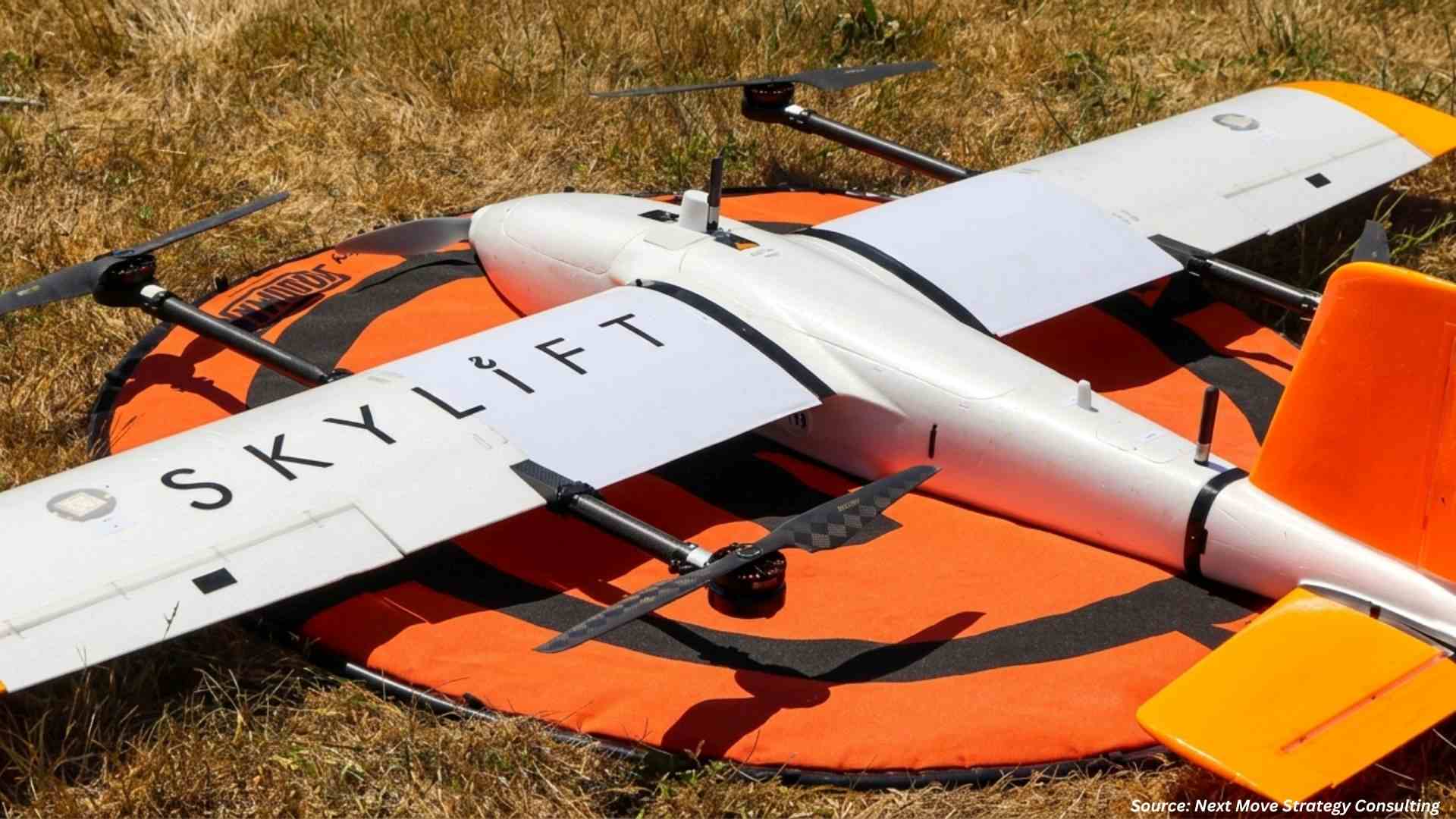
Skylift Advances UK Medical Drone Operations Over the Solent
A major milestone came in the UK, where Skylift UAV completed coordinated Beyond Visual Line of Sight (BVLOS) trials across the Solent, one of Britain’s most complex and heavily used airspaces. The flights, conducted during June and July 2025 and reported in January 2026, were designed to support future deliveries of medicines, blood, and pathology samples between the mainland and the Isle of Wight.
The operation took place under a Civil Aviation Authority-approved Airspace Change Proposal and involved coordination with the coastguard, police, and air ambulance services. That level of integration is significant because it demonstrates how drones may operate alongside existing emergency and aviation systems rather than outside them. At Next Move Strategy Consulting, we observe that regulation, rather than hardware, has been the biggest constraint on advanced drone logistics in developed markets. Trials like these reduce uncertainty for hospitals, investors, and policymakers by creating an operational blueprint.
Key UK Trial Highlights
|
Metric |
Detail |
|
Region |
Solent, United Kingdom |
|
Use Case |
Medical logistics |
|
Cargo Focus |
Medicines, blood |
|
Flight Type |
Coordinated BVLOS |
|
Trial Period |
June–July 2025 |
|
Reported |
Jan-26 |
Windracers Expands Reach for Humanitarian Healthcare Logistics
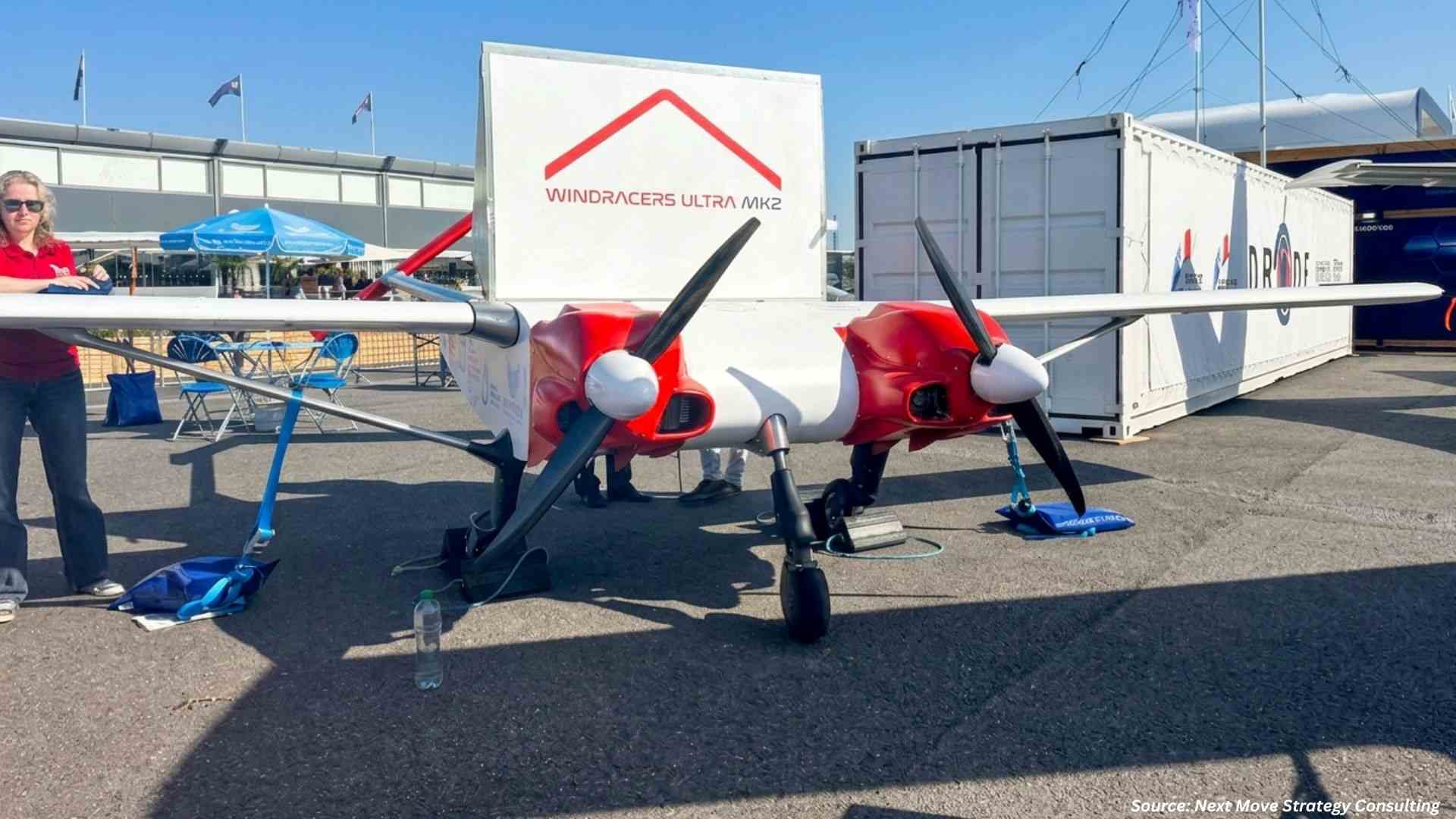
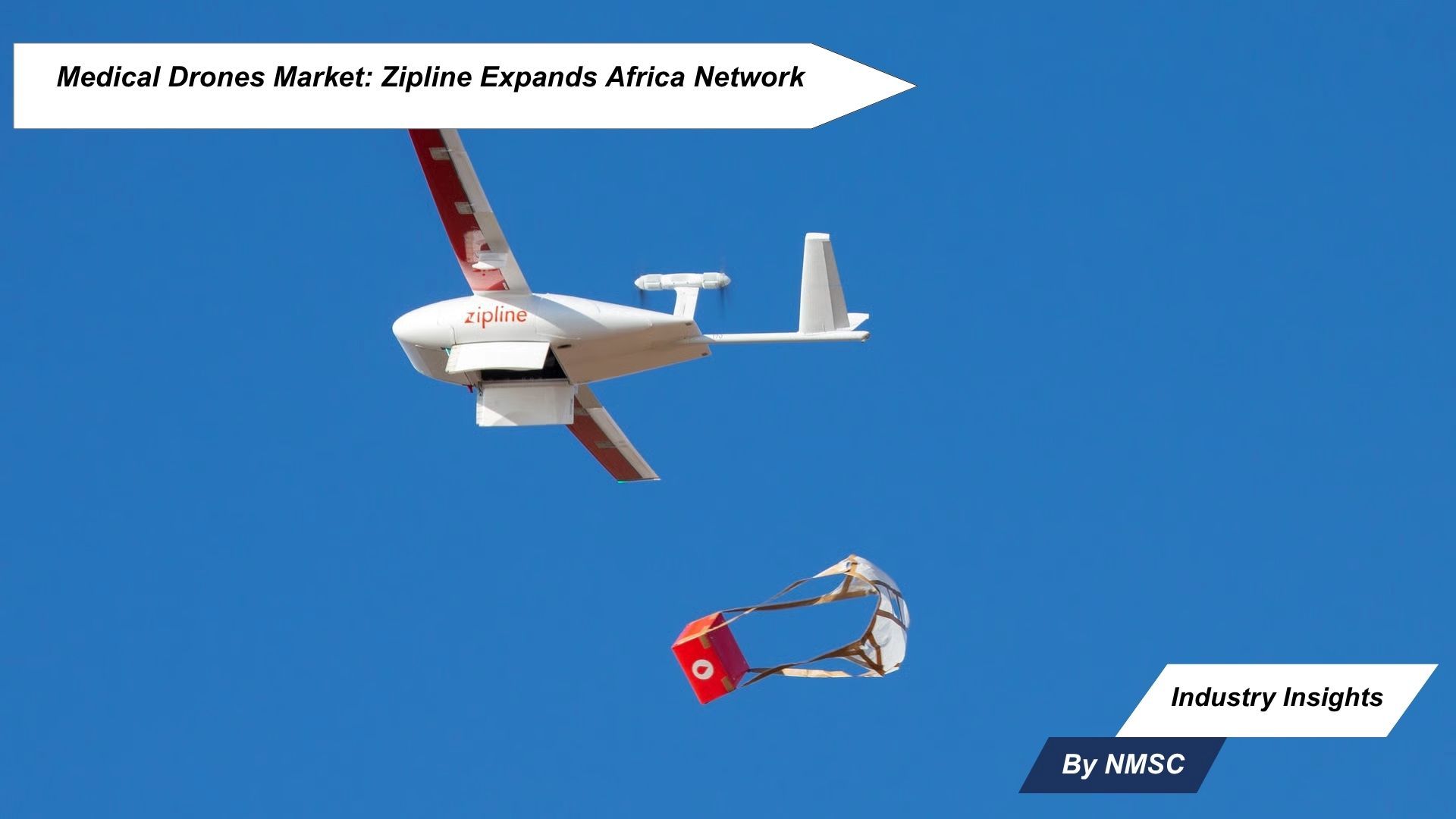
A second major signal comes from Windracers, whose ULTRA heavy-lift UAV entered humanitarian deployment planning for Africa. In 2025, the company announced a proof-of-concept mission in the Democratic Republic of Congo to transport temperature-sensitive medical supplies to remote communities in partnership with Aviation Sans Frontières.
The aircraft’s payload and range profile makes the announcement notable. Earlier specifications highlighted 150 kg payload capacity over 1,000 km. By January 2026, Windracers said ULTRA could be configured for missions up to 2,000 km with a 200 kg payload, broadening its relevance for aid, defence, and civil cargo missions.
We notice that humanitarian deployments often become proving grounds for scalable logistics innovation. If operators can maintain cold-chain integrity and reliable service in difficult terrain, the same model can later support commercial healthcare, disaster response, and regional cargo services.
Windracers Capability Snapshot
|
Metric |
Earlier Capability |
Updated Capability |
|
Payload |
150 kg |
200 kg |
|
Range |
1,000 km |
2,000 km |
|
Core Mission Types |
Medical / Cargo |
Medical / Cargo |
|
Geography Focus |
Remote regions |
Long-distance networks |
Long-Term Industry Impact and NMSC Perspective
Healthcare supply chains are likely to become faster and more decentralized as hospitals and clinics reduce dependence on ferries, vans, or manned aircraft. Drones can shorten delivery times for urgent blood products, vaccines, diagnostics, and emergency medicines. Our analysis indicates that the strongest early demand will come from island territories, mountainous regions, disaster zones, and rural provinces where transport delays carry the highest cost.
Regulation will decide market leadership. Aircraft capabilities are improving quickly, but airspace permissions remain the real barrier. Operators that build strong compliance systems, safety cases, and public-sector partnerships are likely to secure first-mover advantage.
New infrastructure ecosystems are also expected to emerge. The long-term value is not only in aircraft sales but also in drone ports, fleet management software, battery and hybrid propulsion systems, medical cold-chain payload containers, maintenance services, and training platforms.
We also expect public-private operating models to expand. Health systems, NGOs, and logistics providers are increasingly likely to share procurement and operational responsibilities, lowering adoption risk while accelerating deployment.
Market Analysis: What Comes Next in 2026 and Beyond
Regional Outlook
|
Region |
Near-Term Opportunity |
Main Driver |
|
Europe |
Regulated healthcare corridors |
Airspace modernization |
|
Africa |
Humanitarian and rural delivery |
Limited road access |
|
Asia-Pacific |
Island and urban medical networks |
Dense populations |
|
North America |
Hospital and lab logistics |
Cost efficiency |
Competitive positioning in the sector is expected to revolve around BVLOS certification capability, payload reliability, cold-chain performance, fleet economics, public-sector contracts, and interoperability with existing logistics networks. Companies that can combine these capabilities with proven delivery records are likely to capture the strongest long-term opportunities.
Autonomous UAVs in Action: Powering Industries and Humanitarian Missions
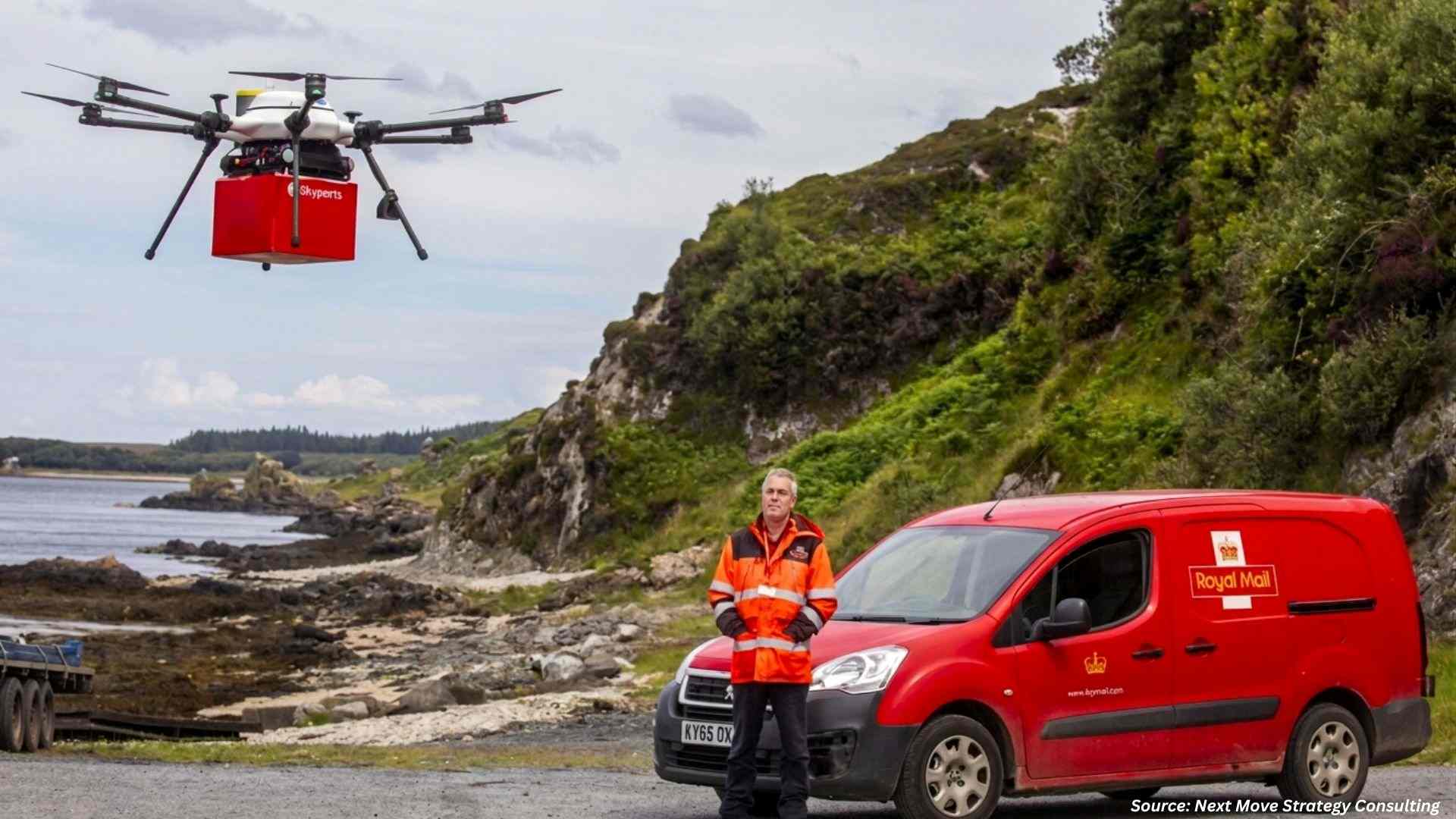
The image illustrates a multi-industry drone ecosystem, where UAVs are deployed across sectors like mining, energy, construction, emergency response, and security highlighting their versatility in inspection, surveillance, and connectivity. Skylift’s BVLOS drone trials in the UK demonstrate how drones can safely operate in complex airspace to deliver critical medical supplies, marking a major step toward integrating UAVs into everyday logistics and emergency services. Similarly, Windracers’ autonomous ULTRA drone is being used in Africa to deliver humanitarian aid, including medicines, to remote regions with limited infrastructure, showcasing the transformative impact of drones in global health and disaster response.

What to Do Next
Healthcare providers should identify routes where transport delays directly affect patient outcomes and begin with blood, diagnostics, and urgent medicine lanes. Investors should prioritize companies with regulatory approvals and recurring-service business models rather than early-stage prototypes alone. Governments can accelerate adoption by expanding sandbox programs, standardizing rules, and supporting corridor approvals. Logistics firms may benefit most by partnering with drone operators and using autonomous aircraft first on low-volume, high-urgency routes.
Conclusion
The UK Solent trials and African humanitarian deployments show that drone logistics is entering a more credible commercial phase. Success is no longer defined only by flying farther or carrying more weight. It is increasingly defined by integration, compliance, and measurable healthcare outcomes. At Next Move Strategy Consulting, we believe the next wave of value creation will come from operators and ecosystem providers that combine aviation capability with healthcare execution. Those who move early in regulated, high-need corridors could shape the future of autonomous logistics.
About Next Move Strategy Consulting:
Next Move Strategy Consulting is a premier market research and management consulting firm that has been committed to provide strategically analysed well documented latest research reports to its clients. The research industry is flooded with many firms to choose from, what makes NMSC different from the rest is its top-quality research and the obsession of turning data into knowledge by dissecting every bit of it and providing fact-based research recommendation that is supported by information collected from over 500 million websites, paid databases, industry journals and one on one consultations with industry experts across a diverse range of industry sectors. The high-quality customized research reports with actionable insights and excellent end-to-end customer service help our clients to take critical business decisions that enables them to move beyond time and have competitive edge in the industry.
We have been servicing over 1000 customers globally that includes 90% of the Fortune 500 companies over a decade. Our analysts are constantly tracking various high growth markets and identifying hidden opportunities in each sector or the industry. We provide one of the industry’s best quality syndicate as well as custom research reports across 10 different industry verticals. We are committed to deliver high quality research solutions in accordance to your business needs. Our industry standard delivery solutions that ranges from the pre consultation to after-sales services, provide an excellent client experience and ensure right strategic decision making for businesses.
For more information, please contact:
Next Move Strategy Consulting
5th Floor 867
Boylston St, STE 500,
Boston, MA 02116, U.S.
E-Mail: [email protected]
Direct: +1-217-650-7991
Website: www.nextmsc.com
About the Author
 Sanyukta Deb
— Sanyukta Deb is Digital Marketing Team Lead at Next Move Strategy Consulting, where she has led content strategy and technical SEO for the firm's B2B market research publications for over 2 years. Her editorial process translates NextMSC's primary and secondary research — spanning technology, industrial, and consumer sectors — into commercial narratives, backed by search-intent, keyword, and competitive analysis. She brings 5 years of overall experience in digital marketing and content strategy.
Sanyukta Deb
— Sanyukta Deb is Digital Marketing Team Lead at Next Move Strategy Consulting, where she has led content strategy and technical SEO for the firm's B2B market research publications for over 2 years. Her editorial process translates NextMSC's primary and secondary research — spanning technology, industrial, and consumer sectors — into commercial narratives, backed by search-intent, keyword, and competitive analysis. She brings 5 years of overall experience in digital marketing and content strategy.
About the Reviewer
 Debashree Dey
— Debashree Dey is Assistant Manager at Next Move Strategy Consulting, where she supports cross-vertical market content and communications across diverse industries for 6 years. Her professional background includes senior content writing, communications, and published manuscript authorship, with experience developing audience-focused business narratives and maintaining clear, consistent messaging. Her role supports research-led content development and editorial quality across NextMSC publications.
Debashree Dey
— Debashree Dey is Assistant Manager at Next Move Strategy Consulting, where she supports cross-vertical market content and communications across diverse industries for 6 years. Her professional background includes senior content writing, communications, and published manuscript authorship, with experience developing audience-focused business narratives and maintaining clear, consistent messaging. Her role supports research-led content development and editorial quality across NextMSC publications.















Add Comment