Can Robotic Surgery Transform Access to Advanced Medical Care?
Lede
Surgical robotics is steadily moving from specialized medical centers to broader healthcare environments as hospitals, innovators, and investors accelerate adoption. Recent developments from community fundraising efforts to expand robotic-assisted surgery at Kelowna General Hospital to a major funding round supporting the expansion of the DEXTER Surgical Robot highlight how the technology is entering a new phase of accessibility and scalability. Together, these initiatives illustrate how healthcare systems and medical technology companies are reshaping surgical practices to improve precision, efficiency, and patient outcomes.
Community Efforts Accelerate Robotic Surgery Adoption
Healthcare institutions are increasingly recognizing robotic-assisted surgery as a transformative advancement in clinical care. At Kelowna General Hospital, a major fundraising initiative known as the “Day of Giving” has been launched to accelerate the adoption of robotic surgery technology.
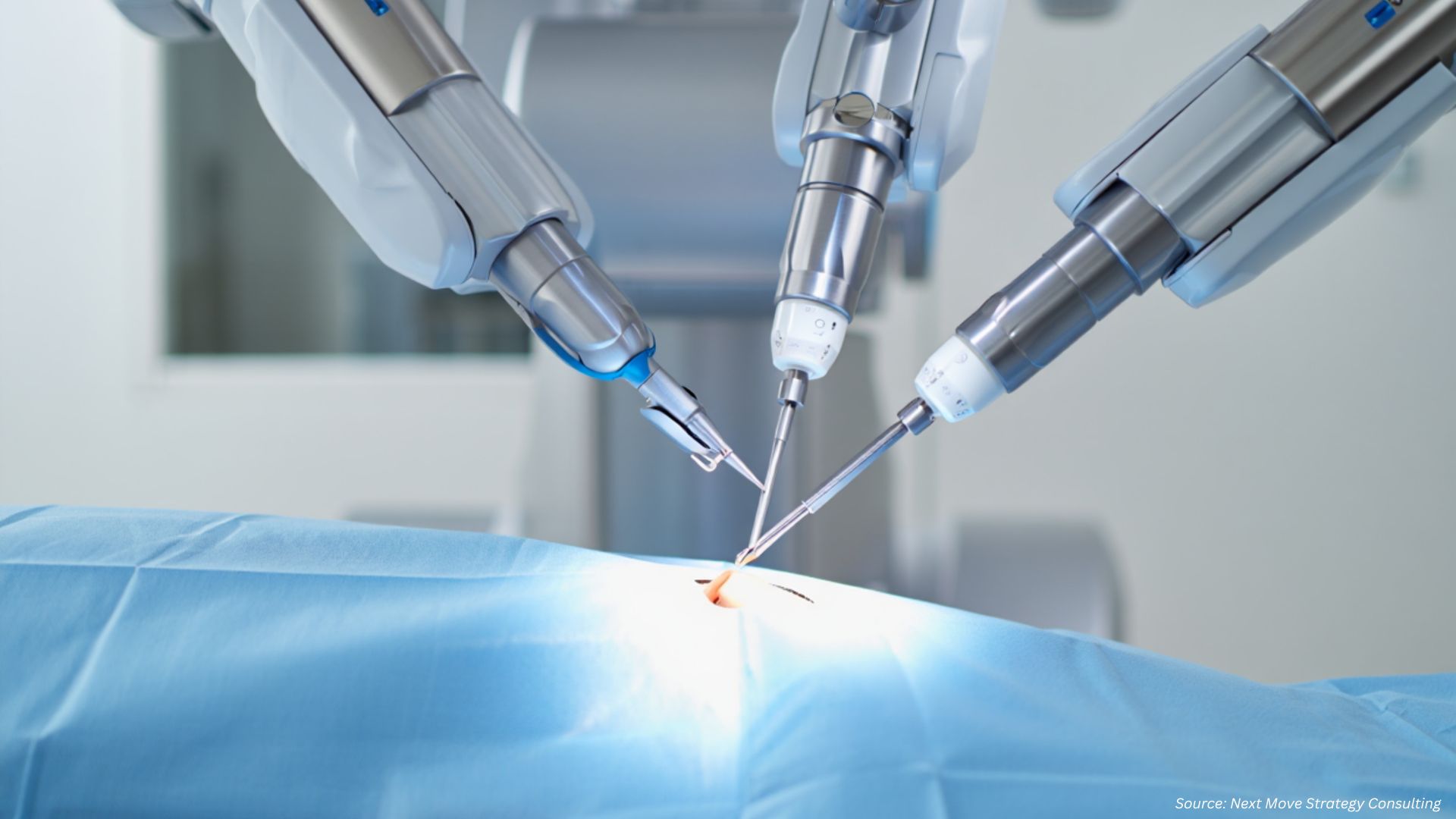
The campaign is led by the Kelowna General Hospital Foundation, which aims to bring the widely used Da Vinci Surgical System nicknamed “Vinni” to the hospital. The system is designed to assist surgeons in performing minimally invasive procedures using robotic arms controlled by the surgeon through advanced visualization and precision instruments.
Physicians involved in the initiative emphasize that robotic-assisted surgery enables surgeons to perform complex operations through small incisions while maintaining high levels of control and visibility. High-definition, three-dimensional imaging allows doctors to view anatomical structures in exceptional detail, while robotic instruments replicate and refine the surgeon’s movements inside the body.
This approach can significantly reduce recovery time, postoperative pain, and hospital stays. Procedures ranging from urological, thoracic, ENT, and general surgeries can potentially be performed using robotic-assisted systems.
Beyond patient benefits, healthcare leaders highlight broader systemic advantages. Hospitals equipped with advanced surgical robotics can attract highly specialized physicians and improve patient throughput by enabling faster recovery and discharge. To achieve this vision, the hospital’s campaign seeks to raise approximately $12 million, with government funding covering half the amount and community donations expected to fund the remainder. Supporters believe the initiative could bring robotic-assisted surgery to the region within a short timeframe, narrowing the technology gap between major metropolitan hospitals and smaller healthcare centers.
Major Investment Fuels Expansion of New Surgical Robotics Platform
While hospitals work to introduce robotic surgery systems, medical technology companies are simultaneously expanding innovation and commercialization efforts.
Swiss-based medtech company Distalmotion recently secured $150 million in Series G funding led by Revival Healthcare Capital to accelerate adoption of its robotic surgery system, the DEXTER Surgical Robot. The funding round, led by Revival Healthcare Capital, is intended to support clinical development and commercial expansion, particularly in the United States.
Unlike many traditional robotic surgery systems designed primarily for large hospitals, DEXTER was built with a different objective: enabling robotic-assisted surgery in outpatient and ambulatory surgery centers (ASCs). These facilities represent one of the fastest-growing segments in healthcare as providers shift toward cost-efficient and minimally invasive procedures performed outside traditional hospital settings.
The robotic system features a compact and mobile design that allows integration into existing operating rooms without structural modifications. Surgeons can also transition between conventional laparoscopic techniques and robotic assistance during procedures, creating a flexible surgical workflow.
The system has already been used in almost 3,000 patient procedures across Europe and the United States. With the new funding, the company plans to expand product development, strengthen clinical research, and accelerate U.S. market penetration.
The company has also strengthened its leadership team with the appointment of an experienced medtech executive as chairman, reflecting a strategic push toward scaling the platform globally.
Key Components and Workflow of Robotic-Assisted Surgery Systems
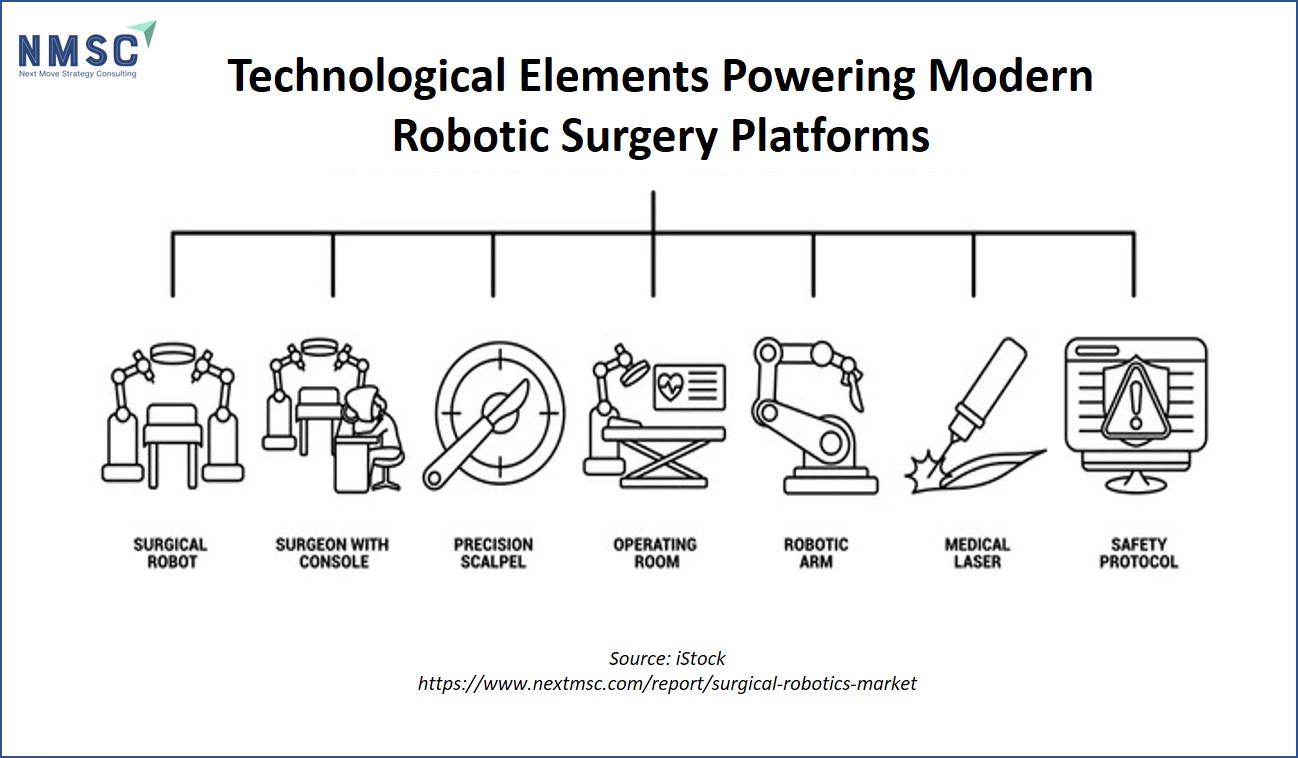
The essential elements involved in modern robotic-assisted surgical procedures, highlighting how advanced technologies work together to support precision-driven operations. The process begins with a surgical robot, which serves as the core platform for robotic-assisted procedures. This system is connected to a surgeon console, where the surgeon controls robotic instruments using hand controls and visual interfaces rather than performing direct manual surgery. It also highlights the use of a precision scalpel, representing the high level of accuracy enabled by robotic instruments that can operate with greater stability and smaller movements than the human hand. These procedures typically take place within a technologically advanced operating room, equipped with imaging systems and integrated surgical tools. Further in the workflow, robotic arms replicate the surgeon’s movements in real time, allowing delicate procedures to be performed through very small incisions. Additional technologies such as medical lasers support precise tissue cutting and treatment, enhancing surgical efficiency and reducing damage to surrounding tissues.
Finally, safety protocols are emphasized as a critical component of robotic surgery systems. These protocols include monitoring software, procedural guidelines, and fail-safe mechanisms that ensure patient safety and procedural accuracy throughout the operation.
Together, these components demonstrate how robotic systems combine surgeon expertise with advanced mechanical precision to enable minimally invasive and highly controlled surgical procedures.
Long-Term Impact on Surgical Technology Adoption
The convergence of hospital initiatives and private-sector investment suggests a broader transformation underway in surgical care.
-
1. Expansion Beyond Major Hospitals: Robotic-assisted surgery is gradually extending beyond large academic hospitals into regional healthcare centers and outpatient facilities.
-
2. Growing Demand for Minimally Invasive Procedures: Patients and physicians increasingly prefer minimally invasive approaches due to reduced trauma, faster recovery, and lower complication rates.
-
3. Workflow Integration and Cost Optimization: Newer robotic systems are being designed to integrate seamlessly into existing operating rooms, reducing adoption barriers and improving cost efficiency.
-
4. Rise of Ambulatory Surgery Centers: Outpatient surgical facilities are becoming a key adoption hub for robotic technologies due to their focus on high-efficiency surgical procedures.
Next Move Strategy Consulting Perspective
From the perspective of Next Move Strategy Consulting (NMSC), the evolving landscape of Surgical Robotics Market reflects a broader shift in healthcare delivery models rather than just technological advancement.
NMSC observes that the next phase of robotic surgery adoption will likely be defined by accessibility and operational flexibility. Historically, robotic systems were limited to large hospitals due to infrastructure requirements and cost barriers. However, emerging platforms designed for smaller operating rooms and outpatient centers are changing this dynamic.
Additionally, community-driven initiatives such as fundraising campaigns for robotic surgery adoption demonstrate that healthcare ecosystems are increasingly willing to invest in advanced technologies that improve patient outcomes and physician capabilities.
Looking ahead, NMSC anticipates several developments shaping the sector:
-
Increased collaboration between hospitals, investors, and technology developers
-
Expansion of robotic surgery into mid-sized hospitals and regional medical centers
-
Greater integration of robotics with AI-assisted surgical planning and imaging technologies
-
A growing role for outpatient surgical centers in driving adoption
As these trends continue, surgical robotics could evolve from a premium technology used in select hospitals to a widely accessible surgical standard, redefining how complex procedures are performed worldwide.
About Next Move Strategy Consulting:
Next Move Strategy Consulting is a premier market research and management consulting firm that has been committed to providing strategically analysed well documented latest research reports to its clients. The research industry is flooded with many firms to choose from, what makes NMSC different from the rest is its top-quality research and the obsession of turning data into knowledge by dissecting every bit of it and providing fact-based research recommendation that is supported by information collected from over 500 million websites, paid databases, industry journals and one on one consultations with industry experts across a diverse range of industry sectors. The high-quality customized research reports with actionable insights and excellent end-to-end customer service help our clients to take critical business decisions that enables them to move beyond time and have competitive edge in the industry.
We have been servicing over 1000 customers globally that includes 90% of the Fortune 500 companies over a decade. Our analysts are constantly tracking various high growth markets and identifying hidden opportunities in each sector or the industry. We provide one of the industry’s best quality syndicate as well as custom research reports across 10 different industry verticals. We are committed to deliver high quality research solutions in accordance to your business needs. Our industry standard delivery solutions that ranges from the pre consultation to after-sales services, provide an excellent client experience and ensure right strategic decision making for businesses.
For more information, please contact:
Next Move Strategy Consulting
5th Floor 867
Boylston St, STE 500
Boston, MA 02116, U.S.
E-Mail: [email protected]
Direct: +1 857 758 5017
Website: www.nextmsc.com
About the Author
 Sanyukta Deb
— Sanyukta Deb is Digital Marketing Team Lead at Next Move Strategy Consulting, where she has led content strategy and technical SEO for the firm's B2B market research publications for over 2 years. Her editorial process translates NextMSC's primary and secondary research — spanning technology, industrial, and consumer sectors — into commercial narratives, backed by search-intent, keyword, and competitive analysis. She brings 5 years of overall experience in digital marketing and content strategy.
Sanyukta Deb
— Sanyukta Deb is Digital Marketing Team Lead at Next Move Strategy Consulting, where she has led content strategy and technical SEO for the firm's B2B market research publications for over 2 years. Her editorial process translates NextMSC's primary and secondary research — spanning technology, industrial, and consumer sectors — into commercial narratives, backed by search-intent, keyword, and competitive analysis. She brings 5 years of overall experience in digital marketing and content strategy.
About the Reviewer
 Debashree Dey
— Debashree Dey is Assistant Manager at Next Move Strategy Consulting, where she supports cross-vertical market content and communications across diverse industries for 6 years. Her professional background includes senior content writing, communications, and published manuscript authorship, with experience developing audience-focused business narratives and maintaining clear, consistent messaging. Her role supports research-led content development and editorial quality across NextMSC publications.
Debashree Dey
— Debashree Dey is Assistant Manager at Next Move Strategy Consulting, where she supports cross-vertical market content and communications across diverse industries for 6 years. Her professional background includes senior content writing, communications, and published manuscript authorship, with experience developing audience-focused business narratives and maintaining clear, consistent messaging. Her role supports research-led content development and editorial quality across NextMSC publications.


















Add Comment