Carbon Dioxide Market Update: Canada Nickel's $1.9B CO2 Capture Permit
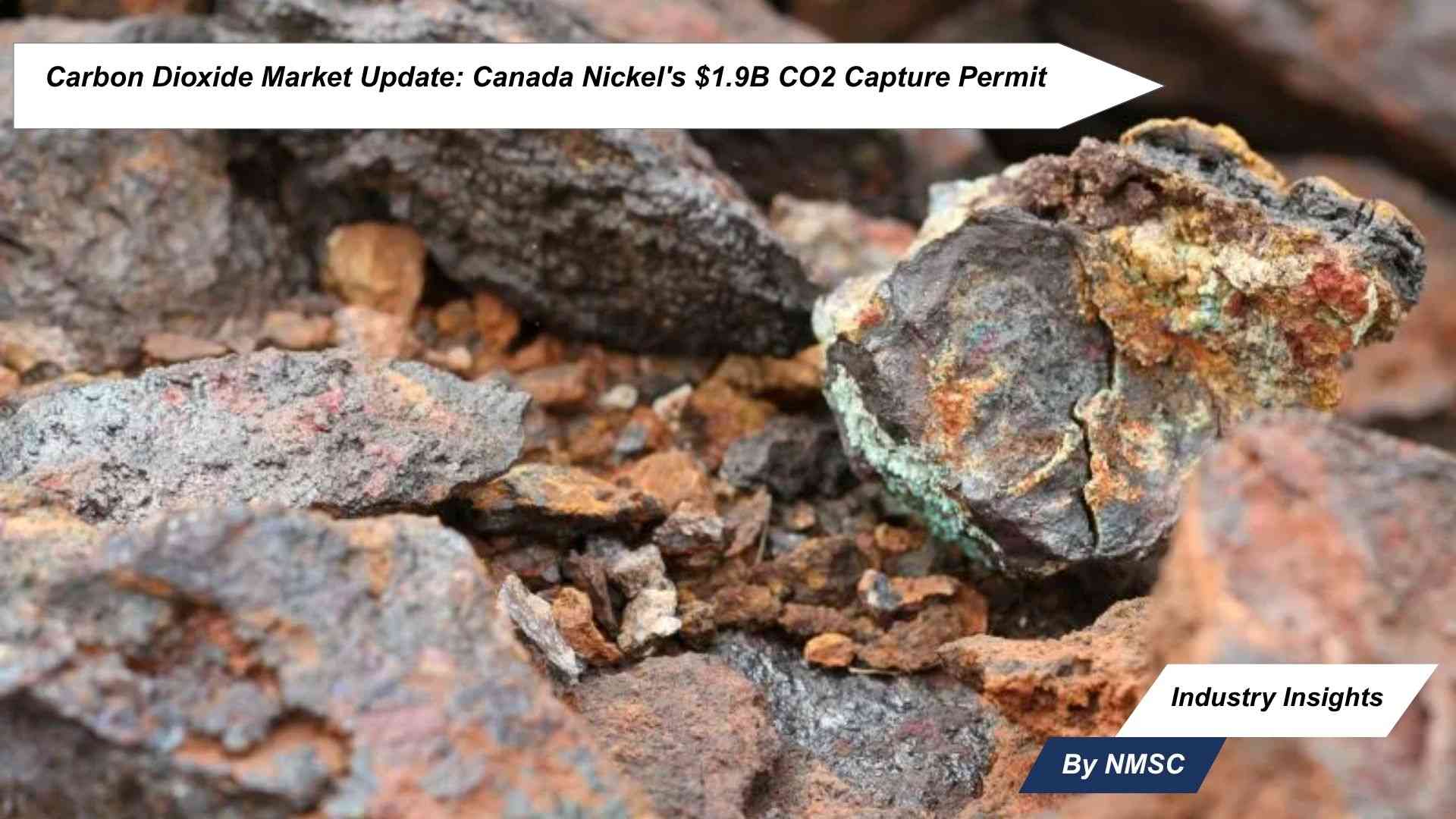
Canada Nickel Wins Ontario Permit for $1.9B Crawford Carbon Capture Mining Project
TIMMINS, Ontario, Canada — August 10, 2026 — Canada Nickel Company has received final permitting approval from the Ontario government for its $1.9 billion Crawford nickel mining and carbon capture project, marking a landmark regulatory milestone with direct implications for the global Carbon Dioxide Market. According to Next Move Strategy Consulting, the market was valued at USD 10.58 billion in 2023 and is projected to reach USD 61.26 billion by 2030, growing at a CAGR of 30.1%.
The approval is the first issued under Canada's amended Impact Assessment Act — an updated regulatory framework designed to accelerate high-quality extractive projects while enforcing rigorous environmental oversight. The Crawford Project, located in Ontario's Timmins mining district, is estimated to contain 3.8 million tons of nickel alongside significant chromium byproduct reserves, positioning it as a major Western alternative to Indonesia, which currently controls approximately 67% of global nickel production.
A defining feature of the Crawford Project is Canada Nickel's proprietary In-Process Tailings (IPT) Carbonization technology, which injects concentrated CO2 into milled stone tailings within the processing circuit, fixing carbon geologically within hours. The facility is projected to store 1.5 million metric tons of CO2 per year during operation — the equivalent of removing 350,000 gas-powered vehicles from the road annually. Across the project's 41-year mine life, total carbon storage potential could eventually reach up to 15 million tons per year.
The company expects project economics to benefit from carbon credit sales alongside government tax credits that offset up to 50% of carbon storage capital expenditures, with a construction decision anticipated in 2027.
Key Highlights:
-
Regulatory First: The Crawford Project is the first to receive approval under Canada's amended Impact Assessment Act, establishing a new benchmark for environmentally integrated critical mineral development.
-
Proprietary CO2 Storage Technology: Canada Nickel's IPT Carbonization technology geologically sequesters 1.5 million metric tons of CO2 annually, with long-term potential reaching up to 15 million tons per year across the project's 41-year operational life.
-
Strategic Critical Mineral Supply: The Crawford site contains an estimated 3.8 million tons of nickel, offering a significant Western supply chain alternative amid global dependence on Indonesian production.
-
Carbon Credit & Tax Credit Economics: The project is structured to generate revenue from carbon credit sales while benefiting from government incentives covering up to 50% of carbon storage capital expenditures, strengthening its financial viability.
Analyst Insight:
According to analysts at Next Move Strategy Consulting, the Crawford Project's permitting approval represents a convergence of two high-growth sectors — critical mineral extraction and industrial carbon dioxide capture — that is increasingly shaping investment flows within the global CO2 market. NMSC analysts note that as the carbon dioxide market advances toward its projected USD 61.26 billion valuation by 2030, proprietary geological storage technologies such as Canada Nickel's IPT Carbonization are expected to attract heightened commercial and regulatory interest, particularly as governments seek to align extractive industries with net-zero commitments through enforceable carbon sequestration frameworks.
Industry Outlook:
The Ontario government's approval of the Crawford Project signals a broader policy shift toward integrating mandatory carbon capture requirements within large-scale mining and industrial permitting frameworks. As jurisdictions worldwide tighten environmental standards for extractive operations, projects that embed CO2 sequestration directly into their production processes are likely to gain a competitive advantage in accessing capital, carbon credits, and government incentives. The Crawford Project's 41-year operational horizon and scalable storage capacity position it as a long-term structural contributor to industrial CO2 reduction — a dynamic that is expected to reinforce demand across the carbon dioxide capture, utilization, and storage value chain through 2030 and beyond.
Source: Carbon Herald
For More Information: Download FREE Sample on Carbon Dioxide Market Report
Prepared By: Sanyukta Deb
About the Author
 Sanyukta Deb
— Sanyukta Deb is Digital Marketing Team Lead at Next Move Strategy Consulting, where she has led content strategy and technical SEO for the firm's B2B market research publications for over 2 years. Her editorial process translates NextMSC's primary and secondary research — spanning technology, industrial, and consumer sectors — into commercial narratives, backed by search-intent, keyword, and competitive analysis. She brings 5 years of overall experience in digital marketing and content strategy.
Sanyukta Deb
— Sanyukta Deb is Digital Marketing Team Lead at Next Move Strategy Consulting, where she has led content strategy and technical SEO for the firm's B2B market research publications for over 2 years. Her editorial process translates NextMSC's primary and secondary research — spanning technology, industrial, and consumer sectors — into commercial narratives, backed by search-intent, keyword, and competitive analysis. She brings 5 years of overall experience in digital marketing and content strategy.
About the Reviewer
 Debashree Dey
— Debashree Dey is Assistant Manager at Next Move Strategy Consulting, where she supports cross-vertical market content and communications across diverse industries for 6 years. Her professional background includes senior content writing, communications, and published manuscript authorship, with experience developing audience-focused business narratives and maintaining clear, consistent messaging. Her role supports research-led content development and editorial quality across NextMSC publications.
Debashree Dey
— Debashree Dey is Assistant Manager at Next Move Strategy Consulting, where she supports cross-vertical market content and communications across diverse industries for 6 years. Her professional background includes senior content writing, communications, and published manuscript authorship, with experience developing audience-focused business narratives and maintaining clear, consistent messaging. Her role supports research-led content development and editorial quality across NextMSC publications.















Add Comment