CATL Expands Commercial Vehicle Electrification Strategy
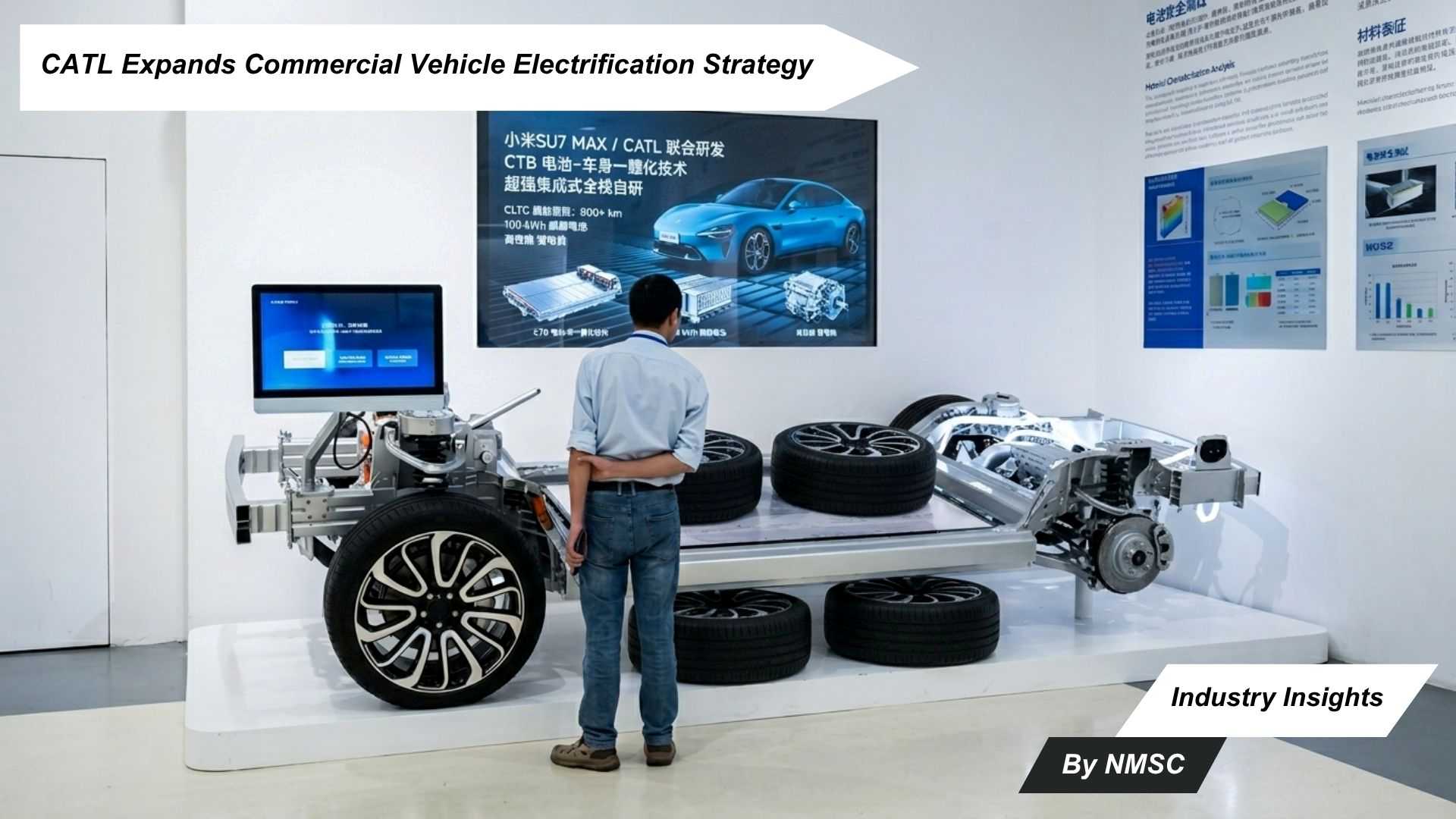
Industry Insights from Next Move Strategy Consulting
As the global transportation sector intensifies its transition toward cleaner and more efficient mobility solutions, Contemporary Amperex Technology Co. Limited (CATL) is advancing its strategic footprint in the commercial vehicle segment. Through targeted collaborations and infrastructure expansion, the company is reinforcing its role in enabling large-scale electrification across logistics and public transport networks.
Driving Fleet Electrification Through Strategic Alliances
In a notable development, CATL has entered into a partnership with STO Express aimed at achieving full electrification of the company’s vehicle fleet. This collaboration underscores a broader shift within the logistics industry toward sustainable operations, driven by both economic and environmental considerations.
Further strengthening its position, CATL has also signed an agreement with transportation operator Jiangxi Yichun to electrify more than 160 rural buses. This initiative builds upon an earlier collaboration established in 2016, which demonstrated a reduction in fuel costs per kilometer exceeding 60%, highlighting the long-term viability of electric mobility solutions in public transport.
Infrastructure Expansion as a Strategic Enabler
A key pillar of CATL’s commercial vehicle strategy lies in the rapid development of its battery-swapping infrastructure. Operating under its Qiji Energy brand, the company currently manages over 300 battery-swapping stations across major economic regions in China, including the Beijing-Tianjin-Hebei region, the Yangtze River Delta, and the Pearl River Delta.
Looking ahead, CATL plans to significantly scale this network, targeting more than 900 battery-swapping stations by the end of 2026. This expansion is expected to play a critical role in addressing range limitations and operational downtime two major barriers to widespread adoption of electric commercial vehicles.
Economic Advantages Strengthen Market Adoption
The transition to electric commercial vehicles is increasingly supported by compelling cost efficiencies. On high-frequency logistics routes, such as the 400-kilometer corridor between Shanghai and Ningbo, electric heavy-duty trucks deliver a cost advantage of approximately 0.8 yuan per kilometer compared to diesel-powered alternatives.
Even when factoring in depreciation costs of conventional vehicles, net savings remain significant, ranging between 0.3 and 0.5 yuan per kilometer. These financial benefits are particularly impactful in the highly competitive express delivery sector, where operational efficiency directly influences profitability.
To further enhance performance and cost-effectiveness, CATL is working closely with vehicle manufacturers to design customized battery systems. These tailored solutions are engineered to meet the specific requirements of logistics vehicles, including capacity optimization, spatial constraints, and weight considerations.
Expanding Technological Horizons Beyond Road Transport
CATL’s focus on commercial vehicle electrification is part of a broader technological vision that spans multiple industries. The company is actively extending its battery applications into maritime transport and AI infrastructure, signaling a diversified growth strategy rooted in innovation.
This expansion is supported by substantial investment in research and development, with expenditures reaching approximately $2.59 billion in 2024. With a global portfolio exceeding 43,000 patents, CATL continues to leverage its technological expertise as a key differentiator in an increasingly competitive market landscape.
Next Move Strategy Consulting’s View
According to Next Move Strategy Consulting, the Commercial Vehicle Market is undergoing a structural transformation driven by electrification, cost optimization, and infrastructure readiness. Strategic collaborations, such as CATL’s partnerships with logistics and transport operators, are expected to accelerate adoption by addressing both economic and operational challenges.
The firm highlights that advancements in battery technology, coupled with scalable infrastructure models like battery swapping, are reshaping investment priorities within the commercial vehicle ecosystem. As fleet operators seek to reduce total cost of ownership while meeting sustainability targets, integrated solutions combining technology, infrastructure, and partnerships will play a decisive role in market expansion.
Redefining the Future of Commercial Mobility
As electrification gains traction across the commercial vehicle sector, CATL’s multi-faceted strategy reflects a comprehensive approach to industry transformation. By aligning infrastructure development, technological innovation, and strategic partnerships, the company is positioning itself at the forefront of next-generation mobility solutions.
With continued momentum in fleet electrification and infrastructure scaling, CATL is set to play a pivotal role in redefining the operational and economic dynamics of commercial transportation.
Source: Ad-Hoc-News
Prepared by: Next Move Strategy Consulting
About the Author
 Tania Dey
— Tania Dey is a content writer specializing in transformation-led, insight-driven storytelling. She develops research-backed, high-impact content aligned with evolving business priorities, digital behavior, and audience expectations. Her work helps organizations sharpen value propositions, strengthen visibility, and communicate strategic intent with clarity and precision. Grounded in data-informed storytelling, she brings a strong focus on relevance, consistency, and measurable digital impact across platforms.
Tania Dey
— Tania Dey is a content writer specializing in transformation-led, insight-driven storytelling. She develops research-backed, high-impact content aligned with evolving business priorities, digital behavior, and audience expectations. Her work helps organizations sharpen value propositions, strengthen visibility, and communicate strategic intent with clarity and precision. Grounded in data-informed storytelling, she brings a strong focus on relevance, consistency, and measurable digital impact across platforms.
About the Reviewer
 Sanyukta Deb
— Sanyukta Deb is Digital Marketing Team Lead at Next Move Strategy Consulting, where she has led content strategy and technical SEO for the firm's B2B market research publications for over 2 years. Her editorial process translates NextMSC's primary and secondary research — spanning technology, industrial, and consumer sectors — into commercial narratives, backed by search-intent, keyword, and competitive analysis. She brings 5 years of overall experience in digital marketing and content strategy.
Sanyukta Deb
— Sanyukta Deb is Digital Marketing Team Lead at Next Move Strategy Consulting, where she has led content strategy and technical SEO for the firm's B2B market research publications for over 2 years. Her editorial process translates NextMSC's primary and secondary research — spanning technology, industrial, and consumer sectors — into commercial narratives, backed by search-intent, keyword, and competitive analysis. She brings 5 years of overall experience in digital marketing and content strategy.


















Add Comment