Electrophysiology Advances Reshape Neural Research

Electrophysiology Market Size to Hit USD 20.52 Billion by 2030 as Semi-Automated Neural Profiling Accelerates
The global Electrophysiology Market is witnessing accelerated technological momentum following major advances in semi-automated neuronal activity profiling and ultrapliable cardiac bioelectronics that are reshaping neuroscience research and cardiac disease modeling worldwide. Recent developments published by Drug Discovery News and Science Advances have intensified industry focus on scalable electrophysiology platforms, with latest NMSC analysis projecting the market valuation to reach USD 20.52 billion by 2030 from USD 8.63 billion in 2023, growing at a CAGR of 13.4% from 2024 to 2030.
The latest breakthroughs highlight a broader transformation across drug discovery, neurobiology, and cardiac electrophysiology applications as research institutions and pharmaceutical companies increasingly adopt automated and tissue-compatible electrophysiology systems to improve experimental precision and scalability.
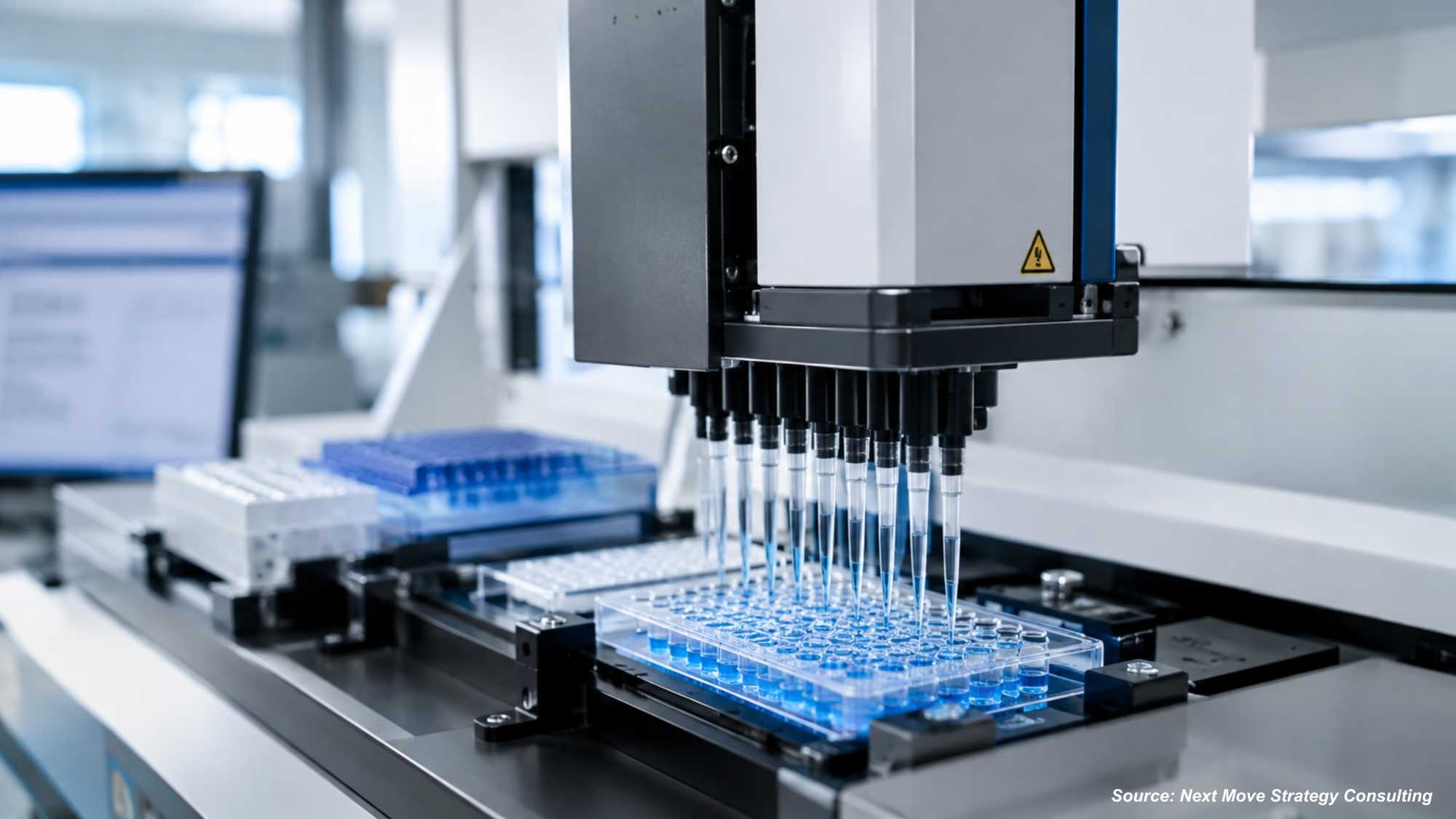
According to recent findings highlighted by Drug Discovery News, researchers are rapidly scaling neuronal activity profiling using semi-automated high-density microelectrode array (HD-MEA) workflows combined with advanced liquid handling systems. The technology enables more reproducible electrophysiological measurements in induced pluripotent stem cell (iPSC)-derived neuronal cultures while significantly reducing manual variability in high-throughput screening environments.
The development is particularly important for neurological disorder research, toxicity studies, and CNS drug discovery, where consistent neuronal network monitoring remains essential for validating pharmacological responses.

At the same time, a groundbreaking study published in Science Advances introduced Pliable Ultrathin Layered Sensing Electronics (PULSE), an ultrapliable bioelectronic interface designed for mechanosensitive cardiac electrophysiology. The platform demonstrated tissue-matched mechanical properties capable of increasing cardiac contraction by nearly 140% and electrical signal strength by approximately 100% compared to conventional electronics.
Jayanta Das, Senior Research Analyst at Next Move Strategy Consulting, notes that the convergence of soft bioelectronics, AI-enabled signal processing, and scalable electrophysiology workflows is fundamentally redefining biomedical research infrastructure.
“Electrophysiology technologies are rapidly evolving from niche laboratory tools into integrated platforms supporting large-scale neural profiling, predictive drug discovery, and physiologically accurate cardiac modeling. NMSC researchers identified strong investment momentum across HD-MEA systems, automated patch clamp technologies, and flexible bioelectronic interfaces during the past six months,” Das stated.
According to the latest NMSC proprietary dataset, rising prevalence of neurological disorders and cardiovascular diseases is accelerating global demand for advanced electrophysiology systems capable of real-time cellular monitoring and precision functional analysis.
Semi-Automated Electrophysiology Gains Commercial Momentum
The growing use of semi-automated electrophysiology systems is helping research laboratories overcome long-standing scalability challenges associated with manual neural recording workflows. Historically, electrophysiological experimentation required extensive operator expertise and highly controlled culture conditions, limiting throughput across large-scale studies.
The introduction of advanced liquid handling systems and HD-MEA platforms is streamlining processes spanning cell plating, media exchange, compound administration, and neuronal activity recording. Researchers believe these technologies could significantly improve reproducibility in preclinical neuroscience programs while reducing operational bottlenecks.
Pharmaceutical companies are increasingly utilizing iPSC-derived neuronal models integrated with HD-MEA systems to evaluate drug efficacy, neurotoxicity, and disease-specific neuronal behavior.
Electrophysiology Market by Region
|
Region |
Primary Growth Driver |
|
North America |
Strong neuroscience funding and AI integration |
|
Europe |
Growth in cardiac electrophysiology research |
|
Asia-Pacific |
Expanding biotech and pharmaceutical infrastructure |
|
Latin America |
Increasing healthcare digitization |
|
Middle East & Africa |
Rising investment in medical technologies |
Cardiac Bioelectronics Transform Disease Modeling
The Science Advances study surrounding the PULSE platform has generated significant interest within the bioelectronics industry due to its ability to closely replicate the mechanical properties of native heart tissue.
Traditional bioelectronics often exhibit stiffness levels in the megapascal range, creating major mechanical mismatches with cardiomyocytes. In contrast, PULSE operates with a tissue-matched modulus of approximately 10 kilopascals, enabling more physiologically accurate cardiac behavior and electrophysiological recording.
Researchers demonstrated that cardiomyocytes cultured on the ultrapliable interface displayed improved contraction, enhanced ion transport activity, and more mature cellular development compared to conventional substrates such as glass and standard PDMS devices.
NMSC analysts believe these innovations could accelerate next-generation cardiac drug screening and personalized medicine applications over the coming years.
AI and Flexible Electronics Become Key Industry Drivers
Artificial intelligence integration is emerging as a major differentiator within the electrophysiology ecosystem. AI-assisted waveform interpretation and automated neural signal analysis are helping researchers process increasingly complex electrophysiological datasets at scale.
Machine learning models are now being used to classify neuronal firing behavior, detect abnormalities, and optimize cardiac electrophysiological analysis in real time. The combination of flexible electronics and AI-driven interpretation is expected to improve predictive disease modeling and drug validation efficiency.

Pharmaceutical and Biotech Firms Expand Investment Activity
The pharmaceutical sector remains one of the largest adopters of advanced electrophysiology technologies due to rising investment in CNS therapeutics, cardiac safety testing, and translational medicine.
Several biotechnology firms are expanding partnerships with electrophysiology platform developers to improve high-throughput drug screening capabilities. Industry stakeholders are particularly focused on applications involving:
-
Neurodegenerative disease research
-
Cardiotoxicity screening
-
Arrhythmia modeling
-
Brain-computer interfaces
-
Personalized medicine development
NMSC researchers identified increasing venture capital funding toward flexible bioelectronics and neurotechnology startups throughout early 2026, signaling growing commercial confidence in next-generation electrophysiology platforms.
Asia-Pacific Emerges as Fastest-Growing Market
Asia-Pacific is projected to witness the fastest growth during the forecast period due to rapid expansion of neuroscience research infrastructure in China, India, Japan, and South Korea.
Government-backed precision medicine initiatives, rising healthcare digitization, and increasing pharmaceutical manufacturing capacity are driving regional adoption of advanced electrophysiology systems.
Several universities and research centers across the region are also increasing procurement of HD-MEA platforms and cardiac electrophysiology technologies to strengthen translational research capabilities.

What CEOs and Investors Should Do Next
-
Increase investment in AI-assisted electrophysiology and HD-MEA technologies to improve scalable data acquisition.
-
Expand strategic collaborations with neuroscience and cardiac research institutions.
-
Prioritize development of tissue-compatible flexible bioelectronics for long-term monitoring applications.
-
Monitor regulatory advancements surrounding neurotechnology and precision medicine frameworks.
-
Evaluate Asia-Pacific expansion opportunities to capitalize on rising regional biotechnology investment.
As automation, artificial intelligence, and soft bioelectronics continue converging across biomedical research, electrophysiology technologies are expected to play a central role in next-generation neuroscience and cardiovascular innovation. Industry analysts believe companies capable of delivering scalable, physiologically accurate, and data-rich electrophysiology ecosystems will secure a major competitive advantage over the coming decade.
About Next Move Strategy Consulting:
Next Move Strategy Consulting is a premier market research and management consulting firm that has been committed to provide strategically analysed well documented latest research reports to its clients. The research industry is flooded with many firms to choose from, what makes NMSC different from the rest is its top-quality research and the obsession of turning data into knowledge by dissecting every bit of it and providing fact-based research recommendation that is supported by information collected from over 500 million websites, paid databases, industry journals and one on one consultations with industry experts across a diverse range of industry sectors. The high-quality customized research reports with actionable insights and excellent end-to-end customer service help our clients to take critical business decisions that enables them to move beyond time and have competitive edge in the industry.
We have been servicing over 1000 customers globally that includes 90% of the Fortune 500 companies over a decade. Our analysts are constantly tracking various high growth markets and identifying hidden opportunities in each sector or the industry. We provide one of the industry’s best quality syndicate as well as custom research reports across 10 different industry verticals. We are committed to deliver high quality research solutions in accordance to your business needs. Our industry standard delivery solutions that ranges from the pre consultation to after-sales services, provide an excellent client experience and ensure right strategic decision making for businesses.
For more information, please contact:
Next Move Strategy Consulting
5th Floor 867
Boylston St, STE 500,
Boston, MA 02116, U.S.
E-Mail: [email protected]
Direct: +1-217-650-7991
Website: www.nextmsc.com
About the Author
 Sanyukta Deb
— Sanyukta Deb is Digital Marketing Team Lead at Next Move Strategy Consulting, where she has led content strategy and technical SEO for the firm's B2B market research publications for over 2 years. Her editorial process translates NextMSC's primary and secondary research — spanning technology, industrial, and consumer sectors — into commercial narratives, backed by search-intent, keyword, and competitive analysis. She brings 5 years of overall experience in digital marketing and content strategy.
Sanyukta Deb
— Sanyukta Deb is Digital Marketing Team Lead at Next Move Strategy Consulting, where she has led content strategy and technical SEO for the firm's B2B market research publications for over 2 years. Her editorial process translates NextMSC's primary and secondary research — spanning technology, industrial, and consumer sectors — into commercial narratives, backed by search-intent, keyword, and competitive analysis. She brings 5 years of overall experience in digital marketing and content strategy.
About the Reviewer
 Debashree Dey
— Debashree Dey is Assistant Manager at Next Move Strategy Consulting, where she supports cross-vertical market content and communications across diverse industries for 6 years. Her professional background includes senior content writing, communications, and published manuscript authorship, with experience developing audience-focused business narratives and maintaining clear, consistent messaging. Her role supports research-led content development and editorial quality across NextMSC publications.
Debashree Dey
— Debashree Dey is Assistant Manager at Next Move Strategy Consulting, where she supports cross-vertical market content and communications across diverse industries for 6 years. Her professional background includes senior content writing, communications, and published manuscript authorship, with experience developing audience-focused business narratives and maintaining clear, consistent messaging. Her role supports research-led content development and editorial quality across NextMSC publications.















Add Comment