Robot-Assisted Surgery Study Reshapes Surgical Systems Market
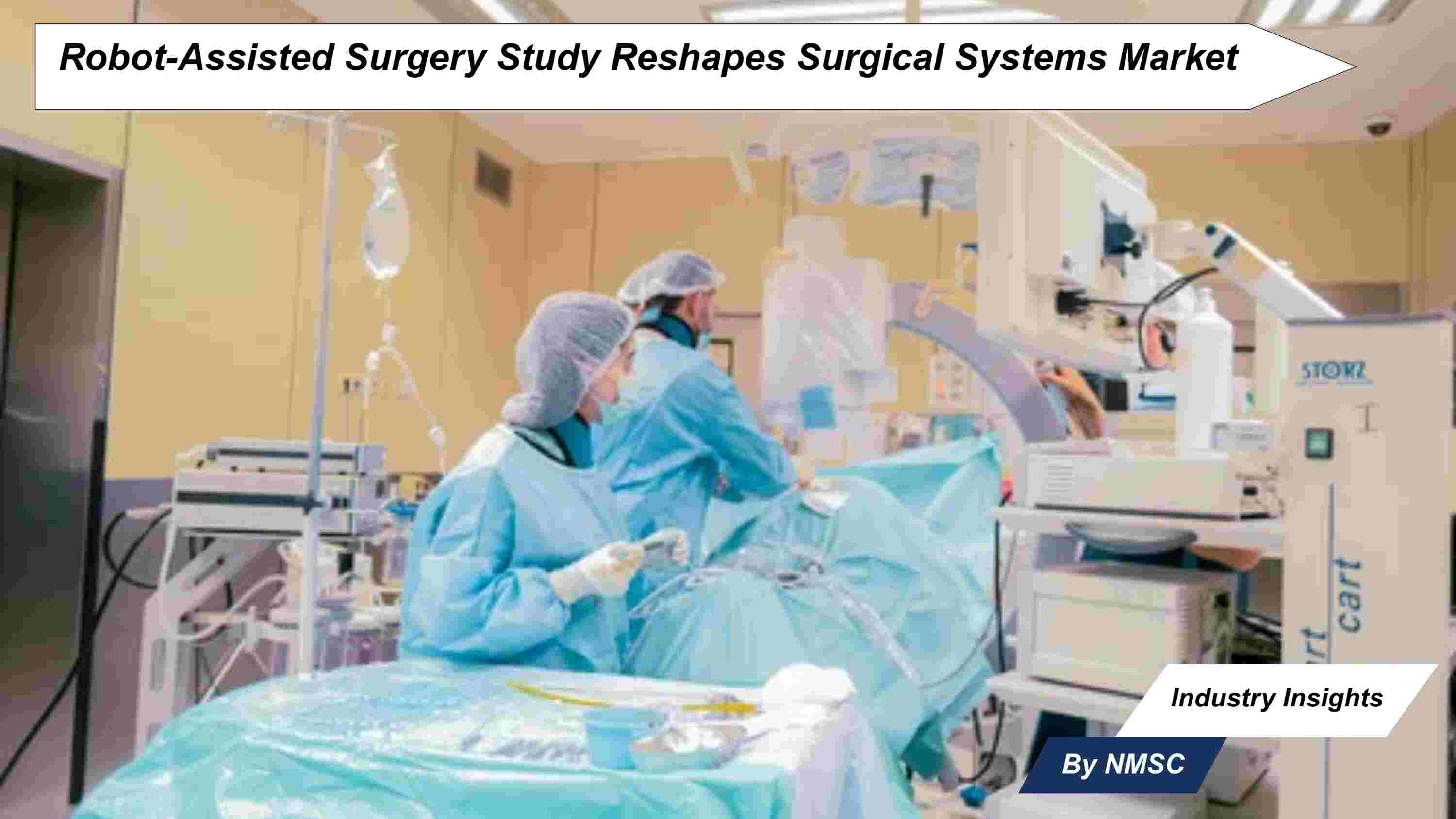
JAMA Surgery RACC Trial Finds Robot-Assisted Hysterectomy Cuts Intraoperative Complications but Not Post-Op Recovery
STOCKHOLM, Sweden October 8, 2026 — A landmark international randomized clinical trial published in JAMA Surgery has found that robot-assisted radical hysterectomy reduces intraoperative complications compared with open surgery in early-stage cervical cancer patients, though the advantage does not extend to postoperative outcomes or overall recovery findings with direct implications for the global Computer-Assisted Surgical Systems market, which is projected to grow from USD 12.91 billion in 2025 to USD 41.18 billion by 2035 at a 12.3% CAGR.
Main Development
The Robot-Assisted Approach to Cervical Cancer (RACC) study coordinated by Karolinska University Hospital in Stockholm and led by principal investigator Henrik Falconer enrolled 900 patients with early-stage cervical cancer across tertiary centers in Europe, randomizing them to either robot-assisted laparoscopic radical hysterectomy or conventional open radical hysterectomy.
Intraoperative complications were recorded in 5.7% of patients in the robotic surgery group compared with 10.0% in the open surgery group, with the difference driven primarily by less serious events. Major complications were uncommon and comparable between the two groups.
However, the lower intraoperative complication rate did not translate into improved postoperative outcomes. Within 30 days, 33.4% of patients in the robotic surgery group and 34.8% in the open surgery group experienced a complication, with serious complications, readmissions, and reoperations remaining statistically similar across both arms. At one month, differences in patient-reported quality of life including physical function and pain were small and did not meet thresholds for clinically meaningful distinction.
"Overall, the results show that the expected benefits of robot-assisted surgery were limited. The fewer complications during surgery did not translate into better clinically meaningful outcomes after surgery or better overall recovery," said Sahar Salehi, MD, PhD, associate professor at Karolinska Institutet and lead author of the publication.
Key Highlights:
-
RACC Trial Scale: 900 patients across European tertiary centers were randomized between 2019 and 2025, representing one of the largest prospective randomized assessments of robot-assisted radical hysterectomy to date.
-
Intraoperative Advantage: Robot-assisted surgery recorded a 5.7% intraoperative complication rate versus 10.0% for open surgery a statistically significant difference, though predominantly confined to lower-grade events.
-
Postoperative Parity: 30-day complication rates, readmissions, and reoperations were comparable between both surgical approaches, indicating that perioperative care advances may be narrowing the gap between minimally invasive and open techniques.
-
Primary Oncologic Outcome Pending: The RACC trial's primary endpoint recurrence-free survival remains under follow-up and will be reported separately; the current publication covers prespecified secondary perioperative outcomes only.
Analyst Insight:
According to analysts at Next Move Strategy Consulting, the RACC trial's findings introduce a clinically important nuance into the robotic surgery adoption narrative: while robot-assisted platforms demonstrably reduce intraoperative events, the absence of a corresponding improvement in postoperative morbidity or patient-reported recovery underscores that perioperative care protocols rather than surgical approach alone are increasingly the primary determinant of 30-day outcomes. NMSC analysts note that this evidence dynamic is likely to influence procurement decision-making at hospital systems evaluating capital-intensive robotic platforms, particularly as the Computer-Assisted Surgical Systems market transitions toward AI-assisted navigation software and procedure-based commercial models that must demonstrate clear, measurable clinical and economic value to justify adoption. The trial's findings are especially relevant given that the Asia-Pacific region where India is projected to register the fastest country-level CAGR of 20.1% from 2026 to 2035 is simultaneously scaling surgeon training infrastructure, making evidence-based credentialing frameworks a critical market enabler.
Industry Outlook:
The RACC trial's publication arrives at a pivotal moment for the Computer-Assisted Surgical Systems industry. With the global market estimated at USD 14.5 billion in 2026 and on a trajectory toward USD 41.18 billion by 2035, the sector's growth is underpinned by expanding robotic platform indications, rising orthopedic robotic adoption, and accelerating AI-assisted navigation software integration.
The RACC findings are expected to sharpen clinical debate around the conditions under which robotic platforms deliver measurable patient benefit beyond the operating room. As the trial's primary oncologic endpoint recurrence-free survival matures, its results will be critical in determining the long-term role of robot-assisted radical hysterectomy in cervical cancer management and, by extension, in shaping evidence requirements for robotic platform adoption across gynecologic oncology globally.
For the broader Computer-Assisted Surgical Systems market, the study reinforces the growing imperative for vendors to pair hardware capability with robust clinical outcomes data a competitive differentiator that North America, holding approximately 52% of global market revenue in 2025, continues to set the standard for through its structured FDA clearance and post-market evidence frameworks.
Source: Karolinska Institutet News
For More Information: Download FREE Sample on Computer-Assisted Surgical Systems Market Report
Prepared By: Sanyukta Deb
About the Author
 Sanyukta Deb
— Sanyukta Deb is Digital Marketing Team Lead at Next Move Strategy Consulting, where she has led content strategy and technical SEO for the firm's B2B market research publications for over 2 years. Her editorial process translates NextMSC's primary and secondary research — spanning technology, industrial, and consumer sectors — into commercial narratives, backed by search-intent, keyword, and competitive analysis. She brings 5 years of overall experience in digital marketing and content strategy.
Sanyukta Deb
— Sanyukta Deb is Digital Marketing Team Lead at Next Move Strategy Consulting, where she has led content strategy and technical SEO for the firm's B2B market research publications for over 2 years. Her editorial process translates NextMSC's primary and secondary research — spanning technology, industrial, and consumer sectors — into commercial narratives, backed by search-intent, keyword, and competitive analysis. She brings 5 years of overall experience in digital marketing and content strategy.
About the Reviewer
 Debashree Dey
— Debashree Dey is Assistant Manager at Next Move Strategy Consulting, where she supports cross-vertical market content and communications across diverse industries for 6 years. Her professional background includes senior content writing, communications, and published manuscript authorship, with experience developing audience-focused business narratives and maintaining clear, consistent messaging. Her role supports research-led content development and editorial quality across NextMSC publications.
Debashree Dey
— Debashree Dey is Assistant Manager at Next Move Strategy Consulting, where she supports cross-vertical market content and communications across diverse industries for 6 years. Her professional background includes senior content writing, communications, and published manuscript authorship, with experience developing audience-focused business narratives and maintaining clear, consistent messaging. Her role supports research-led content development and editorial quality across NextMSC publications.

















Add Comment