Germany Electric Shaver Market is Expected to Reach USD 976.3 Million by 2035
The increasing disposable income over the region is driving the demand for the Germany electric shaver market during the forecast period.
Germany Electric Shaver Market size was valued at USD 667.8 Million in 2025 and reached USD 717.2 Million by 2026. Looking ahead, the industry is projected to expand significantly, reaching USD 976.3 Million by 2035, registering a CAGR of 3.49% from 2026 to 2035. In terms of volume, the market recorded 4 million units in 2025, with forecasts indicating growth to 5 million units by 2026 and further to 8 million units by 2035, reflecting a CAGR of 5.20% over the same period, according to new research by Next Move Strategy Consulting.
The electric shaver industry is currently witnessing a prominent trend propelled by the escalating disposable incomes of global consumers. As economies flourish and individuals enjoy increased purchasing capabilities, there is a noticeable surge in demand for grooming items, notably electric shavers.
This financial empowerment allows consumers to prioritize personal care and grooming, thus accentuating the importance of high-quality grooming solutions. With a rise in discretionary spending, consumers are inclined towards investing in electric shavers featuring advanced functionalities and technologies that promise improved convenience and performance. Premium brands are strategically positioned to leverage this trend by introducing innovative products customized to cater to the changing preferences of discerning consumers.
Moreover, the burgeoning consciousness regarding personal presentation is propelling the market demand for grooming electronic devices such as electric shavers. Social media platforms have emerged as pivotal instruments in amplifying awareness regarding self-perception and physical appearance, compelling individuals to meticulously attend to their grooming rituals to upkeep a refined online persona.
Furthermore, societal and professional norms consistently necessitate a well-kempt appearance, be it within professional or social domains. This impetus to adhere to grooming standards is further galvanized by fashion vogues and the sway of prominent figures and influencers who establish grooming paradigms. The accessibility and array of grooming paraphernalia, including electric shavers, have rendered personal grooming more individualized and convenient, accommodating diverse preferences and routines.
However, the Germany electric shaving industry grapples with challenges stemming from significant initial costs and the enduring popularity of traditional options such as manual razors. The relatively high price tags of many electric shavers may deter budget-conscious consumers who perceive traditional grooming tools as more economically sensible.
Additionally, entrenched consumer familiarity with conventional selections including safety razors poses a substantial barrier to widespread electric shaver adoption. Concerns regarding durability, perceived value, and entrenched cultural grooming practices further compound consumer hesitancy.
To overcome these challenges effectively, strategic pricing, targeted marketing emphasizing the benefits of electric shavers, and continuous innovation are crucial to enhance their appeal and competitiveness against traditional alternatives in a diverse grooming market.
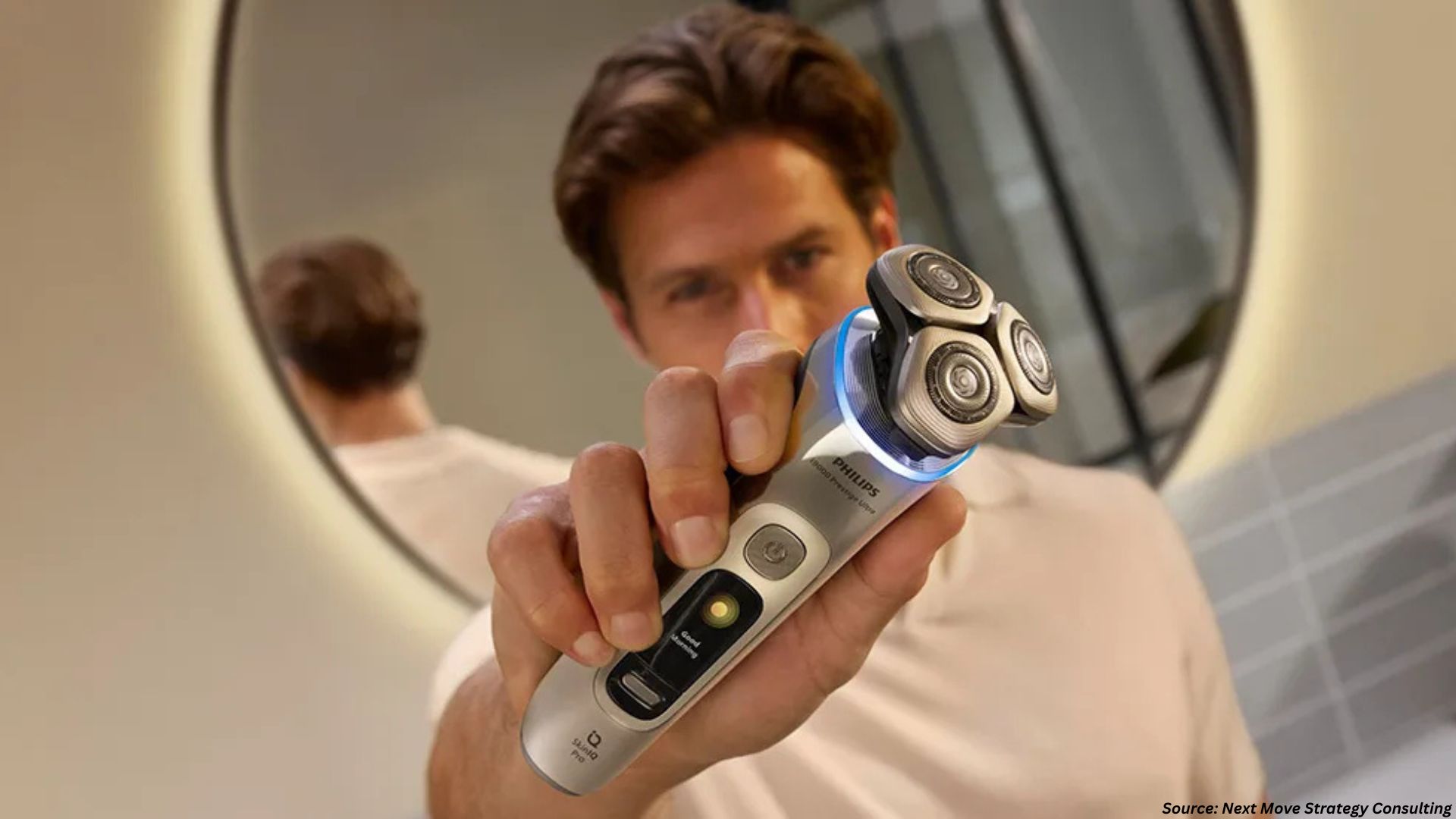
On the other hand, nanotechnology blades epitomize a significant advancement in the Germany electric shaver market, leveraging the precision of nanoscale manipulation to create blades with unparalleled sharpness and cutting performance. By operating at the atomic or molecular level, these blades ensure a remarkably close shave with minimal irritation, revolutionizing the shaving experience for consumers.
Unlike traditional blades that may pull or tug at hair follicles, nanotechnology blades glide effortlessly, resulting in smoother outcomes and heightened comfort. Furthermore, their microscopic sharpness extends their lifespan, reducing the need for frequent blade replacements and enhancing overall durability. This innovation addresses the evolving needs of consumers who prioritize superior performance and convenience in their grooming routines, positioning nanotechnology blades as a compelling solution for the future of electric shavers.
Request for a Sample PDF on the Germany Electric shaver Market
Several market players operating in the Germany electric shaver industry include United Salon Technologies GmbH, Electrodomésticos Taurus S.L, Xiaomi Technology Germany GmbH, Panasonic Marketing Europe GmbH, Beurer GmbH, Beko Grundig Deutschland GmbH, Hitachi Europe GmbH, Maxell Europe GmbH, Skull Shaver EU Ltd, Babyliss Deutschland GmbH, Spectrum Brands Germany GmbH, WAHL GmbH, Philips GmbH, Zhejiang Runwe Electrical Technology Co. Ltd., Gillette Gruppe Deutschland GmbH & Co. OHG
and others.
Key Insights from the Germany Electric shaver Market Report:
-
The information related to key drivers, restraints, and opportunities and their impact on the Germany electric shaver market is provided in the report.
-
The value chain analysis in the market study provides a clear picture of the roles of each stakeholder.
-
The market share of players in the Germany electric shaver market is provided in the report along with their competitive analysis.
About the Author
 Saista Faiyaz
— Saista Faiyaz is Research Associate at Next Move Strategy Consulting, where she has covered consumer markets and healthcare technologies for 3 years. Her work includes primary interview review, secondary-source validation, market sizing, and structured analysis of company and industry data. She supports research by comparing evidence across sources, organizing findings into market narratives, and documenting assumptions used in analysis. Her scope includes cross-market benchmarking, and reports.
Saista Faiyaz
— Saista Faiyaz is Research Associate at Next Move Strategy Consulting, where she has covered consumer markets and healthcare technologies for 3 years. Her work includes primary interview review, secondary-source validation, market sizing, and structured analysis of company and industry data. She supports research by comparing evidence across sources, organizing findings into market narratives, and documenting assumptions used in analysis. Her scope includes cross-market benchmarking, and reports.
About the Reviewer
 Supradip Baul
— Supradip Baul is an accomplished business consultant and strategist with over a decade of rich experience in market intelligence, strategy, technology, and business transformation. His work has included rigorous qualitative and quantitative analysis across multiple industries, helping clients shape investment decisions and long-term roadmaps. Earlier in his career, he was associated with Gartner, where he contributed to industry-leading reports and market share analyses. He has worked with leading global companies and holds an MBA with a dual specialization in Marketing and Finance.
Supradip Baul
— Supradip Baul is an accomplished business consultant and strategist with over a decade of rich experience in market intelligence, strategy, technology, and business transformation. His work has included rigorous qualitative and quantitative analysis across multiple industries, helping clients shape investment decisions and long-term roadmaps. Earlier in his career, he was associated with Gartner, where he contributed to industry-leading reports and market share analyses. He has worked with leading global companies and holds an MBA with a dual specialization in Marketing and Finance.

















Add Comment