Smart Home Security and Surveillance System Market Update
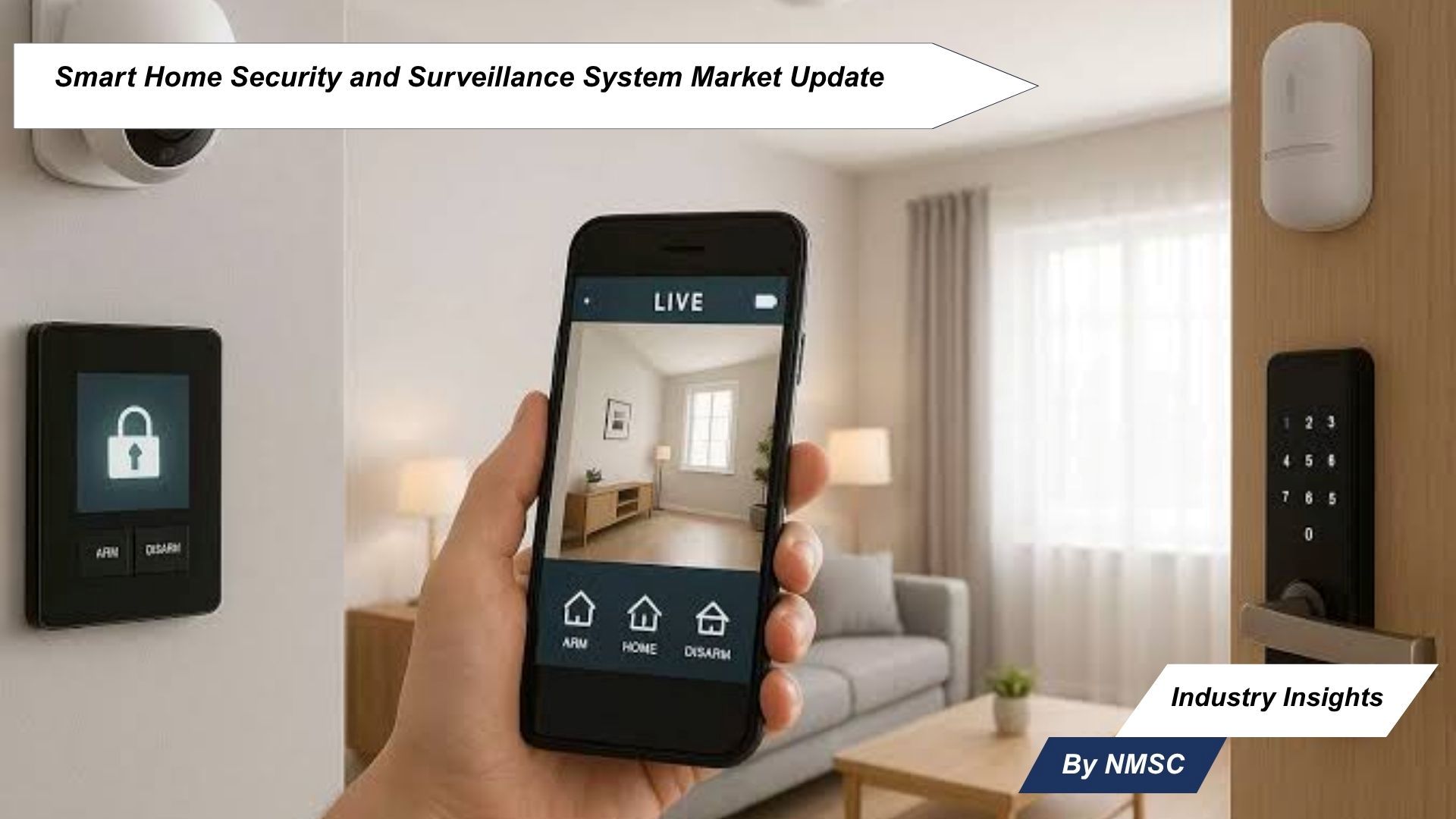
SwitchBot Launches kata AI Assistant to Streamline Smart Home Security Automation
TOKYO, Japan — August 10, 2026 — SwitchBot, a leading provider of AI-enabled embodied home robotics systems, has officially launched kata, a large language model (LLM)-powered AI assistant integrated directly into the SwitchBot App, marking a significant step forward in intelligent home automation for the Smart Home Security and Surveillance System Market. The launch signals a broader industry shift toward conversational AI interfaces that simplify device control, security automation, and real-time troubleshooting for residential users worldwide.
The kata AI Assistant enables users to manage compatible smart home devices — including security cameras, smart locks, and motion sensors — through natural language commands delivered via text or voice input. Rather than navigating complex menus or programming automation logic manually, users can instruct kata to execute multi-device commands, configure routines, and resolve technical issues through a single conversational interface embedded within the SwitchBot App.
The development arrives as AI integration becomes a defining competitive differentiator in the smart home security segment. SwitchBot's kata is designed to lower the barrier to entry for residential security automation, enabling homeowners to deploy and manage layered security configurations — from perimeter surveillance to access control — without requiring technical expertise. The assistant also leverages Optical Character Recognition (OCR) to identify SwitchBot products and deliver step-by-step setup guidance, further reducing friction in device onboarding.
Kata is available in SwitchBot App version 9.29 or later, accessible across SwitchBot's growing ecosystem of AI-enabled home robotics and security devices, including its Outdoor Pan/Tilt Cam 3K, which is available in North America and the United Kingdom.
Key Highlights:
-
LLM-Powered Conversational Control: kata interprets natural language intent — not just fixed commands — enabling users to manage multiple compatible security and smart home devices simultaneously with a single instruction.
-
Automated Routine Creation: Users can describe desired security routines in plain language (e.g., activating outdoor cameras and locking entry points at a set time), and kata translates these into functional automations within the SwitchBot ecosystem.
-
Integrated Troubleshooting Engine: kata references product manuals, FAQs, and support videos to guide users through device connectivity issues and configuration errors, reducing dependence on external customer support.
-
Multimodal Input Support: The assistant supports both text and voice input, maintains session context, and requests confirmation before executing actions involving multiple similar devices — enhancing operational accuracy in security-critical environments.
Analyst Insight:
According to analysts at Next Move Strategy Consulting, the integration of LLM-powered AI assistants into smart home security platforms represents a pivotal evolution in how residential users interact with surveillance and access control systems. NMSC analysts note that as AI-driven interfaces reduce the complexity of multi-device security management, adoption rates among non-technical homeowners are expected to accelerate, expanding the addressable market beyond early adopters and tech-savvy consumers. The firm further observes that vendors embedding conversational AI natively into their ecosystems — rather than relying on third-party voice platforms — are positioned to capture stronger user retention and recurring subscription revenue in an increasingly competitive landscape.
Industry Outlook:
SwitchBot's kata launch reflects a broader structural transition within the smart home security and surveillance sector, where AI-native interfaces are rapidly becoming a baseline expectation rather than a premium feature. As residential security systems grow more interconnected — integrating cameras, smart locks, motion sensors, and environmental monitors into unified platforms — the demand for intuitive management tools capable of handling complex automation logic will intensify. Industry participants that prioritize AI-assisted user experiences are likely to gain a measurable advantage in customer acquisition and platform stickiness. The convergence of LLM technology with physical security hardware is expected to redefine product differentiation standards across the sector in the near term.
Source: PR Newswire
For More Information: Download FREE Sample on Smart Home Security and Surveillance System Market Report
Prepared By: Sanyukta Deb
About the Author
 Sanyukta Deb
— Sanyukta Deb is Digital Marketing Team Lead at Next Move Strategy Consulting, where she has led content strategy and technical SEO for the firm's B2B market research publications for over 2 years. Her editorial process translates NextMSC's primary and secondary research — spanning technology, industrial, and consumer sectors — into commercial narratives, backed by search-intent, keyword, and competitive analysis. She brings 5 years of overall experience in digital marketing and content strategy.
Sanyukta Deb
— Sanyukta Deb is Digital Marketing Team Lead at Next Move Strategy Consulting, where she has led content strategy and technical SEO for the firm's B2B market research publications for over 2 years. Her editorial process translates NextMSC's primary and secondary research — spanning technology, industrial, and consumer sectors — into commercial narratives, backed by search-intent, keyword, and competitive analysis. She brings 5 years of overall experience in digital marketing and content strategy.
About the Reviewer
 Debashree Dey
— Debashree Dey is Assistant Manager at Next Move Strategy Consulting, where she supports cross-vertical market content and communications across diverse industries for 6 years. Her professional background includes senior content writing, communications, and published manuscript authorship, with experience developing audience-focused business narratives and maintaining clear, consistent messaging. Her role supports research-led content development and editorial quality across NextMSC publications.
Debashree Dey
— Debashree Dey is Assistant Manager at Next Move Strategy Consulting, where she supports cross-vertical market content and communications across diverse industries for 6 years. Her professional background includes senior content writing, communications, and published manuscript authorship, with experience developing audience-focused business narratives and maintaining clear, consistent messaging. Her role supports research-led content development and editorial quality across NextMSC publications.















Add Comment