IRRI’s Drones4Rice Initiative Sparks a Modernization Breakthrough for Laguna Farmers
Industry Insights from Next Move Strategy Consulting
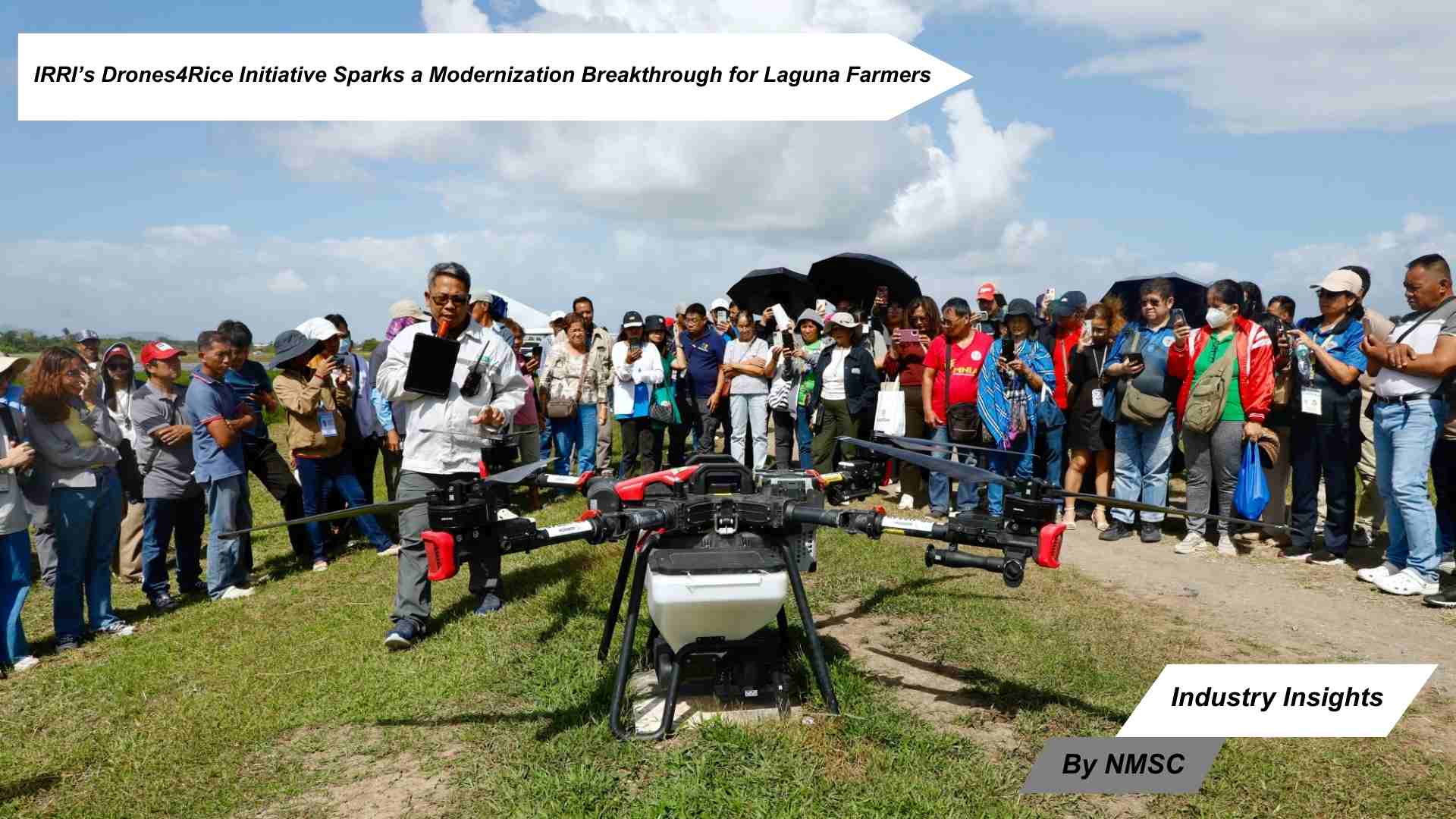
As the agricultural sector faces intensifying pressure from labor shortages and rising production costs, the International Rice Research Institute (IRRI) has reached a transformative milestone with its latest showcase of drone-assisted rice farming in Laguna. Departing from traditional, labor-heavy cultivation methods, the Drones4Rice project introduces a precision-driven approach designed to optimize field management, enhance resource efficiency, and accelerate operational speeds across the Philippine rice landscape.
A Bold Shift Toward Precision Agriculture
For generations, rice farmers have relied on manual broadcasting and spraying—processes that are often inconsistent and physically demanding. IRRI, in collaboration with the Department of Agriculture-Philippine Rice Research Institute (DA-PhilRice), is filling this technological gap through the Drones4Rice project. This evolution represents more than a mechanical upgrade; it is a strategic modernization of how smallholder farmers manage seeds, nutrients, and crop protection in an increasingly competitive environment.
“With the Drones4Rice technology, we have seen how we can help farmers boost productivity and reduce labor costs,” says Dr. Niño Paul Meynard Banayo, Provincial Agriculturist of Laguna. “Through precise and uniform application of agricultural inputs, it can help optimize and modernize our agricultural farm management and practices.”
Key Capabilities at a Glance:
-
Drastic Reduction in Labor Time: Ability to complete seeding or fertilizer application for one hectare in less than one hour, a task that typically requires a full day of manual labor.
-
Significant Cost Efficiency: Targeted reduction of labor expenses, which currently account for roughly 30% of total rice production costs.
-
Precision Input Application: Uniform distribution of seeds and fertilizers, ensuring consistent crop growth and reduced waste.
-
Variable Rate Application (VRA): Integration of mapping and drone imagery to provide specific recommendations for nutrient and herbicide needs.
-
Enhanced Physical Relief: Elimination of the heavy manual lifting associated with traditional farming, where farmers previously carried 5-kilogram loads repeatedly across fields.
Scalable, Collaborative, and Built for the Future
At its core, the Drones4Rice initiative offers a scalable framework that encourages farmers to move beyond individual constraints. To address high initial capital costs, the project promotes a cluster-based model where farmers pool resources through cooperatives to hire professional drone service providers. This ensures that even smallholder growers can access high-tier technical expertise and specialized equipment without the burden of sole ownership.
As the project enters its second year of implementation, the focus is shifting toward refining protocols and expanding capacity. By reducing the "drudgery" of manual farming and lowering emissions through optimized input use, the platform empowers the next generation of agricultural workers with digital tools and dynamic adaptability.
Industry Response and Strategic Outlook
The demonstrations in Laguna have been met with significant enthusiasm from local farming communities and regional field offices. With the ability to slash labor costs-which currently account for nearly one-third of rice production expenses-analysts view drone technology as a cornerstone for the future of food security in the Philippines.
According to Next Move Strategy Consulting, the integration of aerial precision tools is reshaping Agricultural Drone, with an increased emphasis on operational resilience, cost-efficiency, and digital inclusivity.
Redefining the Agricultural Frontier
As global food demands rise, IRRI’s Drones4Rice project signals a new era of smart farming—one where speed, precision, and collaborative service models are essential for survival.
With this initiative, IRRI reinforces its commitment to equipping Filipino farmers with cutting-edge solutions to outpace production challenges and unlock next-level efficiency in rice cultivation.
About the Author
 Sanyukta Deb
— Sanyukta Deb is Digital Marketing Team Lead at Next Move Strategy Consulting, where she has led content strategy and technical SEO for the firm's B2B market research publications for over 2 years. Her editorial process translates NextMSC's primary and secondary research — spanning technology, industrial, and consumer sectors — into commercial narratives, backed by search-intent, keyword, and competitive analysis. She brings 5 years of overall experience in digital marketing and content strategy.
Sanyukta Deb
— Sanyukta Deb is Digital Marketing Team Lead at Next Move Strategy Consulting, where she has led content strategy and technical SEO for the firm's B2B market research publications for over 2 years. Her editorial process translates NextMSC's primary and secondary research — spanning technology, industrial, and consumer sectors — into commercial narratives, backed by search-intent, keyword, and competitive analysis. She brings 5 years of overall experience in digital marketing and content strategy.
About the Reviewer
 Debashree Dey
— Debashree Dey is Assistant Manager at Next Move Strategy Consulting, where she supports cross-vertical market content and communications across diverse industries for 6 years. Her professional background includes senior content writing, communications, and published manuscript authorship, with experience developing audience-focused business narratives and maintaining clear, consistent messaging. Her role supports research-led content development and editorial quality across NextMSC publications.
Debashree Dey
— Debashree Dey is Assistant Manager at Next Move Strategy Consulting, where she supports cross-vertical market content and communications across diverse industries for 6 years. Her professional background includes senior content writing, communications, and published manuscript authorship, with experience developing audience-focused business narratives and maintaining clear, consistent messaging. Her role supports research-led content development and editorial quality across NextMSC publications.

















Add Comment