Is Climate Science Driving CO2 Market Volatility at COP30?
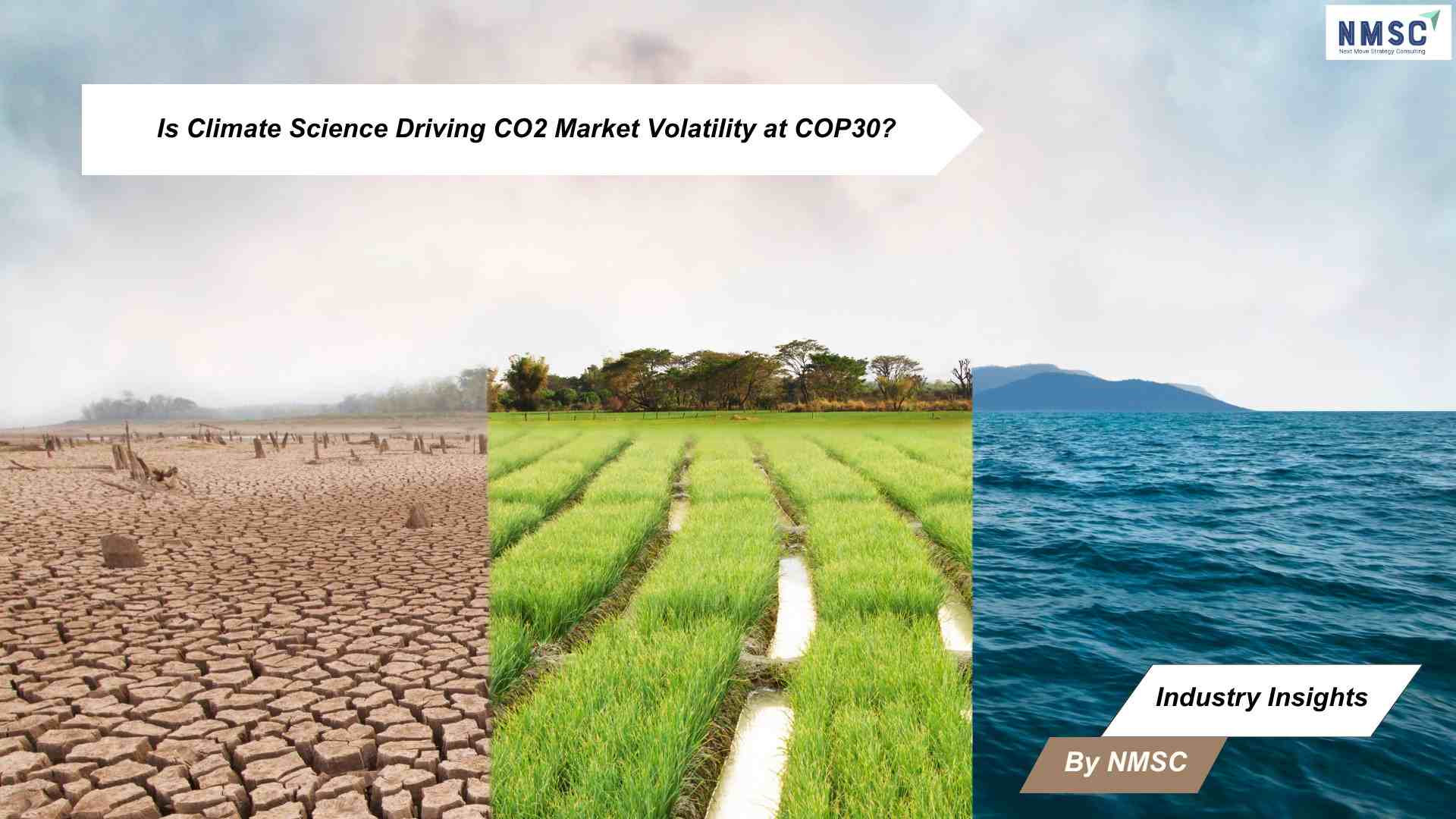
Industry Insights from Next Move Strategy Consulting
As global climate systems exhibit rapid deterioration, the industrial Carbon Dioxide (CO2) market confronts unprecedented supply-side pressures and regulatory uncertainties highlighted at COP30 in Belem, Brazil.
Escalating Warming Rates Reshape CO2 Dynamics
Recent studies confirm global temperatures now rise at 0.27°C per decade—nearly 50% faster than the 0.2°C rate observed in the 1990s–2000s—while sea levels advance at 4.5 mm annually. With the 1.5°C threshold projected for 2030, industries reliant on CO2 face heightened compliance costs and potential carbon pricing shocks.
Tipping Elements Threaten CO2 Absorption Capacity
Marine heatwaves have triggered near-irreversible coral die-off, diminishing natural CO2 sequestration. Concurrent Amazon deforestation risks ecosystem conversion to savannah, further reducing terrestrial carbon sinks. Declining Antarctic sea ice exposes darker ocean surfaces, amplifying warming and jeopardizing phytoplankton—the planet’s primary CO2 consumer.
Wildfire Emissions Intensify CO2 Supply Glut
Between March 2024 and February 2025, 3.7 million square kilometers burned globally, releasing elevated CO2 volumes from carbon-dense forests despite a slight area reduction versus the 20-year average. This surge floods the merchant CO2 market, depressing prices for food-grade and industrial segments while complicating emission accounting for cap-and-trade systems.
Heat-Driven Productivity Losses Elevate Indirect CO2 Costs
Extreme heat already impacts half the global population, with worker productivity falling 2–3% per degree above 20°C—translating to over $1 trillion in annual economic losses. European heatwaves alone caused an estimated 24,400–62,700 climate-attributed deaths in recent summers, underscoring rising liability risks for CO2-intensive sectors.
CO2 Market Implications and Strategic Outlook – Analysis by NMSC
The convergence of faster warming, failing carbon sinks, and wildfire-driven emission spikes creates a bifurcated CO2 market: short-term oversupply from biomass combustion contrasts with long-term scarcity as natural absorption collapses. Enhanced oil recovery (EOR) demand may soften price volatility, yet impending 1.5°C breach accelerates carbon capture utilization and storage (CCUS) investments.

Budget cuts to U.S. climate monitoring—halving NASA Earth Science to $1 billion and slashing NOAA by over 25%—risk data gaps that undermine CO2 credit verification, while expanding science funding in China, the EU, UK, and Japan strengthens alternative emissions tracking frameworks.
Navigating the New CO2 Reality –
As COP30 underscores irreversible climate shifts, CO2 market participants must pivot toward CCUS integration, diversified sourcing, and robust hedging against regulatory escalation to maintain competitive positioning in an increasingly constrained carbon economy.
Source: Reuters
Prepared By: Next Move Strategy Consulting
About the Author
 Sanyukta Deb
— Sanyukta Deb is Digital Marketing Team Lead at Next Move Strategy Consulting, where she has led content strategy and technical SEO for the firm's B2B market research publications for over 2 years. Her editorial process translates NextMSC's primary and secondary research — spanning technology, industrial, and consumer sectors — into commercial narratives, backed by search-intent, keyword, and competitive analysis. She brings 5 years of overall experience in digital marketing and content strategy.
Sanyukta Deb
— Sanyukta Deb is Digital Marketing Team Lead at Next Move Strategy Consulting, where she has led content strategy and technical SEO for the firm's B2B market research publications for over 2 years. Her editorial process translates NextMSC's primary and secondary research — spanning technology, industrial, and consumer sectors — into commercial narratives, backed by search-intent, keyword, and competitive analysis. She brings 5 years of overall experience in digital marketing and content strategy.
About the Reviewer
 Debashree Dey
— Debashree Dey is Assistant Manager at Next Move Strategy Consulting, where she supports cross-vertical market content and communications across diverse industries for 6 years. Her professional background includes senior content writing, communications, and published manuscript authorship, with experience developing audience-focused business narratives and maintaining clear, consistent messaging. Her role supports research-led content development and editorial quality across NextMSC publications.
Debashree Dey
— Debashree Dey is Assistant Manager at Next Move Strategy Consulting, where she supports cross-vertical market content and communications across diverse industries for 6 years. Her professional background includes senior content writing, communications, and published manuscript authorship, with experience developing audience-focused business narratives and maintaining clear, consistent messaging. Her role supports research-led content development and editorial quality across NextMSC publications.
















Add Comment