KAIST Battery Catalyst Tech Boosts Market Size Update
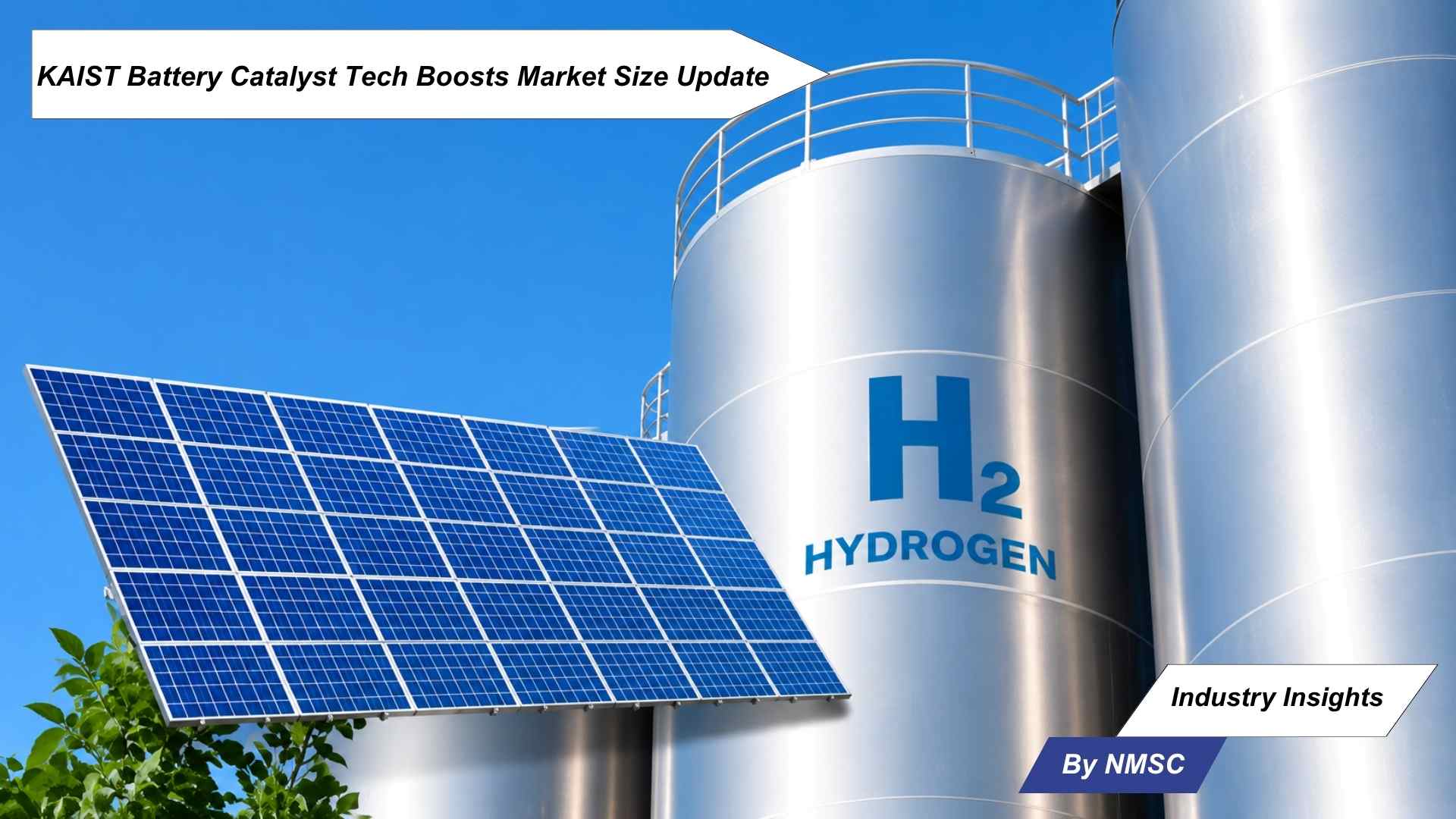
KAIST Catalyst Breakthrough Triggers Multi-Billion Dollar Shift in Hydrogen and Battery Markets
DAEJEON, South Korea — June 2, 2026 — In a development poised to reshape the global clean energy economy, researchers at the Korea Advanced Institute of Science and Technology (KAIST) have unveiled a revolutionary catalyst design technology. The breakthrough drastically optimizes the performance of next-generation batteries and hydrogen fuel cells while significantly reducing core energy loss.
The joint study, led by Professor Seung Jun Hwang of KAIST’s Department of Chemistry alongside Professor Jaeyune Ryu from Seoul National University, introduces a method to dramatically accelerate electricity-generating chemical reactions without replacing underlying materials.
Engineering the Micro-Electrical Environment
Traditional clean tech development relies on changing central metals (like iron, cobalt, or nickel) or modifying surrounding molecular ligand structures to optimize reaction rates. KAIST’s approach disrupts this paradigm by manipulating the local electrical environment instead of the physical catalyst tool itself.
By introducing positively charged "cations (+)" around the molecular catalyst, the team generated a microscopic electric field. This environment forces the critical oxygen reduction reaction (ORR)—the cornerstone of fuel cells and metal-air batteries—to happen with unprecedented stability.
Key performance milestones from the peer-reviewed study include:
-
Efficiency Surge: The proportion of the targeted, electricity-generating chemical reaction skyrocketed from a baseline of 12% to an unprecedented 52%.
-
Drastic Energy Savings: Desired electrochemical reactions were achieved using a fraction of the energy inputs previously required by legacy catalysts.
-
Universal Application: The electrical tuning mechanism is proven to extend beyond fuel cells to carbon dioxide reduction and eco-friendly green hydrogen production.
"This study demonstrates that reaction properties can be precisely controlled solely through the surrounding electrical environment, without changing the structure of the catalyst itself," stated Professor Seung Jun Hwang during the announcement. "We expect it to present a new direction for developing next-generation batteries, fuel cells, and eco-friendly energy catalyst technologies."
Market Projections and Industrial Implications
The commercial ramifications of the KAIST breakthrough are expected to ripple through automotive supply chains and grid-scale storage sectors immediately.
According to Next Move Strategy Consulting (NMSC) analysts, the global Hydrogen Market fuel cell and next-generation battery markets are experiencing sharp capital inflows, driven by industrial decarbonization mandate pressures.
"The ability to unlock a greater than 400% relative increase in reaction selectivity without rebuilding the core catalytic structure solves a massive manufacturing scaling bottleneck," notes an NMSC Lead Analyst. "Our latest market data indicates that technologies reducing raw material dependencies while boosting efficiency are key variables shifting long-term infrastructure investment trends."
The research, funded in part by the Samsung Science and Technology Foundation and the National Research Foundation of Korea, was published in the Journal of the American Chemical Society (JACS).
Source: Eurek Alert
Prepared By: Prakhyat Chowdhury
About the Author
 Sanyukta Deb
— Sanyukta Deb is Digital Marketing Team Lead at Next Move Strategy Consulting, where she has led content strategy and technical SEO for the firm's B2B market research publications for over 2 years. Her editorial process translates NextMSC's primary and secondary research — spanning technology, industrial, and consumer sectors — into commercial narratives, backed by search-intent, keyword, and competitive analysis. She brings 5 years of overall experience in digital marketing and content strategy.
Sanyukta Deb
— Sanyukta Deb is Digital Marketing Team Lead at Next Move Strategy Consulting, where she has led content strategy and technical SEO for the firm's B2B market research publications for over 2 years. Her editorial process translates NextMSC's primary and secondary research — spanning technology, industrial, and consumer sectors — into commercial narratives, backed by search-intent, keyword, and competitive analysis. She brings 5 years of overall experience in digital marketing and content strategy.
About the Reviewer
 Debashree Dey
— Debashree Dey is Assistant Manager at Next Move Strategy Consulting, where she supports cross-vertical market content and communications across diverse industries for 6 years. Her professional background includes senior content writing, communications, and published manuscript authorship, with experience developing audience-focused business narratives and maintaining clear, consistent messaging. Her role supports research-led content development and editorial quality across NextMSC publications.
Debashree Dey
— Debashree Dey is Assistant Manager at Next Move Strategy Consulting, where she supports cross-vertical market content and communications across diverse industries for 6 years. Her professional background includes senior content writing, communications, and published manuscript authorship, with experience developing audience-focused business narratives and maintaining clear, consistent messaging. Her role supports research-led content development and editorial quality across NextMSC publications.


















Add Comment