Liquid Biopsy Innovation Redefines Early Disease Detection
Industry Insights from Next Move Strategy Consulting
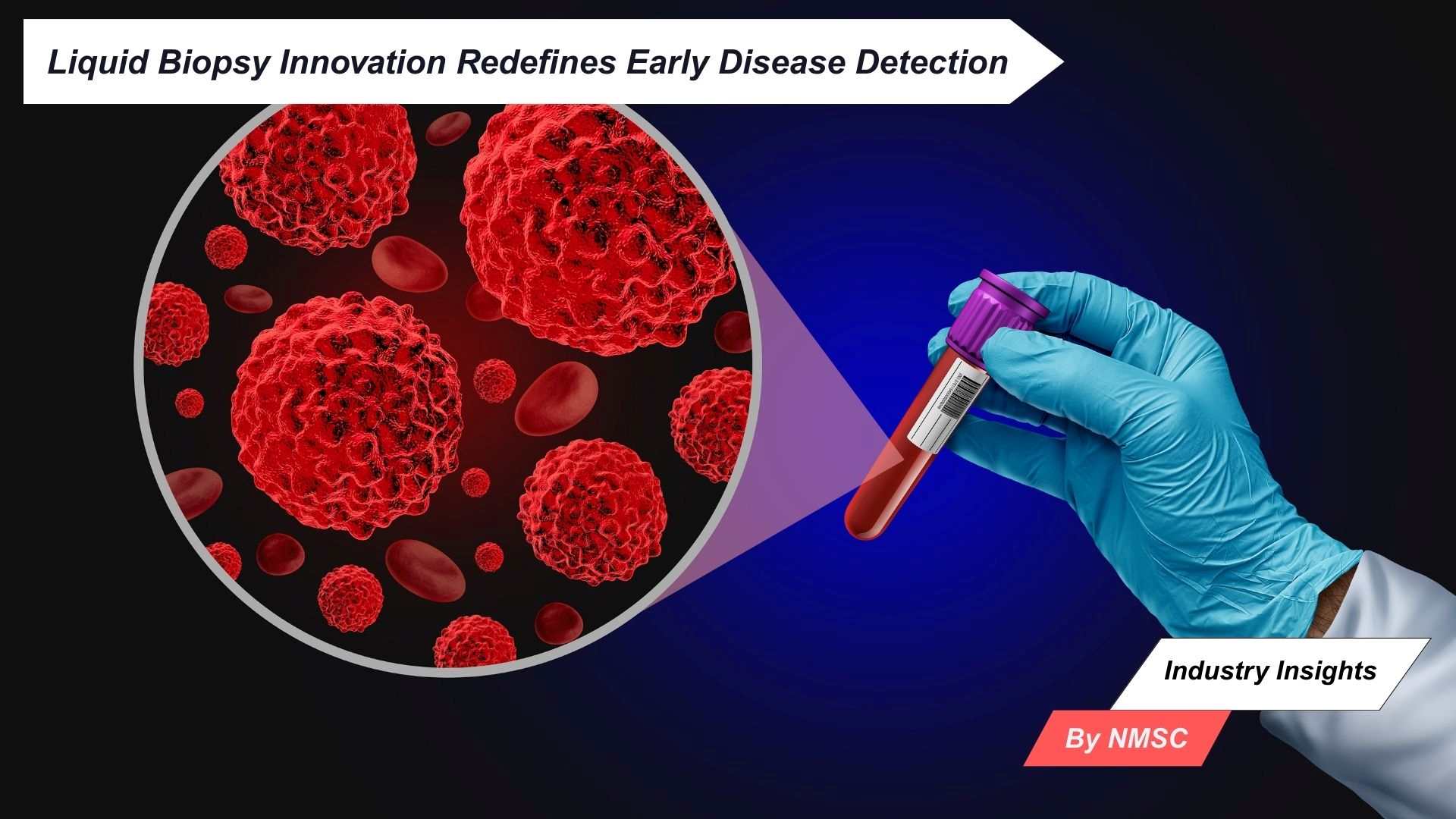
As the demand for non-invasive and highly accurate diagnostic solutions continues to grow, a breakthrough in liquid biopsy technology is poised to transform disease detection and monitoring. Researchers from Peking University have introduced an advanced platform, known as “cf-EpiTracing,” capable of identifying and tracing diseases using as little as 50 μl of human plasma—approximately a single drop of blood.
Published on March 4, 2026, the study highlights a major advancement in overcoming longstanding limitations in traditional liquid biopsy approaches, particularly their inability to determine the origin of disease signals.
Overcoming Limitations in Conventional Liquid Biopsies
For years, liquid biopsy technologies have offered promise in non-invasive diagnostics but have struggled with accurately identifying the tissue source of disease-related signals. The cf-EpiTracing platform addresses this challenge by capturing detailed epigenetic signatures from trace blood samples.
This capability allows clinicians to:
-
Pinpoint the exact tissues contributing to disease development
-
Differentiate between lymphoma subtypes
-
Predict patient outcomes with greater accuracy than existing clinical methods
By enhancing both precision and interpretability, the platform represents a significant step forward in personalized diagnostics.
High Accuracy in Cancer Detection
One of the most notable applications of cf-EpiTracing is in colorectal cancer screening. By combining multimodal epigenomic data derived from cell-free chromatin with machine learning algorithms, the platform achieves:
-
Up to 97.6% accuracy in training datasets
-
92.2% accuracy in independent validation groups
These results demonstrate strong reliability and robustness, reinforcing its potential for early-stage cancer detection and screening programs.
Advancing Lymphoma Insights and Treatment Strategies
Beyond cancer screening, the technology has also provided new clinical insights into lymphoma. Researchers observed that patients with diffuse large B-cell lymphoma exhibit elevated signals of CD34-positive cells in plasma.
This discovery may:
-
Indicate bone marrow involvement
-
Reflect disease aggressiveness
-
Support more precise lymphoma subtyping and treatment planning
Such findings highlight the platform’s ability to not only detect disease but also deepen understanding of disease biology.
Future Outlook: Toward Multi-Omic Diagnostics
Looking ahead, researchers aim to integrate cf-EpiTracing with additional cell-free biomarkers, including DNA methylation, genetic mutations, and chromatin structure analysis.
This multi-omic approach is expected to:
-
Enhance diagnostic precision for complex diseases
-
Enable real-time monitoring of disease progression
-
Support large-scale patient studies with deeper biological insights
The continued evolution of such technologies could redefine non-invasive diagnostics across a wide range of clinical applications.
According to Next Move Strategy Consulting
The emergence of platforms like cf-EpiTracing is expected to significantly influence the liquid biopsy market by accelerating the shift toward precision diagnostics and early disease detection. As technologies increasingly incorporate multi-omic data and machine learning, the market is likely to witness higher adoption across oncology and chronic disease management.
Next Move Strategy Consulting highlights that innovations enabling accurate tissue-of-origin identification and improved predictive capabilities will play a critical role in shaping future diagnostic standards. This advancement is anticipated to drive investment, foster clinical integration, and expand the role of liquid biopsies in routine healthcare.
Transforming the Future of Non-Invasive Diagnostics
The development of cf-EpiTracing marks a pivotal advancement in the liquid biopsy landscape. By enabling highly accurate disease detection from minimal blood samples and providing deeper biological insights, the platform sets a new benchmark for non-invasive diagnostics.
As research progresses and integration with broader genomic tools continues, this innovation has the potential to redefine how diseases are detected, monitored, and treated—ushering in a new era of precision medicine.
Source: Medical Xpress
Prepared By: Next Move Strategy Consulting
About the Author
 Sanyukta Deb
— Sanyukta Deb is Digital Marketing Team Lead at Next Move Strategy Consulting, where she has led content strategy and technical SEO for the firm's B2B market research publications for over 2 years. Her editorial process translates NextMSC's primary and secondary research — spanning technology, industrial, and consumer sectors — into commercial narratives, backed by search-intent, keyword, and competitive analysis. She brings 5 years of overall experience in digital marketing and content strategy.
Sanyukta Deb
— Sanyukta Deb is Digital Marketing Team Lead at Next Move Strategy Consulting, where she has led content strategy and technical SEO for the firm's B2B market research publications for over 2 years. Her editorial process translates NextMSC's primary and secondary research — spanning technology, industrial, and consumer sectors — into commercial narratives, backed by search-intent, keyword, and competitive analysis. She brings 5 years of overall experience in digital marketing and content strategy.
About the Reviewer
 Debashree Dey
— Debashree Dey is Assistant Manager at Next Move Strategy Consulting, where she supports cross-vertical market content and communications across diverse industries for 6 years. Her professional background includes senior content writing, communications, and published manuscript authorship, with experience developing audience-focused business narratives and maintaining clear, consistent messaging. Her role supports research-led content development and editorial quality across NextMSC publications.
Debashree Dey
— Debashree Dey is Assistant Manager at Next Move Strategy Consulting, where she supports cross-vertical market content and communications across diverse industries for 6 years. Her professional background includes senior content writing, communications, and published manuscript authorship, with experience developing audience-focused business narratives and maintaining clear, consistent messaging. Her role supports research-led content development and editorial quality across NextMSC publications.
















Add Comment