LVMH Results Highlight Changing Demand in the Luxury Jewelry Market
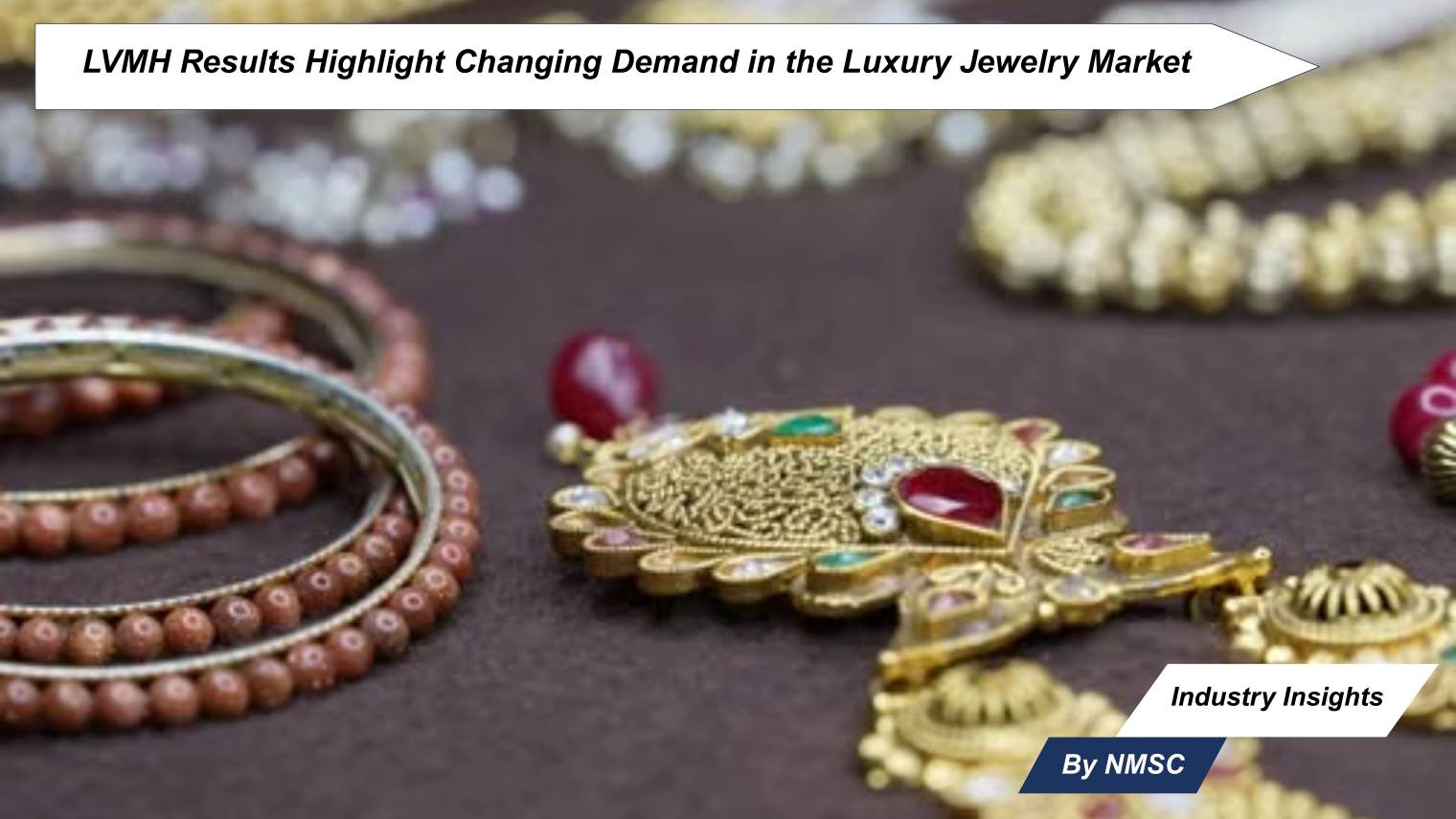
LVMH Q3 Results Reveal Diverging Demand Across Luxury Segments as Jewelry Holds Ground
PARIS, France — October 13, 2026 — Luxury conglomerate LVMH reported weaker-than-expected third-quarter sales on Monday, with its flagship fashion and leather goods division posting a 5% decline in organic revenue, while its watches and jewellery segment home to Bulgari and Tiffany recorded 6% organic growth, underscoring a notable divergence in consumer demand across the luxury jewelry market.
The results, which represent the first major third-quarter trading update from a leading luxury sector player, intensified investor concerns over the industry's ability to regain momentum amid a prolonged three-year slowdown. LVMH's overall organic sales rose just 1% year-on-year to €18.5 billion ($20.7 billion), falling short of analyst consensus expectations of 1.3% growth.
A sharp deterioration in Chinese consumer sentiment was identified as the primary headwind. Sales across Asia a region dominated by China fell 5% year-on-year, while the United States provided a partial offset with 5% growth. LVMH Chief Financial Officer Cecile Cabanis attributed the regional weakness to "a sharp macro-led deterioration in Chinese consumer sentiment, with a tangible impact on discretionary expenses."
The watches and jewellery division's 6% organic growth, while positive, represented a deceleration from the 9% recorded in the first half of 2026, signalling that even the more resilient "hard luxury" category is not entirely immune to macroeconomic pressures. Europe's leading luxury groups have collectively shed approximately €330 billion in market capitalisation since the start of the year, with LVMH alone losing roughly 40% of its market value.
According to Next Move Strategy Consulting, the global luxury jewelry market is valued at USD 75.79 billion in 2026 and is projected to reach USD 150.25 billion by 2035, expanding at a CAGR of 7.9% over the forecast period.
Key Highlights:
-
Watches & Jewellery outperforms: LVMH's jewellery and watches segment posted 6% organic growth in Q3 2026, compared to a 5% decline in the fashion and leather goods division, illustrating the relative resilience of hard luxury categories.
-
China remains the critical pressure point: Asia-Pacific sales fell 5% year-on-year, driven by weakening Chinese consumer confidence compounded by a government tax crackdown on high-net-worth individuals.
-
US demand provides partial support: North American sales grew 5%, offering a counterbalance to Asian weakness and reinforcing the region's role as a stable demand anchor for luxury goods.
-
Sector-wide market value erosion: Europe's major luxury groups have collectively lost approximately €330 billion in market capitalisation since the beginning of 2026, reflecting sustained investor concern over the pace of recovery.
Analyst Insight:
According to analysts at Next Move Strategy Consulting, the divergence between LVMH's jewellery performance and its fashion division reflects a broader structural shift in luxury consumption, where consumers under financial pressure tend to prioritise pieces perceived as holding long-term value such as fine jewellery and watches over discretionary fashion purchases. NMSC analysts note that while the 6% growth in the watches and jewellery segment represents a deceleration from the first half of 2026, it nonetheless confirms that the hard luxury category retains a degree of demand resilience that softer luxury segments currently lack, particularly in markets where consumer confidence remains fragile.
Industry Outlook:
LVMH's Q3 results serve as a critical bellwether for the broader luxury sector, with Hermès and Kering both scheduled to release their own third-quarter figures in the coming week. The performance of LVMH's jewellery brands Bulgari and Tiffany amid a challenging macroeconomic environment suggests that the segment's structural growth drivers, including rising global wealth, gifting culture, and the perception of fine jewellery as a store of value, remain intact even as near-term headwinds persist.
The trajectory of Chinese consumer sentiment and the pace of any policy-driven recovery in domestic spending will be decisive factors in determining whether the luxury jewellery segment can sustain positive momentum through the remainder of 2026 and into 2027. Brands with diversified geographic exposure and strong digital engagement capabilities are better positioned to navigate the current period of uneven demand across regions and product categories.
Source: Reuters
For More Information: Download FREE Sample on Luxury Jewelry Market Report
Prepared By: Sanyukta Deb
About the Author
 Sanyukta Deb
— Sanyukta Deb is Digital Marketing Team Lead at Next Move Strategy Consulting, where she has led content strategy and technical SEO for the firm's B2B market research publications for over 2 years. Her editorial process translates NextMSC's primary and secondary research — spanning technology, industrial, and consumer sectors — into commercial narratives, backed by search-intent, keyword, and competitive analysis. She brings 5 years of overall experience in digital marketing and content strategy.
Sanyukta Deb
— Sanyukta Deb is Digital Marketing Team Lead at Next Move Strategy Consulting, where she has led content strategy and technical SEO for the firm's B2B market research publications for over 2 years. Her editorial process translates NextMSC's primary and secondary research — spanning technology, industrial, and consumer sectors — into commercial narratives, backed by search-intent, keyword, and competitive analysis. She brings 5 years of overall experience in digital marketing and content strategy.
About the Reviewer
 Debashree Dey
— Debashree Dey is Assistant Manager at Next Move Strategy Consulting, where she supports cross-vertical market content and communications across diverse industries for 6 years. Her professional background includes senior content writing, communications, and published manuscript authorship, with experience developing audience-focused business narratives and maintaining clear, consistent messaging. Her role supports research-led content development and editorial quality across NextMSC publications.
Debashree Dey
— Debashree Dey is Assistant Manager at Next Move Strategy Consulting, where she supports cross-vertical market content and communications across diverse industries for 6 years. Her professional background includes senior content writing, communications, and published manuscript authorship, with experience developing audience-focused business narratives and maintaining clear, consistent messaging. Her role supports research-led content development and editorial quality across NextMSC publications.

















Add Comment