Ontario Shifts to Storage Batteries Amid EV Challenges
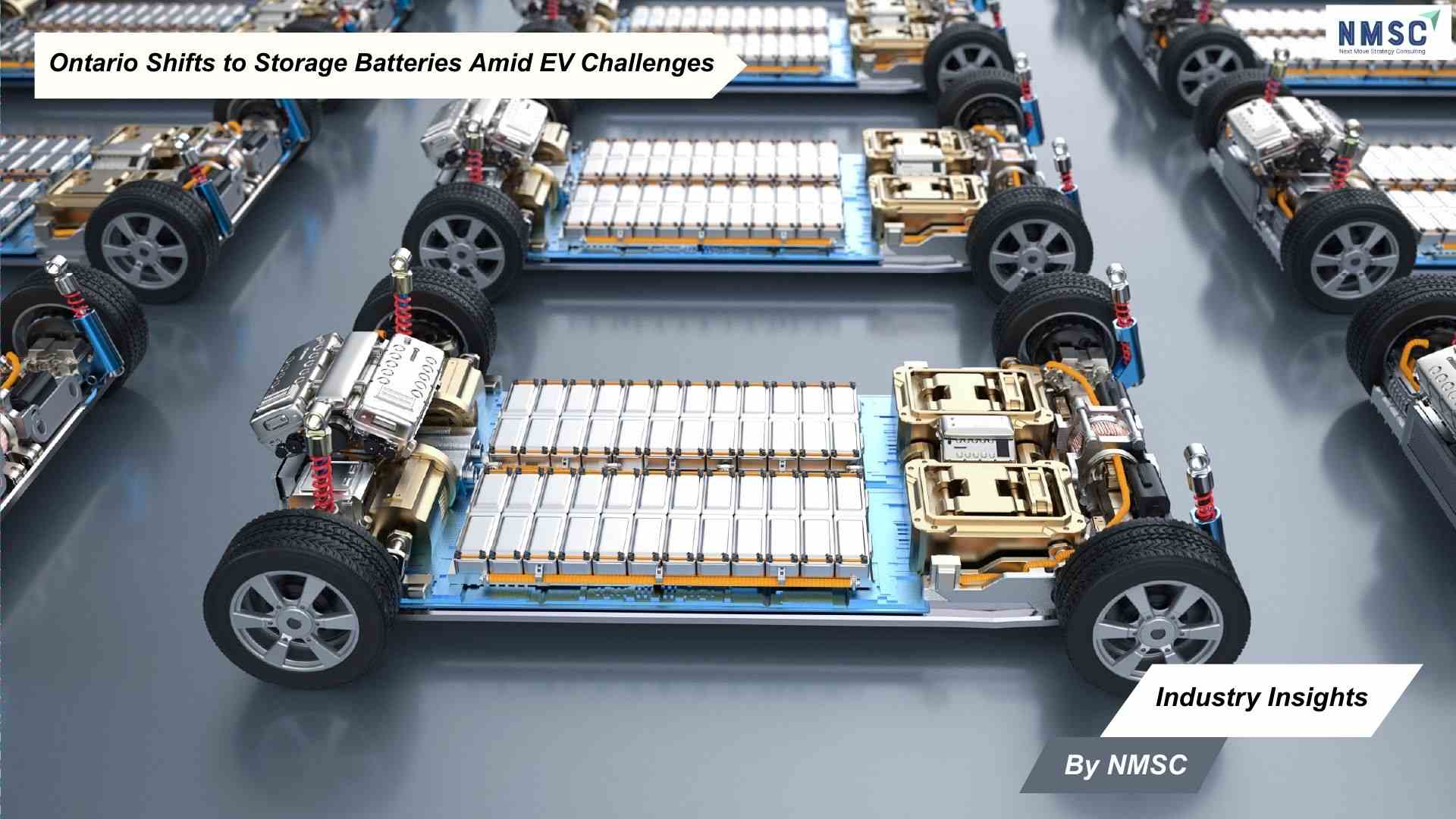
Industry Insights from Next Move Strategy Consulting
As the electric vehicle (EV) manufacturing landscape in Ontario faces setbacks, provincial leaders are adjusting strategy by prioritizing demand for battery storage technologies to sustain the broader EV supply chain framework. Ontario’s initial vision — an end-to-end EV ecosystem anchored in local battery production — has encountered significant delays and cancellations from major automakers and suppliers.
Evolving Challenges in the EV Supply Chain
Ontario had successfully negotiated the establishment of three EV battery plants with federal support, aiming to integrate component production and critical mineral sourcing within the province. However, the momentum behind these investments has weakened. Projects by Honda and Umicore have been postponed or put on hold, and major automakers such as General Motors and Ford have scaled back EV vehicle production plans in favor of traditional internal combustion models.
These shifts have compounded uncertainty around EV market growth in Canada, with analysts citing fluctuating demand influenced by federal rebate policies and trade dynamics. A recent Canada-China trade agreement reducing tariffs on imported Chinese EVs has sparked debate over its potential to both challenge domestic manufacturing and stimulate broader consumer uptake of EVs.
Pivot to Storage Batteries: A Strategic Opportunity
In response, some industry participants are repurposing battery production capacity toward stationary storage applications. Stellantis, through its NextStar Energy facility in Windsor, has redirected efforts from EV battery output to producing energy storage cells for broader utility and industrial uses. This transition leverages the existing supply chain infrastructure and taps into sustained demand for grid-scale storage solutions.
Ontario’s Economic Development Minister has expressed support for this pivot, emphasizing that job creation and investment — rather than specific end products — remain the government’s priority. Components and minerals intended for EV batteries, such as separators, continue to be produced locally, signaling continued support for battery-related manufacturing.
Broader Energy and Industry Impacts
Experts acknowledge that while EV sales are projected to rebound in line with global trends, the interim demand for stationary battery storage presents a meaningful commercial avenue. Storage technologies are increasingly critical for stabilizing electricity systems and enabling integration of variable renewable energy, while also providing predictable pricing for large-scale energy consumers.
Battery storage’s relevance extends beyond temporary market fluctuations, offering a long-term diversification pathway for Ontario’s manufacturing base as EV adoption continues to evolve.
Next Move Strategy Consulting’s Market Analysis
The reshaping of Ontario’s EV battery strategy highlights a pragmatic adaptation to current market conditions. By embracing energy storage demand, Ontario can sustain investment in its battery ecosystem, mitigate the impact of EV production delays, and support economic resilience. Over time, this focus may strengthen the province’s competitive position in both stationary storage and future EV markets, aligning manufacturing capacity with evolving energy and mobility trends.
Source: CityNews Kitchener
Prepared by: Next Move Strategy Consulting
About the Author
 Sanyukta Deb
— Sanyukta Deb is Digital Marketing Team Lead at Next Move Strategy Consulting, where she has led content strategy and technical SEO for the firm's B2B market research publications for over 2 years. Her editorial process translates NextMSC's primary and secondary research — spanning technology, industrial, and consumer sectors — into commercial narratives, backed by search-intent, keyword, and competitive analysis. She brings 5 years of overall experience in digital marketing and content strategy.
Sanyukta Deb
— Sanyukta Deb is Digital Marketing Team Lead at Next Move Strategy Consulting, where she has led content strategy and technical SEO for the firm's B2B market research publications for over 2 years. Her editorial process translates NextMSC's primary and secondary research — spanning technology, industrial, and consumer sectors — into commercial narratives, backed by search-intent, keyword, and competitive analysis. She brings 5 years of overall experience in digital marketing and content strategy.
About the Reviewer
 Debashree Dey
— Debashree Dey is Assistant Manager at Next Move Strategy Consulting, where she supports cross-vertical market content and communications across diverse industries for 6 years. Her professional background includes senior content writing, communications, and published manuscript authorship, with experience developing audience-focused business narratives and maintaining clear, consistent messaging. Her role supports research-led content development and editorial quality across NextMSC publications.
Debashree Dey
— Debashree Dey is Assistant Manager at Next Move Strategy Consulting, where she supports cross-vertical market content and communications across diverse industries for 6 years. Her professional background includes senior content writing, communications, and published manuscript authorship, with experience developing audience-focused business narratives and maintaining clear, consistent messaging. Her role supports research-led content development and editorial quality across NextMSC publications.
















Add Comment