Philippines Braces as Typhoon Fung-Wong Hits Hard
Industry Insights from Next Move Strategy Consulting
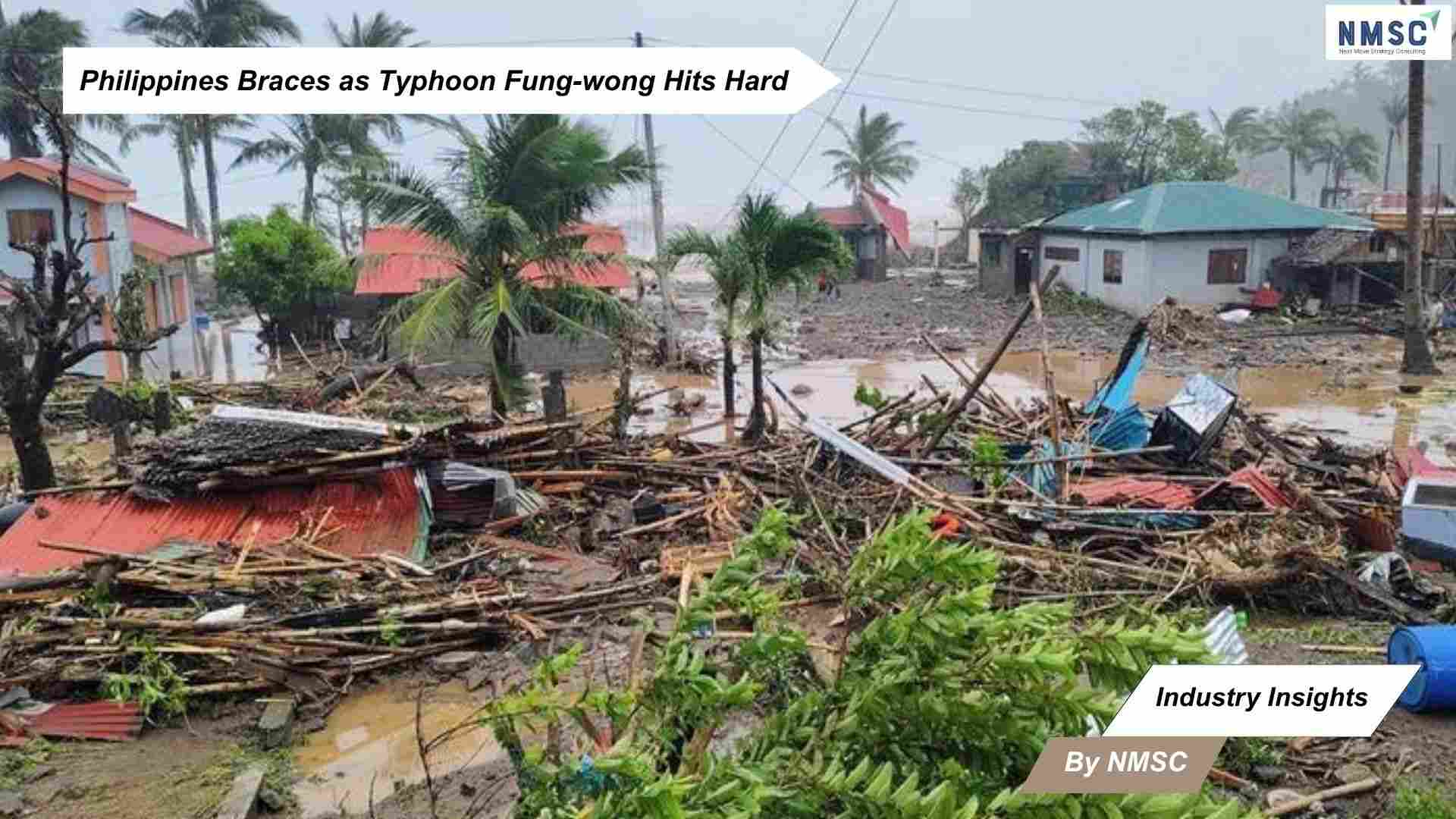
As one of the most powerful storms of the year battered the Philippines, Typhoon Fung-Wong has left widespread destruction across Luzon, forcing nearly one million residents to evacuate. The “very intense” storm made landfall in Aurora province on Sunday evening, with sustained winds of 185 km/h (115 mph) and gusts reaching 230 km/h (143 mph).
A Nation on Alert Amid Rising Winds
The typhoon, known locally as Uwan, struck days after Storm Kalmaegi claimed nearly 200 lives, compounding the crisis. Authorities warned of “life-threatening” surges and destructive winds as Fung-wong tore across the country. By early Monday, the storm had weakened to a typhoon and moved westward over La Union province.
Eastern regions, including Bicol and the Polillo Islands, faced heavy rainfall and powerful gusts from Saturday night. More than 900,000 people fled coastal and low-lying zones following urgent evacuation orders. In Catbalogan City, one person drowned and another was found under debris after a landslide.
Disruption Across Luzon
The impact was swift and severe. Almost 300 flights were cancelled, multiple airports closed, and key transport routes disrupted. Meteorologists warned of up to 200mm of rain in parts of Luzon and 100-200mm in Metro Manila, triggering fears of landslides and flash floods.
Hotels and homes along the Aurora coastline were abandoned ahead of the storm. “We felt very worried because of the strength of the typhoon, and we have young children to think of,” evacuee Jessa Zurbano told. Another resident, Patry Azul, said: “Our house is made of wood and flimsy materials. We live close to the sea so we didn’t feel safe.”
After Kalmaegi, a Second Blow
Fung-wong’s arrival forced authorities to suspend rescue operations launched after Kalmaegi’s devastation. Floods and mudslides had already destroyed neighborhoods, leaving over 100 people missing. The government declared a nationwide state of calamity, unlocking emergency funds and fast-tracking essential relief supplies.
The memories of Typhoon Haiyan in 2013, which killed more than 6,000 people, remain vivid for many. “We decided to evacuate because the recent typhoon brought floods in our area, and now I just want to keep my family safe,” said evacuee Norlito Dugan.
Climate and Future Risks
Situated in a region where around 20 tropical cyclones form annually, the Philippines remains highly vulnerable. While climate change may not increase the number of storms, scientists note that warmer ocean temperatures are making typhoons more intense, with stronger winds and heavier rainfall.
Next Move Strategy Consulting’s Analysis
The escalating intensity of tropical storms in Southeast Asia underscores the growing economic and humanitarian strain on disaster management systems. Analysts note that proactive investment in resilient infrastructure, emergency communication networks, and sustainable rebuilding strategies will be critical as climate-driven weather events continue to test regional stability.
Source: BBC
Prepared by: Next Move Strategy Consulting
About the Author
 Sanyukta Deb
— Sanyukta Deb is Digital Marketing Team Lead at Next Move Strategy Consulting, where she has led content strategy and technical SEO for the firm's B2B market research publications for over 2 years. Her editorial process translates NextMSC's primary and secondary research — spanning technology, industrial, and consumer sectors — into commercial narratives, backed by search-intent, keyword, and competitive analysis. She brings 5 years of overall experience in digital marketing and content strategy.
Sanyukta Deb
— Sanyukta Deb is Digital Marketing Team Lead at Next Move Strategy Consulting, where she has led content strategy and technical SEO for the firm's B2B market research publications for over 2 years. Her editorial process translates NextMSC's primary and secondary research — spanning technology, industrial, and consumer sectors — into commercial narratives, backed by search-intent, keyword, and competitive analysis. She brings 5 years of overall experience in digital marketing and content strategy.
About the Reviewer
 Debashree Dey
— Debashree Dey is Assistant Manager at Next Move Strategy Consulting, where she supports cross-vertical market content and communications across diverse industries for 6 years. Her professional background includes senior content writing, communications, and published manuscript authorship, with experience developing audience-focused business narratives and maintaining clear, consistent messaging. Her role supports research-led content development and editorial quality across NextMSC publications.
Debashree Dey
— Debashree Dey is Assistant Manager at Next Move Strategy Consulting, where she supports cross-vertical market content and communications across diverse industries for 6 years. Her professional background includes senior content writing, communications, and published manuscript authorship, with experience developing audience-focused business narratives and maintaining clear, consistent messaging. Her role supports research-led content development and editorial quality across NextMSC publications.

















Add Comment