Pudu Robotics Launches MP2000 AI-Native AMR for Industrial Use
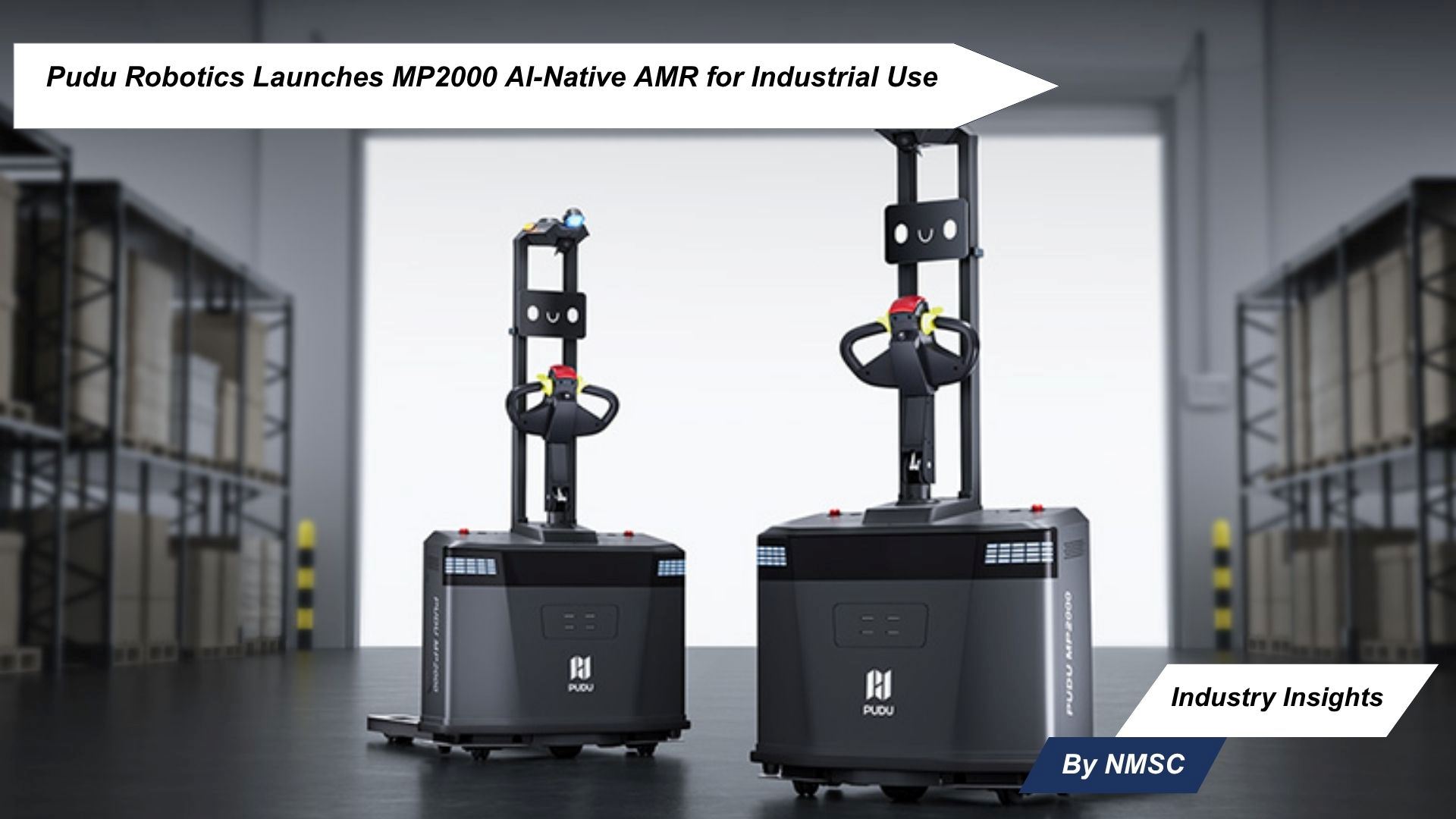
Pudu Robotics Unveils MP2000 AI-Native AMR with 2,000 kg Payload Capacity for Industrial Logistics
SHENZHEN, China — August 19, 2026 — Pudu Robotics, ranked No. 1 globally in commercial service robotics by both revenue and shipment volume according to Frost & Sullivan, has launched the PUDU MP2000, an AI-native autonomous pallet handling robot with a 2,000 kg payload capacity. The development marks a significant expansion in the Autonomous Mobile Robot (AMR) Market, as industrial operators increasingly seek scalable, infrastructure-light automation solutions for warehouse and manufacturing environments.
The PUDU MP2000 is engineered to address one of the most persistent challenges in industrial logistics: deploying autonomous pallet handling at scale without extensive site preparation or complex system integration. Unlike conventional automated forklift solutions that require dedicated reflectors, QR codes, or significant infrastructure modifications, the MP2000 leverages multi-sensor navigation, edge intelligence, and AI-native perception to map its operating environment and begin autonomous workflows within minutes of deployment.
The robot supports common pallet formats — including three-runner pallets and perimeter-base pallets — while also adapting to customized, non-standard load carriers. Its optimized fork-handling process enables fork-in cycles as fast as 20 seconds, a performance benchmark designed to sustain high-frequency material movement across loading docks, warehouses, line-side storage, and production workshops. The MP2000 extends Pudu's existing T Series AMR portfolio, which addresses flexible delivery and lighter-load transport, into the heavier-payload and floor-to-floor transportation segment.
According to Next Move Strategy Consulting, the global Autonomous Mobile Robot (AMR) Market was valued at USD 1.24 billion in 2023 and is projected to reach USD 3.13 billion by 2030, reflecting sustained demand for intelligent automation across logistics and manufacturing sectors.
Key Highlights:
-
AI-Native Perception: The MP2000 integrates 3D LiDAR and depth cameras to detect low-profile and overhead obstacles in real time, enabling adaptive autonomous navigation in dynamic environments where personnel, equipment, and materials are in constant motion.
-
Rapid, Infrastructure-Light Deployment: The system requires no dedicated reflectors, QR codes, or complex platform integration, enabling minutes-level commissioning and reducing disruption for manufacturers and logistics operators.
-
Distributed Fleet Intelligence: Each unit operates with local decision-making capability while coordinating with other Pudu AMRs at the fleet level. Fleet coordination remains functional during network outages, ensuring operational continuity.
-
Broad Pallet Compatibility: The MP2000 supports standard and non-standard pallet formats, with real-time load assessment to navigate constrained spaces and adjust for pallet misalignment without manual intervention.
Analyst Insight:
According to analysts at Next Move Strategy Consulting, the launch of the PUDU MP2000 reflects a broader industry shift toward AI-native, plug-and-play AMR solutions that lower the barrier to entry for industrial automation. NMSC analysts note that as enterprises across manufacturing, e-commerce fulfillment, and third-party logistics seek to reduce dependency on manual material handling, demand for heavy-payload AMRs capable of rapid deployment and fleet-level scalability is expected to accelerate through the latter half of this decade. Pudu Robotics' global footprint — with over 130,000 robots deployed across 85+ countries and regions — positions the company to capture a meaningful share of this expanding segment.
Industry Outlook:
The introduction of the PUDU MP2000 signals a maturation of the AMR market beyond light-payload delivery into heavier, more operationally complex workflows. As industrial facilities face mounting pressure to improve throughput while managing labor constraints, AI-native pallet handling robots that integrate seamlessly with existing infrastructure represent a compelling value proposition. The convergence of edge intelligence, multi-sensor perception, and fleet coordination in a single deployable unit is likely to set a new benchmark for autonomous industrial logistics, prompting broader adoption across sectors including automotive manufacturing, consumer goods, and pharmaceutical distribution.
Source: The Robot Report
For More Information: Download FREE Sample on Autonomous Mobile Robot (AMR) Market Report
Prepared By: Sanyukta Deb
About the Author
 Sanyukta Deb
— Sanyukta Deb is Digital Marketing Team Lead at Next Move Strategy Consulting, where she has led content strategy and technical SEO for the firm's B2B market research publications for over 2 years. Her editorial process translates NextMSC's primary and secondary research — spanning technology, industrial, and consumer sectors — into commercial narratives, backed by search-intent, keyword, and competitive analysis. She brings 5 years of overall experience in digital marketing and content strategy.
Sanyukta Deb
— Sanyukta Deb is Digital Marketing Team Lead at Next Move Strategy Consulting, where she has led content strategy and technical SEO for the firm's B2B market research publications for over 2 years. Her editorial process translates NextMSC's primary and secondary research — spanning technology, industrial, and consumer sectors — into commercial narratives, backed by search-intent, keyword, and competitive analysis. She brings 5 years of overall experience in digital marketing and content strategy.
About the Reviewer
 Debashree Dey
— Debashree Dey is Assistant Manager at Next Move Strategy Consulting, where she supports cross-vertical market content and communications across diverse industries for 6 years. Her professional background includes senior content writing, communications, and published manuscript authorship, with experience developing audience-focused business narratives and maintaining clear, consistent messaging. Her role supports research-led content development and editorial quality across NextMSC publications.
Debashree Dey
— Debashree Dey is Assistant Manager at Next Move Strategy Consulting, where she supports cross-vertical market content and communications across diverse industries for 6 years. Her professional background includes senior content writing, communications, and published manuscript authorship, with experience developing audience-focused business narratives and maintaining clear, consistent messaging. Her role supports research-led content development and editorial quality across NextMSC publications.















Add Comment